- Why it starts below before you see it above
- Early warning signs (before classic yellow leaves)
- The 5-minute root rot check (no special tools)
- Indicators of healthy vs rotting roots
- Root rot impersonators: how you might misread healthy root clues
- If you catch it early: a practical rescue path
- Prevention that Works (and what to stop doing)
- When to get a second opinion (especially outdoors)
- FAQ
TL;DR
- Root rot tends to start by killing off the fine feeder roots first; you might not see the leaf symptoms until a lot of root function is gone. (umass.edu)
- Watch the soil (is it too wet for too long?)? Watch in the pot (is it too heavy after watering)? Watch in plant growth (is it stalling?). Then panic about the yellow leaves.
- Do a quick “dry-down” check, and confirm with a look at the roots: healthy roots are firm; rotting roots are brown/black and feel soft. (extension.umd.edu)
- Early action prompts are mostly to do with oxygen and hygiene: stop the overwatering, increase drainage and airflow, and repot into clean media if roots are starting to fail. (extension.umd.edu)
- If you suspect a specific soil pathogen (like Phytophthora), outdoors the symptom may vary from other problems; also consider involving local Extension/lab help for confirmation. (extension.illinois.edu)
Why it starts below before you see it above
Root rot is usually a slow failure that begins underground. Often the first damage is inflicted on fine feeder roots—the little “workhorse” roots that are primarily responsible for taking up water and nutrients. A plant can lose a surprising amount of root function before the leaves look obviously “sick,” so by the time wilting or yellowing is noticable, the root system may already be at risk. (umass.edu)
What triggers it? Most often it’s not a “curse,” it’s a root-zone no-oxygen problem. When potting mix or soil stays wet for too long, air spaces in the mix are filled with water. Roots become stressed, and opportunistic water-loving pathogens (like Phytophthora and Pythium) can infect. (ipm.ucanr.edu)
Early warning signs (before classic yellow leaves)
Use this like a “radar screen”. One symptom isn’t enough—two or three of the following together should set off alarms to check the roots.
- Takes overly long to dry down from waterings: It remains damp for days longer than usual after being saturated (even though room conditions haven’t altered.)
- The plant feels heavy: You lift it after watering and it “should” be lighter but feels waterlogged.
- Growth stops first: New leaves aren’t sizing up. The stems look tired. And the plant seems stuck. Light and temperature are steady.
- Wilting when the soil is clumpy warm and wet: It’s a very common red flag. The plants can essentially wilt from root failure (even though their clumpy soil conditions are moist). (extension.umd.edu)
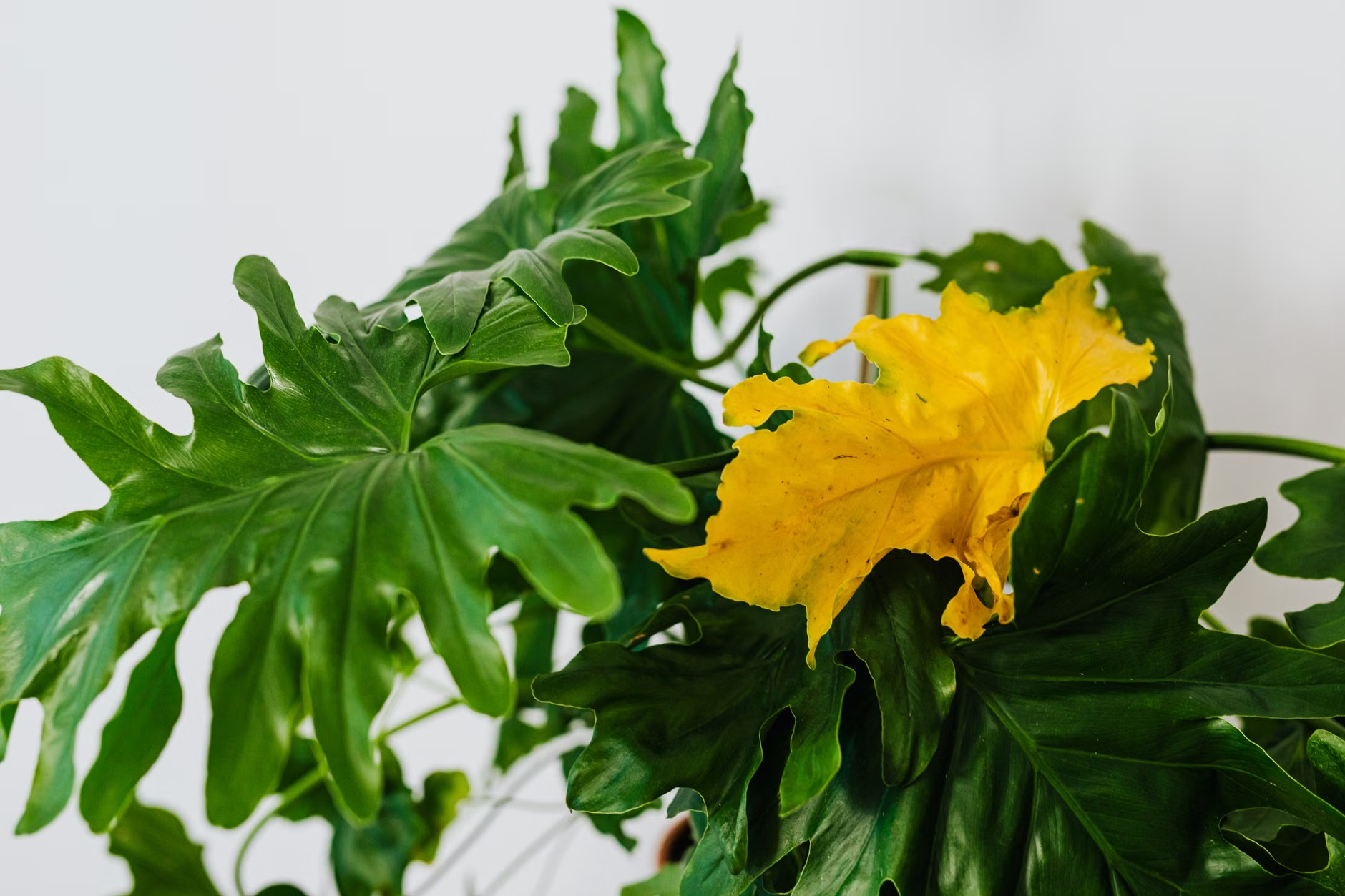
- Leaf tone changes: Foliage is mute or dull looking, somewhat off colour, less perky (even long before it goes yellow) (a sign you might need a reminder to take action).
- A musty or sour odour: (especially noticeable right after watering or upon meeting the inner pot out of its cachepot).
- Fungus gnats appear: They thrive in continually wet media out of the garden. In greenhouse conditions fungus gnats and shore flies have been shown to move around Pythium.
- The stem base looks “stained”: especially if there’s browning/blackening at the crown (that’s the base of the plant). That can be an early clue of the trouble working its way upward. (extension.umd.edu)
The 5-minute root rot check (no special tools)
- Catch any dweller water: If your plant is “living inside” of a decorative cachepot, pull the nursery pot out and check for standing water at the bottom. If there is water, dump it and put it back to draining mode.
- Lift it up: Pick the pot up. If it is unusually heavy for its size, skip watering it and go to step 3.
- Probe the mix (quick “core sample”): Use a wooden skewer or chopstick or clean bamboo stake. Poke it down into the zone near the edge as a probe, then pull it up after ten seconds. If it comes up cool, dark, wet well below the surface, the root zone isn’t dry yet.
- Snoot test: Put your nose near the drainage holes and the mix. If it smells sour/musty, anaerobic (low oxygen) conditions may exist in there.
- Check the crown: Look closely at the stem base where it meets soil. Softening, blackening, or collapse are hints to investigate further.
- Confirm with a root peek: If it’s safe to slip the pot out of the nursery pot, tip it and ease the root ball out. Look for firm, firm? and to note the presence of fine feeder roots (details below).
Indicators of healthy vs rotting roots (and what to feel for)
| What you notice | Usually healthy | Suggests early root rot | Suggests advanced root rot |
|---|---|---|---|
| Root color | White to tan (varies by species), consistent along the root | Brown tips or patches; fine feeder roots look reduced | Brown to black roots are widespread |
| Root texture | Firm, springy, not slimy | Some roots feel softer than others; tips may be dead | Soft/mushy roots; roots collapse when pinched |
| Outer root layer | Stays intact when you gently pull | Outer layer loosens in spots | Outer layer can slip off easily, leaving a thin inner strand (classic with some rots) (extension.purdue.edu) |
| Smell | Earthy/neutral | Slightly sour after watering | Strong sour, swampy, or rotten smell |
| Root system shape | Lots of fine, hairlike feeder roots | Noticeable loss of fine feeder roots (umass.edu) | Root ball feels sparse; large sections may be gone or break apart easily |
Root rot impersonators: how you might misread healthy root clues
Before you repot in a panic, rule out these common imposters. The key is verifying with the root zone and your watering pattern (not just leaf symptoms).
- Underwatering: the soil pulls away from the pot edge, water runs down the sides without being absorbed, roots look dry and brittle—not soft.
- Sudden cold stress: leaves droop or discolor quickly (you’ll see this just after the plant was blasted by a sudden draft or a window exposure while it was rooting out) and roots might still be fine.
- Fertilizer/salt buildup: you might see a white crust on the surface of the soil or around the rim near where it meets the pot, leaf tips will brown out first, and the soil might still be drying out normally.
- Pests: spider mites / thrips / scale can suck all the chlorophyll out of the leaves (causing dullness) and cause a decline, and the root system will remain stiff if you care for them.
- If your plant has poor, discolored leaves, but you know the root system is good: Normal leaf turnover, this is common in many houseplants. Older leaves might go yellow one at a time and new growth is still healthy.
If you catch it early: a practical rescue path
Your job is to: Stop the “wet + low oxygen” cycle and stop the spread being encouraged through dirty tools/containers, or by using the same media for repotting if necessary —dependent on the severity of breakup in the root zone. If the root mass is mostly firm, you can probably pull this whole thing around.
- Quit watering now. Wait to “fix” the droop with more water if you haven’t established that the root zone is indeed drying out!
- Give oxygen around the zone. Move the plant into a brighter more appropriate light and better airflow (but not an additional heat/cold blast). More transpiration gives you a better chance at getting the pot down to a servicable dryness.
- Get the water trapped. Take care of excess water caught in the saucing (and cachepot if applicable), and ensure drainage holes themselves aren’t blocked.
- Decide if you need to repot today: Remove the plant from the soggy mix if the roots are soft/mushy. If you see roots still firm, just be sure you adjust watering practices and drainage setup, but don’t repot. If repotting: cut off decay and reset in clean media: Roots that are brown/black and soft/mushy should be cut back to healthy tissue. Cleaning/sterilized new pots and new clean potting media, as well as separating infected plants are often part of management guidance for cleaning up infected plant roots. (extension.umd.edu)
- Diligent pot aftercare. Water lightly only after repotting (just enough to settle mix), then let the pot down until ‘dry’ is drier than you usually do, until you see clear recovery (new root growth or new foliage).
How to repot without spreading the problem
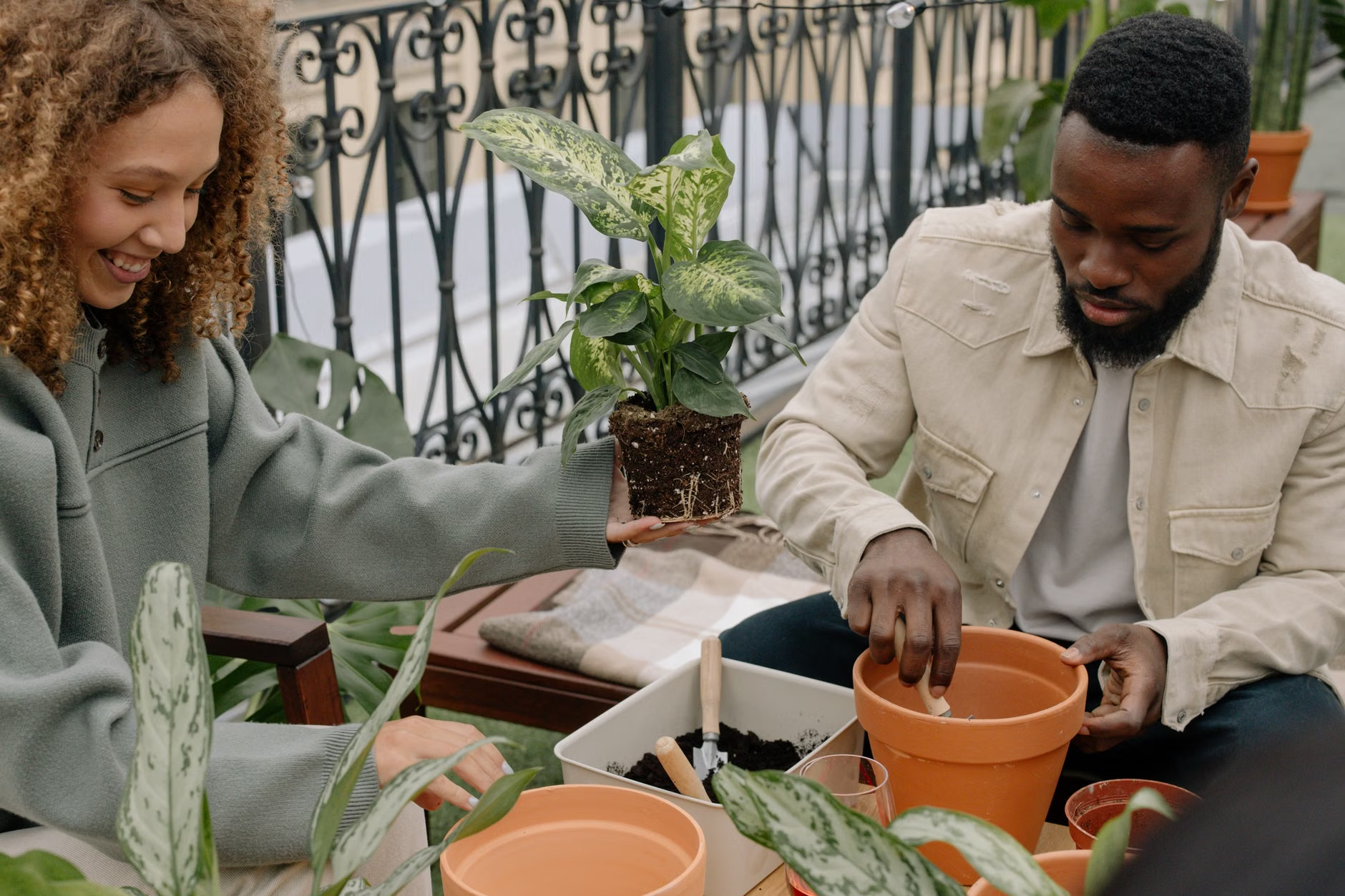
- Lay out sanitation regime: Do all your trimming in a clean workspace lined with clean newspaper or some kind of disposable drop cloth for easy clean-up afterwards.
- Sanitize cutting tools: Use a suitable disinfectant (follow product directions) to wipe your cutting tools before you cut, and again afterwards. This will help to reduce the chances of you moving a pathogen from one plant you cut to another plant that you cut.
- Remove the old mix: Gently shake/tease off the worst of the old soil, so you can see what you are cutting.
- Prune rotted roots: Cut back the soft, dark, collapsing roots. Keep firm roots, even if the plant looks somewhat bare after cutting.
- Use fresh potting mix: Don’t re-use the old mix. Purchasing a high-quality, well-aerated potting mix for many indoor plants will deem it less prone to repeating the waterlogged cycle. (extension.umd.edu)
- Choose the right pot: Drainage holes on the bottom are a no brainer with most types of plants these days, and even cleaning the pot if you reuse one is best. Don’t forget to disinfect the pot as well.
- Don’t “overpot”: A pot too large, holds extra wet mix, which doesn’t dry quickly, leading to a rebirth of the problem. Quarantine: Keep it separate from your plants until you see stable new growth forming, and do not share the runoff water between your plants.
Prevention that Works (and what to stop doing)
Prevention is not about watering less, it’s about watering more intelligently so your roots get both moisture and air.
- Design for appropriate drainage: Watering less is useful, but a pot with drainage holes and a saucer you actually empty will do a much better job. A plant can develop root/crown rot when soil remains wet for extended periods of time, so irrigation/drainage is the first place you can start to mitigate this problem. (ipm.ucanr.edu)
- Make dry-down predictable: Pick a potting mix that is appropriate for your unique environment (humidity, light, temperature). If your home is a low light cave in winter, opt for a more aerated potting mix or water less often.
- Water based on the root zone and not the calendar: Use the chopstick/skewer method, or simply pick up the plant pot before watering to sense its weight. This is especially critical at seasonal transition times.
- Avoid compacting soil: Less oxygen! Compressed soil has less oxygen reaching the roots; this reduces its availability and can make plants more susceptible to root problems. (umass.edu)
- Be mindful of cachepot: it is a dirty little thief of water most of the time. If you love the look, keep the plant in a drainable nursery pot and remove it to water in the sink.
- Inspect new plants before they join your collection: Checking roots and keeping new plants separate briefly can prevent importing problems. (extension.umd.edu)
When to get a second opinion (especially outdoors)
For landscape shrubs and trees, “it looks like root rot” isn’t always enough. Some diseases can mimic drought stress, nutrient issues, or other root problems. For Phytophthora in particular, laboratory diagnosis may be necessary to confirm what’s actually happening—and improving drainage/irrigation is typically the core management step either way. (extension.illinois.edu)
FAQ
Can a plant recover from root rot if I catch it early?
Often, yes—especially if most roots are still firm. The earlier you restore oxygen (better drainage, better dry-down) and remove decayed roots, the better the odds. In some guidance for woody plants, recovery is possible if drainage is corrected before decline goes too far. (extension.illinois.edu)
Dry-down test: if your mix is taking longer than normal to dry out and the pot is still heavy, it likely means the root zone is starved for oxygen. Check the condition of your roots before watering again.
My plant is wilting, this is bad!! (but the soil is wet). Water anyway though, right?
No, wilting may occur even when moisture is fairly good if roots are damaged. Confirmation comes from checking the condition of the root zone, and roots, not more water. (extension.umd.edu)
Are fungus gnats an automatic indication of root rot?
Not necessarily, but they are a valuable hint that your soil isn’t drying out enough. Also, in greenhouse culture, fungus gnats/shore flies generally are vectoring لحف Pythium. (extension.purdue.edu)
Should I reuse the soil I experienced root rot in before if I’m unfortunate enough to have another incidence?
Ideally, No. Non-sterile or ‘frequently used’ pots and non-pasteurized potting media should be avoided at all times in the Management of root problems generally, along with potting the identified ‘sick’ plant. (extension.umd.edu)
How can I confirm it’s Phytophthora?
You generally can’t confirm identification – from home – utilizing leaf symptoms only. Problems due to Phytophthora are most often correlated with saturation of the soil so laboratory diagnosis is usually essential. (extension.illinois.edu)