A recurring watering reminder feels organized, but it is not a very good judge of what is happening inside a pot. Houseplants do not use water at the same rate every week. Light, temperature, humidity, pot size, pot material, growth stage, and potting mix all change how fast the root zone dries, which is why extension and botanical garden guidance consistently recommends checking the soil instead of watering by the calendar. (extension.umd.edu)
TL;DR
- The most reliable routine is a root-zone check: test moisture below the surface, then confirm with pot weight before you water. (extension.umd.edu)
- For most apartment plants, a dry-looking surface alone is not enough evidence. The useful question is whether the soil around the roots is dry enough for that kind of plant. (rhs.org.uk)
- When you do water, water thoroughly so excess drains out, then empty saucers or decorative covers so roots are not left sitting in water. (extension.umd.edu)
- If symptoms and soil readings do not match, stop guessing and check deeper, inspect drainage, or slide the plant from its pot to look at the roots. (extension.umd.edu)
A calendar cannot see your windowsill
A fixed schedule fails for a simple reason: apartments are full of small changes that alter drying speed. A plant in active growth needs more water than the same plant in a slower season. A plant in brighter light usually uses water faster than one pulled back from the window. Container type matters too, and so does the potting mix. (extension.illinois.edu)
Even within one room, the differences add up. Unglazed clay pots dry faster than plastic. Root-restricted plants can dry faster than plants with more available mix. Decorative pot covers and foil sleeves can hold runoff where you cannot see it. None of those factors show up on a Sunday reminder, but all of them affect whether watering today is helpful or harmful. (missouribotanicalgarden.org)
The other problem is that people tend to judge only the top crust of the mix. That is often the least useful part of the pot. The surface can look pale and dry while the lower root zone is still holding enough moisture to wait another day or three. Good watering decisions come from checking where the roots actually are. (rhs.org.uk)
Use the Root-Zone Check instead
A better method is what I’ll call the Root-Zone Check. It combines three signals before you water: moisture at depth, the weight of the pot, and the kind of dry-down your plant prefers. It takes less than a minute, and it is much more reliable than treating every Tuesday as watering day. (extension.umd.edu)
- Check below the surface. For many houseplants, push a finger about 1 to 2 inches into the mix, or to knuckle depth. If that zone is still moist, wait. (extension.umd.edu)
- Use a skewer or dowel for large pots. If the container is too deep or crowded to test with your finger, insert a wooden skewer or dowel farther down. Moist mix will darken it or cling slightly. (extension.umd.edu)
- Lift or tilt the pot. A watered pot feels noticeably heavier than a drier one. This is one of the quickest ways to confirm whether the root ball is still carrying moisture. (extension.umd.edu)
- Match the reading to the plant’s moisture style. Some plants want fairly even moisture, many common foliage plants like a partial dry-down, and succulents and cacti need a much drier interval. (extension.illinois.edu)
- When the plant is ready, water thoroughly. Apply enough water that some drains from the bottom, then let the pot drain and remove the excess from the saucer or cachepot. (extension.umd.edu)
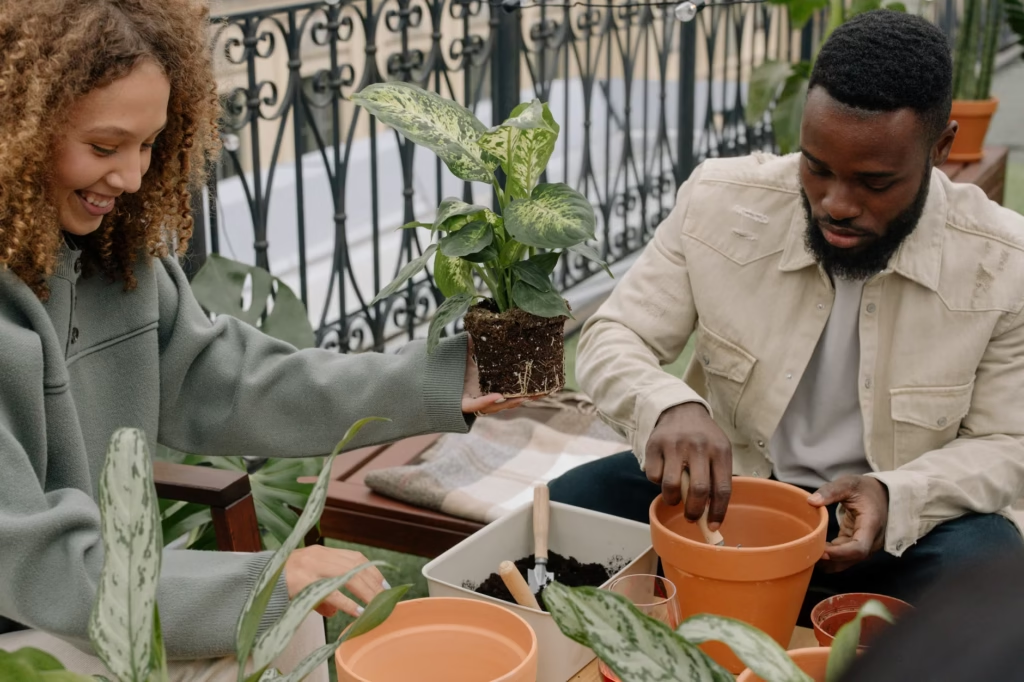
Decorative sleeves and cachepots are a common apartment trap. They can hide standing water, so always separate the inner pot and dump the runoff after watering. (missouribotanicalgarden.org)
What “dry enough” actually means
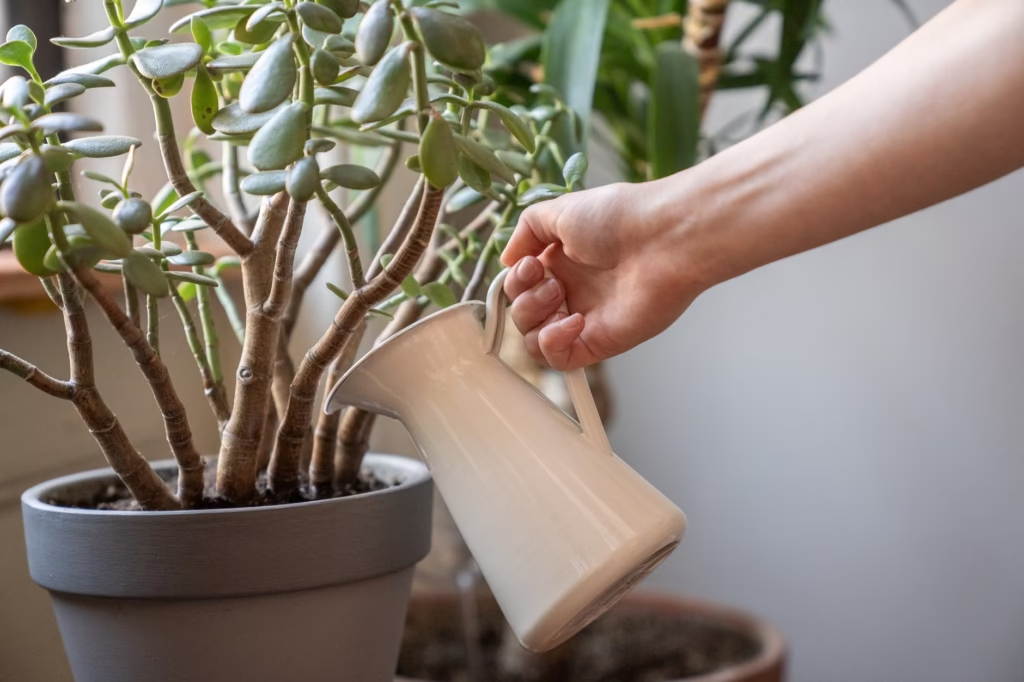
“Let it dry out” is too vague to be useful. Dry enough depends on the plant category. Extension guidance generally separates indoor plants into broad moisture preferences: plants that want to stay more evenly moist, plants that prefer moderate drying between waterings, and much drier plants such as cacti and many succulents. The table below turns that into a practical apartment rule of thumb. (extension.illinois.edu)
| Plant moisture group | Wait until this part of the mix is dry | Useful cross-check | Typical apartment examples |
|---|---|---|---|
| Evenly moist, not soggy | Top 1/2 to 1 inch is dry, but lower mix still feels lightly moist | Pot feels a little lighter, not hollow-light | Peace lily, many ferns |
| Moderate dry-down | Top 1 to 2 inches are dry and the rest is only lightly moist | Pot feels clearly lighter than after watering | Many common tropical foliage plants |
| Substantial dry-down | Much of the pot is dry before watering again | Pot feels quite light | Snake plant, ZZ plant, many drought-tolerant houseplants |
| Near-total dry-down | Mix is nearly dry throughout before rewatering | Pot feels very light | Many cacti and succulents |
This table is a starting point, not a species file. Some plants have seasonal rest periods and want less water in fall or winter. Others, such as cacti and succulents, are notable exceptions to the “check 2 inches and water” rule because they prefer a much drier interval. (missouribotanicalgarden.org)
An apartment example: same plant, different drying speed
Imagine two similar foliage plants in one apartment. One sits in an unglazed clay pot near a bright window. The other is in a plastic nursery pot inside a ceramic cachepot a few feet farther back. The brighter plant may use water faster, the clay pot may lose moisture faster, and the cachepot can keep runoff around the roots longer if it is not emptied. A single weekly watering day treats those very different conditions as if they were identical. (extension.illinois.edu)
With the Root-Zone Check, the decision changes. The bright-window plant might test dry at depth and feel light, so you water it. The plant in the cachepot might feel heavy and come up moist on a finger or skewer test, so you leave it alone. That difference is exactly why this method works better than habit. You are responding to the pot, not to the date. (extension.umd.edu)
What people misread before they water
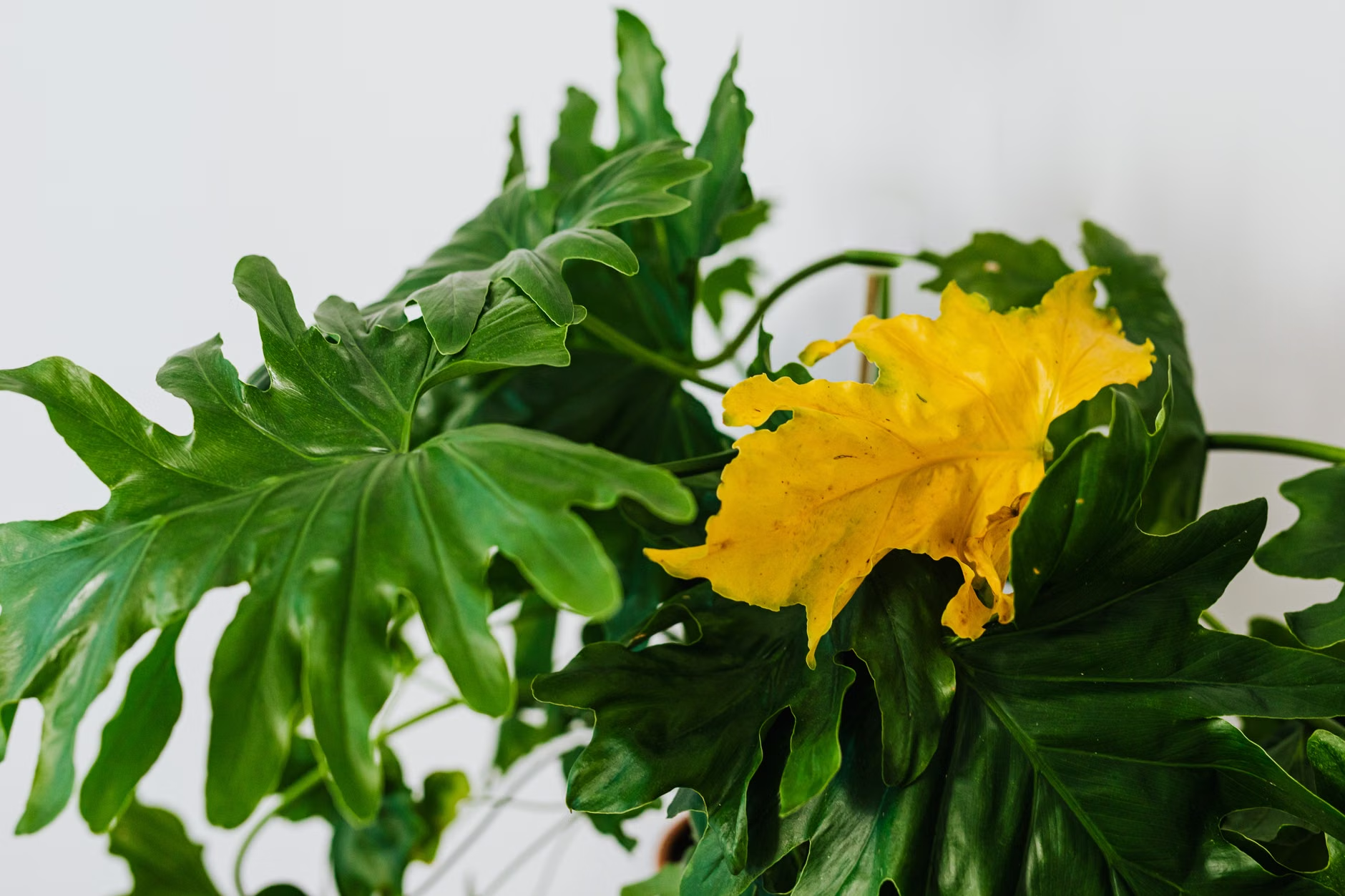
The biggest misunderstanding is thinking every wilt means thirst. It does not. Overwatered plants can wilt because excess moisture reduces oxygen in the mix and damages fine roots, which then may not take up water well. Yellowing lower leaves can also point to excess moisture. And a dry-looking surface can still sit above a damp root zone. (extension.umd.edu)
- Touching only the top crust. Surface dryness is not enough; check deeper. (rhs.org.uk)
- Watering because leaves droop. Wilt can mean too dry or too wet, so confirm with the soil first. (extension.umd.edu)
- Giving frequent small drinks. Botanical garden guidance favors watering well, then allowing the proper dry-down, which generally leads to fewer root problems than constant shallow sips. (missouribotanicalgarden.org)
- Leaving runoff in saucers or covers. Roots sitting in trapped water stay wet longer than you think. (extension.umd.edu)
- Ignoring root-bound or worn-out mix. If your finger cannot penetrate well, or the plant dries to the point that the mix pulls from the pot, the problem may be the medium, not just the schedule. (extension.umd.edu)
When the test gets tricky
Large pots and floor plants
You may not be able to lift a big floor pot safely, and the surface may tell you very little. In that case, switch to a wooden skewer or dowel inserted deep into the mix. A moisture meter can also help for large planters, but it works best as a supporting tool, not as your only evidence. Depth matters, and meter readings still need interpretation based on the plant’s water style. (extension.umd.edu)
Water runs straight through
If water immediately races through the pot and into the saucer, do not assume the plant was watered well. That can be a sign the mix became extremely dry and is not rewetting evenly. Missouri Botanical Garden and University of Maryland guidance both note that very dry mixes may need soaking or several applications of water to rehydrate properly. (missouribotanicalgarden.org)
The mix stays wet for too long
If the pot stays heavy and wet for an unusually long stretch, look beyond watering frequency. Poor drainage, a too-large container, a decorative sleeve trapping water, or damaged roots can all keep the root zone too wet. At that point, the next step is inspection: slide the plant from the pot if you can, check whether roots look healthy or mushy, and consider repotting into a container and mix better suited to indoor use. (extension.umd.edu)
How to prove the method is working
The easiest way to verify the Root-Zone Check is to track just three watering cycles for one plant. You are not looking for a perfect interval. You are looking for a repeatable relationship between soil depth, pot weight, and plant response. If the days between waterings vary while the plant looks steadier, that is evidence the calendar was the weak link. (extension.umd.edu)
- Right after a thorough watering, lift the pot and notice its fully watered weight. That is your baseline. (extension.umd.edu)
- Every couple of days, check the same plant at the same depth with your finger or skewer, then compare the weight. (extension.umd.edu)
- Water only when the depth reading and pot weight both suggest the plant has reached its proper dry-down. (missouribotanicalgarden.org)
- After three cycles, review the pattern. If lower yellow leaves, chronic wilt in wet soil, or constant sogginess are easing, your timing is likely improving. If not, inspect roots, light, and drainage next. (extension.umd.edu)
A moisture meter is optional, not mandatory. It can be genuinely helpful for deep or heavy pots, but extension guidance also notes that readings can be misleading if you do not measure at the right depth or if you treat the number as universal for every plant. (extension.illinois.edu)
Conclusion
The soil moisture test that beats a fixed schedule is not fancy. It is simply a better question: is the root zone dry enough for this plant, in this pot, in this spot, today? Once you start checking depth, confirming with pot weight, and watering thoroughly only when the plant is ready, houseplant watering becomes less repetitive and more accurate. That is usually what apartment plants need most. (extension.umd.edu)
FAQ
How deep should I check the soil?
For many houseplants, check about 1 to 2 inches down, or roughly to knuckle depth. The point is to assess moisture below the surface, not just the dry top layer. Large pots may need a skewer or dowel to read deeper. (extension.umd.edu)
Are moisture meters worth buying?
They can be useful for large planters or for gardeners who cannot easily lift pots, but they are best used as a backup tool. Readings depend on depth and on what kind of dry-down the plant prefers. (extension.illinois.edu)
Should water come out of the drainage hole every time I water?
For standard top watering, authoritative guidance generally recommends watering thoroughly enough that some excess drains out, then discarding that excess so the plant is not left sitting in water. (extension.umd.edu)
What if my plant is wilted but the soil is wet?
Do not automatically add more water. Wet soil plus wilt can point to excess moisture, root damage, or root rot, because overly wet roots may not take up water normally. Check drainage and root health next. (extension.umd.edu)
Can I still keep a watering reminder on my phone?
Yes, but use it as a prompt to inspect the plant, not as an automatic order to water. Extension advice is very consistent on this point: let the plant and the soil guide you, not the calendar. (extension.illinois.edu)
What if my pot has no drainage hole?
A pot without drainage is much less forgiving because extra water has nowhere obvious to go, and trapped water is a common cause of root problems. In apartments, the safer setup is usually a nursery pot with drainage placed inside a decorative outer pot. (missouribotanicalgarden.org)
References
- University of Maryland Extension – Watering Indoor Plants – https://extension.umd.edu/resource/watering-indoor-plants
- University of Maryland Extension – Overwatered Indoor Plants – https://www.extension.umd.edu/resource/overwatered-indoor-plants
- Missouri Botanical Garden – How Often Should I Water My Indoor Plants? – https://www.missouribotanicalgarden.org/gardens-gardening/your-garden/help-for-the-home-gardener/advice-tips-resources/gardening-help-faqs/question/1555/how-often-should-i-water-my-indoor-plants
- Missouri Botanical Garden – How to Water Indoor Plants – https://www.missouribotanicalgarden.org/gardens-gardening/your-garden/help-for-the-home-gardener/advice-tips-resources/visual-guides/how-to-water-indoor-plants
- Illinois Extension – Watering – https://extension.illinois.edu/houseplants/watering