Most apartment plant problems are not really watering problems. They are layout problems. A plant marketed as easy ends up in a decorative dark corner, while the one good window gets packed so tightly that the leaves shade each other and the room starts to feel smaller. The fix is to treat light like limited real estate: give the brightest square feet to the plants that truly need them, use medium-light plants as the transition layer, and keep walkways and surfaces clear enough that your home still functions like a home. That approach is easier on the room and often cheaper than replacing stretched, scorched, or slowly declining plants. (extension.umd.edu)
TL;DR
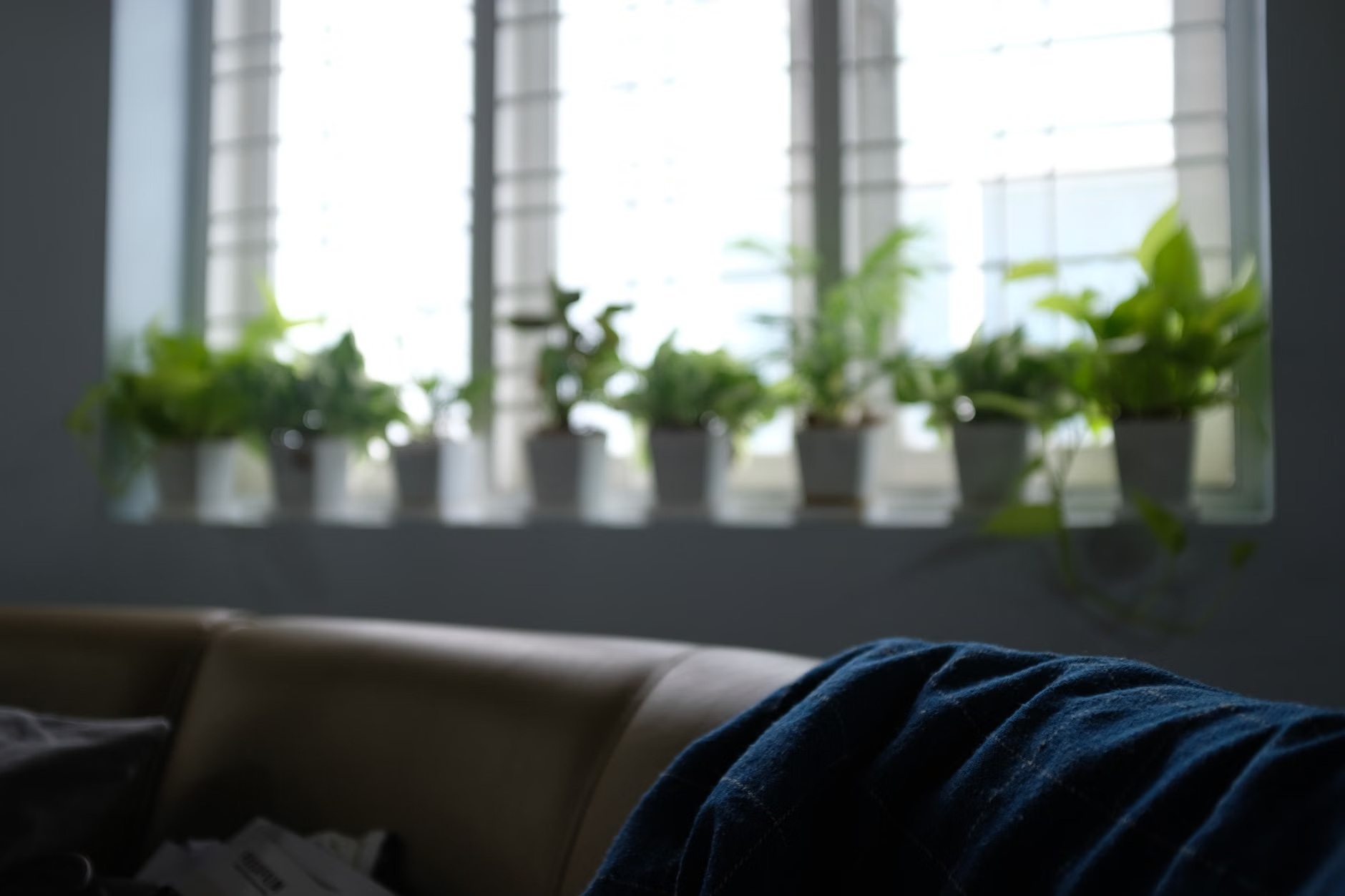
- Start with actual window exposure, not the plant label alone. In most homes, north windows count as low light, east or west windows as medium light, and south-facing windows as the brightest indoor option, though overhangs and nearby buildings can reduce that light. (extension.umd.edu)
- Distance matters more than many renters expect. A plant at least two feet back from a south window may already be in indirect light, and spots beyond about eight feet from most brighter windows often behave like low-light areas. (missouribotanicalgarden.org)
- Use the LIFT Score in this article to judge each plant spot: Light match, Isolation from shade, Floor footprint, and Traffic risk.
- If sunlight is the real limit, a targeted LED grow light is usually a better fix than buying a bigger plant rack for a dim wall. UMD says most plants should not be illuminated for more than 16 total hours a day, and OSU offers rough wattage starting points by grow area. (extension.umd.edu)
Start with the window, not the pot collection
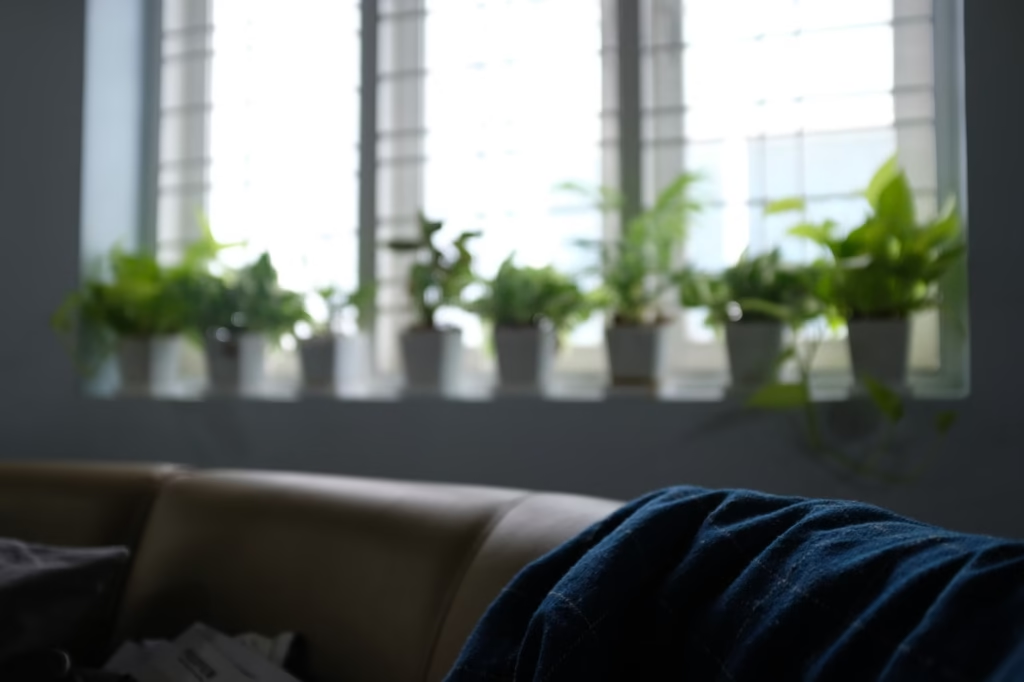
The useful question is not whether a plant likes bright indirect light in the abstract. The useful question is what that phrase means in your apartment. Extension guidance is fairly consistent: low-light plants fit north windows or similarly dim areas, medium-light plants do well in east windows or near west windows out of direct sun, and high-light plants belong in south-facing windows or the brightest west-facing spots. Flowering plants and most succulents usually need more light than foliage plants grown mainly for leaves. (extension.umd.edu)
Then adjust for the apartment itself. A balcony, roof overhang, insect screen, or neighboring building can weaken a bright exposure. Missouri Botanical Garden notes that a southern window set back at least two feet from the sill can already function as indirect light, and areas beyond eight feet from many directional exposures often slip into low-light territory. The same guidance also notes that west windows tend to run hotter than east windows, and lower-light plants grow more slowly and use less water. That is why a crowded plant cluster can fail in two ways at once: not enough light and too much routine watering. (extension.umn.edu)
Use the LIFT Score to choose each spot
In order to simplify the working process, rate each plant site according to four aspects. The four aspects include Light match, Distance to shade, Floor area, and Traffic hazard. Each factor gets a score of 0, 1, or 2 points. A total score of 7 or 8 indicates a desirable site. A score of 5 or 6 indicates that the site is acceptable, provided you have a hardy species. A score of 4 or less requires another site, a small plant, or additional lighting.
- Light match: 0 if the plant is clearly in the wrong exposure, 1 if it can tolerate the spot, 2 if the spot fits its actual light needs. Good examples: succulents, cacti, citrus, and many hoyas want the brightest places; spider plants, pothos, philodendron, rubber plant, and many ferns fit medium light; ZZ plant, snake plant, cast-iron plant, and peace lily handle lower light. (extension.umd.edu)
- Shade isolation: The rating is 0 when there is sufficient blocking of the canopy by another plant, 1 if there is partial overlap of leaves, and 2 when the plant is able to see the window or the grow light. In this aspect, most people make a mistake and pack their shelf for aesthetic purposes instead of practical ones.
- Footprint of footprint: 0 if the vegetation occupies an area and makes cleaning difficult, 1 if it reduces the area available for working, 2 if it is found on the narrow counter, stand, shelf or in the corner. In an apartment, remember that you should think on the vertical level before you get to the horizontal one.
- Traffic risk: 0 if the plant gets bumped, catches curtains, or sits in a cold or hot draft zone, 1 if contact happens occasionally, 2 if the plant is easy to water, rotate, and leave alone. Wisconsin notes that air currents around windows and doors can create drafts that some houseplants do not tolerate well. (hort.extension.wisc.edu)
A simple decision table for common apartment spots
| Apartment spot | Likely light | Best plant matches | Arrangement move | Main watch-out |
|---|---|---|---|---|
| Unshaded south window or sunniest west-facing spot | High light to direct indoor sun; south-facing windows are usually the brightest, and an unshaded south bay window can deliver 4 to 6 hours of direct sun. (extension.umn.edu) | Succulents, cacti, citrus, gardenia, hoya. (extension.umd.edu) | Keep only a few true sun-lovers here and use low risers so plants do not shade one another. | Heat and bleaching can become a problem if leaves press against the glass. (hort.extension.wisc.edu) |
| Two to four feet back from a south window, or behind a sheer curtain | Often bright indirect rather than direct sun; Missouri Botanical Garden notes that at least two feet back from a southern window can already behave as indirect light. (missouribotanicalgarden.org) | Rubber plant, spider plant, pothos, philodendron, monstera, peperomia, fiddle-leaf fig. (extension.umn.edu) | Use a narrow bench or shallow console instead of multiple floor pots. | Tall plants can still shade shorter ones if the bench becomes a wall of leaves. |
| East window, or near a west window but out of direct sun | Medium to medium-bright light; east and west windows are classic medium-light zones, though west often runs hotter. (extension.umd.edu) | Chinese evergreen, rubber plant, dracaena, African violet, Norfolk Island pine, ferns, spider plant. (extension.umd.edu) | This is usually the best zone for the largest number of apartment plants, so use shelves and risers here before expanding elsewhere. | West exposure can overheat plants that are pushed too close to glass. (missouribotanicalgarden.org) |
| North window, or more than about eight feet from brighter windows | Low light; north windows and deeper interior positions commonly fall into this range. (extension.umd.edu) | ZZ plant, snake plant, cast-iron plant, peace lily, pothos, philodendron. (extension.umd.edu) | Keep the group small and spread out; low-light plants still need some open sky view toward the room and window. | Low light usually means slower growth and lower water use, so overwatering becomes the bigger risk. (extension.umn.edu) |
| Interior shelf with a targeted LED grow light | Supplemented light. UMD advises keeping total daily light to no more than 16 hours, and OSU gives rough starting points of about 16 watts per square foot for low-light plants and 25 watts for high-light plants. (extension.umd.edu) | Best for one or two plants you want to keep in a dim room, not for turning the whole apartment into a plant wall. | Use the light to rescue a good shelf, not to justify a bulky rack in a bad location. | All-night lighting is not better, and upper shelves can still shade lower ones. (extension.umd.edu) |
How to tier plants without shrinking the room
The urban design plan that emphasizes aesthetics typically features three heights instead of six. You should place the tallest plants near the window opening (though preferably not in its center) in order to keep them lighted without restricting visibility. The mid-sized plants should be positioned in such a way as to “float” above bigger pots, meaning that they should not be put right under them. As for the pots with the smallest plants, it is essential to elevate these plants above the bigger plants, maintaining their visibility.
- Leave part of the sill, bench, or shelf empty. If every inch is full, you have no room to turn plants, open curtains, or separate a struggling plant from the rest.
- Keep the deepest furniture near the brightest window to 10 to 14 inches if possible. Shallow shelves waste less floor space and keep more foliage in the light band.
- Use one tall floor pot per major window before adding a second. Multiple floor plants often take more room than they add visual value.
- Avoid stacking broad-leaf plants directly in front of one another. If one canopy hides another at midday, the lower plant is not really sharing the light.
- Do not assume the brightest spot is automatically safe. South and west windows can be hot, and some plants also react poorly to drafts around windows and doors. (hort.extension.wisc.edu)
A realistic one-bedroom example with numbers
Imagine a one-bedroom apartment that has an area of 650 square feet with a living room of 12 by 15 feet. The apartment has a 72-inch window facing south and partially shaded by a balcony and has a window in the bedroom that faces north. The plant collection consists of three 4-inch succulents, one hoya, one rubber plant, one spider plant, one pothos, one ZZ plant, and one peace lily plant. In the first version of the room, there are six floor pots and a very narrow ledge of windows. In total, they occupy an approximate area of 11 square feet including floor space making the passage from the sofa to the closet less than 18 inches in width.
A better version keeps only two floor plants. The south window gets a 36-inch bench that is 12 inches deep, plus two small risers. The three succulents and the hoya take the brightest bench positions because they benefit most from stronger light. The rubber plant moves about two feet back from the glass in bright indirect light. The spider plant and pothos go on a shallow shelf beside the window, where they still receive strong but filtered light. The ZZ plant and peace lily move to the north room, where lower light is acceptable. The result is a plant footprint closer to 4.5 square feet, a full 24-inch walkway, and a layout that matches plant needs instead of forcing every pot into the same photo-friendly cluster. (missouribotanicalgarden.org)
Tip: In a budget-conscious setup, a pair of risers and one targeted grow light usually does more than a big new plant rack. The room-saving upgrade is often the cheaper upgrade too.
When the room just does not have enough sun
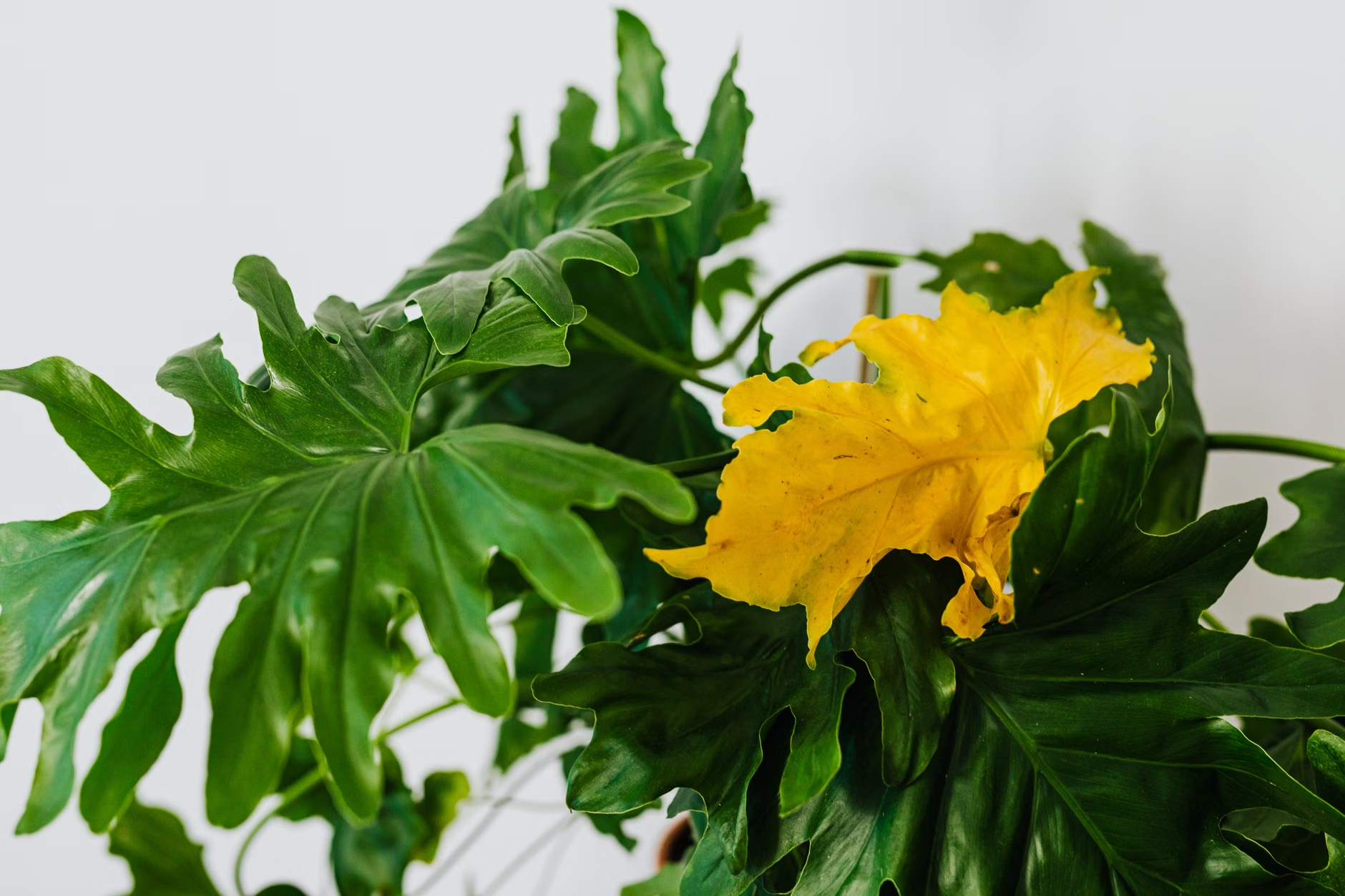
Some apartments simply have weak natural light. Maybe the only window faces north. Maybe a neighboring building blocks most of the day. Maybe winter light drops off enough that the same plant arrangement that worked in June starts stretching by January. University guidance makes the key point clear: light quality, intensity, and duration all matter, and plants decline when the location does not match the requirement. Symptoms of too little light include leggy growth, pale foliage, larger gaps between leaves, leaf drop, and poor flowering. Too much light can bleach or scorch leaves. (extension.umn.edu)
- Reduce the collection to the plants your light can actually support. If you have one truly bright window, reserve it for high-light plants first. (extension.umd.edu)
- Move medium-light plants into the transition zone near east windows or a few feet back from south or west glass, rather than pressing every pot onto the sill. (extension.umn.edu)
- Treat low-light plants as lower-light plants, not no-light plants. They still need a real window exposure or strong artificial light. (extension.umd.edu)
- Add a grow light only where it solves a specific problem. If the shelf is good but dim, supplemental light can work. If the entire wall is dead space, a bigger rack will not change that. UMD says to keep total light exposure under 16 hours a day. (extension.umd.edu)
- If a plant keeps stretching after a fair trial, rehome it and choose one that fits the room. Fighting the apartment is more work than choosing the right plant.
Common mistakes that waste light and space
- Treating every south window like full sun even when a balcony or overhang blocks part of the day. Window direction matters, but obstructions matter too. (extension.umn.edu)
- Packing plants shoulder to shoulder because the grouped look feels lush. If leaves overlap heavily, some plants are living in another plant’s shade, not in the window light.
- Watering the whole collection on one schedule. Low-light plants usually grow more slowly and use less water, so the darker side of the room often gets overwatered first. (extension.umn.edu)
- Pushing foliage against hot glass or leaving sensitive plants in drafty spots near windows and doors. Heat stress and cold drafts can both damage leaves. (hort.extension.wisc.edu)
- Moving a shade-loving plant straight into stronger south or west light. Minnesota recommends a gradual shift over one to two weeks because sudden exposure can scorch leaves. (extension.umn.edu)
- Ignoring dust. UMN notes that dusty leaves block light and reduce how efficiently the plant uses it. (extension.umn.edu)
- Buying a giant plant stand before mapping the room. Storage is not the same as usable light.
Pressure-test the setup before you buy more plants or furniture
- Watch the room at three times in one day, such as 9 a.m., noon, and 4 p.m. Mark where direct sun lands and where the room stays bright but indirect.
- Check each plant after two weeks for leaning stems, pale new growth, wider gaps between leaves, dropped older leaves, or a failure to bloom. These are classic low-light clues. (extension.umn.edu)
- Notice which pots dry fastest. Plants in stronger light or warmer windows often need water sooner, while lower-light plants tend to use less. (extension.umn.edu)
- If you need to move a plant into brighter south or west light, shift it gradually over one to two weeks instead of in one jump. (extension.umn.edu)
- If the room still feels confusing, use a light meter once before buying more plants. Missouri Botanical Garden notes that a light meter is the best way to measure light intensity at a window exposure. (missouribotanicalgarden.org)
Bottom line
The best apartment plant arrangement is usually less about adding more shelves and more about assigning each plant to the right light band. Start with the brightest window, reserve that space for the plants that truly need it, use medium-light plants as the middle layer, and let low-light plants occupy the weaker zones without overwatering them. If a room still falls short, add a targeted grow light instead of crowding the apartment with more furniture. A plant collection should make the room feel better, not smaller. (extension.umd.edu)
FAQ
How far from a window is too far for most apartment plants?
It depends on the exposure, but a useful rule is that spots more than about eight feet from most brighter windows often behave like low-light areas. Missouri Botanical Garden also notes that a plant at least two feet back from a south window may already be in indirect light rather than direct sun. (missouribotanicalgarden.org)
Should I rotate my plants so every side gets sun?
Occasional turning can help a plant grow more evenly, and Missouri Botanical Garden specifically recommends periodic turning for direct-light cacti and succulents with heavy growth. But rotation is not a substitute for enough light. If the plant is stretching or dropping leaves, the location is the bigger issue. (missouribotanicalgarden.org)
Can I keep all my plants on one large rack?
Only if the rack sits in a real light zone and the upper plants are not shading the lower ones. In practice, a large rack works best for medium- and low-light plants near an east window or a bright indirect window. High-light plants still need the brightest positions. (extension.umd.edu)
Do north-facing windows work for houseplants at all?
Yes. North windows are classic low-light locations and can suit plants such as ZZ plant, snake plant, cast-iron plant, and peace lily. They usually are not the best choice for cacti, succulents, or heavy bloomers that need stronger light. (extension.umd.edu)
When does a grow light make more sense than another shelf or stand?
A grow light makes more sense when the limit is sun, not storage. If you have a good shelf in a dim room, supplemental light can make that spot usable. UMD advises not to push total daily light beyond 16 hours, and OSU suggests roughly 16 watts per square foot for low-light plants and 25 watts per square foot for high-light plants as a starting point for small grow areas. (extension.umd.edu)
References
- University of Maryland Extension: Lighting for Indoor Plants – https://www.extension.umd.edu/resource/lighting-indoor-plants
- University of Minnesota Extension: Lighting for indoor plants and starting seeds – https://extension.umn.edu/planting-and-growing-guides/lighting-indoor-plants
- Missouri Botanical Garden FAQ: How much light do indoor plants need? – https://www.missouribotanicalgarden.org/gardens-gardening/your-garden/help-for-the-home-gardener/advice-tips-resources/gardening-help-faqs/question/1557/how-much-light-do-indoor-plants-need
- Wisconsin Horticulture: Houseplant Care – https://hort.extension.wisc.edu/articles/houseplant-care/
- University of Minnesota Extension: Spring houseplant care – https://extension.umn.edu/houseplants/spring-houseplant-care
- Oklahoma State University Extension: LED Grow Lights for Plant Production – https://extension.okstate.edu/fact-sheets/led-grow-lights-for-plant-production
- Missouri Botanical Garden factsheet: Indoor Plants or Houseplants – https://www.missouribotanicalgarden.org/Portals/0/Gardening/Gardening%20Help/Factsheets/Indoor%20Plants21.pdf