The Apartment Jungle Mistake: Why More Plants Won’t Fix a Bad Setup
Buying “one more plant” is tempting—but in an apartment, a shaky setup (light, drainage, airflow, pests, and routine) will fail faster the more plants you add. Here’s how to diagnose what’s actually wrong and build a low
- Resumo
- The “More Plants” Trap: When Collection Replaces a System
- The 5 Setup Fundamentals Your “Apartment Jungle” Can’t Ignore
- The Apartment Setup Audit
- Designing an “Apartment Jungle” That Scales
- Minimum Equipment That Helps
- The Secret Myth! “Plants Are Air Fixers ‘n Things”
- Common Apartment Jungle Errors
- How to Add Plants, Without Your System Breaking
- Quick Checklist: A “Good Setup” in One Page
- Perguntas Frequentes
TL;DR
More plants = same issues with too little light, slow-drying soil, inconsistent watering frequency, lack of airflow, and pests spreading faster. Fix your setup first (light map + drainage + routine), and your “apartment jungle” becomes easier—not harder—to manage. Use symptoms to troubleshoot (yellow leaves, droop, attraction to gnat parties, crispy edges) instead of guessing—with your watering cans, too. Aim for a home humidity range that’s neither too humid nor too dry, then create tiny “microclimates” for humidity-loving plants. Plants are for your mood and the aesthetic of your room—not for improving your air—that’s up to ventilation and filtration!
The “More Plants” Trap: When Collection Replaces a System
The familiar apartment-jungle storyline: you buy a couple of easy plants, they’re doing fine for a while, your confidence skyrockets, you add more, and — suddenly everything’s struggling! Leaves are yellowing, stems stretch, fungus gnats show up, you’re either watering all the time or not at all.
The dirty little secret is that plant problems often aren’t plant problems at all. They’re setup problems. And a subpar setup doesn’t average out when you add plants, it compounds. The same low light and a slow-drying pot that was barely “okay” for a pair of plants becomes a full-time job (and a pest nursery) with twenty!!
Why Apartments Make This Harder (and Why It’s Still Fixable)
Apartments tend to come with some built-in challenges: windows that don’t admit much light, buildings that shade each other, HVAC that dries out air in wintertime, fewer “buffer zones” like a bright sunroom or sheltered porch. You can absolutely grow a robust indoor garden in an apartment—but the winning strategy is going to be repeatability, not variety. Repeatability is whether you can answer these questions quickly for any plant that you own: how much light does it actually get here, how fast does this pot dry, what’s my pest prevention plan? If you can’t answer those, then you are essentially adding new unknowns with new plants.
The 5 Setup Fundamentals Your “Apartment Jungle” Can’t Ignore
1) Light: Your #1 Limiting Factor (and the Most Misjudged)
Low light doesn’t just slow growth, it changes how watering works and makes root rot more likely because the plant isn’t using its water up as quickly. Lots of the “easy” houseplants tolerate lower light, but “tolerate” is not the same thing as “thrive.”
- Extension guides from universities talking about “indoor light” tend to use something called foot-candles (or lux) to describe different levels of light—very low intensities, not that much of that light, won’t sustain life in the long term.
- Stretched, leaning growth + small new leaves = not enough light (not just “needs fertilizer”).
- Soil stays wet for too long = often a light problem as much as a “watering problem.”
- “Bright indirect light” = actually just “bright to you” (your eyes are calibrated to such a huge range of contrasts, plants are not).
2) Drainage + Potting Mix: The Root Zone Is Where Most “Mysteries” Live
OOPS, MY POT DOESN’T DRAIN WELL: You can be a “careful” waterer, and your pot still doesn’t drain well (oxymoron?)! Most apartment plant failures are due to oxygen-starved roots in consistently wet media. Extension resources continue to flag overwatering and poor drainage as the two most common causes of plant decline—and to stress that root rot causes sudden wilting regardless of soil wetness.
- Use a pot with a drainage hole for almost every houseplant (cachepots are okay providing there’s a nursery pot sitting in one and you can dump the excess water).
- Make sure water can exit fast: run the water into the pot. Did it take seconds or minutes to start draining? Notify your planthrio—you have a problem.
- Match your mix to your lifestyle. If you tend to overwater, use a chunkier, faster-draining mix. If you tend to underwater, use a slightly more moisture retentive mix, but still airy.
- Dump all saucers/cachepots after watering so roots don’t sit in “wet feet”.
3) Watering: Stop Using a Calendar (Start Using Plant Signals)
Scheduling your plant waterings is maddeningly seductive. It gives you that feeling you’re in control, and who doesn’t want that? Trouble is, watering needs change constantly with season, temperature, humidity, and light conditions indoors. Multiple guides from extension departments say to check moistness rather than watering at regular intervals.
- If you’re often unsure: lift the pot. Weight is a surprisingly good indicator once you learn “just watered” vs “ready to water.”
- Water thoroughly (until it drains) vs giving small sips—then let the plant use that water before watering again (species-dependent).
- Droop isn’t always “thirst.” Overwatered plants can droop too because plant tissues in the roots can’t move water.
4) Humidity + Airflow: Don’t Chase the Tropics (and Don’t Invite Mold)
Yes, many common houseplants are tropical and certainly would prefer more humidity than a heated winter apartment achieves. But the trick isn’t to turn your whole home into a greenhouse. High indoor humidity can lead to condensation and mold problems, and various government guidance recommends keeping indoor relative humidity below about 60% (often aiming closer to 30-50% where feasible).
- The most popular “humidity hacks” are often oversold, as the extension guidance acknowledges that pebble trays can increase humidity right around a plant, other extension guidance points out that in a normal room, the moisture disperses, and the overall impact on room humidity can be minimal.
- If your air is very dry, a small humidifier near a cluster of plants is often more effective than misting.
- Microclimates: Put plants next to each other; use a bathroom that has a window, or use a small humidifier in one corner rather than the whole apartment.
- Keep leaves off cold glass and away from the heat of HVAC blasts; these temps swings can cause leaves to drop and cause stress in general.
- Airflow is a big issue: “crowded leaves that never dry” are more likely to tolerate leaf spots & pest pressure (spider & webbing included)!
Pest Management: More Plants = Faster Spread
A common ‘apartment jungle’ mistake is not the number of plants, but lack of quarantine and scouting before they join the collection. Many common houseplant pests (mealybugs, scale, spider mites) like to move into a home when plants are stressed (not enough light, wrong watering etc)
- University extension IPM (Integrated Pest Management) resources that emphasize good overall plant care, monitoring and inspection, and isolating new plants for a bit until they can join the rest of the plants. Apply these:
- Quarantine every new plant for 2–3 weeks (another room is best).
- Inspect once a week; check undersides of leaves, nodes, soil surface, & both sides of the rim of the pot.
- Most infestations can be controlled; it’s only after weeks of ignoring them that they become “impossible.”
- To minimize fungus gnats, change some of their ecology: more drying of the top layer of soil or other controls as applicable (follow directions on the label).
The Apartment Setup Audit (Do It WITH Your Plants)
When you learn about houseplants in public, be aware that learning from your plants means their time, and in turn, your time too, must be spent well. And sometimes, there’s nothing worse feeling than losing plants while not knowing firsthand why it’s happening. Are they sick? Are you overdoing it and they just refuse to participate? Much like setting up a car, there are three pieces in this plant-starting puzzle: you, the plants, and their home. Use the table below to help your research.
| Symptom | Most common setup cause(s) | Fastest “check” | First fix to try |
|---|---|---|---|
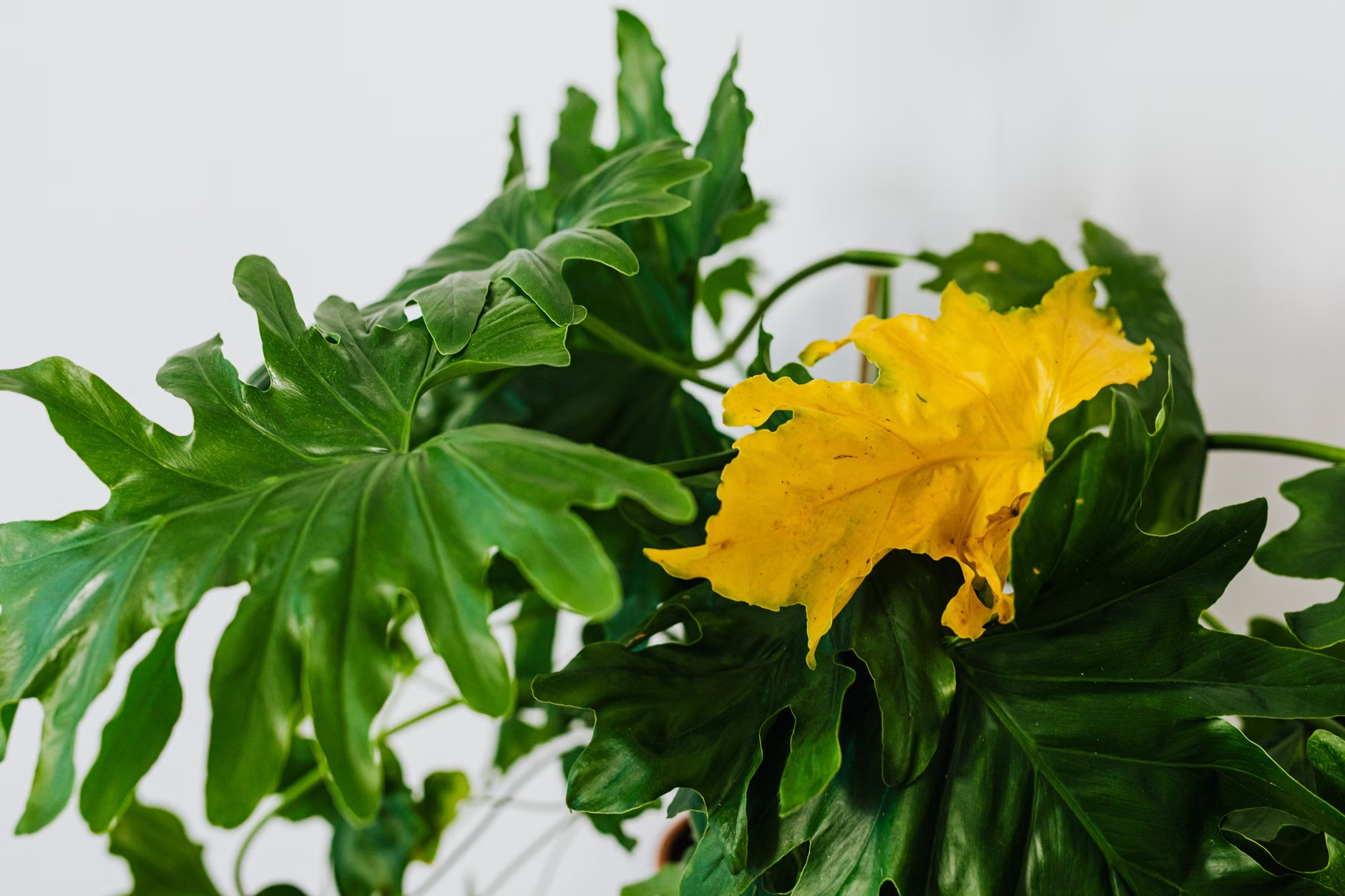
| Yellow leaves + wet soil + droop | Overwatering, poor drainage, low light (slow water use) | Smell soil; check if pot drains fast; lift pot weight | Improve drainage/mix, increase light, adjust watering trigger |
| Leggy/stretching growth | Not enough light | Measure light where leaves are | Move closer to window or add a grow light |
| Crispy edges / browning tips | Underwatering, salt buildup, very dry air, inconsistent watering | Check soil moisture depth; note HVAC vents nearby | Water more consistently; flush occasionally; adjust placement |
| Tiny flies around pots (fungus gnats) | Constantly wet soil surface; organic-rich wet media | Look for larvae in top soil; sticky traps confirm adults | Let surface dry more; improve airflow; targeted larvicide per label |
| Sticky residue (honeydew) on leaves or nearby surfaces | Sap-feeding insects (aphids, scale, mealybugs) | Inspect leaf joints and stems closely | Isolate plant; wipe/spot-treat; repeat weekly until clear |
| Sudden leaf drop after moving | Temperature swing, drafts, light change, watering mismatch | Check proximity to door/window drafts or vents | Stabilize location; water by soil moisture; allow recovery time |
(One Thing to Do Before Buying Another Plant)
- Map your light: pick 4–6 plant “parking spots” you can genuinely commit to. Measure light levels at leaf height from each spot across a day’s worth of tracking.
- Designate plants to zones: if a plant needs higher light, place it in your brightest zone. Stop forcing your lowest-light corner to try and support light-hungry species.
- Standardize your containers: if possible, use nursery pots with drainage inside a cachepot (that you can water thoroughly and dump the excess).
- Standardize your mix strategy: choose 1–2 go-to mixes for plants (e.g. an airy mix for aroids; a gritty mix for succulents) so you aren’t trying to manage ten different dry-down speeds.
- Identify one day a week as your “scout day” when you’ll check every plant for pests, and check for moisture. Water only those that meet your trigger.
- Identify one place for pest quarantine you can isolate and check easily, whether a shelf, or cart in your home.
Designing an “Apartment Jungle” That Scales
If you want lots of plants without raising chaos, design for consistency. We’re not going for perfect—we’re going for reducing the number of unique situations you have to remember.
- Group by care needs, not by “vibe.” Plants that need the same light + watering should live together so we aren’t mixing ‘suckers and ferns on the same shelf!
- Use vertical space wisely: if you’re stacking plants on shelves make sure they’re not cutting into window access; add a grow light on each shelf level if necessary.
- Keep “mess management” built-in: saucers that actually fit, a watering tray, and a dedicated towel for drying the overflow once you’ve watered will ensure it’s less likely to get accidentally overwatered, and that plants won’t get “skipped”.
- You’ll forget to water! Pick forgiving plants for your lowest-light, most unwieldy bit of macrame.
Minimum Equipment That Helps (Not Just Pretty to Look At)
| Tool | Why it matters | What to Look For |
|---|---|---|
| Light meter (or app) | You won’t guess; you’ll stop setting up chronic low-light setups. | Measured at leaf height. Get readings at different times! |
| Hygrometer | Stops you from over-humidifying your plants and helps you track down that crispy-tip culprit. | Simple digital monitor. Check a few different rooms/spots. |
| Yellow sticky traps | Can help you keep tabs on those flying pests, like fungus gnats. | Place near surface of soil. Swap out when covered. |
| Dedicated quarantine of newly-potted spots (could be a new table) | Stops your one new plant from infecting your whole collection. | Super easy to wipe down, and not on a shelf for spying plants to escape from. |
| Grow light (this is optional but a megahelp) | Opens up the possibilities for houseplants in apartments. | Plugging into your lighting, stable mount, timer, etc., but also make sure the coverage suits shelf size! |
The Secret Myth! “Plants Are Air Fixers ‘n Things”
Plants are truly useful indoors: they can make you feel better, or at least softer space, and they’ll start making you pay attention to your environment! But if your mission statement is, “I’ll add more plants to improve my air quality,” well, that’s usually a setup mistake too. NASA did some research in the late ’80s that showed a handful of different plants could reduce certain pollutants in sealed test chambers, but further analysis in conditions more like a typical building concluded that potted plants, by themselves, do not meaningfully improve indoor air quality at typical room air exchange rates.
If you are targeting your indoor air quality, public health organizations and regulatory agencies stress source control, ventilation, and filtration (like HEPA-capable portable air cleaners). Not plants.
Common Apartment Jungle Errors (That You Should Not Make the Loop Over)
- Buying for looks, not light (and compensating with watering or fertilizing).
- Using pots that do not have good drainage, because they go with the decor.
- Mixing opposite needs on one shelf of plant (succulents and calatheas and other disgraced natural orders).
- Mist as a primary strategy, not as a vent if you needed it!
- Put it in the corner, because “looks it healthy,” even at questionable position.
- Jumping symptoms (w/o confirming cause) w/all sorts of random products. (esp. on pests).
- Add plants to a corner – that’s functionally dark – then claim “low light.”
If You Want to Keep Expanding: Here’s How to Add Plants, Without Your System Breaking:
- Add in batches of 1-3, not 10 at once. New plants change “how often you water” and “the risk for pests”.
- Only buy plants that fit an existing zone (light + watering style). If you need a brand new care routine, that’s a “special project,” not a collection plant.
- Duplicate success before you chase novelty: if a pothos thrives in your low-medium light zone, another pothos is lower risk than a fussy species with different needs.
- Level up one variable at a time: add a grow light first, then add plants—don’t do both simultaneously or you won’t know what worked.
Quick Checklist: A “Good Setup” in One Page
- I know my brightest and dimmest plant spots (measured, not guessed).
- Most plants are in pots with drainage, and I can empty excess water easily.
- I water based on soil moisture + pot weight, not the calendar.
- I have a weekly scouting habit for pests (and a quarantine spot).
- My humidity plan is monitored and doesn’t create condensation / mold risk.
- I can explain why each plant is placed where it is (light + temperature + convenience).
FAQ
Q: How many plants is “too many” for an apartment?
There’s no universal number. “Too many” is when you can’t water based on actual need, can’t inspect for pests weekly, or you’re forced to place plants in unsuitable light just to make them fit. A better rule: only expand when your current plants have stabilized for 6–8 weeks.
Q: How can I quickly solve my dying plant corner?
Increase good light (move plants closer to window or add a grow light) and improve drainage of potted media (plants should be in pots with holes and an airy mix). Those two changes solve the cycle of slowness, wetness, and bugs often.
Q: Are pebble trays or misting effective ways to raise humidity?
They can raise humidity locally or briefly, but in the average open room, the effect dissipates. If humidity is seriously the limiting factor and not other things, small humidifiers placed near grouped plants are simply more effective than misting.
Q: Why do I see fungus gnats every winter?
Often in winter, plants are using water more slowly (it is not as bright, and cooler), and so soil stays wet longer (like in a nursery). Fungus gnats breed in moist potting media that stays consistently moist. Letting the surface dry more between waterings will help. Use IPM (IPM tools like sticky traps and properly labelled treatments) to break the cycle.
Q: Do you repot everything when you bring plants home?
Not necessarily. You will cause some stress for the plants. It is safer to use the quarantine + inspection first, then repot if it is in not so good media for your own watering style, if the drainage is poor, if the plant is truly rootbound, or if you suspect pests/pathogens in the media.
Q: Do more plants mean better indoor air?
Plants are great for wellbeing, but research shows potted plants alone do not meaningfully improve air quality in normal room conditions. For air quality, focus on source control, ventilation, and filtration strategies suggested by recognized public health and environmental agencies.