TL;DR
- Keep the setup to one controlled zone: one surface, two to three plants, one tray, and a simple watering routine.
- Buy for light first. University of Maryland Extension says light is probably the most essential factor for healthy indoor plant growth and recommends choosing plants that match the light your home actually gets. (extension.umd.edu)
- Use drainage holes and a saucer or tray. Pots without drainage, and plants left sitting in water, are common causes of root rot and mess. (extension.umn.edu)
- If the corner is too dark, add one LED grow light before buying more plants. UMD recommends capping total light at no more than 16 hours a day, and DOE notes LEDs use at least 75% less energy than incandescent lighting. (extension.umd.edu)
- Treat the first month as a test. If the setup spreads, drips, or needs constant rescue, shrink it before you upgrade it.
If you want to create busyness in a small apartment, the quickest way to do so would be to put plants on every available flat surface. Just create some sort of a vibe, and it will work. On the other hand, a successful plant corner focuses all greenery into one or two concentrated zones, matches each plant’s requirements with the existing light source in your home, encloses and protects both floors and furniture from damage from watering, and remains simple enough that it doesn’t become a weekly chore to maintain.
Light is the first constraint, not pot style or plant rarity. University of Maryland Extension explicitly notes that light is probably the most essential factor in healthy indoor plant growth and that plants should be selected according to the light available in the home. (extension.umd.edu)
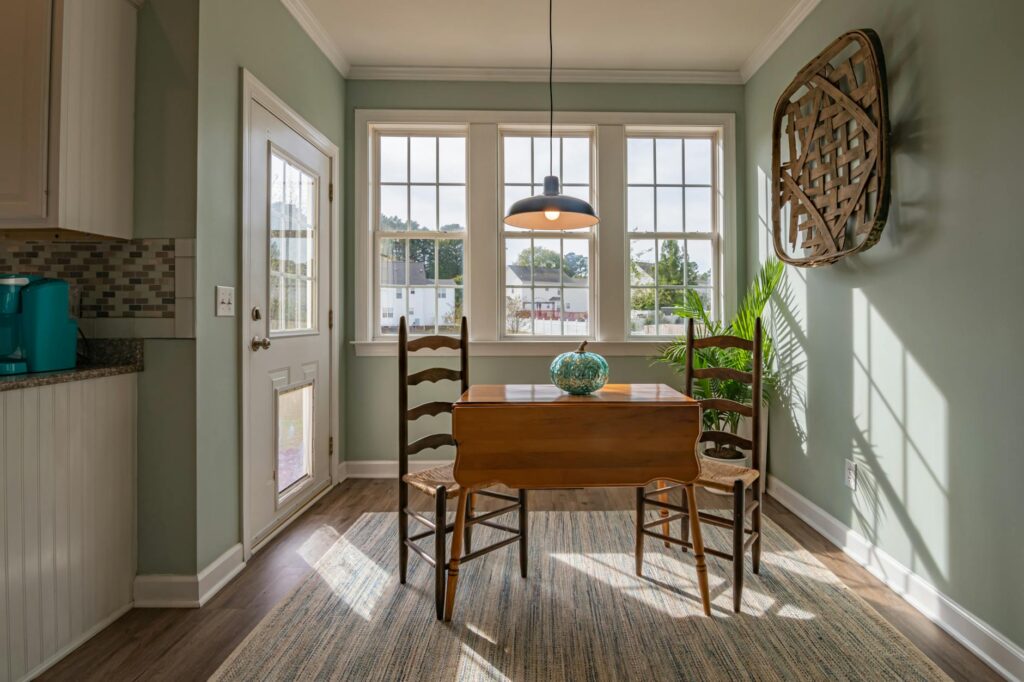
Use the Corner Clarity Score before you buy anything.
To avoid accumulations of items in your home, try not to shop unless the corner is able to pass the Corner Clarity Score. To score, check the set-up; if it rates 0-2 in all six categories then there should be about 8 in total, indicating an acceptable location for shopping, 6-7, there are issues that need to be addressed prior to shopping there and, 5 or less indicates that the shopping cart will move through the corner more quickly than the room will process it.
- Light fit: 0 if you have no usable light plan, 1 if the window works but you have not matched plant type yet, 2 if you know the exposure and the plants fit it. UMD separates indoor light into low, medium-bright, high, and direct indoor sun categories. (extension.umd.edu)
- Footprint: 0 if the plants will spill onto several surfaces, 1 if they use two spots, 2 if everything fits on one surface no bigger than roughly 2 feet by 2 feet.
- Drainage control: 0 if the pot has no hole, 1 if it drains but you have no tray or runoff plan, 2 if the plant drains into a saucer or waterproof tray you can empty easily. Good drainage matters, and plants left in water are much more likely to rot. (extension.umn.edu)
- Reach and routine: 0 if watering will require moving furniture, 1 if it is awkward but possible, 2 if you can carry the plant to the sink or water without dripping through the apartment. UMN advises that double-potted plants should be removed from the decorative pot, watered, drained fully, and then returned. (extension.umn.edu)
- Visual limitation: If you intended to add baskets, books, candles, and hand tools all in one place, then you would have a 0; if the zone was only somewhat organized and contained too many items, you would have a 1; and if the zone contained only plants, pots, and a single useful item, then the visual limitations would be 2.
- Safety: 0 if the corner sits next to a heat register, A/C blast, or an obvious pet-chewing zone, 1 if one risk remains, 2 if it is away from drafts and you have checked species safety where needed. UMD warns that many indoor plants are sensitive to drafts and heat from registers, and ASPCA lists some common houseplants as toxic while others are non-toxic. (extension.umd.edu)
Pick the spot like a renter, not a collector.
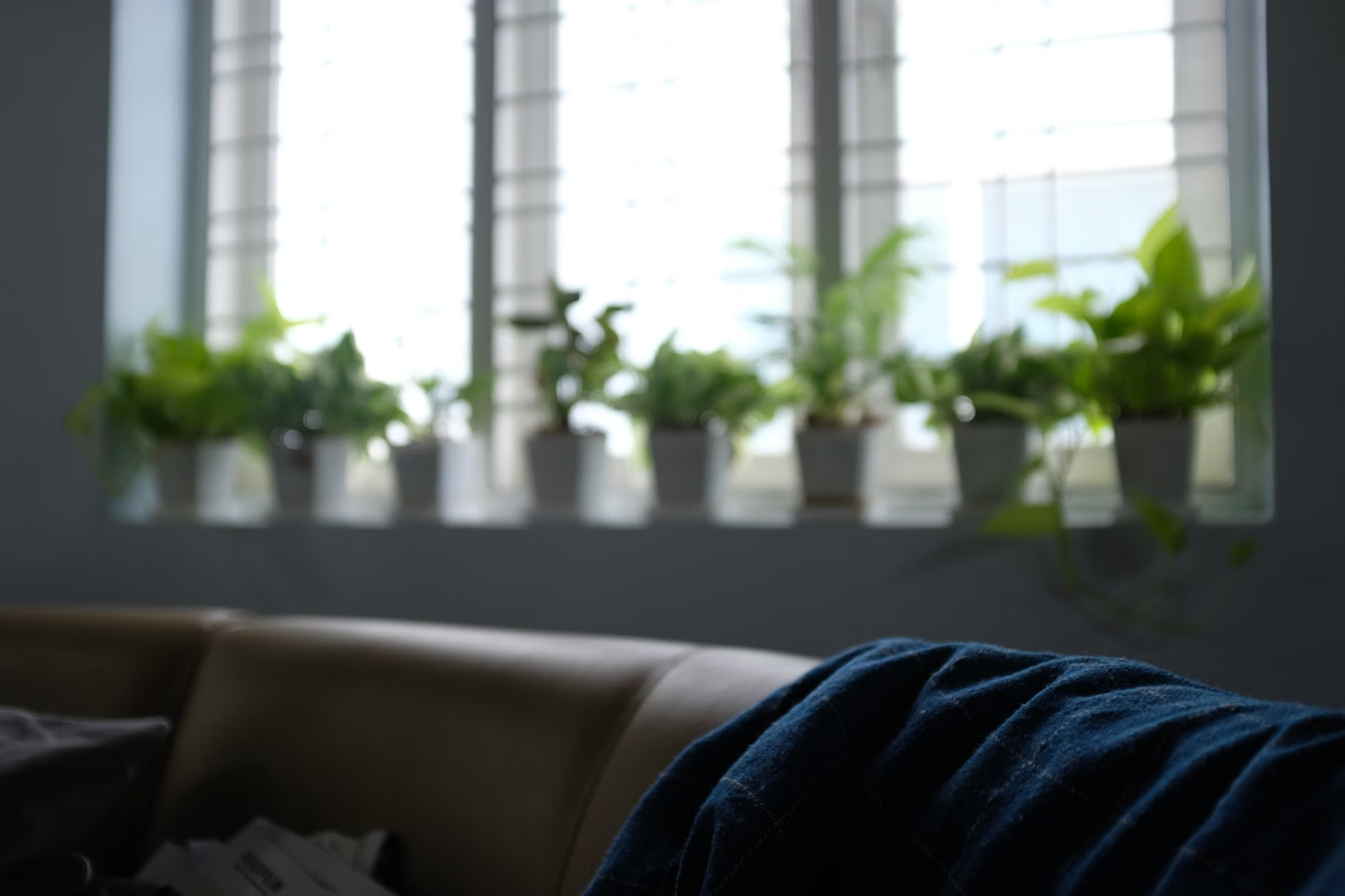
A small apartment plant corner should earn its square footage. The best locations are usually a windowsill, a narrow side table, a low-profile stool, or one shelf near a window you already use. For low light, UMD points to north-facing windows or rooms lit mainly by artificial light, where plants like ZZ plant or snake plant tend to tolerate conditions better. East- or west-facing windows suit medium-bright options such as Chinese evergreen, dracaena, or African violets. South-facing windows are better for cacti and succulents that want stronger light. (extension.umd.edu)
The location also needs to work with the apartment, not just the plants. Keep the corner out of the main walking path, away from HVAC vents, and far enough from furniture edges that a little runoff will not become a stain. If dry air is part of the problem, UMD notes that grouping plants or using a pebble tray can raise humidity around them, but EPA advises keeping indoor humidity between 30% and 50% because higher humidity increases the likelihood of mold. (extension.umd.edu)
| Apartment condition | Best setup | Good starter plants | Skip this | Illustrative budget |
|---|---|---|---|---|
| North-facing window or bright room with no direct sun | One sill or one small stool with a waterproof tray | ZZ plant plus spider plant, or snake plant only if pets do not chew leaves | A multi-succulent arrangement that wants stronger sun | $35-$70 |
| East- or west-facing window | Narrow side table or one shelf with two matching pots | Chinese evergreen plus pothos or philodendron; if pets chew, swap pothos for spider plant | Buying four different plants just because the light is decent | $45-$90 |
| South-facing window with several hours of bright light | Single sunny sill or compact stand | Cactus, jade, or another succulent in a drainage pot | Moisture-loving plants you cannot monitor closely | $30-$80 |
| No useful natural light where you want the corner | One shelf plus one LED grow light on a timer | Low- to medium-light plant only after the light is installed | Assuming a dark corner will somehow keep high-light plants alive | $55-$120 |
Build the setup in this order so you do not pay twice.
- Start by measuring the footprint of your planned space. You will want to pick either top or bottom and set your width for that surface at about 18-24 inches. If you find that you must put a second shelf on day one then your design is already too big to be a basic corner.
- Watch the light for three days. Note where sunlight lands in the morning, midday, and late afternoon. UMD’s general rule is that north-facing areas are low light, east and west are medium-bright, and south-facing windows can reach high or direct indoor sun. (extension.umd.edu)
- Use a surface you already own if possible. A side table, bench end, or windowsill is usually cheaper and visually quieter than adding a separate plant stand right away.
- Buy two plants, not six. One upright plant and one trailing or arching plant is usually enough to make a corner feel finished. If pets are part of the household, verify the species before checkout. ASPCA lists spider plant as non-toxic, while pothos and snake plant are listed as toxic to cats and dogs. (aspca.org)
- Keep plants in nursery pots inside simple cachepots, or place them on saucers. Water in the sink when practical, let them drain, then return them to the corner. UMN recommends fully draining double-potted plants before putting them back in the decorative pot. (extension.umn.edu)
- Skip the gravel trick. UMD says adding rocks, gravel, or shards to the bottom of a container does not improve drainage and can raise the water table in the pot. (extension.umd.edu)
- Use a recurring reminder to check soil, not an automatic reminder to water. UMN and UMD both warn that overwatering is a common houseplant problem, and UMD specifically says container plants should not be watered on a fixed schedule without first checking moisture. (extension.umn.edu)
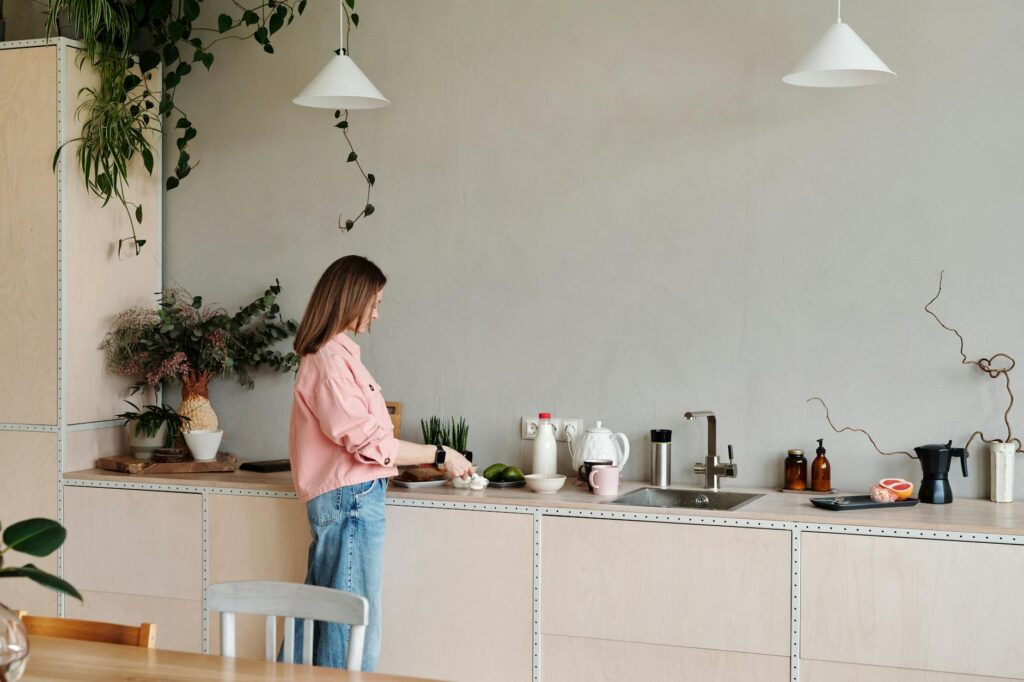
A realistic starter corner on a modest budget.
Consider a renter in a 480-square-foot studio with one east-facing window and a total plant budget of $90. They already own a small side table. They spend $18 on a Chinese evergreen, $14 on a spider plant, $16 on two plain cachepots, $9 on a waterproof tray, $6 on saucers, $7 on potting mix, and $8 on small pruning scissors. Total initial outlay: $78. The remaining $12 stays unspent as a replacement buffer or winter-light fund.
That setup works because the spending follows the constraint. East-facing light generally supports medium-bright houseplants better than a tray of sun-hungry succulents, so the renter buys foliage plants that fit the window instead of forcing the corner into a higher-maintenance look. They also skip the large stand, the humidifier, decorative moss, and extra plant tools until the corner proves it can stay tidy for a month. That is the quiet personal-finance move here: buy the fix for the actual problem, not the accessory for the fantasy version of the hobby. (extension.umd.edu)
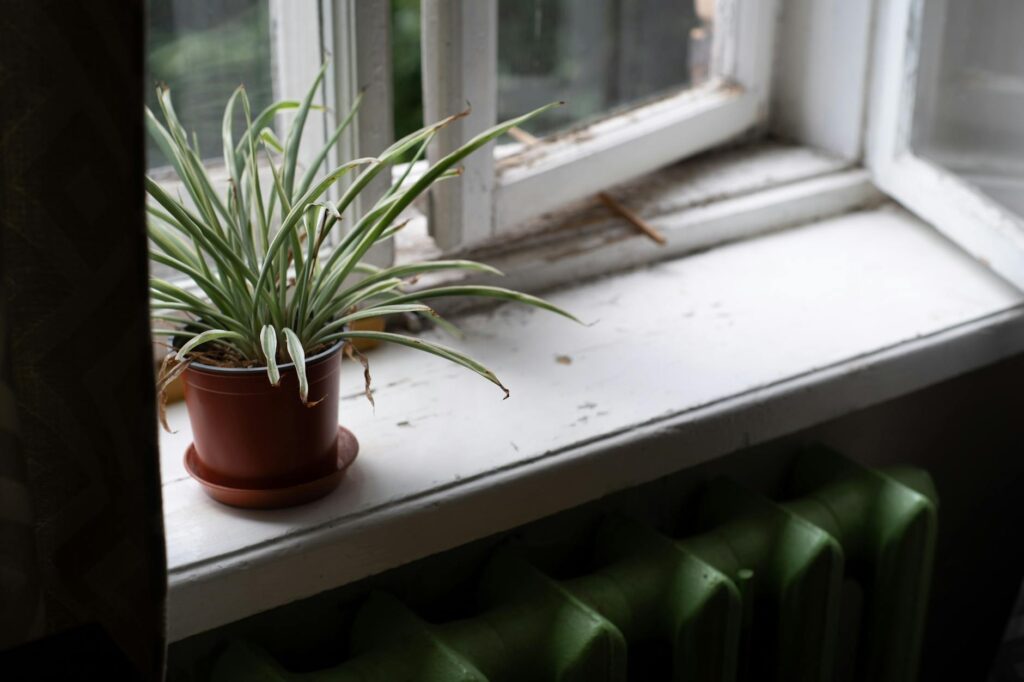
The mistakes that turn a plant corner into clutter.
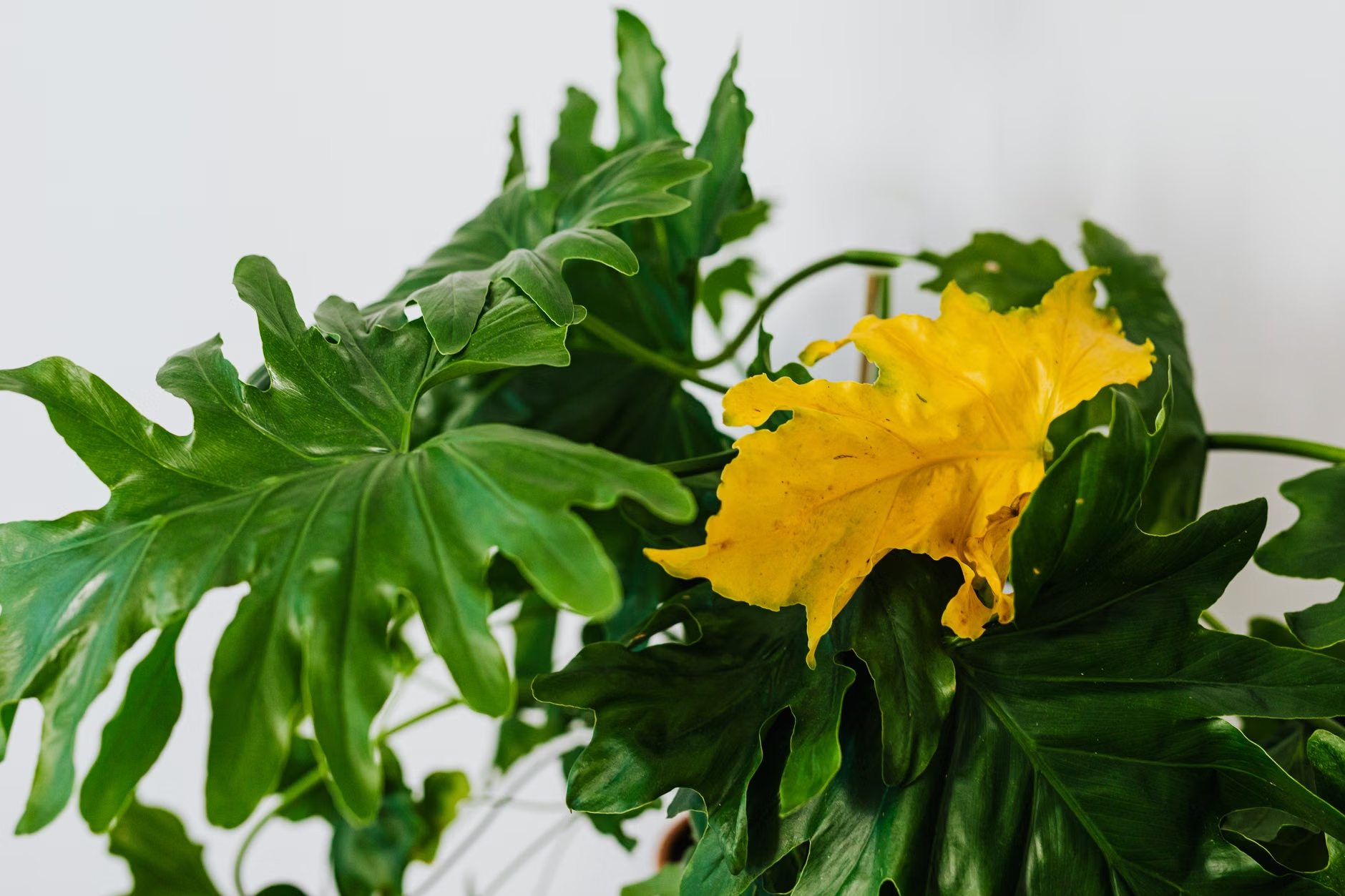
- Buying for leaf shape instead of light. UMD notes that too little light can cause leggy growth, faded leaf color, diminished flowering, and poor growth, while too much direct light can pale or brown leaves. (extension.umd.edu)
- Using pots without drainage or letting water sit in the outer pot. That is one of the fastest ways to get soggy soil, root rot, and fungus gnats. (extension.umn.edu)
- Adding rocks to the bottom of the pot because it feels neat. UMD says this does not improve drainage and can worsen waterlogging. (extension.umd.edu)
- Watering by calendar instead of by soil. UMD and UMN both recommend checking moisture first because wilt and yellowing can come from overwatering as well as underwatering. (extension.umn.edu)
- Putting the corner next to a radiator, heat register, or A/C vent. UMD warns that indoor plants, especially flowering varieties, are sensitive to drafts and heat from registers. (extension.umd.edu)
- Treating every common houseplant as pet-safe. ASPCA lists spider plant as non-toxic, while pothos and snake plant are listed as toxic to cats and dogs. (aspca.org)
- Using plants as an excuse to ignore actual air-quality problems. EPA recommends source control, ventilation, and filtration as the primary ways to improve indoor air quality. (epa.gov)
When the first plan is not enough.
If the corner looks good for a week and bad for a month, the setup is telling you what is wrong. Leaning stems, stretched growth, or a plant that never really perks up usually mean the light is weaker than the room seemed at first. In that case, move the corner closer to the window or add one LED grow light on a timer before you buy anything else. UMD notes that plants become leggy in too little light and recommends no more than 16 total hours of daily light; DOE notes that LEDs use at least 75% less energy than incandescent lighting. (extension.umd.edu)
If watering is the part that keeps failing, reduce complexity instead of increasing attention. A nursery pot inside a decorative pot is easier to carry to the sink, easier to drain, and cheaper to replace than planting directly into a heavy ceramic container. UMN specifically recommends removing double-potted plants from the decorative container, watering them, allowing them to drain completely, and then setting them back in place. (extension.umn.edu)
If dry air is the issue, try grouping plants or using a pebble tray before buying a humidifier. UMD says misting is questionable as a humidity strategy, while grouping plants can raise humidity in their area. If you do use a humidifier, EPA says to keep indoor humidity between 30% and 50% to reduce mold risk. If pet safety is the issue, switch species rather than gambling on behavior. And if runoff is staining surfaces, use a tray or saucer you can empty promptly. (extension.umd.edu)
How to verify that your corner is working.
- Take one doorway photo each week. If the corner is visually spreading beyond its original footprint, it is becoming storage instead of decor.
- Check growth direction. If stems are stretching or leaning, the plant likely needs more light. If leaves closest to strong sun are paling or browning, the corner may be too bright. (extension.umd.edu)
- Check soil before adding water. UMN notes that a wilted plant with moist soil can be suffering from root rot rather than thirst. (extension.umn.edu)
- Look under the pot and tray for standing water, mineral crust, or stains. Empty saucers regularly so moisture does not seep back into the pot or sit against furniture. (extension.umd.edu)
- Track maintenance time for 30 days. A simple corner should not feel like a side hobby. If it takes more than about 10 minutes a week, reduce plant count before adding tools.
- Track spending for 30 days. If the corner keeps triggering unplanned purchases, pause and ask whether the problem is really light, drainage, or just too many plants.
- If you are managing humidity actively, use a hygrometer and keep the room in EPA’s 30% to 50% range. (epa.gov)
Bottom line.
The cleanest plant corner in a small apartment is not the most elaborate one. It is the one that fits the light, contains the mess, and stays inside a single visual boundary. In practice, that usually means one surface, two to three plants, reliable drainage, and a clear reason for every object in the zone. Match the plants to the exposure first, use nursery pots, saucers, or trays to control runoff, and add supplemental light only if the corner proves too dim. That approach is cheaper than replacing stressed plants and much more likely to stay tidy. (extension.umd.edu)
Frequently Asked Questions
How many plants should a small apartment plant corner start with?
Starting out with two houseplants is a good idea for typical small apartments. If you are new to housing plants, then limit yourself to three total; once you’ve kept your corner organized for 30 days, add one more plant there. This isn’t necessarily a rule; however, it is common sense because as you add more and larger pots/saucers/water needs and visual impact they compete for your attention (not to mention take up valuable space).
Do I need a grow light if my apartment only has a north-facing window?
Maybe. UMD classifies north-facing windows and rooms lit mainly by artificial light as low-light conditions. Plants such as ZZ plant and snake plant tend to tolerate that better than cacti and succulents, but if you want medium- or high-light plants, supplemental light is usually a smarter fix than hoping the plant adapts. (extension.umd.edu)
Can I use a decorative pot without a drainage hole?
Yes, but use it as an outer cachepot rather than the planting container. UMN and UMD both stress the importance of drainage, and UMN specifically recommends removing double-potted plants to water and letting them drain fully before returning them to the decorative pot. (extension.umn.edu)
Which starter plants are safer if I have a cat or dog?
Always verify the exact species, but ASPCA lists spider plant as non-toxic to cats and dogs, while pothos and snake plant are listed as toxic. If a pet regularly chews leaves, the safer move is to choose non-toxic plants or keep the setup fully out of reach. (aspca.org)
Will a plant corner clean my apartment air enough to replace other air-quality steps?
No. EPA recommends source control, ventilation, and filtration as the main strategies for improving indoor air quality, and it advises keeping indoor humidity between 30% and 50% to reduce mold risk. A plant corner can make a room feel better, but it is not a substitute for fixing moisture problems or using proper filtration when needed. (epa.gov)
Is misting enough to solve dry indoor air for houseplants?
Usually not. UMD says it is questionable whether misting really increases humidity. Grouping plants, using a pebble tray, or carefully managing room humidity tends to be more practical, while EPA’s guidance is to keep indoor humidity in the 30% to 50% range. (extension.umd.edu)
References
- University of Maryland Extension – Lighting for Indoor Plants – https://extension.umd.edu/resource/lighting-indoor-plants
- University of Maryland Extension – Selecting Indoor Plants – https://extension.umd.edu/resource/selecting-indoor-plants
- University of Minnesota Extension – Watering houseplants – https://extension.umn.edu/yard-and-garden-news/watering-houseplants
- University of Maryland Extension – Temperature and Humidity for Indoor Plants – https://extension.umd.edu/resource/temperature-and-humidity-indoor-plants
- University of Maryland Extension – Growing Vegetables in Containers and Salad Tables – https://extension.umd.edu/resource/growing-vegetables-containers-and-salad-tables
- US EPA – Care for Your Air: A Guide to Indoor Air Quality – https://www.epa.gov/indoor-air-quality-iaq/care-your-air-guide-indoor-air-quality
- US EPA – Air Cleaners and Air Filters in the Home – https://www.epa.gov/indoor-air-quality-iaq/air-cleaners-and-air-filters-home
- US Department of Energy – LED Lighting – https://www.energy.gov/energysaver/led-lighting
- ASPCA – Spider Plant – https://www.aspca.org/pet-care/aspca-poison-control/toxic-and-non-toxic-plants/spider-plant
- ASPCA – Devils Ivy – https://www.aspca.org/pet-care/aspca-poison-control/toxic-and-non-toxic-plants/devils-ivy
- ASPCA – Snake Plant – https://www.aspca.org/pet-care/animal-poison-control/toxic-and-non-toxic-plants/snake-plant