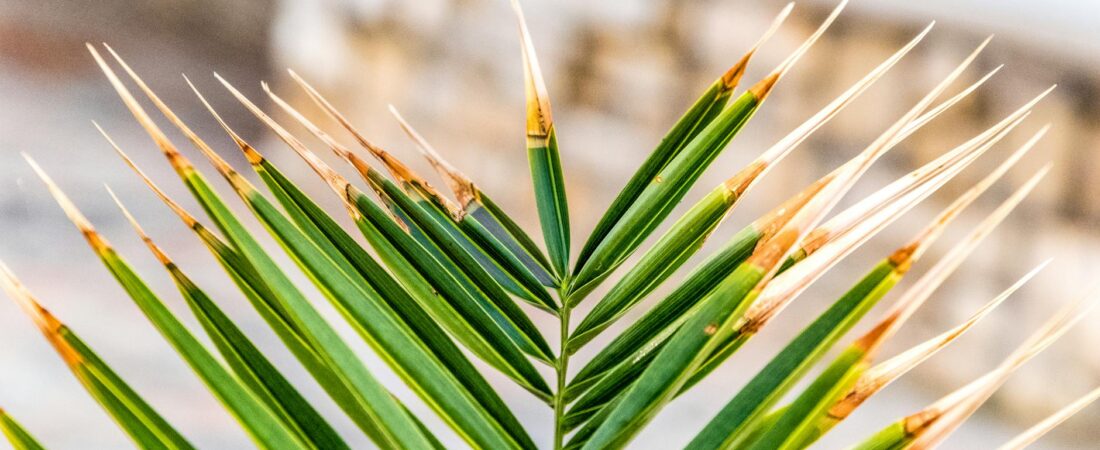
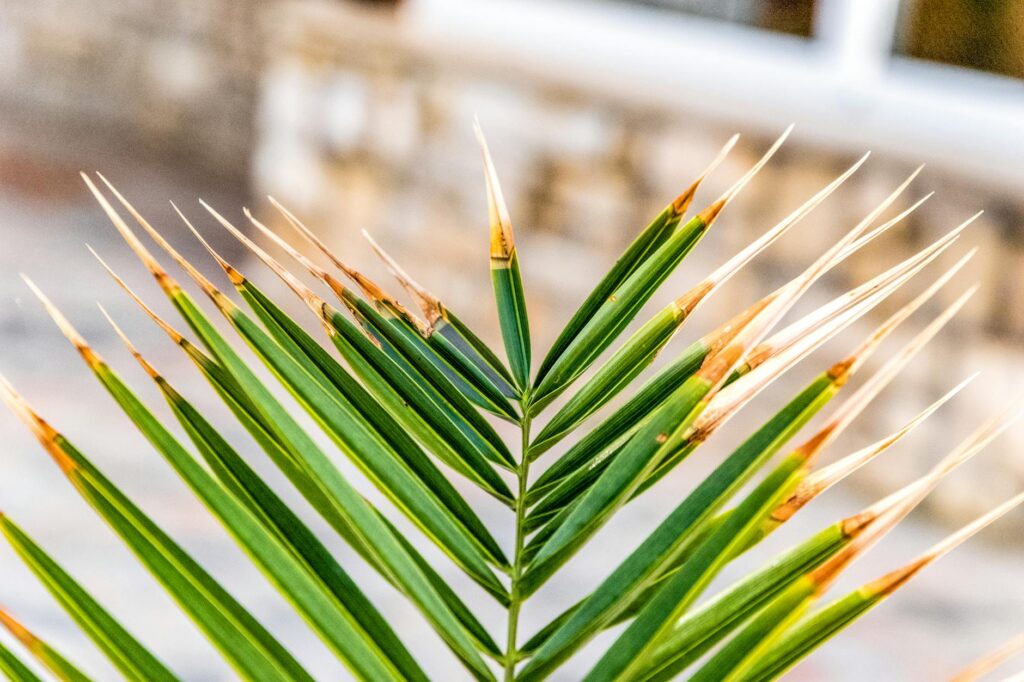
- If several unrelated houseplants start getting crispy brown tips at the same time, your apartment is often part of the problem, especially dry air, drafts, harsh window exposure, or mineral buildup from water and fertilizer. (extension.umd.edu)
- The cheapest useful purchase is usually data, not a gadget: a basic hygrometer can tell you whether your room is actually dry before you buy a humidifier. (homedepot.com)
- White crust on the soil or pot usually points to salts or minerals, not a mysterious disease. Hard water, softened water, and overfertilizing are common contributors. (extension.umd.edu)
- Weekly calendar watering is a common money-wasting habit. Both underwatering and overwatering can end with brown tips because damaged roots cannot move water well. (extension.umd.edu)
- Before you replace the plant, check five things in order: building air, residue, orientation, watering rhythm, and root crowding. That sequence solves more apartment plant problems than buying fertilizer or another decorative pot first. (extension.umd.edu)
Brown leaf tips are easy to misread. People assume they missed a watering or bought a “difficult” plant. In apartments, the plant is often reacting to the room as much as to the care routine. Dry winter air, a register blowing warm air across the leaves, direct sun from one window, or mineral-heavy water can all show up first at the tips and margins. When more than one plant starts doing it, the apartment becomes part of the diagnosis. (extension.umd.edu)
The upside is that brown tips are usually cheaper to troubleshoot than they look. You can often narrow down the cause before spending much money: start with humidity and drafts, then look for salt residue from tap water or fertilizer, then fix your watering rhythm, and only then think about repotting or replacing the plant. Overwatering stays on the list because root damage can create brown, dry-looking foliage even when the soil is wet. (extension.umd.edu)
Use the BROWN audit before you buy anything
Here is a simple apartment-specific framework: BROWN. It stands for Building air, Residue, Orientation, Water rhythm, and Need for more root room. Run all five checks once. If three of the five point to the same cause, that is your first fix. This keeps you from buying a humidifier when the real problem is salty soil, or repotting a plant that is just getting blasted by a heat vent. (extension.umd.edu)
| Check | What to look for | What it usually means | First move |
|---|---|---|---|
| B = Building air | Humidity stays around 25% to 30% in winter, and tips worsen when the heat is running. (extension.umn.edu) | Air that is acceptable for the apartment may still be too dry for many tropical houseplants. (extension.umn.edu) | Move the plant away from the register, group plants, and measure before buying a humidifier. (extension.umd.edu) |
| R = Residue | White crust on the soil, rim, or drainage area. (extension.umd.edu) | Mineral or fertilizer salt buildup, sometimes worsened by hard water, softened water, or overfeeding. (extension.umd.edu) | Flush the pot from the top, cut back fertilizer, and use lower-mineral water for sensitive plants. (extension.umd.edu) |
| O = Orientation | Only the window side or vent-facing side is browned. (extension.umn.edu) | Sun scorch, hot air, cold drafts, or abrupt temperature swings. (extension.umn.edu) | Move the plant 1 to 3 feet back or away from the draft and watch new growth. (extension.umd.edu) |
| W = Water rhythm | You water on a schedule, not by the soil; the mix is either bone dry or constantly wet. (extension.umd.edu) | Underwatering, overwatering, or root stress from an inconsistent routine. (extension.umd.edu) | Check the soil before watering and use pot weight as a second check. (extension.umd.edu) |
| N = Need for room | Roots circling, roots through drain holes, or soil drying unusually fast. (extension.umn.edu) | The plant may be root-bound and unable to hold moisture evenly. (extension.umn.edu) | Repot one size larger in fresh mix, not three sizes larger. (extension.umn.edu) |
What brown tips usually mean in an apartment
The most common apartment message is dry, moving air. University extension guidance notes that most indoor spaces lack enough humidity for healthy indoor plants in winter, and that houseplants are sensitive to heat from registers and air-conditioning sources. A useful renter insight is this: a room can be comfortable for people and still be stressful for plants. Minnesota Extension says roughly 25% relative humidity in winter can be healthy for the home, while Maryland Extension notes that many indoor plants benefit from added humidity. If your hygrometer is sitting in the high 20s, dry-air stress is a plausible first suspect. (extension.umd.edu)
The second common message is salts. Brown tips paired with a white crust on the pot or soil are often telling you that minerals or fertilizer salts are building up faster than the plant can handle. Maryland and Minnesota extension sources both note that hard water and excess fertilizer can leave mineral buildup and contribute to brown tips, while Maryland specifically warns that softened water contains more dissolved minerals and should be avoided for houseplants. (extension.umd.edu)
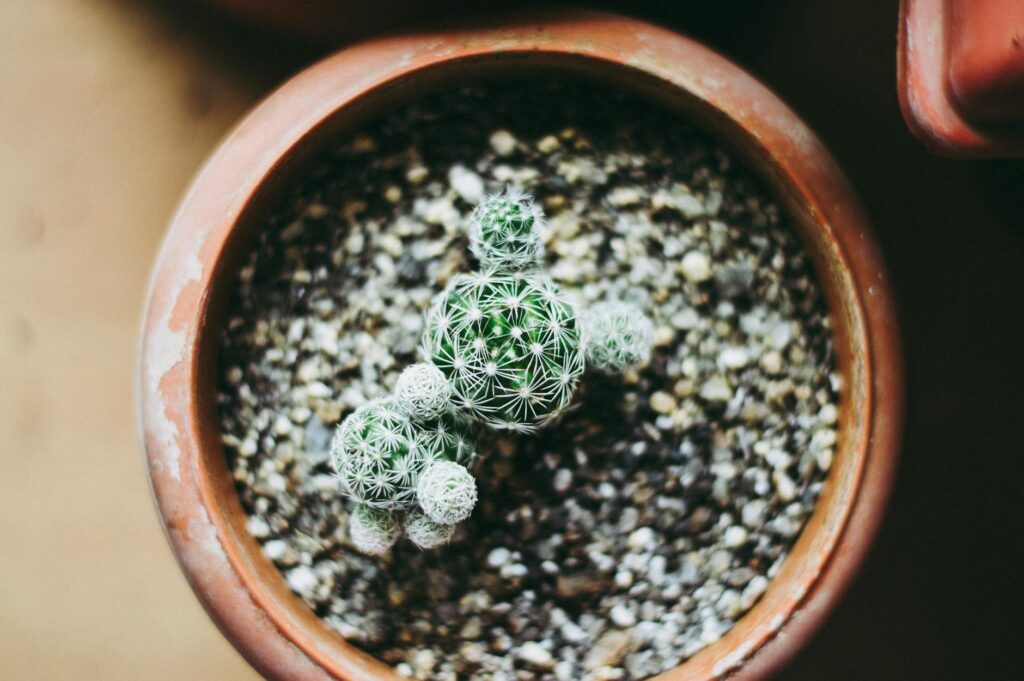
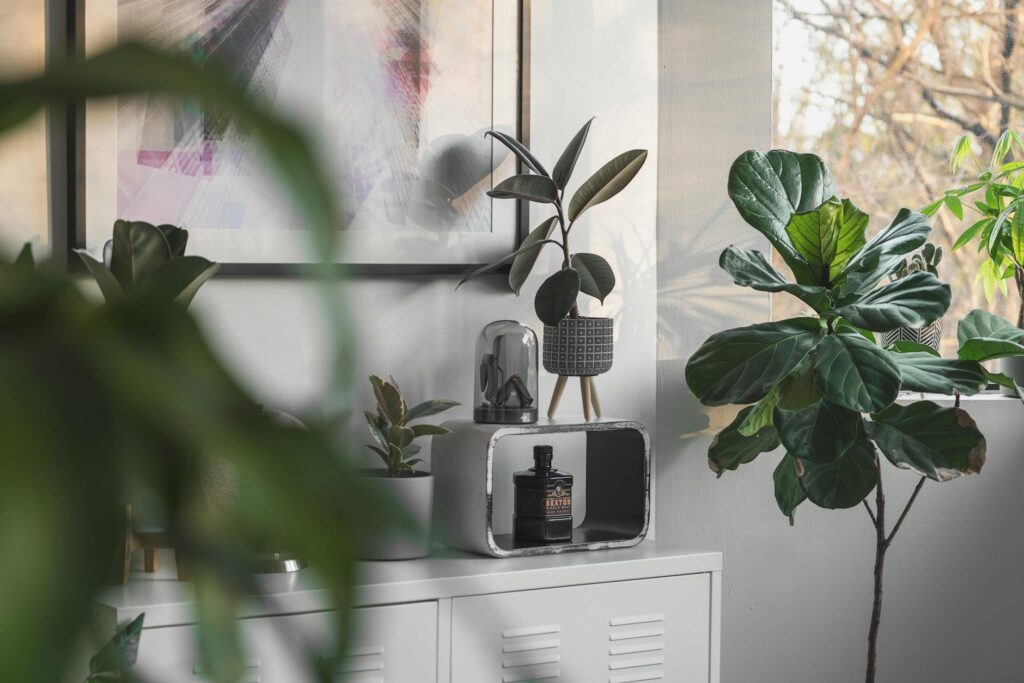
Placement matters more than many renters think. If the browning is stronger on one side, think about the apartment layout before you think about nutrient deficiency. A bright south- or west-facing window can scorch some plants, and a cold window in winter or a warm register nearby can create a stress pattern that looks like bad watering. Extension guidance is blunt on this point: do not place indoor plants near heat or air-conditioning sources, and watch for leaf scorch when moving plants closer to stronger light. (extension.umd.edu)
Watering still matters, but not in the simplistic “water more” way. Brown tips can come from drought stress, but they can also show up when overwatering damages roots. The University of Maryland says overwatering is the number one reason indoor plants die in winter and notes that rotted roots can leave a plant wilting even when the potting mix is wet. That is why a fixed Saturday watering schedule is a frequent problem in apartments with variable light, heat, and humidity. (extension.umd.edu)
Species sensitivity changes how clearly the apartment shows up. Spider plants are famous for tip burn from low humidity, dry soil, salt accumulation, and chemicals such as fluoride or chlorine in tap water. Some dracaenas are also notably sensitive to fluoride. So if only your spider plant and dracaena are crisping while your pothos looks fine, the apartment may still be the trigger, but the species is amplifying the signal. (hort.extension.wisc.edu)
A renter-friendly spending ladder
This is where the personal finance angle matters. Brown tips tempt people into buying solutions in the wrong order: fertilizer, decorative pots, a fancy humidifier, then replacement plants. A better rule is to buy the cheapest item that can confirm or rule out a cause. In practice, that usually means buying measurement first, using distilled water only for sensitive plants, and repotting only when the roots give you a reason. (homedepot.com)
| Problem you suspect | Cheapest useful move | Typical current cost | When spending more makes sense |
|---|---|---|---|
| Low humidity | Buy a basic hygrometer and move the plant off the vent before doing anything else. (homedepot.com) | About $12.60 for a simple indoor thermometer-hygrometer. (homedepot.com) | If readings stay low and several plants are affected, a small humidifier in the room can make sense. Small units were listed around $15.99 to $22.97. (walmart.com) |
| Salt or tap-water sensitivity | Flush the soil and try distilled water for the most sensitive plant first. (extension.umd.edu) | About $1.39 to $2.59 per gallon for distilled water. (target.com) | Spend more only if the whole collection is affected and your water source is the clear pattern. (extension.umd.edu) |
| Bad placement | Move the plant away from the window edge, cold draft, or heat source. (extension.umd.edu) | Usually $0. (extension.umd.edu) | A sheer curtain or new stand is a later purchase, not a first one. (extension.umn.edu) |
| Root crowding | Repot only if roots are circling or the mix dries out unusually fast. (extension.umn.edu) | About $6.97 for a small indoor potting mix bag, plus a slightly larger pot if needed. (homedepot.com) | Repotting is worth it when the plant outdrinks the pot every day or roots are pushing out of drain holes. (extension.umn.edu) |
A realistic apartment example with numbers
Say a renter has a spider plant and a dracaena on a shelf near a south-facing window and a baseboard heater. Both show brown tips by January. Instead of replacing two $18 plants, the renter spends $12.60 on a hygrometer, sees the room is sitting around 27% relative humidity, flushes both pots, and buys one gallon of distilled water for the spider plant at $1.39. If the room is still reading dry after a few days, a small humidifier around $15.99 is the next step. Total outlay: about $30, which is still cheaper than replacing the plants once, and much cheaper than guessing your way through fertilizer, stylish cachepots, and another “easy” plant that will run into the same apartment conditions. The key scorecard is cleaner new growth, not whether old damage disappears. (homedepot.com)
A 10-day brown-tip reset
- Take clear phone photos from the same angle and note where the plant sits relative to a window, radiator, AC source, or draft. Brown tips are often environmental, and placement patterns matter. (extension.umd.edu)
- Measure humidity morning and night for three days if you can. If readings are persistently low, move the plant away from the air stream before you buy anything else. (extension.umd.edu)
- Stop calendar watering. Check the soil first and use pot weight as a second signal; a dry pot is much lighter than one that still has enough moisture. (extension.umd.edu)
- Inspect the soil surface, saucer, and pot rim for white residue. If you see buildup, flush the pot from the top with plenty of clear water and let it drain completely. Maryland advises leaching houseplants every four to six months to reduce mineral buildup. (extension.umd.edu)
- If the plant is a spider plant, dracaena, or another tap-water-sensitive type, test distilled water on that plant first instead of changing water for every plant in the apartment. (hort.extension.wisc.edu)
- Repot only if roots are circling tightly, roots are coming out of drainage holes, or the pot dries out unusually fast. Choose only one size up. (extension.umn.edu)
- Trim badly damaged tissue for appearance if you want, but judge the reset by the next round of growth. Damaged leaves are often best removed once you have corrected the cause. (extension.umn.edu)
Common mistakes that waste money
- Watering every Saturday no matter what. Extension guidance repeatedly warns that fixed schedules are a common cause of both drought stress and root rot indoors. (extension.umd.edu)
- Treating every brown tip as a humidity emergency. Sometimes the real clue is white salt crust, a hot window, or a fluoride-sensitive plant. (extension.umd.edu)
- Misting instead of changing the room conditions. Maryland says it is questionable whether misting really increases humidity in a meaningful way. (extension.umd.edu)
- Adding more fertilizer because the plant looks stressed. Overfertilization can burn foliage and worsen soluble salt buildup. (hort.extension.wisc.edu)
- Buying another plant without matching the species to your actual apartment. Extension guidance is clear that you will do better choosing plants that suit your indoor conditions than trying to remake the apartment for a plant that hates it. (extension.umd.edu)
- Ignoring pests because the browning looks “dry.” Spider mites are more likely indoors when the air is drier, and webbing or stippling points away from a simple humidity problem. (hort.extension.wisc.edu)
When the easy fix is not enough
Sometimes brown tips are only the first symptom, not the whole problem. If the soil stays wet and roots are dark, soft, or mushy, you may be dealing with root rot rather than a dry-room issue. If you see stippling, webbing, sticky residue, or cottony clusters, you may have spider mites or mealybugs. And if your apartment is both dim and dry, the most cost-effective move may be plant selection, not environmental engineering. Wisconsin and Maryland sources both emphasize choosing tougher species for less-than-ideal indoor conditions. (extension.umd.edu)
- If roots are mushy and brown, stop treating the problem like dehydration. Root loss can make a wet plant look thirsty. (extension.umd.edu)
- If webbing or pale stippling appears, isolate the plant and check for spider mites. Dry indoor air often helps them become a problem. (hort.extension.wisc.edu)
- If your apartment stays dry and the light is mediocre, tougher plants like snake plant, pothos, cast iron plant, or Chinese evergreen may be a better long-term fit than humidity-hungry species. (hort.extension.wisc.edu)
- If multiple plants decline after a move and you suspect building water treatment or severe HVAC dryness, document dates, photos, and readings before you contact management. Softened water and problematic airflow are real possibilities. (extension.umd.edu)
How to verify that you fixed the right problem
- Use the same photo angle every few days. Cleaner new growth matters more than the old damaged tissue. (extension.umn.edu)
- Track humidity and watering in one note on your phone. If the room is still very dry and the plant is still near a register, your first fix was incomplete. (extension.umd.edu)
- Lift the pot before and after watering for a week. You want a predictable dry-down, not a pot that stays swampy for days or turns bone-dry overnight. (extension.umd.edu)
- Check whether the white crust returns. If it does, the water or fertilizer issue is still active. (extension.umd.edu)
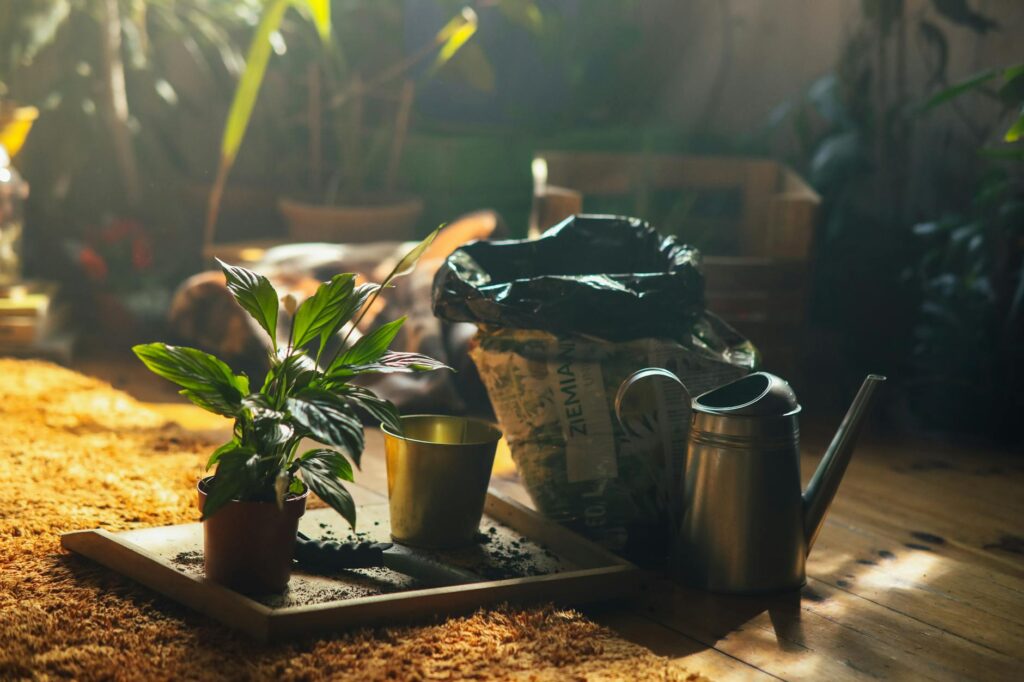
The purpose of this information is to help educate you in a general fashion only. If you believe that there is an issue with either your Water Treatment System; leaking pipes or issues with HVAC that may be causing or contributing to the decline of your plant; document your observations and notify the management of the building. If your plant has an extreme case of root rot and/or a significant amount of pests, you may be able to have a local Cooperative Extension Office or reputable nursery identify the problem for you.
Bottom line
Brown leaf tips are often less about “bad plant parenting” and more about what your apartment is doing to the plant every day. In most rentals, the first suspects are dry air, vent or window placement, salt buildup from water or fertilizer, and inconsistent watering. Diagnose those in order, spend on measurement before gear, and only repot or replace when the roots or the room clearly justify it. (extension.umd.edu)
FAQ
Do brown leaf tips mean I need a humidifier?
Not automatically. Measure first. A hygrometer is usually the cheapest useful purchase because it tells you whether low humidity is real or whether you should be looking at salt buildup, drafts, or watering instead. (homedepot.com)
Why do only my spider plant and dracaena get brown tips?
Those plants can be more sensitive than sturdier houseplants. Wisconsin notes that spider plants often get tip burn from low humidity, dry soil, salt accumulation, or fluoride and chlorine in tap water, and the article notes dracaenas can also be sensitive to fluoride. (hort.extension.wisc.edu)
Can overwatering really cause brown tips?
Yes. Maryland says overwatering is the leading indoor plant problem in winter, and rotted roots can leave a plant unable to move water even when the soil is wet. That can create browning, dieback, and wilting that people misread as dryness. (extension.umd.edu)
Should I cut the brown tips off?
You can trim damaged tissue for appearance, and extension guidance supports removing damaged leaves that are past their prime. Just remember that trimming is cosmetic. The real test is whether new growth comes in cleaner after you fix the cause. (extension.umn.edu)
When should I repot instead of moving the plant?
Repot when the roots are circling tightly, roots are coming through the drainage holes, or the soil dries out unusually fast. In that case, use a pot only one size larger. (extension.umn.edu)
What if my apartment is just too dry and dim for fussy plants?
Then the most economical answer may be different plants, not more equipment. Extension sources recommend matching species to your conditions, and tougher lower-light options include snake plant, pothos, cast iron plant, and Chinese evergreen. (extension.umd.edu)
References
- University of Maryland Extension: Temperature and Humidity for Indoor Plants – https://extension.umd.edu/resource/temperature-and-humidity-indoor-plants
- University of Maryland Extension: Watering Indoor Plants – https://extension.umd.edu/resource/watering-indoor-plants
- University of Maryland Extension: Mineral and Fertilizer Salt Deposits on Indoor Plants – https://extension.umd.edu/resource/mineral-and-fertilizer-salt-deposits-indoor-plants
- University of Maryland Extension: Winter Indoor Plant Problems – https://www.extension.umd.edu/resource/winter-indoor-plant-problems
- Wisconsin Horticulture: Houseplant Care – https://hort.extension.wisc.edu/articles/houseplant-care/
- Wisconsin Horticulture: Spider plant, Chlorophytum comosum – https://hort.extension.wisc.edu/articles/spider-plant-chlorophytum-comosum/
- Wisconsin Horticulture: Keys to Healthy Houseplants – https://hort.extension.wisc.edu/2025/01/06/keys-to-healthy-houseplants/
- University of Minnesota Extension: Winter houseplant tips – https://extension.umn.edu/node/170761
- University of Minnesota Extension: Spring houseplant care – https://extension.umn.edu/houseplants/spring-houseplant-care
- University of Minnesota Extension: Watering houseplants – https://extension.umn.edu/yard-and-garden-news/watering-houseplants
- University of Minnesota Extension: Controlling moisture problems in your home – https://extension.umn.edu/moisture-and-mold-indoors/do-you-have-too-much-moisture-your-home
- University of Minnesota Extension: Twospotted spider mites in home gardens – https://extension.umn.edu/yard-and-garden-insects/spider-mites/