TL;DR
- Both overwatering and underwatering can cause wilting—so don’t diagnose by droop alone.
- Start with the soil: wet for days + musty smell usually points to overwatering; bone-dry + soil pulling from pot suggests underwatering.
- Overwatering fixes focus on restoring oxygen to roots (drainage, drying cycle, sometimes repotting).
- Underwatering fixes focus on fully re-wetting the root ball (slow soak/bottom watering; repeat if soil turned water-repellent).
- If roots are brown/black, mushy, or foul-smelling, treat it as root rot and repot into fresh, well-draining mix.
If you’ve ever seen a plant droop and thought “it needs water,” you’re not alone. The tricky part is that too much water can produce drought-like symptoms because waterlogged soil deprives roots of oxygen—damaged roots can’t move water to leaves effectively.
Why overwatering and underwatering can look the same
When soil is too wet for too long, air pockets fill with water. According to extension experts, excess water lowers the amount of oxygen in the soil and damages the fine roots, resulting in a wilted or yellow appearance; this could be mistaken for drought stress (underwatering).
The 60-second diagnosis: do these checks in order
- Soil surface: is it wet/cool, or dry/dusty?
- Light weight or heavy? A consistent heavy feel when lifted may indicate a “soaked” soil. Consistently light = dry root ball.
- Context clues: standing water in cachepot or saucer, fungus gnats, mushy smell = too wet. Look at leaf feel: underwatering often displays crispy, papery, browned edges; overwatering is more likely to display soft yellowing and leaf drop (particularly of lower/inner leaves).
- If you still can’t tell, slip the plant out and check its roots (the best bet): healthy roots are firm and lighter in color; rotting roots are dark, mushy, and may stink.
Overwatering: common symptoms (what you see)
- Wilting or drooping despite soil being moist (even for days).
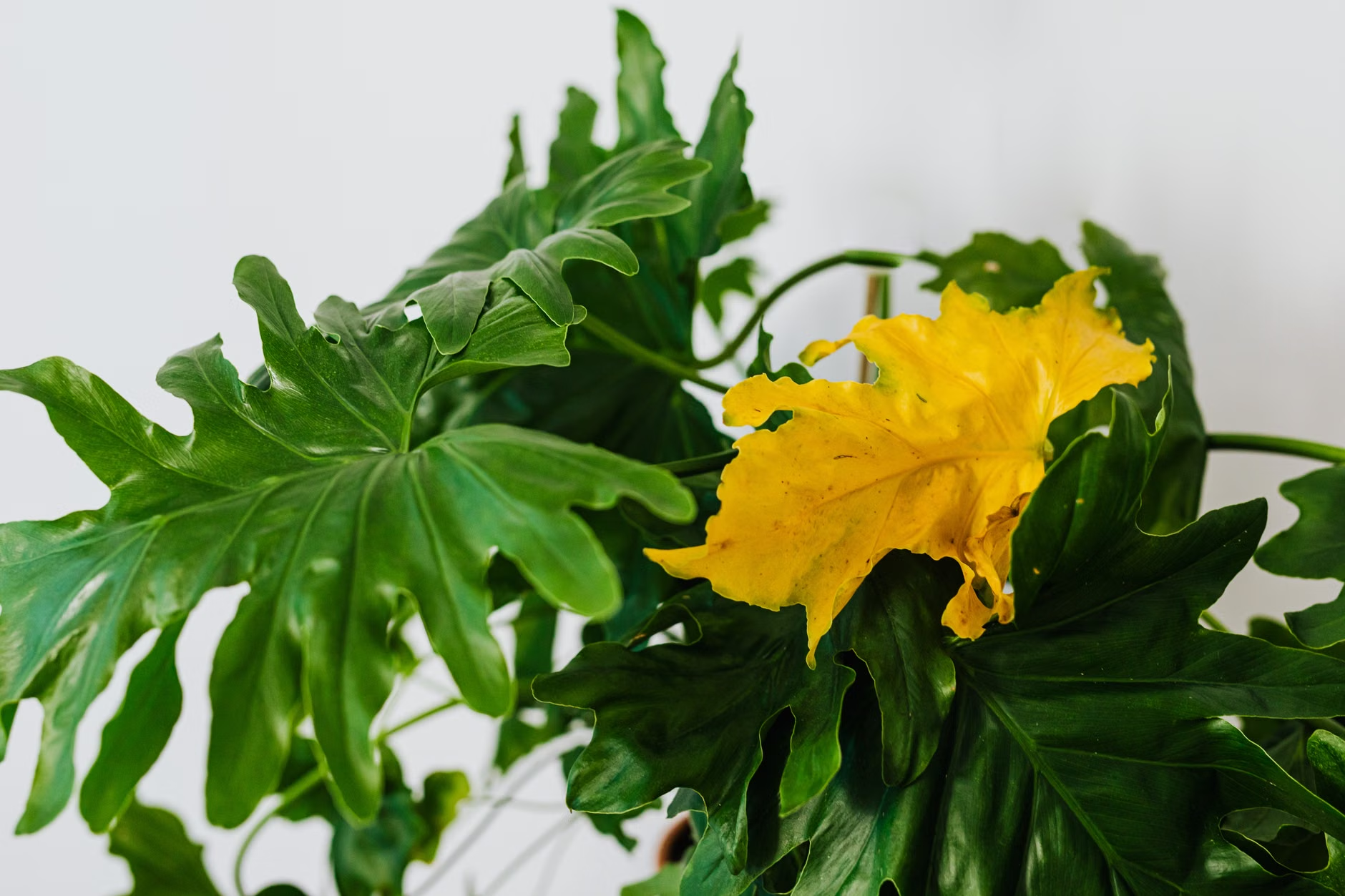
- Yellowing of most lower/inner leaves; leaves can drop at that point.
- Scorch/browning can show up after time; the roots can’t keep up with the water demands.
- Soil never dries; pot feels heavy long after watering.
- Waterlogging signs: root ball may be blue-black/blackened and stink of rot.
- Edema (oedema): corky, scab-like or blistered spots—invariably on undersides of leaves—due to water imbalances when uptake exceeds transpiration (common with excess water in mix + low light/cool, humid environment).
Quick over watering reality check: is it a water “space” problem, or bad “drain?”
Over many “over watered” plants will be “under drained”. And not just by quantity, also by drainage holes, old/cemented potting mix and not letting residual water escape. (Your goal is a thorough water cycle followed by drying out, NOT soaking continuously.).
How to fix overwatered plant (step-by-step)
- Stop watering immediately, and empty any saucer or outer cachepot so the inner pot isn’t sitting in water.
- Move the plant to brighter light (appropriate for the species) and increase air circulation to speed drying.
- Check the container: you need drainage holes. If the plant is in a nursery pot inside a decorative pot, remove it to let it drain freely.
- Test how wet the root ball really is: insert a wooden dowel/chopstick deep into the pot—moist mix will discolor or cling to it.
- If the soil is soggy and the plant is declining, unpot and inspect roots. Trim off dark, mushy, rotting roots; repot into fresh, well-draining mix in a pot with drainage (and don’t reuse contaminated, sour-smelling soil).
- After repotting, water lightly (or not at all if the mix is still moist) and resume watering only when the plant actually needs it. Use “dryness threshold” (top inch dry, top 2 inches dry, etc.) based on the plant type (see framework below).
- If roots are mostly gone, consider taking healthy cuttings to propagate as a backup plan (many houseplants root easily).
Underwatering: common symptoms (what you’ll usually see)
- Wilting and leaf curl when roots can’t supply enough moisture. Definition: Too little water and/or underwatering.
- Signs: Brown, papery leaves. Browning, scorching, or tip burn, starting at the edges (usually).
- Excessively persistent drought stress causing stunted growth, possible increased leaf drop (to protect plant structure).
- Soil pulling away from the sides of the pot (dry soil mix, or the mix has shrunk away from the pot).
- Water rushing straight through the pot: extremely dry mix can become ‘hardened’ or very dry and cannot rewet evenly on first water.
How to fix an underwatered plant (in easy steps)
- Confirm it is dry at root level (and not just the top). Dig about with your finger, or with a dowel/chopstick, or by sliding the root ball out slightly.
- Rewet the root ball across its whole volume (not just the crust, patina/recently dry surface): water slowly/have it running through the pot for at least a full minute: pause for 5-10min (so soaked through) and water again to help the mix absorb evenly.
- If the soil is very dry and has shrunk from the sides of the pot, it is recommended to use several applications of water when adjusting to thoroughly re-hydrate the soil. (In this instance, bottom water).
- Bottom-watering method (for deeply hydrophobic soil): Fill a bowl with water and place the pot in it. Leave for 20-45 minutes, then remove and allow to drain thoroughly.
- Clip off fully dead leaves and/or stems when the plant begins to perk up again – clipped off dead tissue remains dead and contributes to pests/diseases.
- Adjust your routine slightly (lightly, slightly bump up frequency) or slightly modify the overall conditions slightly (more shade exposure if outdoors, less heat?, a bit more humidity if indoors) so that the plant loses water more slowly.
- Do you infrequently forget to water? Consider forming a self-water arrangement, but not like the full zone of roots constantly padded and continuously filled with water.
Overwatering vs underwatering: side-by-side cheat sheet
| Clue | More likely overwatering | More likely underwatering |
|---|---|---|
| Soil feel (down in the pot) | Wet/cool for days | Dry/dusty; may be hard and shrunken |
| Pot weight | Heavy long after watering | Very light |
| Leaf texture | Often soft yellowing; may drop | Often crisp, papery, browned edges |
| Wilting timing | Wilts despite wet soil (roots struggling) | Wilts with dry soil; perk-up after thorough watering |
| Smell / roots | Sour smell; roots can darken/rot | Little smell; roots often dry but firm (unless severely damaged) |
| Other signs | Edema/corky blisters possible in excess moisture + low light | Soil pulls away from pot; may take repeated watering to re-wet |
How to water correctly (so you stop guessing)
1) Pick a “dryness threshold” instead of watering on a schedule
Most problems come from watering at the same time routinely (e.g., “every Saturday”) and not based on need. A practical method is to water it properly, then keep an eye on how long it takes the target portion of the pot you’re trying to water dry out (top 1”, top 2”, and so on). All sorts of variables will alter how fast that happens; type of pot/reservoir (auto watering type), potting mix, type of water, temperature and humidity, outside conditions, all change that.
2) Use at least two checks (soil + pot weight is a good combo)
- Feel the soil (“finger test” with a finger for small pots; dowel/moisture meterting for larger pots—moist soil will produce a moist discoloration/cling”).
- Weight of pot. Pick it up. Pick it up right after watering. Pick it up every few days and learn what the “dry” weight feels like.
- Moisture meter. Optional, but it can help as a tool and means of confusion (and not a true crutch unless you find it “diagnostically” come handy) and not likely to improve on “look and feel” and weight of pot.
3) Let your watering style reflect plant type (generalized framework)
| Plant type (examples) | Let this much of the pot dry out before watering | Common mistake |
|---|---|---|
| Succulents/cacti (aloe, echeveria) | Most of the pot dries; err on the dry side | Frequent little sips that keep roots damp |
| Aroids (pothos, philodendron, monstera) | Top 1–2 inches dry | Watering again with lower pot still wet |
| Ferns/calatheas | Keep evenly moist but not soggy; don’t let the whole pot go bone dry | Let dry completely, then flood repeatedly |
| Herbs/veg seedlings | More consistent moisture (they dry fast) | Tiny pots drying out, daily in sun/wind |
| Woody landscape plants | Deep, infrequent watering so moisture reaches roots | Frequently watering shallowly that never penetrates |
Common mistakes leading to repeat issues
- No drainage holes (or leaving the pot w sitting water).
- Potting mix that’s old/compacted and holds water too long (even if you “barely water”).
- Watering lightly and often instead of watering thoroughly and allowing to thoroughly dry.
- Thinking wilting always means “more water” (it can also be waterlogged roots).
- Not adjusting for seasons: many houseplants need less water in lower light/cooler conditions.
When it’s not watering: problems that mimic over/underwatering
Yellowing, wilting, scorch, and dieback can also come from pests, diseases, transplant/root damage, planting too deeply, or environmental stress. Diagnostic guidance notes that improper watering can resemble other issues (including planting too deeply), so it’s worth checking the whole situation before you “treat.”
Quick “before you water” checklist (copy/paste)
- I checked soil moisture below the surface (not just the top).
- I lifted the pot and compared it to its “just-watered” weight.
- The pot has drainage holes and isn’t sitting in water.
- I’m watering thoroughly enough to wet the full root ball (not just a splash).
- I’m adjusting for current conditions (light, temperature, season).