Soil mix for indoor plants: a simple DIY recipe (and why it works)
A simple, dependable DIY potting mix for most indoor plants—plus easy tweaks for succulents, aroids, ferns, and seedlings, with practical tests to confirm your mix is draining and holding moisture correctly.
Instead of picking up multiple specialty bags as you expand your container gardening, try this simple base mix for most houseplants: 2 parts peat (or coco coir) + 1 part perlite + 1 part finished compost (by volume). This combo works because the “base” holds moisture, perlite airtights create pockets for the roots, and compost provides nutrients (when it’s fully finished). You can even adjust the ratio: more perlite or bark for plants that rot easily, etc. and more base or vermiculite for thirsty plants. Verify your mix with a squeeze test (does it crumble not ooze?) and a watering test (does it wet evenly and drain freely?). You can also add dry nutrient packets to the individual bag when mixing.
Indoor plants rarely die because they need “richer soil.” They die because the pot stays wet too long (no oxygen for roots) or dries fast (no consistent moisture). A good indoor potting mix is really a carefully balanced growing medium—often soilless—designed to manage air + water + support in a container. [source: uvm.edu] “Use soil-less mixes for indoor plants for these four jobs:
- Support roots—because of poorly draining earth, plants can waste air and moisture when roots are suffocated in compacted dirt.
- Hold water and nutrients—because of no-water/water mixes that keep plants cozy, and snazzy potting soil that’s only half-peat, the water and fertilizers will hang out, enabling lush plants.
- Drain well—because even old-school soilless mixes cannot prevent plant root-drowning.
- If you want your indoor plant container to breathe, your potting mix must not include dirt or incorporate traditional black earths that are sticky and impenetrable. Soil-level meets air with comfortably coarse boulders and glitter for that igneous look. The mix produces gobs of air for plant-life to extravagantly breathe. The concoction has some applied nutrients; gypsum, ludicrous to grow, makes it foolish not to make dirt for it to slosh about in.” – (uvm.edu)
- “Provide (and hold onto) nutrients—because soilless ingredients are often low in fertility by themselves.” (uvm.edu)
The “secret” is that you can meet those four jobs with a small set of ingredients—then adjust the ratio based on how fast you water, how much light/heat you have, and what kind of roots your plant makes (fine, thick, or airy/epiphytic).” (aos.org)
Simple DIY potting mix recipe (great for most indoor plants)
Base recipe (by volume):
- 2 parts peat moss OR coco coir (your moisture-holding “base”)
- 1 part perlite (your aeration/drainage ingredient)
- 1 part finished compost (your nutrition + a little moisture buffering)
This ratio is intentionally boring. It’s meant to be a reliable starting point for pothos, philodendrons, hoyas, dracaena, spider plants, many ficus, and lots of everyday houseplants.” (sfyl.ifas.ufl.edu)
If you want an even simpler “starter” for seedlings or propagation, Penn State Extension describes a standard soilless mix as 50% peat and 50% perlite or vermiculite. That mix is light and uniform, but you’ll need to add nutrients as plants grow.
- Measure in “parts,” not cups. A part can be 1 cup, 1 scoop, or 1 bucket—just keep the ratio. Example small batch: 4 cups peat/coir + 2 cups perlite + 2 cups compost.
- Pre-moisten the peat or coir in a tub so it’s evenly damp (not dripping). Dry peat/coir can be hard to wet evenly at first.” – (sfyl.ifas.ufl.edu) Wet the perlite before mixing to minimize dust, and mix outdoors or in a well-ventilated area. (extension.okstate.edu)
Add the compost last (screen out any chunks) and mix thoroughly. Finished compost only! (edis.ifas.ufl.edu)
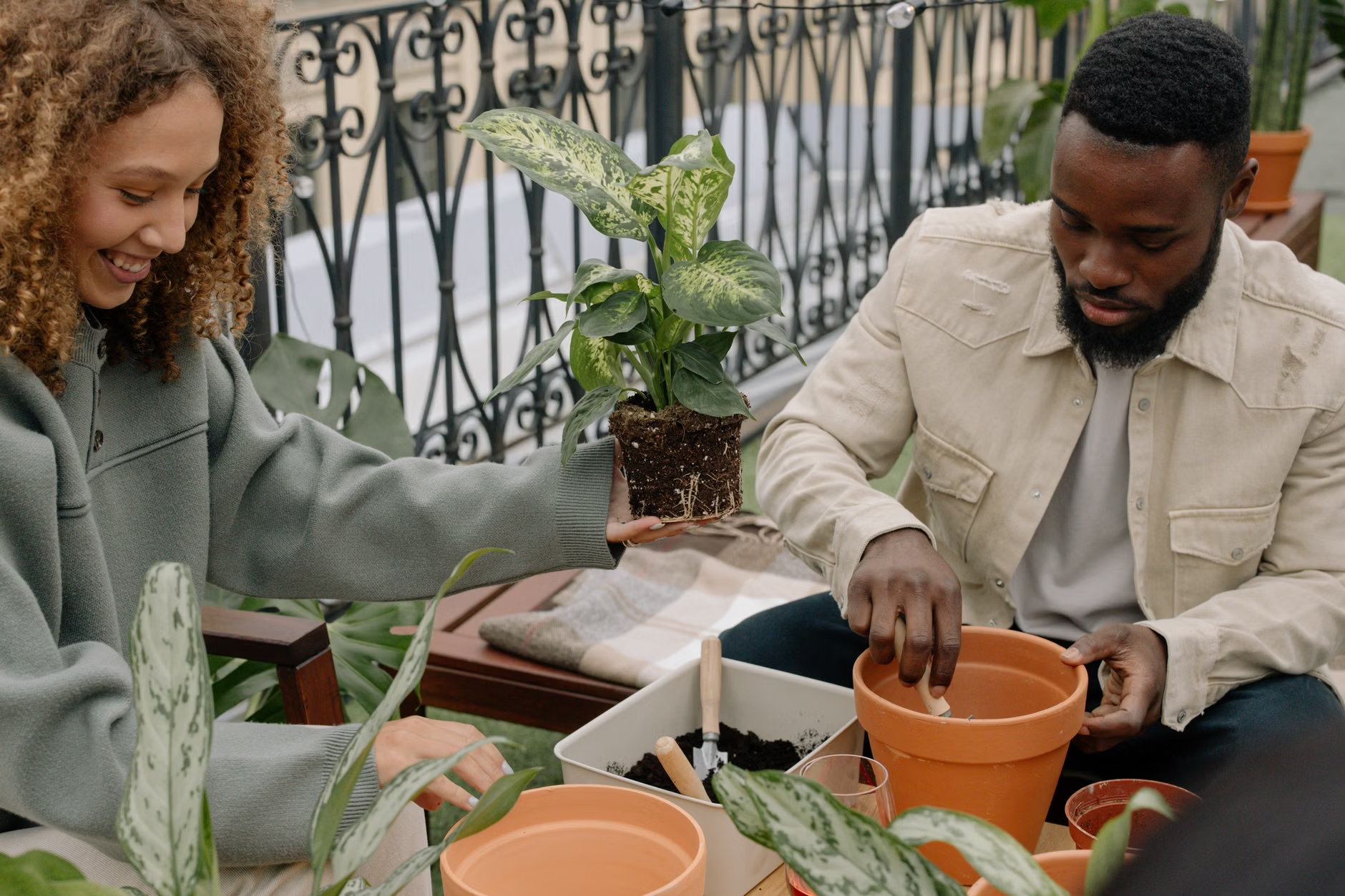
Pot up and tap the pot lightly to settle (but don’t make it rock-hard), then leave air pockets.
Water once to completely saturate and let it drain well. Empty the saucer/cachepot so that roots aren’t sitting in water.
Safety tip: Dry amendments such as perlite are dusty. Wet it first, don’t stir vigorously indoors, and wear a dust mask if sensitive. (extension.okstate.edu)
Why this DIY recipe works (crunched-down details in plain English)
1) Peat or coir creates the “moisture battery”
Peat and coir are common “base” ingredients in soilless mixes because they create a favorable physical environment for roots, while not adding much nutrition themselves. University of Vermont notes that sphagnum peat is stable and very water holding, while coir has similar physical properties but a higher pH may contain higher salts. (uvm.edu).
Peat vs. Coir in Practice: Coir (which often seems a bit less “spongy” in practical use) can be better if you tend to over-water or have low light. If you use peat, keep in mind that it’s acidic and mixes often have lime added to raise pH (uvm.edu).
2) Perlite protects root oxygen (and prevents “indoor sogginess”)
Perlite is an extremely lightweight expanded volcanic material. It aerates and promotes drainage in container mixes. That matters indoors because evaporation is generally slower (cooler temps, still air, lower light), so a compact mix can stay wet long enough to begin stressing roots. (uvm.edu)
3) Finished compost adds nutrients (but too much can backfire)
Compost can improve water-holding and provide nutrients, but it should be finished/mature—and you generally want it blended with a drainage-improving ingredient (like perlite) rather than used alone. UVM also points out that compost varies a lot batch-to-batch, and immature compost can cause problems for seedlings. (edis.ifas.ufl.edu)
4) The ratio matches your habits (not just the plant)
A mix that’s perfect for a notoriously forgetful waterer might be a root-rot risk for someone who waters on a predictable schedule. The American Orchid Society puts this principle plainly: choose a coarser medium if you water heavily/frequently, and a more water-retentive medium if you water lightly or tend to forget. That idea applies to regular houseplants, too. (aos.org)
Easy “dial-in” ratios by plant type
Use these as starting points. If your pot stays wet longer than ~7–10 days in typical indoor conditions, increase the aeration ingredients. If it dries in 1–2 days and you’re watering constantly, increase the base. (As a general rule: always amend one step at a time.)
| What plants you want to grow or keep | Usual suggested ratio (perlite : compost) | Advantages in this ratio |
|---|---|---|
| host of common houseplants | 2-1 | rounded mix of moisture + air + nutrients |
| plants who hate staying too damp (lots of succulents/cacti) | 1-2 (or less compost) | more air space; faster dry-down |
| “thirstier” plants (lots of ferns, peace lily in bright light) | 3-1 (or swap some perlite out for vermiculite) | keeps them a bit more consistently moist without becoming pure “mud” |
| fast growing foliage, in warmer and/or brighter spots[citation needed] (it’s okay to also feed per time) | 2-1 + consistent fertilizer routine for pot plants. | A little bit of compost goes a long way, but lots of a container plant’s food usually needs to come from the source plant over time. |
| seed starting / propagation | 1-1 (then fertilise after true leaves) | light and fluffy enough to drain, good for skinning new roots, and super uniform. |
Ingredient swaps (when you can’t find something)
- If you don’t have…
You can try…
What to watch for.. - Peat moss… Coco coir… Coir can have higher salts and a higher pH; rinse/rehydrate well and monitor for salt stress. (uvm.edu)
- Perlite… Vermiculite (for moisture-loving plants)… Vermiculite tends to hold more water; great for seedlings/thirsty plants, not ideal if you already overwater. (uvm.edu)
- Compost… Worm castings (smaller amount) + a regular fertilizer plan… Castings are gentler but usually not a full nutrient plan for long-term container growth (you’ll still fertilize).
- A “chunky” texture for aroids… Add pine bark fines/bark to increase air space… Bark adds structure and air space but often needs you to stay on top of fertilizing. (sfyl.ifas.ufl.edu)
- Extra weight for tall/top-heavy plants… Coarse builder’s sand (small amount)… Use coarse sand (not fine) to avoid turning the pot into dense concrete. (sfyl.ifas.ufl.edu)
How to verify your mix works (2 quick at-home tests)
- Squeeze test (moist mix): Grab a handful and squeeze hard. It should hold together briefly, then crumble when you poke it. If it oozes water or stays as a hard clump, you likely need more aeration (perlite/bark) and/or less compost.
- Watering test (in a pot with drainage): Water slowly until you get steady runoff. The mix should wet evenly and drain freely. If water runs straight down in channels and the mix stays dry around them, you probably didn’t pre-moisten your peat/coir enough. (sfyl.ifas.ufl.edu)
3. Dry-down reality check: In our dry indoor air, most houseplants prefer the pot not to stay saturated for too long. If it is still heavy and wet a week later, consider making your next batch chunkier/coarser. (aos.org)
Common DIY potting-mix mistakes (and simple fixes)
- Using garden soil indoors: It’s heavy and can impede aeration/drainage; sterilization is necessary if soil is included. (uvm.edu)
- Adding “a lot” of compost because it feels nutritious: Too much compost can push the mix toward wetness and can cause variability if it’s not fully finished. (uvm.edu)
- Packing the pot down hard: You’re squeezing out the air you just paid for (perlite/bark). Lightly settle, don’t tamp.
- No drainage hole (or leaving water in the outer pot): Even a perfect mix goes downhill if the container can’t drain. (aos.org)
- Skipping fertilizing long-term: Many soilless ingredients are relatively inert; plan on some kind of consistent, gentle fertilizer routine as the plant grows. (uvm.edu)
Storage and reuse (so you don’t waste supplies)
- Storage: Store unused mix slightly dry, in a sealed bin/bag, off the rain and direct sun. Used pre-mixed and fairly heavily-soaked, best to use fairly soon.
- Reuse: If your potting mix is pest-free and not waterlogged/compacted, you can often safely reuse it for non-sensitive plants—but refresh the structure by adding new perlite (and/or bark), and throw out any mix that previously had serious disease issues. If you’d prefer to err on the side of caution, you can also reuse the old mix outdoors and use fresh mix for your pots indoors!
FAQ
Do I really need a soilless mix for my indoor plants?
How much compost is too much in a houseplant mix?
Peat or coco coir—what should I pick?
Perlite or vermiculite—are they interchangeable?
What if I must use a bit of my garden soil?
What’s the quickest way to making a chunkier mix for aroids?
Referências
- University of Vermont Extension — Potting Mixes for Organic Growers (fact sheet)
- UF/IFAS — Homemade Potting Mix (ingredients + recipes)
- Oklahoma State University Extension — Soilless Growing Mediums (perlite/vermiculite details + handling notes)
- American Orchid Society — Repotting (choosing coarser vs more water-retentive media based on habits/conditions)
- Penn State Extension — Homemade Potting Media (standard soilless mix ratio)
- UF/IFAS EDIS — Compost Tips for the Home Gardener (finished compost guidance; blending compost for potting mixes)
- UF/IFAS EDIS — Starting the Garden with Transplants (potting mix components overview)
- Mississippi State University Extension — Potting Mix (ingredient overview video page)
- Penn State Extension — Potting Media and Plant Propagation (overview of soilless ingredients)