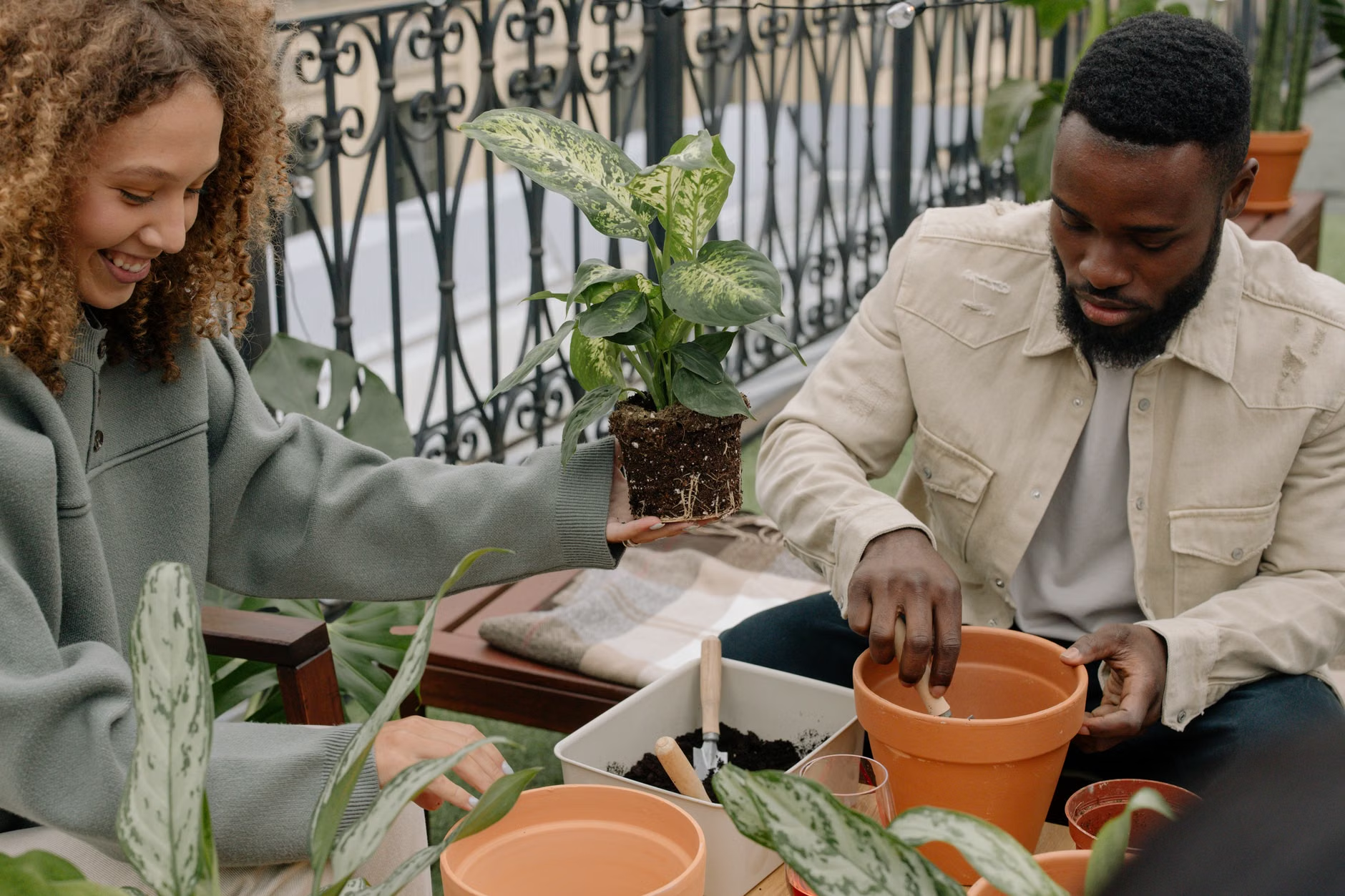

A new houseplant can look like a harmless $20 or $30 purchase, but the real cost shows up if it brings spider mites, mealybugs, scale, or fungus gnats into a small apartment. Extension guidance consistently warns that many indoor pest problems start with infested plants that were recently purchased or brought home, which is why inspection before purchase and quarantine afterward matter so much. In a tight space, where plants share windowsills, bathrooms, and air, the cheapest fix is often refusing the wrong plant before it crosses your front door. (extension.colostate.edu)
- Spend five minutes inspecting the plant before you pay. Check leaf tops, leaf undersides, leaf joints, the soil surface, the pot rim, and the roots if the store allows it. (extension.umn.edu)
- Refer to the APIS rating given below: a mark between 0 and 2 reflects buying something and quarantining it; a score between 3 and 4 reflects buying an item only if the price meets the extra effort required; and finally if it scores 5 or more, abandon.
- Quarantine every new plant for about 2 to 3 weeks. Extension guidance ranges from 1 week to about 3 weeks, so the longer window is the safer apartment rule. (extension.umn.edu)
- Sticky residue, cottony clusters, fine webbing, flying insects, and soil that stays soggy are stronger warning signs than a torn leaf or a little cosmetic damage. (extension.umn.edu)
Treat houseplant shopping like a small household risk audit
When you buy a plant, you are not just buying foliage. You are buying the condition of the leaves, the soil, the roots, and the amount of cleanup that condition may create after you get home. Extension sources recommend examining the tops and undersides of leaves, stems, pot crevices, and roots when possible. That is the right mindset for an apartment: pay for a plant that fits your space, not a rescue project that takes over your sink, shower, and Saturday afternoon. (extension.umn.edu)

Use the APIS score before you pay
APIS refers to Apartment Plant Intake Score. This is a straightforward method necessary for individuals who rent apartments or own plants that require minimal space. In this test, each category is given 0, 1, or 2 points, and the lower the score, the better.
| Check zone | 0 points | 1 point | 2 points |
|---|---|---|---|
| Leaf undersides and veins | Even color, no webbing, no speckling. | Minor scars or dust you cannot identify. | Fine webbing, stippling, or tiny moving specks. Spider mites are among the hardest indoor pests to control. (extension.umn.edu) |
| Leaf joints, stem bases, and new growth | Clean nodes and petiole bases. | One suspicious fleck, but no stickiness. | Cottony white clumps or sticky honeydew. Mealybugs often hide where leaves join stems. (extension.umn.edu) |
| Pot rim, saucer, and soil surface | Clean rim, no flyers, drainage hole present. | Soil looks very wet or algae is visible. | Gnats lift off, soil smells sour, or the pot has no drainage. Wet media encourages fungus gnats and root trouble. (extension.umn.edu) |
| Roots and drain hole | Roots look light colored and firm. | A few roots at the hole or light crowding. | Dark, mushy, foul-smelling, or tightly circling roots. (extension.illinois.edu) |
| Price versus workload | Fair price for a clean plant. | Minor issue and a good return policy. | The discount only looks good because you are about to buy a problem. |
Score 0 to 2: buy it, then quarantine it. Score 3 to 4: buy only if the price clearly covers the extra work and you have a real isolation spot. Score 5 or higher: leave it behind. APIS is a budget filter, not a botany exam. Even a green-light plant should stay away from your collection for its first 2 to 3 weeks at home. (extension.umn.edu)
The five-minute store inspection that catches most problems
- Use your phone flashlight and start with the leaves. Check both the top and underside for webbing, speckling, holes, eggs, or unexplained yellowing. A small magnifier helps because some pests are easy to miss. (extension.umn.edu)
- Inspect the tight places pests prefer: where leaves join stems, along the midrib and veins, at new growth, and around the stem base. Mealybugs often hide in those sheltered spots. (extension.umn.edu)
- Look for residue, not just insects. Sticky honeydew on leaves, the pot, or the surface below the plant can point to aphids, mealybugs, or soft scale. (extension.umn.edu)
- Tap or shake the foliage gently over a white sheet of paper. University of Minnesota recommends this trick for spotting tiny mite specks, and it can reveal movement you would miss at a glance. (extension.umn.edu)
- Check the pot rim, drainage hole, saucer, and soil line. Extension guidance specifically calls out these crevices because insects can hide there, and watering can make some pests move. (extension.umn.edu)
- If the store allows it, slide the plant partly out of the pot. Healthy roots are typically light colored and firm; dark, mushy, or bad-smelling roots are a walk-away signal. (extension.illinois.edu)
- Give the whole shelf a quick scan. This is an editorial rule, not a lab test: if the neighboring plants clearly have whiteflies, mealybugs, or webbing, pick another plant or another store.
Which red flags are worth walking away from?
| What you see | Likely issue | Buy, quarantine, or skip | Why the math matters |
|---|---|---|---|
| Clean foliage, clean pot rim, drainage hole, no flyers | Low visible pest risk. (extension.umn.edu) | Buy, then quarantine 2 to 3 weeks | You are paying for a plant, not immediate treatment. |
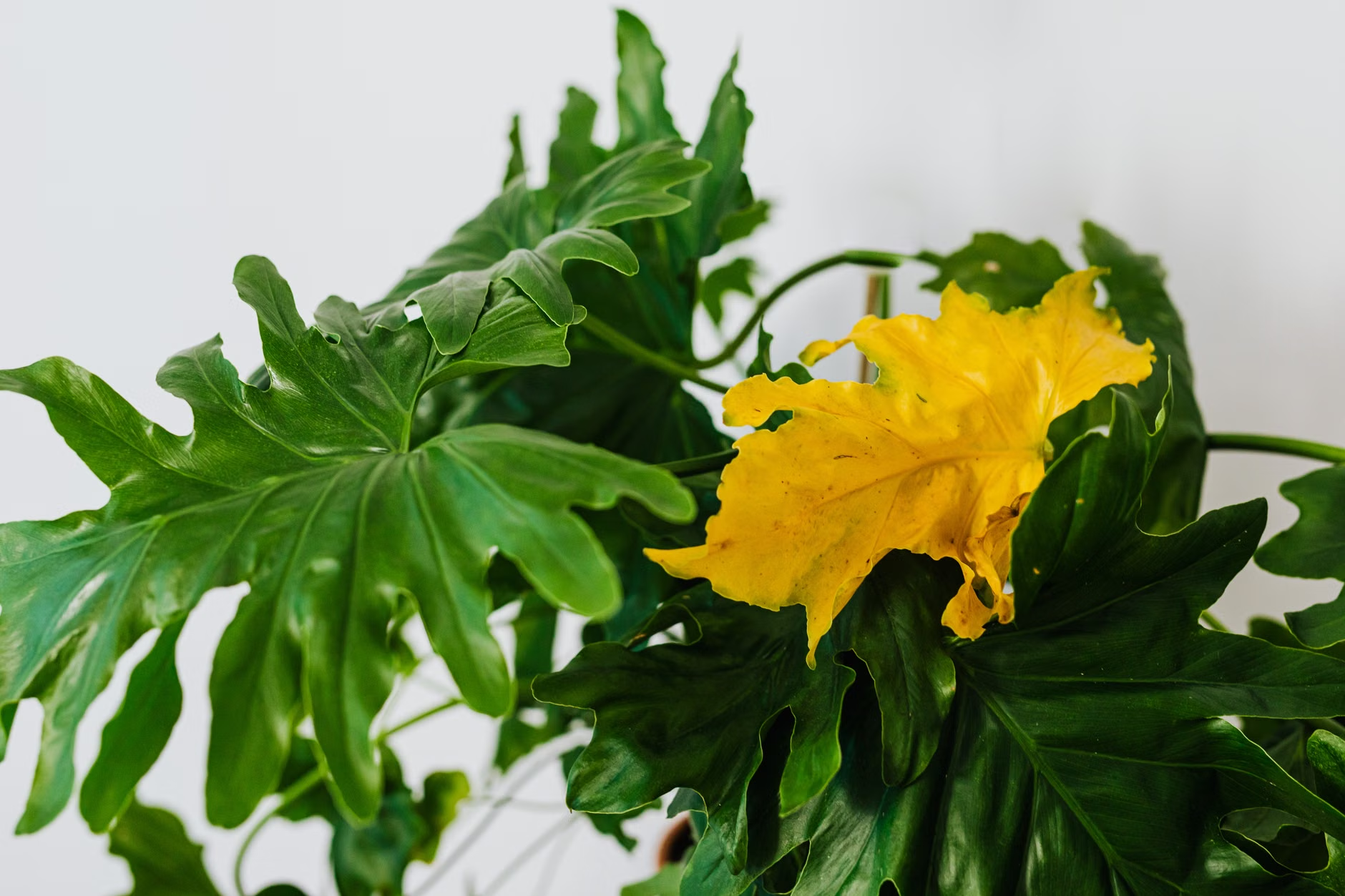
| A few yellow lower leaves but no insects or sticky residue | Likely stress or older foliage, not an obvious pest sign. (extension.illinois.edu) | Usually buy if the rest of the plant looks strong | Cosmetic recovery is cheaper than pest cleanup. |
| Soil is soaked and 1 or 2 gnats lift off | Fungus gnat risk and probably overwatering. Gnats are usually more nuisance than disaster, but wet media creates recurring hassle. (apps.extension.umn.edu) | Buy only if discounted and you can isolate, dry the soil, or repot | This is a lower-stakes problem, but it is still work. |
| Cottony dots at leaf joints or sticky leaves | Possible mealybugs or soft scale. (extension.umn.edu) | Skip | These pests hide well and usually need repeated treatment. |
| Fine webbing, stippled leaves, or specks after a tap test | Possible spider mites. (extension.umn.edu) | Skip | In a dry apartment, one infested plant can turn into a collection-wide job fast. |
| Roots circling heavily but leaves are clean | Root-bound, not automatically a pest problem. (extension.illinois.edu) | Buy only if the price reflects repotting soon | Budget for a bigger pot, fresh mix, and the time to do it right. |
A realistic apartment-budget example
Consider a realistic household example. Dana already owns seven healthy plants and has about $210 tied up in plants, pots, and soil. At the store, she sees a $14 clearance parlor palm and a $28 clean one. The clearance plant scores 5 on APIS: stippled leaves, soaked soil, and one gnat. If she buys the bargain and it turns into a mite-and-gnat cleanup, she may spend roughly $9 on sticky traps, $12 on insecticidal soap, $16 on fresh potting mix, and lose a Saturday to isolating, rinsing, and rechecking every plant. If two older plants decline badly, replacements can erase the savings. Those dollar figures are illustrative, not survey data, but the decision rule is real: compare the discount with the cost of treatment supplies, repotting, and the value of the plants you already own.
Common mistakes that turn one new plant into a whole-collection problem
- Buying a plant because the top leaves look good, while never turning over a single leaf. Most early clues live underneath or at leaf joints. (extension.umn.edu)
- Treating soggy soil as normal store watering. Continuously wet media is associated with fungus gnats and root problems, especially if drainage is poor. (extension.umn.edu)
- Skipping quarantine because the seller looked reputable. Better retailers lower risk, but they do not remove it. (extension.illinois.edu)
- Using homemade dish soap. University of Minnesota specifically warns against homemade soap mixes because they can burn plants. (extension.umn.edu)
- Spraying first and identifying later. EPA says the label defines where, how much, and how often a pesticide may be used, and using more than directed does not make it work better. (epa.gov)
- Keeping a badly infested plant out of guilt. Extension guidance notes that discarding a heavily infested, badly damaged plant can be the most economical way to protect the rest of the collection. (extension.umn.edu)
When the first inspection is not enough
No inspection catches everything. Some pests are tiny enough that extension guidance recommends a magnifier, and some mealybugs may even sit below the soil surface on the main stem. A plant that passes the store test can still fail at home a week later. That is why the buying decision and the quarantine plan should be treated as one decision, not two. (extension.umn.edu)
If you cannot inspect the roots
- Keep the receipt and photograph the plant the day you buy it. That gives you a baseline if you need to use the return window.
- Quarantine it away from other plants for about 2 to 3 weeks. Extension guidance ranges from 1 to 3 weeks, so using the longer end is a conservative apartment approach. (extension.umn.edu)
- Place a yellow sticky trap in the pot if the soil seems wet or you suspect flyers. Traps help detect adult fungus gnats, whiteflies, winged aphids, and thrips. (extension.umn.edu)
- Water in the sink or shower during quarantine. Moisture and movement can make some insects easier to see, and small plants can be rinsed there if needed. (extension.umn.edu)
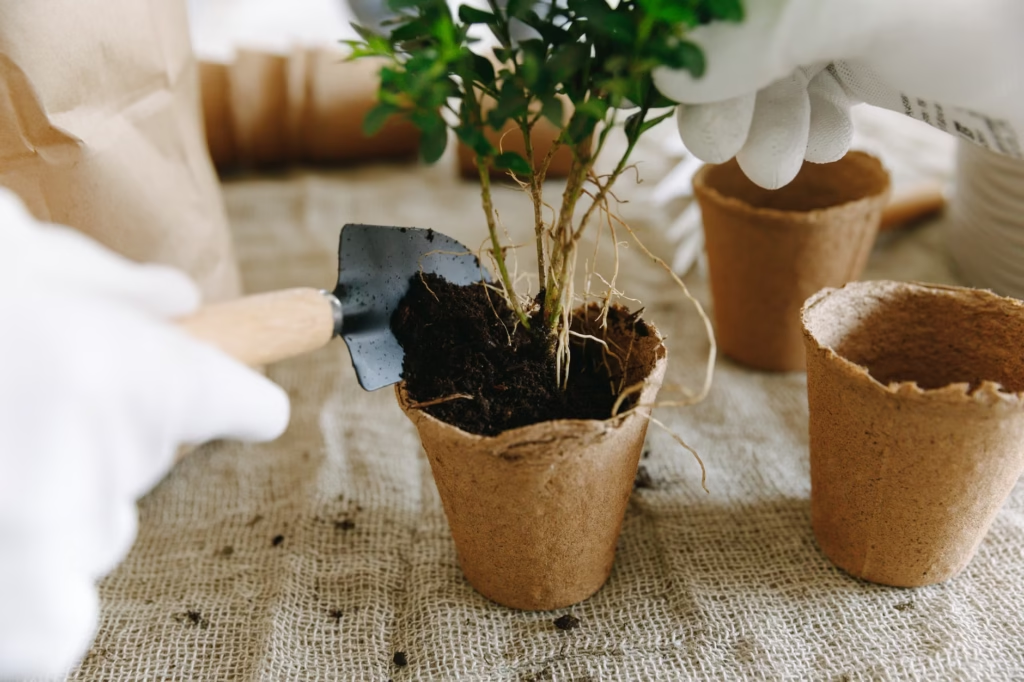
- If the soil smells sour, stays saturated, or produces gnats, repot with fresh mix in a clean container after washing soil from the roots. (extension.umn.edu)
Use a 21-day apartment intake checklist to verify the plant is really clean
- Day 0: Isolate the plant, wipe dust from the leaves, and inspect the pot rim, saucer, and drainage hole. (extension.umn.edu)
- Day 3 or 4: Tap foliage over white paper and check the undersides again, especially if the plant sits in warm, dry air where mites do well. (extension.umn.edu)
- Day 7: Water the plant and watch the soil surface. Flying gnats and crawling insects often reveal themselves when the mix is disturbed. (extension.umn.edu)
- Day 14: Recheck leaf joints, sticky residue, and any discolored leaves. Prune or physically remove isolated pests if you find only a few. (extension.umn.edu)
- Day 21: If the plant still looks clean, move it into the collection. If you are seeing repeated pests by this point, return it if possible or decide whether treatment costs more than the plant is worth. (extension.illinois.edu)
Informational only: if you use a pesticide indoors, confirm that the plant and pest are on the label, follow the directions exactly, use nonchemical methods first when possible, and keep children, pets, toys, and food away until the product has dried or the label says re-entry is safe. (epa.gov)
A few plant types deserve extra skepticism
If you are choosing between similar plants, University of Minnesota notes more spider mite trouble on palms, philodendrons, and figs, while succulents, cacti, pothos, snake plants, hoya, and ferns tend to have fewer spider mite issues. That is not a guarantee. It simply means a mite-prone plant deserves a stricter APIS score and a full quarantine window. (extension.umn.edu)
Bottom line
The cheapest houseplant is rarely the one with the lowest sticker price. It is the one that enters your apartment clean, adjusts well, and does not force you to treat every other plant two weeks later. Use APIS at the store, quarantine every plant, and be willing to walk away from sticky leaves, webbing, or wet soil that already looks like work. The goal is not perfection. It is to keep a small purchase from becoming a whole-collection expense. (extension.colostate.edu)
Frequently Asked Questions
How long should I quarantine a new houseplant?
A practical apartment rule is 2 to 3 weeks. Extension sources vary from 1 to 2 weeks, 2 to 3 weeks, and about 3 weeks, so the longer window is the safer choice if you already own several plants. (extension.umn.edu)
Is one fungus gnat a dealbreaker?
Not by itself. Fungus gnats are usually more nuisance than serious plant killers, but they are strongly associated with continuously wet potting mix. If you see a gnat plus soggy soil or poor drainage, treat the plant as a project, not a casual purchase. (apps.extension.umn.edu)
Should I repot every new plant as soon as I get home?
Not automatically. A clean plant can often wait until after quarantine so you are not mixing acclimation stress with transplant stress. Repot sooner when the soil is sour, always saturated, or clearly carrying soil-borne pests, and use fresh mix and a clean pot. (extension.illinois.edu)
Can I use dish soap instead of insecticidal soap?
It is better not to. University of Minnesota advises against homemade soap mixes because they can burn plants. If you decide a pesticide is necessary, use a product labeled for the plant and pest and follow the label exactly. (extension.umn.edu)
What if the plant was a gift and I cannot return it?
Quarantine it immediately, inspect it every time you water, use sticky traps if flyers are possible, and remove small numbers of pests with physical methods such as rinsing, pruning, or a cotton swab with alcohol for mealybugs. If the infestation is heavy and the plant is badly damaged, discarding it can be the most economical way to protect your other plants. (extension.umn.edu)
References
- Colorado State University Extension: Managing Houseplant Pests – https://extension.colostate.edu/resource/managing-houseplant-pests/
- University of Minnesota Extension: Managing insects on indoor plants – https://extension.umn.edu/yard-and-garden-insects/insects-indoor-plants
- Illinois Extension: Get Started | Houseplants – https://extension.illinois.edu/houseplants/get-started
- Illinois Extension: Buyer Beware: Inspect Plant Material Closely Before Purchase – https://extension.illinois.edu/blogs/good-growing/2026-06-18-buyer-beware-inspect-plant-material-closely-purchase
- University of Minnesota Extension: Houseplant pests – https://extension.umn.edu/news/houseplant-pests
- Colorado State University Extension: Fungus Gnats as Houseplant and Indoor Pests – https://extension.colostate.edu/resource/fungus-gnats-as-houseplant-and-indoor-pests/
- University of Minnesota Extension: Moving Houseplants Outdoors – https://extension.umn.edu/news/moving-houseplants-outdoors
- US EPA: Introduction to Pesticide Labels – https://www.epa.gov/pesticide-labels/introduction-pesticide-labels
- US EPA: Pesticide Safety Tips – https://www.epa.gov/pesticide-incidents/pesticide-safety-tips