How Long Should Grow Lights Stay On? A Practical Schedule by Plant Type
Most indoor plants thrive with 12–14 hours of grow-light per day, but seedlings, herbs, succulents, and photoperiod-sensitive bloomers often need different schedules. Use this practical chart by plant type, plus a step‑by‑step timer guide.
- The two numbers that matter: photoperiod vs. “enough light” (DLI)
- Practical grow-light schedules by plant type (use this chart first)
- Step-by-step: set a grow-light timer that doesn’t suck
- Engraving frustrating: Signs your lights just have too long a grand, or not long enough
- Special cases: plants that need specific day length to flower
- FAQ: grow light hours (common questions)
TL;DR
- If you want one safe default: 12–14 hours ON, 10–12 hours OFF works for many foliage houseplants and leafy greens. (extension.umn.edu)
- Seedlings usually do best at 16–18 hours ON (then a dark rest). (extension.umn.edu)
- Flowering houseplants commonly do well at 14–16 hours ON—but some “holiday bloomers” need long, uninterrupted nights to set buds. (extension.umn.edu)
- Don’t guess based on hours alone: light intensity and distance change results. Learn the basics of DLI (Daily Light Integral) to fine-tune your schedule. (extension.unh.edu)
- Use a timer and keep the schedule consistent; most plants respond best to a predictable day/night rhythm. (extension.okstate.edu)
Grow lights don’t have one “perfect” number of hours—because a dim light for 16 hours can still be insufficient, while a strong light for 10–12 hours may be plenty. The practical goal is to deliver the right total light each day (often discussed as DLI) without breaking the plant’s photoperiod needs (day length cues that affect flowering). (extension.unh.edu)
The two numbers that matter: photoperiod vs. “enough light” (DLI)
When people ask “How long should grow lights stay on?”, they’re usually mixing two different ideas:
- Photoperiod (day length): The hours of light vs. darkness in a 24-hour period. Plants use day length—especially the length of uninterrupted darkness—as a seasonal clock that can trigger flowering or dormancy.
- Total usable light per day (often tracked as DLI): You can run lights for many hours and still not provide sufficient total photons if the fixture is weak or too far away; this is why DLI may often be more valuable as a “growth” parametric than hours alone. (extension.unh.edu)
Example of why this matters: University of New Hampshire Extension points out that “long days” can still be sent to a photoperiod-sensitive plant even if the light is too weak to grow (they use poinsettia + nighttime TV light as an illustration). (extension.unh.edu)
Practical grow-light schedules by plant type (use this chart first)
| Plant type | Hours ON (per 24h) | Hours OFF (dark time) | Notes (what to watch for) |
|---|---|---|---|
| Seedlings (most vegetables/flowers) | 16–18 hours | 6–8 hours | If they stretch/lean: bring lights closer or increase intensity before increasing hours. |
| Leafy greens + many herbs (e.g., lettuce, basil, cilantro) | 12–14 hours | 10–12 hours | Good starting range for edible leaf growth in typical home setups. |
| Hydroponic lettuce and herbs (common home systems) | 12–14 hours | 10–12 hours | Keep consistent; watch for tip-burn if intensity is high. |
| Foliage houseplants (pothos, philodendron, monstera, many tropical foliage plants) | 12–14 hours | 10–12 hours | If leaves pale/bleach: reduce intensity or duration; if leggy: increase intensity. |
| Flowering houseplants (many) | 14–16 hours | 8–10 hours | Some species are photoperiod-sensitive and won’t rebloom without specific dark periods (see below). |
| Microgreens | 12–16 hours | 8–12 hours | If stems are long and floppy, intensity is usually the issue. |
| Fruiting indoor plants (tomatoes/peppers/citrus indoors, etc.) | Up to ~16 hours | 8+ hours | Often need stronger light than houseplants; long hours won’t compensate for a weak fixture. |
| Succulents & cacti | 10–12 hours | 12–14 hours | They typically want high intensity; too many hours at high intensity can scorch—acclimate gradually. |
| Spinach (and other bolting-prone long-day greens if you’re growing for leaves) | 10–11 hours | 13–14 hours | Long days can trigger bolting; keep days shorter if your goal is tender leaves. |
| Short-day (long-night) bloomers (poinsettia, chrysanthemum, holiday cactus) | Often ~10–12 hours light; prioritize long, uninterrupted nights | 12–14+ hours uninterrupted darkness | Avoid “light leaks” at night (lamps, TV, hallway light) during bud set. |
Step-by-step: set a grow-light timer that doesn’t suck
- Find the category that matches your target plant and goal (leaf growth vs. flower).
- Start with a conservative schedule for 7-10 days (houseplant: 12-14 hours; seedling: 16). (extension.umn.edu)
- Set an outlet timer so ON/OFF is at the same time every day (photoperiod responses are affected by consistency and duration). (extension.okstate.edu)
- Adjust placement: keep lights close enough for intensity but not so close that they overheat or bleach—distance changes intensity dramatically! (extension.unh.edu)
- After a week or two, start adjusting just one of the variables at a time, either (a) increase/decrease duration per day by one or two hours, or (b) change intensity or height, but not both.
- Check back weekly as your plant grows: its foliage will change, so the canopy height may be the same, but your light at leaf level won’t be!
Engraving frustrating: Signs your lights just have too long a grand, or not long enough
Usually means: not enough total light (even if your hours are “correct”)
- Tall seedlings, thin and leaning (“leggy”, often due to low intensity or lights at too far a distance). (extension.okstate.edu)
- Gaps between leaves on houseplants stretch out internodes, leaves get smaller or new growth will reach toward the light.
- Slow growth, even when you’re “putting in the hours”. Maybe yours isn’t the right fix for your plant’s DLI needs? (extension.unh.edu)
Often means: too much light (or too much intensity too fast)
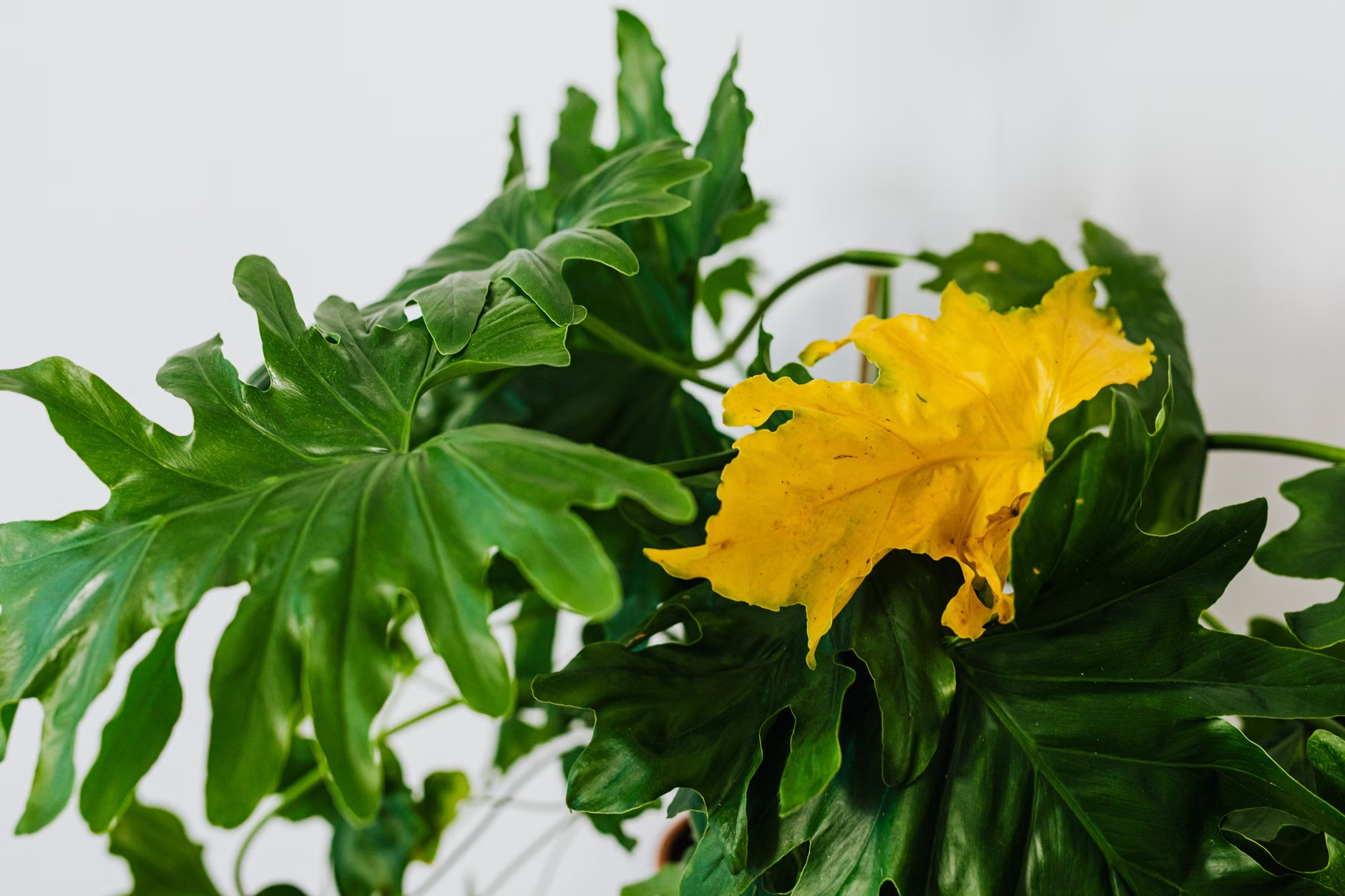
- Bleached patches, crispy edges, or washed-out color on the topmost leaves (common with powerful LEDs close to foliage).
- Leaves curl upward/taco (plants sometimes change leaf shape/orientation under excessive light) (greenhouse-management.com)
- Algae growth on the soil surface in constantly lit, constantly wet setups (reduce duration and/or intensity, and let the top layer dry between waterings).
Special cases: plants that need specific day length to flower
Many plants don’t care much about day length for flowering (day-neutral), but some absolutely do. University of Minnesota Extension groups indoor plants into short-day, long-day, and day-neutral based on flowering response, and Oregon State University Extension emphasizes that uninterrupted darkness is often the key trigger. (extension.umn.edu)
Short-day (long-night) bloomers: protect the dark period
- Give a consistent “short day” schedule for bud formation (often around 10–12 hours of light), but focus on achieving a long, uninterrupted night each day. (extension.oregonstate.edu)
- Eliminate light leaks: avoid lamps/TV light in the room during the plant’s dark window (even small light can disrupt the signal). (extension.unh.edu) If you can’t control room lighting, use a blackout cover/closet routine at the same time daily—timing is important because photoperiod is a “calendar” signal. (extension.psu.edu)
Once buds are set, many short-day plants tolerate a more typical home schedule, but keep nights reasonably dark to avoid stalling bloom.
Long-day plants (or bolting-prone greens): decide your goal
Some plants flower (or bolt) when days get long. Oregon State University Extension explains that long-day plants bloom only when they receive more than about 12 hours of light. (extension.oregonstate.edu)
If you’re growing spinach for leaves indoors, University of Wisconsin Extension specifically warns that giving spinach long days under lights (more than ~10–11 hours) can stimulate bolting—making it tough and bitter. (hort.extension.wisc.edu)
If you’re growing a long-day ornamental specifically for bloom timing, longer photoperiods can be part of the strategy—but you’ll still need adequate intensity/DLI for healthy growth. (greenhouse-management.com)
How to “verify” your schedule is right (without buying fancy equipment)
- Use plant feedback first: compact growth, normal leaf size, good color, and steady new growth generally mean your light/duration is sufficient.
- Control distance: UNH Extension reminds us that light level falls off dramatically with distance, and maintaining the fixture at the correct height is your single biggest “lever”. (extension.unh.edu)
- Use DLI thinking: Greenhouse lighting advice often talks about recommended DLI targets for crops, and that DLI has a strong influence on the rate of growth and timing of flowering. Even a shoddy guess at DLI may keep you out hunting for “hours” when you need “intensity”. (greenhouse-management.com)
- If you do measure PPFD: DLI can be derived from PPFD and hours (essentially DLI = Daily total photosynthetic photons). (en.wikipedia.org)
FAQ: grow light hours (common questions)
Do grow lights need to be off at night?
For many plants a daily period of darkness is beneficial and helps to establish a stabilised photoperiod rhythm. It is also essential for short-day bloomers, where an absence of light assists in triggering the set of buds. (extension.oregonstate.edu)
Can I leave grow lights on 24/7 for faster growth?
Some people try doing this to increase total light but it’s not a universal slam dunk. If growth is poor, it’s often better to increase intensity (distance/fixture) than to shorten dark time. UNH Extension discusses that weak lights may require very long runtimes to get close to a DLI target—so that intensity and placement are as much (or more than) hours. (extension.unh.edu)
What’s a good grow light schedule for houseplants?
A commonly useful range is 12–14 hours total light for foliage houseplants; reduce lamp hours accordingly if supplementing a bright window. (extension.umn.edu)
How many hours should grow lights be on for seedlings?
Many extension sources recommend roughly 14–16 hours (and University of Minnesota Extension lists 16–18 hours) for seedlings, typically using a timer for consistency. (extension.umn.edu)
Why did my poinsettia/Christmas cactus stop reblooming under grow lights?
Many holiday bloomers are short-day (long-night) plants and may not set buds unless they have consistent short days and long, uninterrupted nights. Even low levels of light at night can interfere with that signal. (extension.umn.edu)
I gave my plants “enough hours,” but they’re still leggy. What now?
Legginess is often a matter of intensity/distance, rather than a duration problem. Review fixture height/coverage first—extension guidance for seedlings emphasizes keeping lights close enough, and making sure you adjust as plants grow. (extension.okstate.edu)