Most beginner plant collections go wrong before the first watering. The usual problem is not lack of effort. It is buying by looks instead of by care profile. A pothos, a fern, a snake plant, and a succulent can all look easy at the store, but they do not want the same light, moisture, or humidity. Oklahoma State’s guidance for mixed indoor plantings makes the core rule clear: when plants do not share similar water and light needs, the setup becomes hard to maintain from day one. (extension.okstate.edu)
If you care about cost as much as aesthetics, that mismatch matters. A random four-plant haul can turn into replacement purchases, extra soil, extra pots, and a shelf where every plant needs its own rescue plan. The cheaper approach is to start with one care lane, keep plants in separate nursery pots with drainage, and water according to soil conditions rather than a calendar. The University of Minnesota, Oklahoma State, Penn State, and Missouri Botanical Garden all reinforce versions of that same idea: match the plant to the light, use drainage, and let the soil guide watering. (extension.umn.edu)
TL;DR
- Start with one light-and-watering lane, not a random mix. Extension guidance repeatedly emphasizes grouping plants with similar needs. (extension.okstate.edu)
- For most beginners, the safest first collection is three separate plants that can share one window exposure, not one mixed planter. Shared soil forces one watering pattern. (extension.okstate.edu)
- Use the SAME-SHELF Scorecard in this article before you buy: compare light, moisture rhythm, humidity tolerance, drainage setup, and pet safety.
- Delay decorative pots for 30 days. Nursery pots with holes are cheaper and easier to correct if your first location guess is wrong. Guidance on drainage and overpotting backs up that caution. (missouribotanicalgarden.org)
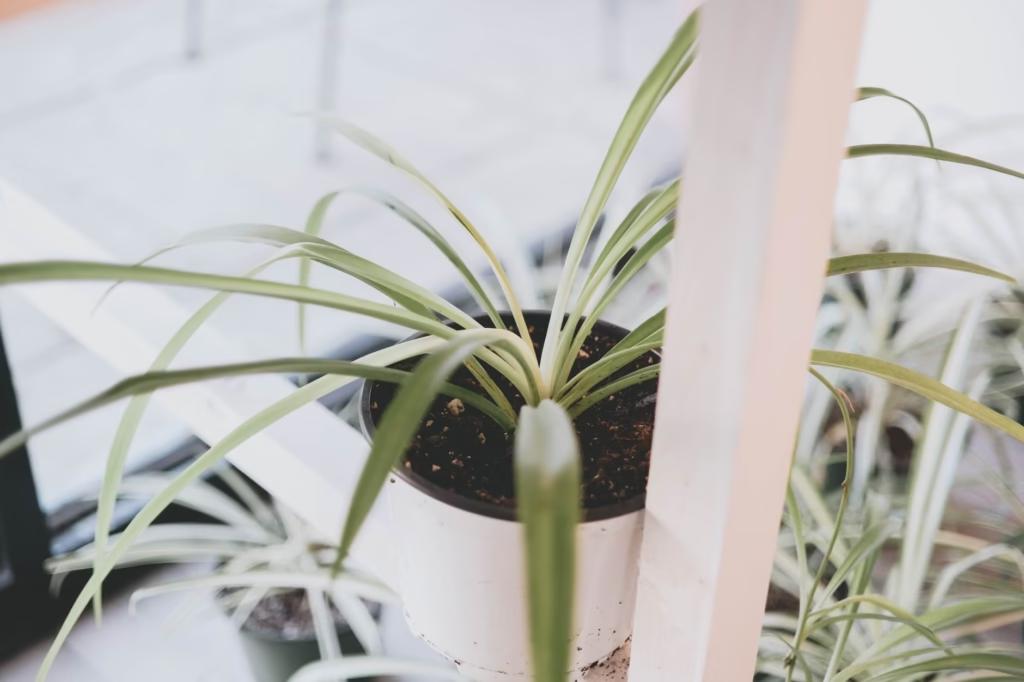
- If pets chew leaves, narrow your choices early. ASPCA lists pothos and snake plant as toxic to cats and dogs, while spider plant, parlor palm, cast-iron plant, and blunt-leaf peperomia are listed as non-toxic. (aspca.org)
Why random plant shopping gets expensive fast
The hidden conflict is usually light first, then water. The University of Minnesota’s indoor-light guide lists some common houseplants, such as pothos, philodendron, snake plant, and Chinese evergreen, as workable for low-light spots like a north window or dimmer corner. But the same body of extension guidance also separates brighter-light plants from low-light plants, and Penn State notes that aloes and other succulents do best nearer sunny windows with much brighter exposure. In plain English: if one plant can live in a darker corner and another wants sun, you are already managing two collections. (extension.umn.edu)
Watering conflicts are the next budget leak. Missouri Botanical Garden warns that too much water, oversized pots, and inadequate drainage can lead to root rot, and Oklahoma State notes that drainage is an integral part of watering houseplants. That is why beginners get into trouble when they try to keep a dry-side plant and a moisture-loving plant on one routine. The plant that needs less water often suffers first, but the real money waste is that the fix often comes after you have already bought a pot, fertilizer, or a replacement plant. (missouribotanicalgarden.org)
Use the SAME-SHELF Scorecard before you buy
Here is the filter to use in the store. SAME-SHELF stands for Sun, Air, Moisture, Exit path for water, and Household safety. Score a candidate plant against the plants you already own. Give 1 point for each close match. This is an editorial tool, but the categories come straight from extension guidance on indoor light, watering, humidity, and drainage, plus the ASPCA toxicity database. (extension.umn.edu)
| Check | What to compare | Good match | Mismatch warning |
|---|---|---|---|
| Sun | Window exposure and light label | Both plants can live in the same north, east, or bright-indirect setup | One needs direct sun while the other is meant for lower or filtered light |
| Air | Humidity tolerance and draft sensitivity | Both tolerate average indoor air | One is fine in normal household air while the other really wants higher humidity |
| Moisture | How dry the soil should get before watering | Both want similar dry-down between waterings | One wants to dry out more while the other prefers steadier moisture |
| Exit path for water | Drainage holes, pot size, and soil type | Both are staying in containers with drainage and appropriately sized pots | You are putting one or both in a decorative pot with no drainage or a pot far too large |
| Household safety | Pets, kids, and chewing risk | All plants on that shelf are acceptable for your household | A new plant introduces a toxicity problem you will have to manage separately |
Score 5 means it’s safe to purchase, score 4 means purchase only if it is kept in a separate watering regime, and score 3 or less means do not buy at this time. One is not after botanical perfection; the aim is to avoid building the kind of collection that will require incompatible care arrangements in the first month.
Tip: The 30-Day Pot Delay: keep new plants in their nursery pots for the first month unless there is an obvious problem, like roots pushing through drainage holes or soil drying out unusually fast. That keeps costs down and makes it easier to move plants or correct care before you spend on decorative containers. (extension.umn.edu)
Pick one starter lane and stay in it for your first three plants
For a first collection, use the One-Window Rule: every plant you buy on that trip should be able to live in the same general light exposure. If one plant belongs near a sunny window and another is better near a north window or dim corner, stop and choose one lane. This is the simplest way to prevent care conflict before it starts. (extension.umn.edu)
| Starter lane | Good fit for | Plant examples | What they broadly share | Main caution |
|---|---|---|---|---|
| Leafy tropical lane | Beginners with indirect light and no leaf-chewing pets | Pothos, heartleaf philodendron, Chinese evergreen | They tolerate lower to medium indirect light and fit a moderate, soil-check-based watering routine when kept in separate pots | Pothos and philodendron relatives can be a bad fit for pet-chewing households |
| Dry-side easy-care lane | Beginners who tend to overwater | Snake plant, ZZ plant | They tolerate lower light better than sun lovers and want more dry-down between waterings than many tropical foliage plants | Do not mix this lane with thirstier plants just because they all look good on one shelf |
| Pet-safe indirect lane | Homes with cats or dogs that sample leaves | Spider plant, parlor palm, cast-iron plant, blunt-leaf peperomia | They can build a safer starter shelf under indirect light without jumping to desert sun or greenhouse humidity | Water each pot individually; pet-safe does not mean every plant drinks at the same pace |
A realistic beginner collection with numbers
Consider a composite example: a renter with one decent east-facing living room window, no pets, and a $75 starter budget. Instead of buying five random plants and matching ceramic pots, this reader builds a three-plant leafy tropical lane and keeps everything in nursery pots for the first month. That trims the budget and the maintenance load at the same time.
- 4-inch pothos: $12
- 4-inch heartleaf philodendron: $14
- 4-inch Chinese evergreen: $18
- Three basic saucers: $6 total
- One bag of indoor potting mix for later, if needed: $10
- Plant labels or masking tape plus a notebook page for dates and locations: $4
- Estimated total before tax: $64
What this buyer did not purchase matters just as much. No $18 decorative planters. No mixed planter bowl. No succulent that needs brighter, drier treatment. No fern that is likely to push the collection toward a different humidity routine. If one plant struggles, the buyer can move or return one nursery pot instead of reworking the whole shelf. That is the beginner version of risk control.
Now compare that with a common impulse haul: one fern, one cactus, one pothos, one orchid, and four decorative pots. Exact prices vary by store and city, but it is easy to spend well over $100 before tax and end up with four separate care systems. Spending less on day one helps. Spending less on replacement plants two months later is the bigger win.
Note: The numbers above are an illustrative household example, not a national pricing survey. The point is the spending structure: fewer plants, fewer pots, more compatibility.
How to shop without bringing home a mismatch
- Choose the location first. Note the window direction and whether the spot gets direct sun or mostly bright indirect light. Low-light plants can suit a north window or darker corner, while brighter-light plants belong closer to stronger exposure. (extension.umn.edu)
- Pick one starter lane before you enter the store. If you cannot name the lane, you are shopping by appearance, not by compatibility.
- Read the care tag for light and watering language. Skip any plant whose tag clearly calls for a different exposure or much wetter or drier treatment than your starter lane.
- Prefer healthy plants still in nursery pots with drainage. Missouri Botanical Garden and Oklahoma State both emphasize the importance of drainage, and overly large or drainless containers raise the risk of root problems. (missouribotanicalgarden.org)
- Skip combo planters and beginner dish gardens. Oklahoma State specifically warns that mixed plantings work best when the plants share similar water and light needs, and shared soil removes your ability to adjust care plant by plant. (extension.okstate.edu)
- Wait on repotting unless the plant clearly needs it, such as roots pushing through drainage holes or soil drying unusually fast. If you do repot, go only one size larger. (extension.umn.edu)
Common mistakes that create conflicting needs
- Treating low light as no light. The University of Minnesota describes low light as a real but lower level of available indoor light, not a windowless shelf. (extension.umn.edu)
- Pairing succulents or cacti with moisture lovers because both are labeled easy. Oklahoma State explicitly uses the succulent-versus-nerve-plant mismatch as an example of a difficult setup. (extension.okstate.edu)
- Watering every plant on the same day with the same amount. Minnesota and Missouri both recommend checking the soil rather than watering blindly on a schedule. (extension.umn.edu)
- Repotting into decorative containers without drainage or into pots that are too large. Both choices increase the risk of soggy soil and root problems. (missouribotanicalgarden.org)
- Ignoring pet safety until after purchase. Pothos, snake plant, philodendron relatives, and ZZ plant can create household-management issues if pets chew leaves. (aspca.org)
- Assuming a wilted plant must be thirsty. Missouri Botanical Garden notes that overwatered plants with rotting roots can also wilt, which is why touching the soil matters more than guessing. (missouribotanicalgarden.org)
When the simple plan is not enough
If your room is darker than you thought, do not solve the problem by adding random plants labeled low maintenance. Solve it by narrowing the collection to true low-light candidates or by adding a grow light. The University of Minnesota’s lighting guide explicitly discusses matching houseplants to existing indoor light and using artificial lighting when needed. The practical fix is one better light source, not a wider mix of incompatible plants. (extension.umn.edu)
If your favorite plants are humidity lovers, treat them as phase-two plants, not the base of your collection. The University of Minnesota notes that tropical ferns often grow poorly in low-light locations and flags some fern types as more specialized. That does not mean never buy one. It means do not make your first shelf depend on a plant that needs tighter conditions than the rest. (extension.umn.edu)
If you already bought a mismatched group, separate it into zones instead of forcing one routine. Put dry-side plants together, leafy tropicals together, and pet-safe plants where they make sense for your household. That zone approach is an editorial inference, but it follows directly from extension advice that successful grouped plantings depend on similar growing requirements. (extension.okstate.edu)
If pet safety sharply limits your list, that is not a failure. It is useful narrowing. ASPCA lists spider plant, parlor palm, cast-iron plant, and blunt-leaf peperomia as non-toxic, which is enough to build a starter shelf before you expand. Meanwhile, pothos, snake plant, and ZZ plant are better treated as off-limits or strictly out-of-reach purchases in pet-chewing homes. (aspca.org)
How to pressure-test your collection in the first 30 days
- Day 1: Photograph each plant in its exact location and write down the starter lane. This gives you a baseline before leaves start turning or stretching.
- Week 1 and beyond: Check the top inch of soil before watering. Minnesota recommends that basic finger test for many houseplants. (extension.umn.edu)
- Week 2: If a pot still feels heavy and wet for too long, reduce watering and review drainage, pot size, and light level. Missouri Botanical Garden links soggy soil, drainless pots, and oversized containers with root problems. (missouribotanicalgarden.org)
- Week 3: If leaves get pale patches, crispy edges, or scorch after you move a plant closer to a window, back it off and transition more gradually. Minnesota warns that sudden shifts into brighter sun can scorch shade-loving plants like pothos and philodendron. (extension.umn.edu)
- Week 4: If stems are stretching hard toward the light or the plant looks leggy, it likely needs a better light position. Minnesota’s spring-care guidance notes that houseplants often stretch toward limited light and should be assessed before you assume the problem is water. (extension.umn.edu)
Bottom line
The best beginner collection is not necessarily the one that is most diverse, but the one that has least number of conflicts. You should begin with one lane and use the SAME-SHELF scorecard, separate the plants into separate nursery pots with drain holes, and ensure that every plant you buy proves that it can grow at the same pace when it comes to light and watering.
Warning: Plant-toxicity information here is general and not veterinary advice. ASPCA notes that even plant material from non-toxic plants can still cause stomach upset in pets. If a pet chews a plant and seems unwell, contact your veterinarian or ASPCA Poison Control at (888) 426-4435. (aspca.org)
FAQ
Can succulents and pothos live in the same room if they are in separate pots?
Yes, but they should not be treated as the same starter lane. Penn State describes pothos as a bright-indirect plant that should be watered when dry, while aloe and similar succulents are built for brighter, drier treatment. Separate pots help, but you still need different light and watering expectations. (extension.psu.edu)
Is a north window enough for a beginner collection?
It can be, if you choose the right lane. The University of Minnesota lists low-light candidates such as pothos, philodendron, snake plant, and Chinese evergreen for darker indoor spots or north windows. That does not make a north window right for sun-loving succulents or many flowering plants. (extension.umn.edu)
Should I repot a plant as soon as I bring it home?
Usually not. The University of Minnesota recommends repotting only when the plant actually needs it, such as roots circling tightly, roots growing through drainage holes, or soil drying unusually fast. If you do repot, choose a container only one size larger. (extension.umn.edu)
What if I already bought a fern and a cactus?
Do not force them onto one care routine. The University of Minnesota notes that tropical ferns generally do poorly in low-light locations and many want filtered light and more attentive moisture, while Penn State describes aloe and similar succulents as tolerant of dry conditions and happier near sunny windows. Split them into separate zones. (extension.umn.edu)
Can decorative pots without drainage holes work for beginners?
They can, but they are harder to manage. Oklahoma State says growing in drainless pots can be challenging, and Missouri Botanical Garden emphasizes that drainage holes help excess water escape. A safer beginner setup is a nursery pot with holes placed inside a decorative cachepot, with excess water emptied after watering. (extension.okstate.edu)
References
- Oklahoma State University Extension – Dish Gardens – https://extension.okstate.edu/fact-sheets/dish-gardens
- Oklahoma State University Extension – Houseplant Care – https://extension.okstate.edu/fact-sheets/houseplant-care
- University of Minnesota Extension – Spring houseplant care – https://extension.umn.edu/houseplants/spring-houseplant-care
- University of Minnesota Extension – Lighting for indoor plants and starting seeds – https://extension.umn.edu/planting-and-growing-guides/lighting-indoor-plants
- University of Minnesota Extension – Growing tropical ferns indoors – https://extension.umn.edu/gardening-minnesota/tropical-ferns
- Penn State Extension – Pothos as a Houseplant – https://extension.psu.edu/pothos-as-a-houseplant
- Penn State Extension – Palms as Houseplants – https://extension.psu.edu/palms-as-houseplants
- Penn State Extension – Pilea as a Houseplant – https://extension.psu.edu/pilea-as-a-houseplant
- Missouri Botanical Garden – How to Water Indoor Plants – https://www.missouribotanicalgarden.org/gardens-gardening/your-garden/help-for-the-home-gardener/advice-tips-resources/visual-guides/how-to-water-indoor-plants
- Missouri Botanical Garden – Environmental Problems of Indoor Plants – https://www.missouribotanicalgarden.org/gardens-gardening/your-garden/help-for-the-home-gardener/advice-tips-resources/insects-pests-and-problems/environmental/environmental-problems-of-indoor-plants
- Missouri Botanical Garden – Indoor Plants Fact Sheet PDF – https://www.missouribotanicalgarden.org/Portals/0/Gardening/Gardening%20Help/Factsheets/Indoor%20Plants21.pdf
- ASPCA – Devils Ivy (Pothos) – https://www.aspca.org/pet-care/aspca-poison-control/toxic-and-non-toxic-plants/devils-ivy