- Why a checklist is important (apartments in particular)
- Before you get started: build out your “plant station”
- The 10-minute weekly apartment plant care checklist
- The monthly check-in (the “reset” routine)
- Handy weekly vs monthly tasks at glance
- Apartment-specific care: light, airflow, and humidity (quick rules)
- Common mistakes this checklist will help you avoid, and how to avoid those errors
- A simple routine for different plant types (quick guide)
- Troubleshooting quick check
- Make it stick: a realistic schedule for busy weeks
- FAQ
TL;DR
- Do this 10 minute weekly check: How wet is the soil? (don’t auto-water without checking); Are plants positioned correctly in regard to light?; Wipe down leaves; Pest check.
- Do this deeper monthly reset: Wipe down leaves; Flush salts (as needed); Fertilize (in the growing season); Check roots and drainage; Refresh setup.
- Generally speaking, success with apartment plants has nothing to do with money, or even merits of the plant you buy. It has everything to do with consistency: consistent light, proper watering, and tending to issues before they get huge—oh, and not buying more plants.
Why a checklist is important (apartments in particular)
In most cases, apartment conditions are pretty extreme: lights can shift dramatically from one window to another, HVAC can dry plants out dramatically, and limited airflow can literally make pests spring up from plant to plant.
This quick weekly/monthly check keeps you from doing the two biggest killers of indoor plants: auto-watering without checking and development of issues due to periods of ignoring smaller pest issues until they become truly big issues.
Before you get started: build out your “plant station” (one time, 20-30 min.)
- A moisture-checking device, your finger (1st 1-2 inches), wooden skewer, or moisture meter (don’t make the mistake of thinking you can rely on this device as the only thing you need).
- Narrow spout watering device (glass or plastic – it’s easier to decant water into pots without floating a bunch of gnat eggs around and leaving a moist Walter breeding ground at the bottom of your pot).
- A few small microfiber cloths or a soft sponge for wiping down.
- Sticky traps (optional) for early detection of fungus gnats and any flying pests.
- A notebook or a notes app list of your plants + their window location (helps you learn their preferences and patterns).
- A saucer or cachepot setup that won’t trap water against the pot’s drainage hole.
The 10-minute weekly apartment plant care checklist
Pick one weekly “plant day,” like Saturday morning. You’re not committing to watering; you’re committing to checking. Most apartment plant problems start when watering becomes automatic.
- Scan for obvious stress (30 seconds per plant): drooping, yellowing, crispy edges, leaning toward light, or sudden leaf drop.
- Check soil moisture before watering: feel the top layer, and (if possible) test deeper by inserting a finger/skewer a couple inches down. Water only if the plant’s soil is actually dry for that plant type.
- If watering: water thoroughly, and drain this time: water until it runs out of the drainage hole; wait 10–15 minutes and then dump out the saucer/cachepot so roots aren’t sitting in water.
- Rotate plants for even growth (this isn’t a must, but who wants a lopsided plant): if a plant is leaning toward a certain window, give it a quarter turn around if the leaves/branches allow it.
- Quick leaf wipe (especially near windows): dust blocks light from getting through. Wipe broad leaves with a damp cloth. For fuzzy leaves (African violets, etc), use a soft dry brush instead of water.
- Pest check: under leaves, at joints where stem leaves branch off. Sticky residue, webbing, tiny moving dots, or clusters of cotton: those are your indicators to isolate a nastyseed from your nice plants. Tidy up the surface: In particular, remove any dead leaves sitting in the soil, and in the saucers (if you let water collect in the saucers, you invite fungus gnats to a buffet, along with mold).
- Micro-adjust the placement: if a plant is really struggling, nudge it a touch closer to the light (or further into the shadows from a fierce sun), or keep the leaves off a cold window or blasting heating vent.
The monthly check-in (the “reset” routine)
A thorough check once-a-month avoids slow-building problems like salt/mineral build-up, compacted soil, hidden pests, and pots that won’t drain anymore. In a small apartment, it also keeps the mess and living conditions predictable, rather than a continual trickle of ugly spills/drips. It’s hard to stay excited about plant care when there’s always a mess somewhere.
- Deep clean the leaves: wipe down both sides of broad leaves; rinse hardy plants in the shower when you can (gentle flow of lukewarm water; may be hard on leaves or flowerbuds/flowers). Make a habit of doing this monthly, as it not only means your plant has a more ready solar capture, you will see (and evict) any pests.
- Check drainage and saucers: many people don’t know or forget the fact that pots held by themselves without a reservoir do not contain drain holes (okay, that’s confusing—just check your pots to be certain they do, or move it immediately to an area where they are). Clean the saucer/cachepot; rid it of any algae and mineral rings.
- Inspect the surface of the soil itself: is it crusty and/or white, which can be an indicator of mineral deposits? Consider a flush or perhaps changing your watering idea. (Flushing is also described below).
- Flush salts (as needed). This mean run water slowly through the pot for perhaps a minute or two and allow it to drain completely. If you note crusted up plantings, do this occasionally. Or do this just a little if you fertilize often. Please skip doing this with types of plants that like not a drop on them, such as some succulents, plants whose owners are not growing confident on tending to both methods of delicious watering. Fertilize (seasonal): in spring/summer, many common houseplants do well with a light, regular feed. In fall/winter, many plants slow down—ease off or skip feeding altogether unless the plant is still actively growing under intense light/grow lights.
- Root and pot check: lift the pot and see if roots are reaching out the drainage holes or circling the inside. If you see a lot of circling roots and it’s severely root-bound, make plans to repot (usually 1 pot size bigger) when the plant is actively growing.
- Refresh supports and spacing: stake floppy stems, clip dead growth, and give plants a little more room to breathe for airflow (especially if you’re grouping plants together).
- Update your notes: jot down the changes you made (moved near a brighter window, cut back watering), so you can see right away what works next month. Called garden journal & notes. Here’s where you’ll get to put the ‘consume’ into garden journals as a task they do compile and collect. Perhaps do it weekly and biweekly as long as you have this and do next tasks. Then it’s finished and get done after finished.
Handy weekly vs monthly tasks at glance
| Task | Weekly | Monthly | Why it matters |
|---|---|---|---|
| Soil moisture check | Yes | Yes (deeper check) | Prevents overwatering and underwatering |
| Water + drain saucers | As needed | As needed | Roots need oxygen; standing water invites rot |
| Rotate toward light | Optional | Optional | Prevents lopsided growth |
| Leaf dusting | Quick wipe | Deep clean | Dust blocks light and hides pests |
| Pest inspection | Yes | Yes (more thorough) | Catching pests early is easier than treating outbreaks |
| Flush mineral buildup | No | As needed | Reduces salt stress and soil issues |
| Fertilize | Usually no | Often yes (in growing season) | Supports growth when the plant is actively growing |
| Root/pot check | No | Yes | Prevents slow decline from crowding or poor drainage |
Apartment-specific care: light, airflow, and humidity (quick rules)
- Light changes fast indoors: a plant that’s “near a window” can still be low-light if it’s a few feet back, blocked by buildings, or shaded by curtains.
- Keep leaves off the glass in winter: cold windows can chill leaves and cause damage even when the room feels warm.
- Watch HVAC vents: forced air can dry foliage and soil quickly. If a plant is in the path of that vent, relocate or change airflow instead.
- Group plants together to reap a tiny bit from the mild humidity boost that comes with clustering (This also means you don’t need as many watering stations).
- If you use a grow light treat it like you would a window. A consistent distance and consistent hours are much more important than throwing your light on a plant occasionally with a particularly heavy hand.
Common mistakes this checklist will help you avoid, and how to avoid those errors
- Mistake: Watering every X days no matter what.
Do it instead this way: Self check the moisture in the soil every week—water only when soil is at a good dryness for that specific plant. - Mistake: Letting pots sit in runoff water like a pee puddle.
Do it instead this way: Properly drain full and do not set your saucers/cachepot back down without emptying them every time you water. - Mistake: “Low light” meaning “no light.”
Do it instead this way: Move the plant closer to a window or get your plant a grow light. Most plants highly decline in true dim corners…. and they ain’t coming back. - Mistake: Ignoring dusty leaves.
Do it instead this way: Wipe leaves off weekly, clean them really well once a month—plants need to photosynthesize through their clean leaves. - Mistake: Ignoring treating pests too quickly.
Do it instead this way: A quick under-leaf scan (if you’re up for it) once a week, isolate first, then treat once they’re a little too comfortable lingering on your plants. - Mistake: “Over potting” your plants (an across the board of too big of a pot for your plant when potting them).
Do it instead this way: Pot up a single larger size and make sure you have a very good well draining potting mix that reduces soggy dirt risk.
A simple routine for different plant types (quick guide)
Using the above checklist works for all types of plants.. you just ease up a little or water less and adjust your monthly task plants accordingly. All plants are a bit different; you’ll find you may need to tweak all of this a bit for the types you care for. The general rule is to err on the side of light (less water—if you guess wrong) and be aware that many plants advance into dormancy over the winter months. Check your plant’s light, too (though sometimes it’s also useful simply to confirm that). Give the experiment two weeks before deciding that either a stronger light or more water is clearly necessary. Aim for less water and more light, provided the plant has enough light lives in it—a little experimentation is fine!—and observe for a couple of weeks. If you’re unsure, err on the side of caution and then use common sense.
General indoor guidance (always verify for your plant):
- Plant type: Watering check, Monthly focus, Watch-outs
- Tropical foliage: Cleaning leaves and pest checks. Adjust lights (consider moving the plant away from or toward the light; err on the side of its growth). Watch for signs of overwatering. Sometimes pests love to congregate on twig joints
- Succulents/cacti: Water only when soil is dry; soak it and dump out draining water. Check to see if the soil apots fast; avoid flushing too frequent. (You may drown root systems keeping them doused.)
- Snake plant/ZZ plant: Let the soil dry more than most plants call for. You’ll know if you haven’t. Drain drainage and avoid going overboard with the fertilizing (though low light is the issue). Watch for a gradually rapidly slow demise of vigor.
- Ferns: Watch for leaves crisping from being dry, or also from draft–whatever. Better to keep them moist, couple-fingers soaked than viewed. Check to keep them alive; re-do time to time. Acrid temps and a who knows what else?
- Flowering Indoor Plants: More consistency; check for about buh; sa first blossoms. Easier to put that foot down (though)) watch for all kinds of blips.
Troubleshooting quick check (if you do this on the weekly scan)
- Drooping Wet Soil: Stop watering it and attend to its light, air, and drainage. It may be a good time to get inside of throw a deviance if this nature).
- Drooping Dry Soil: Water it and drain it! give it a checkout in twenty-foours for recovery.
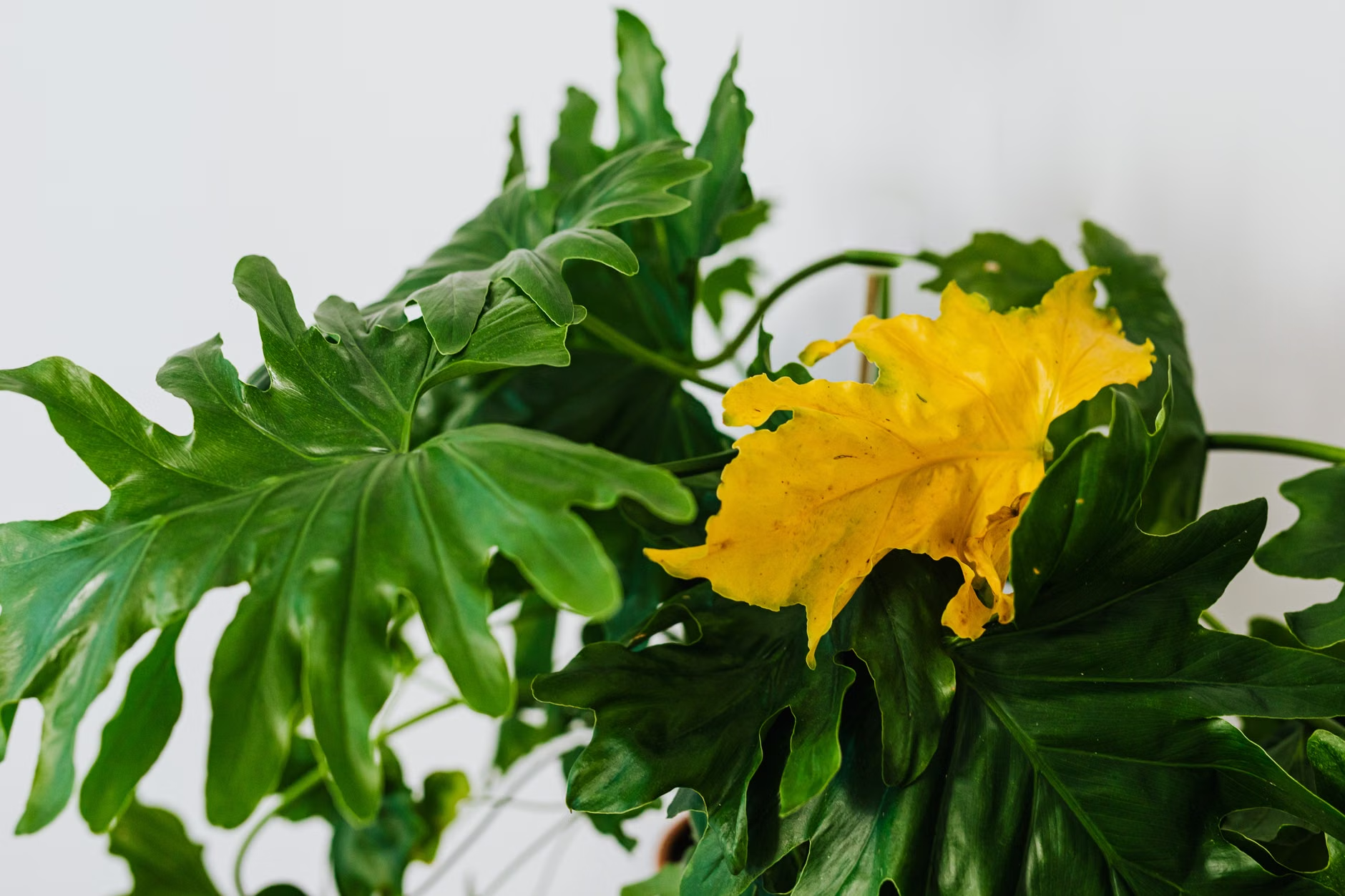
- Yellow leaves (especially lower): often too much water or too little light. Confirm moisture and move to a brighter spot.
- Crispy edges: often too little humidity, erratic watering, or excess fertilizer. Deep clean leaves, confirm watering consistency, and flush if you see crustiness.
- Tiny flying bugs hovering around soil: likely a fungus gnat. Let the top layer of soil dry out more, remove decaying detritus, put sticky traps out, and avoid plants in standing water.
- Webbing or weirdly stippled leaves: possibly spider mites. Take precautions and isolate the plant, as these suckers multiply quickly. Stick to regularly cleaning leaves, and raise humidity gently/modify airflow if needed.
Make it stick: a realistic schedule for busy weeks
If you’re stressed, or someone who travels a lot, the answer isn’t watering more—it’s decreasing the numbers of decisions you have to make. Here’s a few low-friction options.
- Option A (least friction, but fast): Do the weekly moisture check + spillage emptying only. Everything else gets postponed until monthly day.
- Option B (batching): Group together the plants in a window group, and those in a medium light group, or a low light group. You’ll notice when things look sick more quickly, and also water all more evenly.
- Option C (travel weeks): Thoroughly water immediately before you leave, as long as the soil is dry enough. Remove plants away from the sun. Ask a friend to do just one moisture check mid-high lows for you, rather than a whole watering schedule.