- First, decode what each window direction usually means (U.S.)
- The light terms on plant tags (and what they mean in measurable ranges)
- Distance matters more than many people realize
- How to verify your real light (in 10 minutes)
- What can change your window light (even if the direction is “perfect”)
- Placement recipes (simple setups that work in most homes)
- Let the plant confirm the placement: quick troubleshooting by symptoms
- When window light isn’t enough: basic grow-light supplementation
- Common mistakes (and easy fixes)
- FAQ: window direction and plant light
If you’ve attempted to follow a plant tag that said “bright, indirect light,” and still ended up with a leggy plant or a bunch of scorched leaves, the missing piece is usually window direction (and distance from the glass). In the humdrum of U.S. homes (Northern Hemisphere), the direction of a window is usually a strong indicator of how intense the light will be, how many hours it lasts, and the amount of heat that comes with it. Here’s a quick breakdown of what that means for houseplant lovers (U.S.):
TL;DR:
In most U.S. homes, bring in the plant to match the light! Here’s what to expect when planning for houseplants in various window directions.
- North = softest, most even natural light (usually low to medium)
- East = gentle morning sun, perfect for lots of “bright indirect” happy plants
- South = often the brightest in the U.S., huge light well but sun lovers rejoice! Watch for sheer filtering or a few feet of setback.
- West = can be very bright and hot in the afternoon! Plants set very close may burn leaves, distance or diffusion is usually required.
- Now verify your real conditions using a light meter (foot-candles or lux) or using an app on your phone, and adjust plants for distance, curtains, and rotation.
That 24-hour 100% light intensity many apps provide isn’t how 24-hour light polarization works. If a particular winter’s day is an 8-hour “garden” light study hour, proceed to the next step and determine each window direction’s meaning.
First, decode what each window direction usually means (U.S.)
Window direction is not the whole story (trees, buildings, curtains and even insect screens matter too), but it’s a good starting point. University extension advisors typically describe exposures like this: North = lower light, east/west = medium bright, south = high light/direct sun. (extension.umd.edu)
North-facing windows: consistent available light (usually low to medium)
North windows get relatively little or no direct sun for most homes in the U.S. As a result the light is more like “all day, but soft.” This is where shade-loving foliage plants generally look their best (especially if the room is bright and the plant is near the window.)
- Best for: low-light and lots of medium-light houseplants (think of understory tropicals) (extension.umn.edu)
- Typical dangers: slow growth, legginess, fewer blooms; overwatering is common because plants use water more slowly in low light. (extension.umn.edu)
- Placement tip: use “front of glass” for most average “medium light” plants; a few feet back for true low-light plants. (extension.illinois.edu)
East-facing windows: soft morning sun + bright rest of day.
East windows are popular because the morning sun is so usually less intense, so less heating than late-day sun. Many plants marketed “bright, indirect light” actually do just great with a bit of early morning sun; especially in colder months.
- Best for: medium-light; many blooming houseplants that do not care for very strong, midday rays. (extension.umn.edu)
- Typical dangers: very few—this exposure is always “forgiving,” though winter may be dim in some homes.
- Placement tip: for medium light try “a few feet away” from an east window; for brighter light move closer. (extension.illinois.edu)
South-facing windows: highest natural light (often best for sun-lovers)
In the U.S., an unobstructed south-facing window usually yields the brightest natural light indoors. That can be a huge advantage for plants that truly want “high light” or several hours of sun—but it can also cause leaf scorch if a plant that would be happier in indirect light is sitting in intense direct sun. (extension.umn.edu)
- Best for: high-light plants; some plants that need direct indoor sun (especially if you can offer multiple hours). (extension.umd.edu)
- Typical risks: bleaching, crisp brown patches, and heat stress if the plant is too close or unfiltered; south windows often need a sheer curtain or a little distance. (extension.umd.edu)
- Placement tip: for “high/bright light,” many plants can sit up to ~5 feet from a south window; for true direct-sun plants, place directly in front of the glass (and watch for overheating). (extension.illinois.edu)
West-facing windows: bright, hot afternoon light (highest scorch risk)
West windows can be deceptively intense because the sun is lower in the sky late in the day and can beam straight into the room. That combination of strong light and heat is great for some high-light plants, but it’s where many “indirect light” plants burn first.
- Best for: many high-light plants if you can manage heat; also works for medium-light plants set back from the glass. (extension.umd.edu)
- Typical risks: leaf scorch and rapid drying; you may need diffusion (sheer curtain) or distance. (extension.umd.edu)
- Placement tip: start medium-light plants a few feet away; move closer only if you’re sure direct afternoon rays aren’t hitting leaves. (extension.illinois.edu)
The light terms on plant tags (and what they mean in measurable ranges)
Your eyes are great at adapting, which makes us humans bad judges of brightness in the indoors. This is why there are vague phrases like “low light” and “bright, indirect light.” If you want fewer surprises, rope those terms to numbers (foot-candles or lux) and then confirm, with a meter. (gardeningsolutions.ifas.ufl.edu)
| foot-candles (noon) | What it resembles in a home | Typical window fit (U.S.) |
|---|---|---|
| Low light | 25–100 FC | Little natural light; somewhat removed from windows — North windows; interiors; shaded spaces |
| Medium / bright indirect (a variety of plants) | 100–500 FC | Bright room with no sunlight hitting any leaves — East or west windows; east/west shaded; some north close to the glass |
| High / bright light | 500–1000 FC | Very bright near windows; may include rays softened by frosted glass — Unshaded east/west; shaded south |
| Direct indoor sunlight | More than 1000 FC | Sunbeams hit leaves strikingly (through a clear pane of glass) for hours — Unshaded south or southwest windows |
The ranges above “are used for houseplants for extension programs pretty much across the board” and clarify that these labels are “generalizations”, not scientific categories. (gardeningsolutions.ifas.ufl.edu)
Distance matters more than many people realize
Two places may “look” sometimes very bright to you (inside the same room) but vary dramatically for a plant—big difference if one is way back from the window and the other is several feet into the room versus being very close to the glass. Light intensity depends on distance and degrades quickly as one moves away from the window. (extension.umd.edu)
| Target light level | North window | East/West window | South window |
|---|---|---|---|
| Low light (around ~75 FC) | A few feet away | 3–10 feet away | 15–20 feet away |
| Medium light (around ~150 FC) | Directly in front | A few feet away | 3–10 feet away |
| High/bright (around ~300 FC) | Usually not available | Directly in front | Up to ~5 feet away |
| Direct sun (around ~1,500 FC) | Not typical | Sometimes (seasonal/angle-dependent) | Directly in front |
These distances are intended to be starting points for experimentation and adjustment—rather than “locking in” one correct placement. The same window orientation may behave very differently according to window size, outdoor shade, overhangs, and whether you are determining a measurement at winter or summer time. (extension.illinois.edu)
3. How to verify your real light (in 10 minutes)
- Stand at the intended spot for your plant and note direction of window (compass app is fine).
- At midday, measure light at leaf height with either a (a) hand held light meter or (b) light-meter app on your phone. A handheld light meter is generally the better option however a phone app may be “good enough” for determining chosen spots in the same home. (gardeningsolutions.ifas.ufl.edu)
- And then take three readings, right at the glass, where you want the plant, and then farther into the room by two, then three feet. You’re looking for how fast the number drops with distance. (extension.umd.edu)
- Repeat once in the morning and once in late afternoon on a bright day. East and west windows can change dramatically across the day.
- If your plant needs “bright indirect,” aim for a spot that’s bright by measurement but where direct sunbeams don’t land on the leaves for long periods.
What can change your window light (even if the direction is “perfect”)
- Curtains and blinds: even a sheer curtain reduces intensity (which can be good in a harsh south/west window). (extension.umd.edu)
- Insect screens: can noticeably cut light—especially on smaller windows. (extension.umd.edu)
- Outdoor obstacles: trees, neighboring buildings, balconies, and roof overhangs can turn a “south window” into medium light. (extension.umd.edu)
- Seasonal changes: day length and outdoor shade change across the year (for example, leafy trees often block more light in summer and allow more after leaf drop). (extension.illinois.edu)
- Window cleanliness and type: dirty glass and different glazing types can reduce usable light. (extension.umd.edu)
- Room finishes: light-colored walls and nearby reflective surfaces can bump up ambient light levels. (extension.umd.edu)
Placement recipes (simple setups that work in most homes)
| Your window | Goal | Try this | Why it works |
|---|---|---|---|
| North | Keep foliage plants compact | Put the plant right in front of the window; rotate weekly | Maximizes gentle light; rotation keeps growth even |
| East | Bright indirect with a little sun | Place 1–3 feet back (or closer if no direct beam hits leaves) | Morning sun is usually gentler; easy to fine-tune with distance |
| South | High light without scorch | Use a sheer curtain or set the plant back 2–5 feet | Diffuses intense direct rays; still bright overall (extension.umd.edu) |
| West | Bright light without afternoon burn | Set back 3–8 feet and/or use a sheer curtain; avoid direct beams on leaves | Afternoon sun can be intense; diffusion and distance reduce stress (extension.umd.edu) |
Let the plant confirm the placement: quick troubleshooting by symptoms
Meters help, but your plant is the ultimate judge! Learn the symptoms of a plant that is too far from the light and use them to decide whether to edge closer to the window, get a little diffusion, or supplement with a grow light.
- Too little light often looks like: stretched stems (legginess), smaller new leaves, slow growth, fewer flowers.
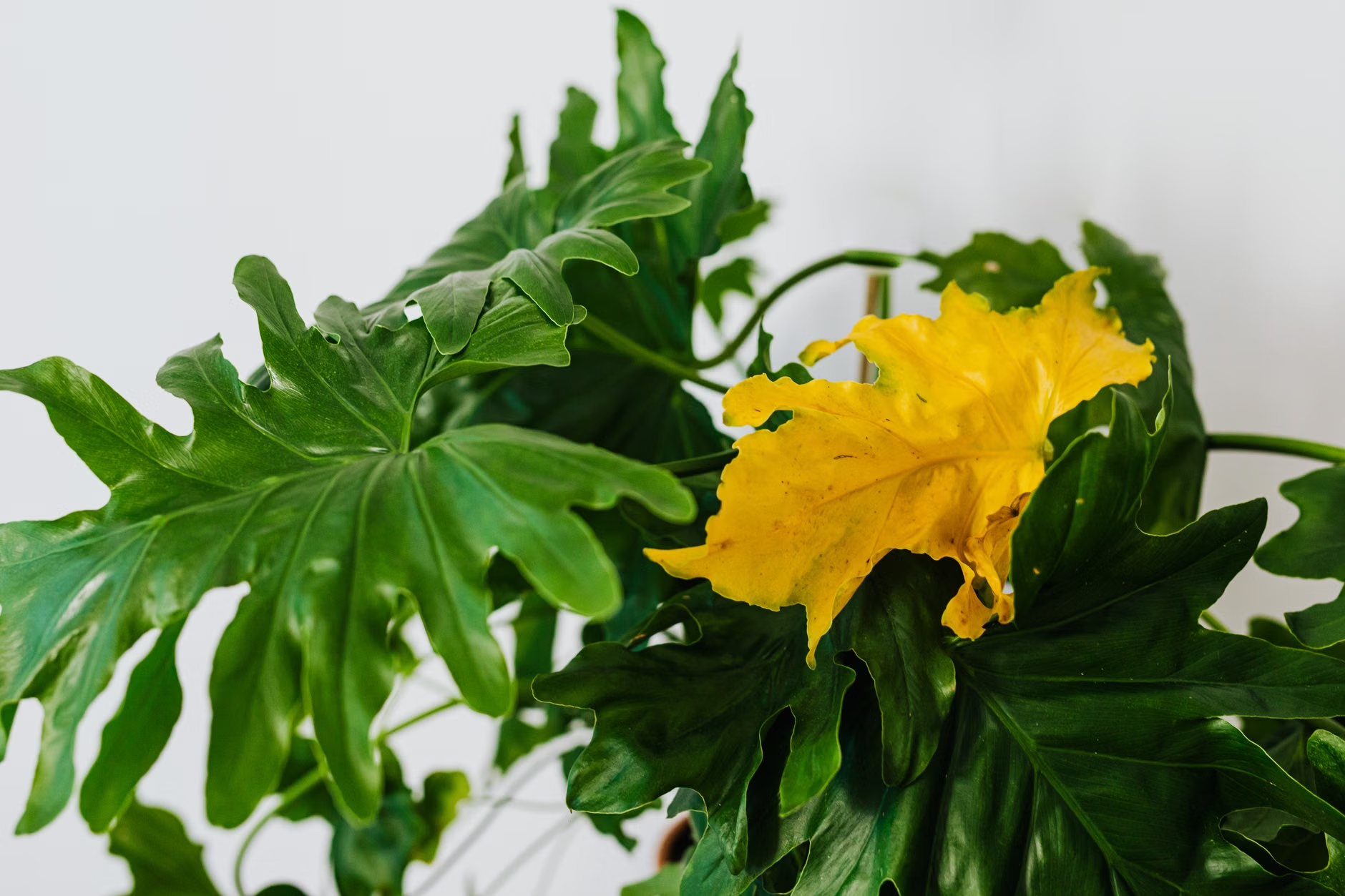
- Too much light often looks like: faded/pale patches, crispy brown areas, sudden yellowing after a move into stronger sun; excessive direct light can damage leaves. (extension.umd.edu)
- Low light + normal watering often causes: persistent wet soil, fungus gnats, root issues—because plants use less water when growth slows. (extension.umn.edu)
- If the plant is stretching: move it closer to the window first (often the fastest fix).
- If leaves are scorching: increase distance and add a sheer curtain for south/west exposures. (extension.umd.edu)
- If growth is slow and soil stays wet: reduce watering frequency and consider slightly brighter placement. (extension.umn.edu)
- After any move to stronger light: acclimate gradually over 7–14 days (a sudden jump is when burns happen).
When window light isn’t enough: basic grow-light supplementation
If your home is shaded (trees buildings) or you only have north windows, adding a grow light is often easier than constantly hunting for a “magical” spot. Many extension resources recommend extending light duration for plants in low light, while still allowing a daily dark period; a common maximum guideline is not exceeding 16 hours of light in a day. (extension.illinois.edu).
- Use a timer so the schedule is consistent (plants like routine).
- Keep in mind that plants still need darkness each day; avoid running lights 24/7. (extension.illinois.edu)
- In low light, you usually don’t need to water as often—don’t “compensate” with extra water if the light is dim. (extension.umn.edu)
Common mistakes (and easy fixes)
- Mistake: trusting your eyes alone. Fix: measure foot-candles/lux at leaf level; your eyes adapt and can lead you astray indoors.
- Mistake: putting a “low-light” plant in a dark corner and watering normally. Fix: move it toward the window and water less often in the dim light.
- Mistake: assuming “south window = always perfect.” Fix: consider curtains/screens/trees and heat in summer, diffuse or move the plant back.
- Fix: rotate 1/4 turn weekly so the plant doesn’t lean too hard toward the light.
- Mistake: not considering seasonal shifts. Fix: re-measure your brightest spots in June and December; adjust your distances as needed. (extension.illinois.edu)
FAQ: window direction and plant light
What exactly is “bright, indirect light?”
Think: “a fairly bright spot, near a window, where the plant can see the sky, but not the actual sunlight beam hits the leaf for any length of time.” Actually if you measure most of these “bright indirect” spots in daylight are medium to high spots (often roughly 100–1,000 foot-candle, depending on distance and filtering). (gardeningsolutions.ifas.ufl.edu)
Is every north-facing window necessarily “low light”?
No! Sometimes. A large north window with no outdoor shade can be very decent medium light right at the glass. A shaded south with heavy trees or a balcony can be like medium or even low light – check with a meter if you can. (extension.umd.edu)
Why can a plant do great in an east window and burn in a west window?
The afternoon sun is hotter and tends to beam deeper into the room at a lower angle which can cause heating and scorching to happen more easily. East window sun tends to be gentler in most indoor conditions. (extension.umd.edu)
How far from the window still counts as near a window?
It depends on the window and the conditions outside, but further in, the drop off happens fast. If you’re more than a couple feet into the room many plants that want medium to higher light will slow down if not supplemented. (extension.umd.edu)
If my plant does grow in low light should I water it more so it will grow more?
No, usually it means less. A plant in lower light normally grows at a slower rate with less transpiration and therefore uses less water so the pot is going to stay wet longer usually. Water to how fast the soil dries, not the calendar. (extension.umn.edu)