Root Rot vs Underwatering: A Practical Decision Tree (Using Pot Weight, Root Check, and Leaf Texture)
Is your plant drooping because it’s too dry—or because the roots are drowning? Use this hands-on decision tree (pot weight, leaf texture, and a quick root check) to separate root rot from underwatering, plus a photo-by-# checklist to support your diagnosis.
- How root rot and underwatering can have the same top-level symptom
- Getting ready to conduct the decision tree’s process
- The Decision Tree: Root Rot vs. Under-Watered
- Leaf Texture Reference Guide from Touch
- Roots Check “Visual” & “Non-Visual”
- Photos you’ll take (before watering again or trimming roots)
- Once You Have Completed Your Discoveries, You Are Now Ready to Take Next Steps (Recovery Action Plans)
- Tools Used for Treating Plant Pathogens: Good Tool Hygiene
- Common Misunderstandings (and How to Verify Facts)
- Frequently Asked Questions
- References
- Very light pot and high crispiness/thin leaves = underwatering (and/or hydrating soil)
- Heavy pot with wilting leaves and brown/black mushy/smelly roots = root rot (or waterlogged)
- Reliable tie breaker = root check; healthy roots = firm and light in color; rotting roots = soft, dark and can slough off.
- Use photo checklist prompts in this guide to document clues prior to changing anything (collected photos = receipt).
- Top of pot may be “dry,” but bottom can be overwatered. Pot weight + root inspection = no misdiagnosis.
This informational only. If plant is irreplaceable or you suspect spreadable root pathogens from different sources, contact local nursery or Extension office. Disinfect all tools and don’t reuse contaminated potting mixes.
How root rot and underwatering can have the same top-level symptom
Both problems have same top-level symptom of a droopy, unhappy plant. In root rot cases (often from prolonged wet conditions) the roots are unable to get enough oxygen and/or are decaying; therefore, even though your pot is wet, your plant can not take water up through the roots and into the top portions of the plant (the wilting alone cannot give an accurate diagnosis).
Getting ready to conduct the decision tree’s process
- Use a paper towel and bright light (can use phone flashlight).
- If possible, check roots at sink or tub.
- If the pot is inside a decorative cachepot, take the plant out of the pot so that you will have an accurate assessment of the pot’s drainage system and weight.
- If you watered your plant within the last couple of days, record the date when you watered it (for example: “last watered on 2-14-26”). This information is more useful than following an established schedule.
The Decision Tree: Root Rot vs. Under-Watered (Determine Pot Weight → Leaf Texture → Inspect Roots)
- Step 1 – Lift Test (Determine Pot Weight): Carefully lift your plant by placing one hand under the rim of the pot and supporting it from below. Compare this weight to how the pot felt immediately after it was thoroughly watered (or compare it to another plant of the same type and size).
- If the plant feels very light, go to Step 2A (compare leaf texture and analyze soil quality).
- If the plant feels heavy (or unexpectedly heavy) go to Step 2B (compare leaf texture; and determine time until next watering).
- Step 2A: If the weight of the pot is low, touch the leaves; do they feel thin, like tissue paper; do they feel frail to the touch, or do they have a definite feel of being full of water? If so, then it is likely that your plant is under-watered; therefore, you should proceed to Step 3 to rule out hydrophobic soil. If your plant’s leaves feel mushy or soft to the touch, then go to Step 4 to perform a root-check.
- Step 2B: If the weight of the pot is too heavy, does the plant exhibit symptoms of needing water (such as wilting, yellowing, or lack of growth)? If so, then it is most likely that the plant has either root rot or is water-logged and you should perform Step 4 to check the plant’s roots.
- Step 3 is to eliminate ‘fake underwatering’ as an issue. Fill a cup with water and pour it into the pot. The water should soak in evenly (you may have hydrophobic soil), run down the sides without any runoff (indicating unevenly wet soil), or all of the water runs right through the pot (soil is too dry). In this case the root ball will be dry (not submerged when you push on the soil), indicating drought stress, but the way to fix it is not to just add more water to the pot. See Step 5A (underwater recovery) for how to fix the roots if you follow these steps and can confirm that you have hydrophobic soil or unevenly wet soil.
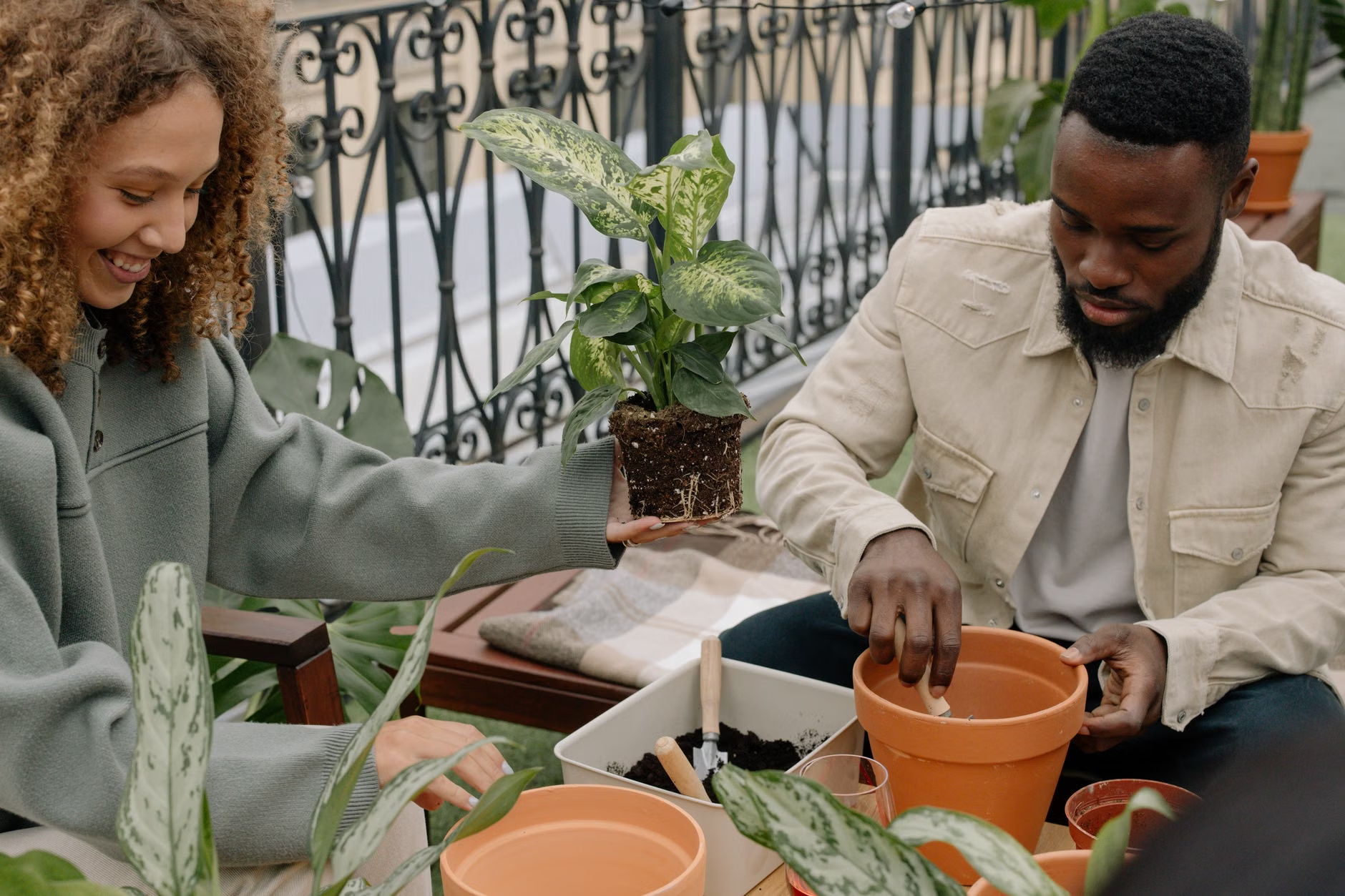
Next Step 4 is the root inspection. Take the root ball out of the pot. Inspect by color, firmness and smell. Healthy roots are usually firm (as opposed to soft/mushy) and light in color (as opposed to brown/black, etc.). Healthy roots do not smell sour/swampy. If you have a lot of rotting roots (i.e. mostly brown/black and mushy) then see Step 5B (root rot recovery) for how to fix. If you have only healthy roots, but your pot has a very dry soil mix, then see Step 5A for how to fix.
Step 5 is to have a final “sanity check”. Look at the state of moisture in the pot relative to the conclusion you came to in Steps 2 & 4. If you are confident that you have root rot, your pot is going to stay wet longer than expected. If you are confident that you have underwatered, your pot is going to dry very quickly and feel light. If you have either of these mistakes, go back to Step 3 and 4.
Leaf Texture Reference Guide from Touch
| Texture of Leaf/Physical Quality | Usually Could Mean | Be Aware Of |
|---|---|---|
| Leaf Edges of Leaves Have Crispness (Crisp) and Crackly Spots; Leaves Feel Very Thin and Papery; Leaf Has Pull-Away from Pot Edge | Under-Water (Drought) | Note: Also Some Plants (Calatheas, Dracaenas) May Become Crisp Due to Low Humidity or Built-Up Salt-Seawater (Check for Pot Weight) |
| Leaves Are Limp and Soft; Not Mushy; Will Flower Back Up in Hours from a Complete Watering | Under-Watering (Classic) | Fast Flowering Back Up Is A Very Good Way To Tell Roots Are Still Growing |
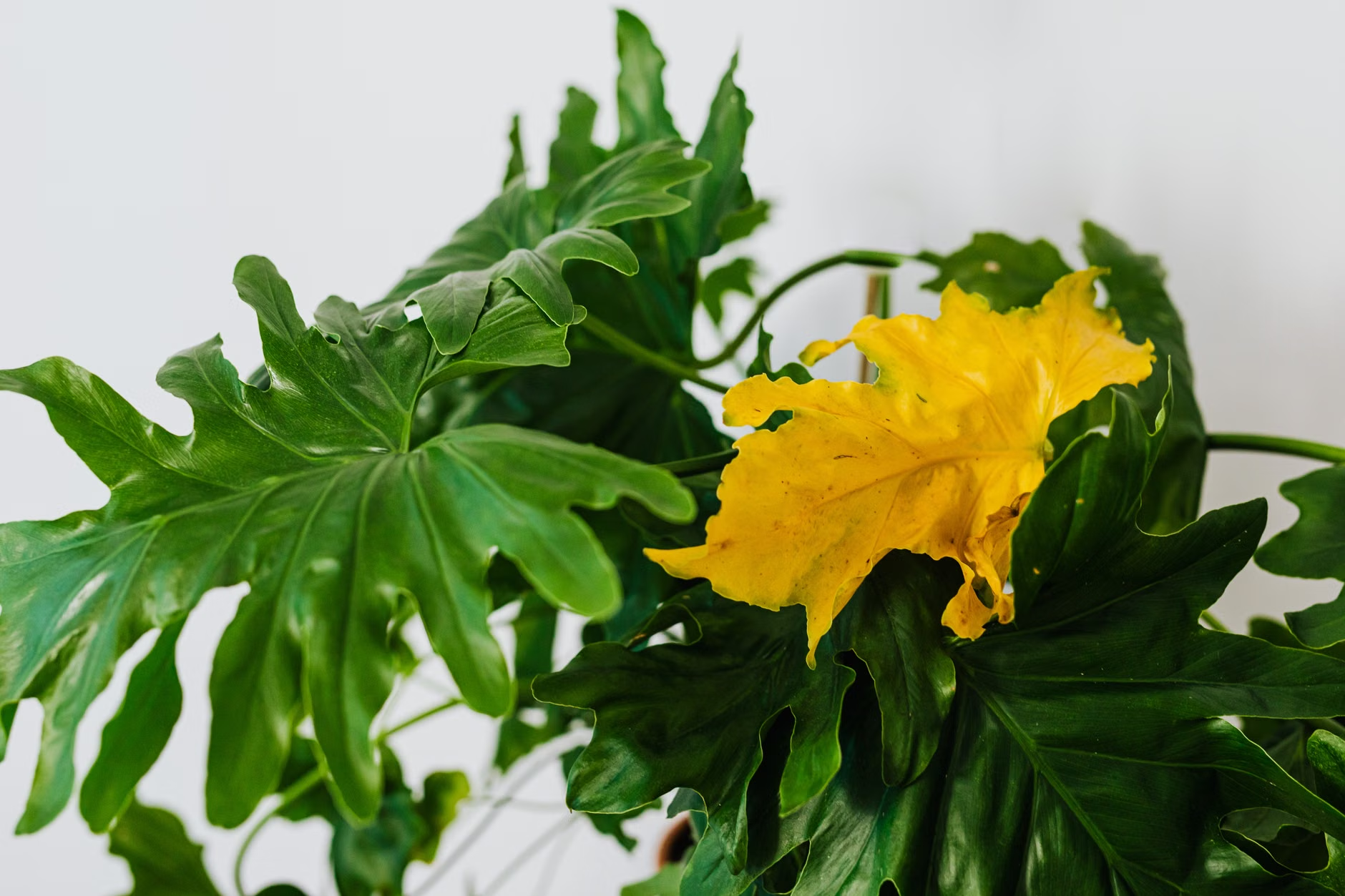
| Leaf Yellowing, Limp/Wild With Wet Pot Yet Heavy Pot | Stress With Roots (Root Rot/Waterlogged Roots) | Wilting While In Wet Media (Very Very Large Warning Sign; Possible Roots Cannot Pull Up Water |
| Base of Leaf Is Mushy/Crown; Stems are Collapsing at Soil Level | Advanced Root Rot | Do Not Continue To “Test” By Watering (Do Root/Crown Check Immediately) |
| Edges of Leaf Create Wrinkling in Succulent Plants; Leaf Is Less Wide Than/Thinner | Under-Watered | If Pot Is Heavy But Plant Appears To Have Wrinkles, Roots May Have Remained In “Rot” (Unable To Pull Up Water) |
Roots Check “Visual” & “Non-Visual” Characteristics to What “Healthy” Roots Expected To Look Like Where Actors Sprouted From, and What “Rotting” Roots Will Expect To Look Like:
- Healthy Roots (Most Houseplants): Firmness, Resilient Nature, Color (White, Creamy, Tan), Fine Root Days Will Be Present; Foul Odor Will Happen. Signs of root rot: wet, brown-black undercut roots (regardless of packing material density). Young tree root systems appear more fragile than mature trees, and mature trees with lighter-colored, firm-textured roots are normally more resilient to rot.
Media clues: If the mix stays wet for an extended period, the roots will become oxygen-deficient, resulting in a similar outcome to when a plant is infected with root rot-causing pathogens.
Photos you’ll take (before watering again or trimming roots) to document recovery
Taking these photographs right after watering will help support your diagnosis and keep track of the roots’ condition. Take photos of the potting mix’s moisture content, texture of the leaves, and condition of the roots.
| Photo To Take | How To Take It | What To Look For |
|---|---|---|
| 1) Full Image of Plant—Front View | Take from 3-6 feet away from the plant, in good light | Overall type of wilting–all leaves shoulder spp. or just lower leaves. Leaning columns and areas of yellowing leaves. |
| 2) Close-Up of Most Damaged Leaf–Front & Back | The Image should be as large as possible, filling the whole Image and having some of the edge of the leaf | Will have a Crispy tip and/or a decayed area from poor watering. There may also be insect/plant disease spots. |
| 3) Demonstrate How Leaf Bends & Texture | Gently bend a leaf & take a photo at the point at which it folds | Does the leaf crease like paper (dry) or bend sagging (crown/root rot)? |
| Soil Surface Close-Up | View Directly Down to Observe Texture of Soil (Cracking; Shrinkage from Pot Edge [Too Dry]; Algae/Moldy Surface [Too Wet]; Fungus Gnats Activity) | |
| Pot + Saucer/Cached Pot | Take Photos of Drainage Holes and Saucer (e.g., standing water; drain holes plugged; or a nursery pot sits inside of a watertight decorative pot) | |
| Side View of Root Ball after Sliding Out of Pot | Hold Root Ball over Towel; Light the Side | (Observe Root Density; Black/Brown/Patchy Areas and Bare [Where Roots Are Dead]) |
| Bottom of Root Ball | Take Picture of Bottom (Where Roots Exit Pot) | (Observe Healthy White Tips vs Dark, Rotted, Sparse Roots and Observe Roots That Circle Pot – Roots Will Trap Moisture) |
| Squeeze Test (Optional Photo) | Take Picture While Gently Pinching One of the Suspect Roots | (Firm Will Support Weight; Rotted May Collapse/Slough off Blade) |
Once You Have Completed Your Discoveries, You Are Now Ready to Take Next Steps (Recovery Action Plans)
5A – IF Under-Watering (or Drought Stress) Rehydrate Properly (Don’t Splash and Run).
- Slowly Water Until Water Flows Out of Drainage Holes, Once Done Allow to Completely Drain. If Soil Has Become Hydrophobic and Water Runs Through Almost Instantly, Bottom Soak for 15-30 Minutes Before Allowing to Completely Drain.
- Reset Your Starting Point (Baseline) For Lifting The Pot After You’ve Allowed The Pot to Drain. Immediately Before You Lift the Pot After it Has Completely Drained Take Note Mentally (or Write Down) The “Fully Irrigated Weight” So You Can Compare It With Future Lifts.
- Fix the Reason for Rapid Drying. Too Much Direct Sun/Heat, Pot Is Too Small, Soil Mix Is Extrememly Aery, Roots Are Rootbound; These Are Some of The Problems That Can Cause Rapid Drying. If needed, you may want to move it slightly away from the heating vent or consider re-potting into a larger size pot if it’s extremely root-bound.
- Don’t make the common rebound error: Don’t go from an extremely dry environment to a constantly wet environment. The goal is to establish an even cycle. Thoroughly water first, then let that plant experience the appropriate amount of time to dry out.
- Keep track of the plant’s rebound: Most plants will begin to perk up again in as little as a few hours or up to 24 hours if the roots are healthy and the pot is dry/heavy. If a plant does not improve, and the pot is wet/heavy—check the roots. Roots may be damaged.
Step 5B — If you discover wet roots/rotted roots:
- STOP the cycle: Don’t water again “just in case.” If the pot is wet and the roots have been damaged, it is mostly due to watering too much in a short period of time.
- Un-pot the plant and honestly evaluate it: If the majority of the roots are mushy/detached or if the crown/stem area is soft/collapsed, the plant most likely will not be able to survive. In this case, it is more appropriate to either compost the plant (and replace it with a new one) than it is to save the plant and cause plant disease.
- Cut off any mushy or discoloured roots with a sterile pair of scissors (disinfected). After cutting, remove the decomposed, compacted potting mix before cleaning the roots; when cleaning the roots, give them a gentle rinse to determine how many healthy roots you have left.
- Re-pot the plant into a clean container: A clean pot with a drainage hole and fresh, well-draining potting soil is essential to the survival of the plant. Do not use the old, soggy mix for re-potting. After re-potting, you must water to settle the mix around the plant (as long as the mix is just slightly damp, do not water). Then, allow the potting media to dry out more than usual to allow the plant’s roots to grow back in and to give the plant enough time to recover. The best way to determine when to water is by using the weight of the pot.
- Increase air circulation around the plant; do not put the plant on a cold windowsill (cold and wet is detrimental to the plant’s roots) and place the plant in bright, indirect light to allow the plant to recover.
- Keep the plant away from other plants for two to three weeks while you monitor for signs of return of collapse (droop), as well as the presence of fungus gnats and/or spreading of rot.
Tools Used for Treating Plant Pathogens: Good Tool Hygiene
It is essential to use clean tools when dealing with pathogens that could harm your plants. Use clean scissors or pruners between getting rid of dead plant material to reduce the risks of spreading root pathogens. You should also wash your hands thoroughly after handling any dead or dying plant material.
Common Misunderstandings (and How to Verify Facts)
- “The top of my plant is dry, so I’m going to give it more water.” – Verification: Do the lift test and check the moisture level below the surface of your mix (or remove the plant from its pot.) The top of your mix will dry out before the bottom(s).
- “The plant dropped, so I watered it again.” – Verification: The weight of your pot stayed heavy for multiple days. Also, if your plant continuously wilts for long periods of time while you have water in your pot, you should suspect your roots are stressed.
- “Yellow leaves = overwatering.” – Verification: Other things can cause yellow leaves on plants – root rot, nutrient issues, low light levels, and natural leaf drop. Compare the symptoms on your leaves to how moist/dry the mix in the pot is and how good/poor the condition of the roots are.
- “I watered very thoroughly. Why is the dry?” – Verification: If your potting mix is repellent to water, when you water the root ball will remain dry and water will be channeled past the root ball. The behavior of water should be observed so that the soil will hold moisture evenly. Verify schedules (i.e., work) by checking pot weight, plant signals and growing conditions (season, light and plant size). To determine whether my plant needs to be watered use a pot scale. I carry a scale with me which makes it more convenient to determine if the soil needs additional water based on a plant’s current condition.
If you want to know how to diagnose an underwatered plant (underwatered), check out this 60 second plant diagnosis reference chart:
| Clue (visual appearance) | Points to Underwatered | Points to Root Rot (waterlogged) |
|---|---|---|
| Pot Weight | Light compared to weight after watering | Heavy and remains heavy for days |
| Leaf Texture (how it feels & looks) | Crispy, papery, wrinkled on a succulent & returns to original size after watering | Wilt while still wet, yellow/limp, mushy leaf base if severe |
| How Soil Behaves When Watered | Soil does not absorb well (hydrophobic) or absorbs very quickly because soil was extremely dry | Soil predominately remains wet after watering; rocks and black sludge is on surface of the soil; smells |
| Sizing the Roots | Light coloured roots | Dark/brown, mushy, loose roots; foul smell/dry root mass |
Frequently Asked Questions
Q: How can my plant be both dehydrated and have root rot?
This can be answered by stating, “If there are decaying roots, then the plant will not be able to take up water, so even though the soil is wet, the plant may look dehydrated.” A “wilt indicates water” is an unreliable measure for determining whether you need to water your plant. Performing a root sizing/check is the only true way of determining whether to add water to your plant.
Q: I have a heavy pot, but the top inch feels dry. Why is this?
Usually, the weight of the pot will indicate that the lower part of the pot still has moisture. This often occurs with taller pots or compacted growing mediums. Use the weight of the pot and an additional deeper check before deciding whether to add more water.
Q: Should I buy a moisture meter?
A moisture meter can be helpful as it can measure the moisture in all parts of the root zone. However, they are often misused if you have inserted the meter in the wrong place or if the soil is not compacted. You are usually better off using the weight of the pot and an occasional visual inspection for water management.
Q: Do I need to apply fungicide to solve the problem of root rot?
Often the best way to solve root rot is to remove any affected/rotting roots, repot the plant into a new environment and adjust your watering habits accordingly. If you are dealing with a pathogen, check with your local extension office; different states and different plants require different methods of control.
Q: What is a timeframe to expect recovery from an underwatered houseplant?
If your plant has been underwatered, recovery can be immediate; the plant can improve within hours to days. If the houseplant suffers from root rot, it will take a few weeks for the plant to recover. You can tell if your plant is healing by waiting for new growth and stable patterns of drying of the pot.
References
- University of Maryland Extension – Root Rots of Houseplants
- University of California ANR (UC Davis) – Watering Your Houseplants
- Iowa State University Extension (Yard and Garden) – Checking Container Weight for Watering Decisions
- South Dakota State University Extension – Root Rot Troubleshooting and Root Inspection Cues
- Royal Horticultural Society (RHS) – Symptoms of Water Logging, including Root Rot & Lack of Oxygen
- Royal Horticultural Society (RHS) – Phytophthora root rot: Overview and similar root symptoms to water logging