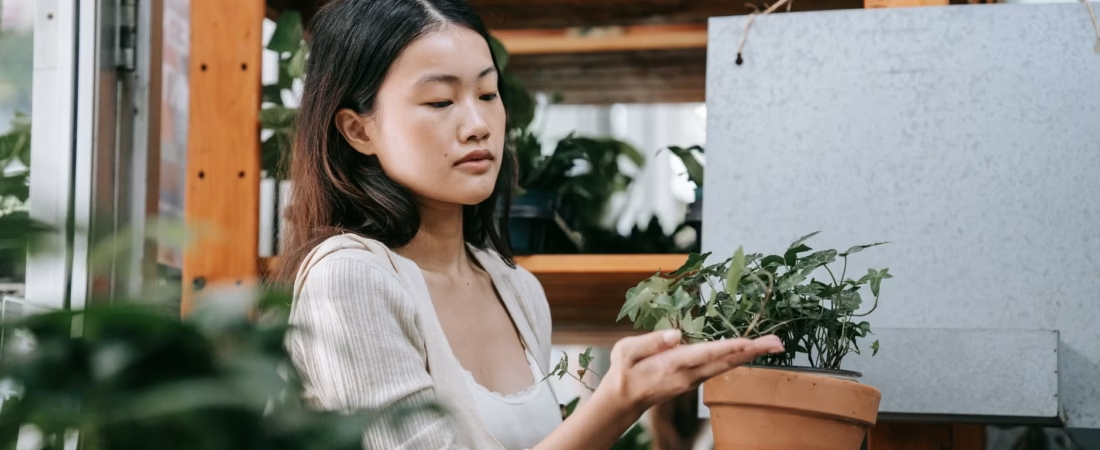
A lot of expensive houseplant disappointment starts at the store, not in the living room. Beginners often buy the prettiest plant on the shelf, then try to force it into a dim corner, a pot without drainage, or a watering routine that does not match how the plant actually grows. University extension guidance is remarkably consistent on this point: healthy indoor plants depend on matching the plant to the available light and giving it proper watering and drainage. (extension.umn.edu)
For apartment residents, the buying decision matters even more because space, window exposure, dry air, pets, radiators, weekend travel, and building layout all limit what will actually work. A plant that looks easy on social media may still be a poor fit for a north window or a busy one-bedroom with a curious cat. The goal is not to buy the “best” plant in general. It is to buy the best plant for your exact apartment. (extension.umn.edu)
TL;DR
- Choose for the light you have, not the look you want. North windows suit low-light plants; east and some west exposures fit medium-bright plants; south-facing windows provide the strongest natural light. (extension.umn.edu)
- Do not buy a plant in a pot that traps water or smells sour. Drainage and root health matter more than the decorative cachepot. (extension.usu.edu)
- Inspect leaves, stems, soil surface, and drainage holes before you pay. New plants are a common way indoor pests enter the home. (extension.umn.edu)
- If pets chew plants, verify the exact plant name on the ASPCA list before buying. Common names are unreliable. (aspca.org)
- A smaller healthy plant that fits your apartment is usually a smarter first purchase than a large stressed “statement” plant. (extension.psu.edu)
Use the MATCH rule before you shop
If you want one buying framework to keep you out of trouble, use MATCH: Map your light, Assess your routine, Test the pot and roots, Check for pests, and Home-check safety and size. It takes a few minutes, but it helps prevent the common beginner pattern of buying first and diagnosing later.
- Map your light. Stand where the plant will live and note the window direction, how many hours the area stays bright, and how far the plant will sit from the glass. University guidance places low-light plants in north windows or fairly dark corners, medium-bright plants near east or west light, and high-light plants in bright south or southwest exposures. (extension.umn.edu)
- Assess your routine honestly. If you travel, forget to water, or work long days, buy plants that tolerate some drying rather than moisture-hungry plants. Utah State notes there is no universal watering schedule for indoor plants, and Minnesota notes low-light plants use less water because they grow more slowly. (extension.usu.edu)
- Test the pot and roots. Look for a drainage hole, a pot that is not excessively oversized, and roots that are firm and light-colored rather than black, slimy, or packed into a dense spiral. Penn State and other extension sources describe healthy roots as white or tan and warn against badly circling or rotting roots. (extension.psu.edu)
- Check for pests before checkout. Look under leaves, around new growth, in leaf joints, on the soil surface, and at the drainage holes. Extension services specifically recommend inspecting new purchases because pests often enter homes on newly bought plants. (extension.umn.edu)
- Home-check safety and future size. If you have pets or children who may chew leaves, verify toxicity using the exact plant name. Also ask whether the mature plant will still fit the shelf, sill, or floor space you actually have. A bargain plant is not much of a bargain if it outgrows its spot in two months. (aspca.org)
A quick apartment decision table
| Your apartment condition | Safer beginner buy | Skip for now | Why |
|---|---|---|---|
| North window or room set back from the window | Low-light foliage plants | Sun-hungry succulents, crotons, or other high-light plants | North windows and dim corners suit low-light plants; high-light plants tend to stretch, pale out, or decline there. (extension.umn.edu) |
| East window or bright room with gentle morning light | Medium-bright plants such as compact foliage plants or African violets | Large desert cactus unless the spot is truly bright for much of the day | East-facing windows are a standard medium-bright placement for many indoor plants. African violet is also listed by ASPCA as non-toxic to cats and dogs. (extension.umd.edu) |
| South or southwest window with strong direct light | High-light plants such as jade, cacti, and other succulents | Shade-adapted plants pressed directly against hot summer glass | South-facing windows provide the strongest natural light, but too much direct light can scorch leaves on plants that prefer indirect light. (extension.umn.edu) |
| Home with a cat or dog that chews leaves | African violet, spider plant, baby rubber plant, or ponytail palm after confirming the exact name | Pothos, philodendron, monstera, or snake plant within reach | ASPCA lists spider plant, African violet, Peperomia obtusifolia, and ponytail palm as non-toxic, while golden pothos, philodendron, Monstera deliciosa, and snake plant are toxic to cats and dogs. (aspca.org) |
| You travel often or forget to water | Thicker-leaved, more forgiving plants in pots with drainage | Moisture-loving ferns or plants that need to stay evenly damp | There is no one-size-fits-all watering calendar, and plants in lower light typically use water more slowly. (extension.usu.edu) |
How to inspect a plant in the store in less than five minutes
- Read the tag first. If the label does not identify the plant clearly, pause. You need the exact name to verify light needs, mature size, and pet safety. ASPCA specifically warns people to check the plant’s name because common names can be confusing. (aspca.org)
- Look at the newest growth, not just the oldest leaf damage. Fresh, compact new growth is usually a better sign than a plant that is tall, weak, and stretched toward light. Leggy growth is a classic low-light symptom. (extension.umn.edu)
- Flip several leaves over. Look for webbing, sticky residue, bumps, cottony clusters, or tiny moving insects. Penn State notes that sticky honeydew can be a clue even when the insects are hard to spot, and Clemson recommends checking both the plant and the container before buying. (extension.psu.edu)
- Check the soil surface and smell the pot. Pass on plants with sour-smelling media, swampy soil, fungus gnat activity, or potting mix that feels heavy and soggy. Excess moisture and poor drainage are strongly linked with root rot and fungus gnat problems. (extension.umn.edu)
- Peek at the drainage hole. A few visible roots are not a crisis, but a dense mat of roots, black mushy roots, or roots forcing out of the pot suggest the plant may be stressed or overdue for repotting. Extension guidance also warns that too much extra soil in a much larger pot can hold too much water. (extension.umn.edu)
- Confirm that there is real drainage. A decorative pot without a drainage hole is a common beginner trap. Watering until some water exits the bottom and then discarding excess water is a standard indoor watering approach from several horticulture sources. (extension.usu.edu)
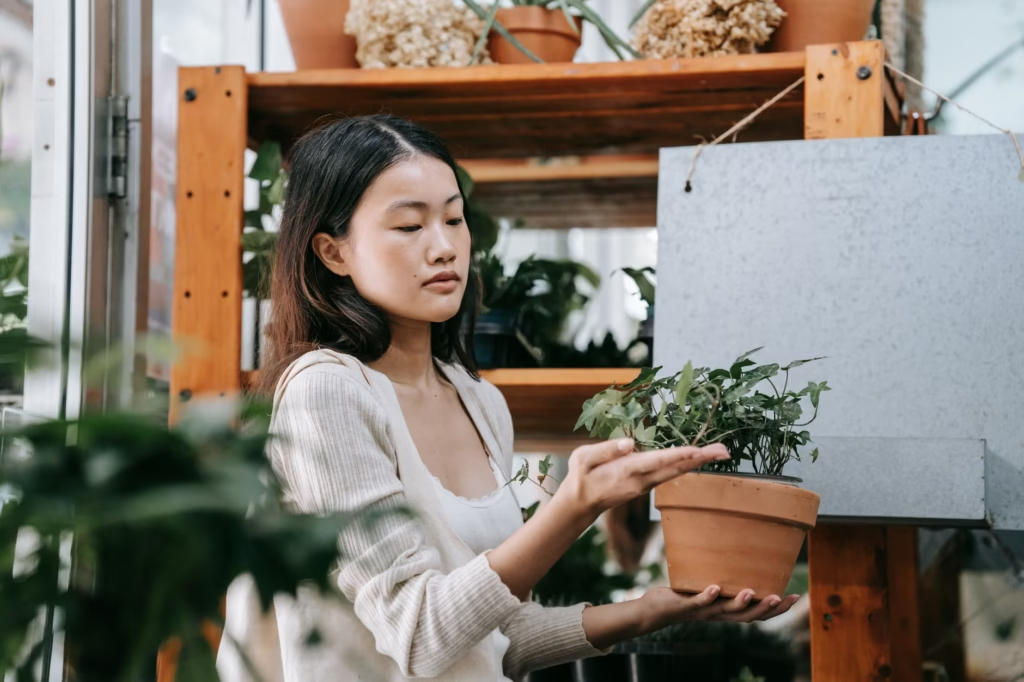
- If you want your first plant to succeed, choose the healthiest smaller specimen over the largest dramatic one. Large statement plants cost more, are harder to inspect, and are more painful to lose if the light match is wrong.
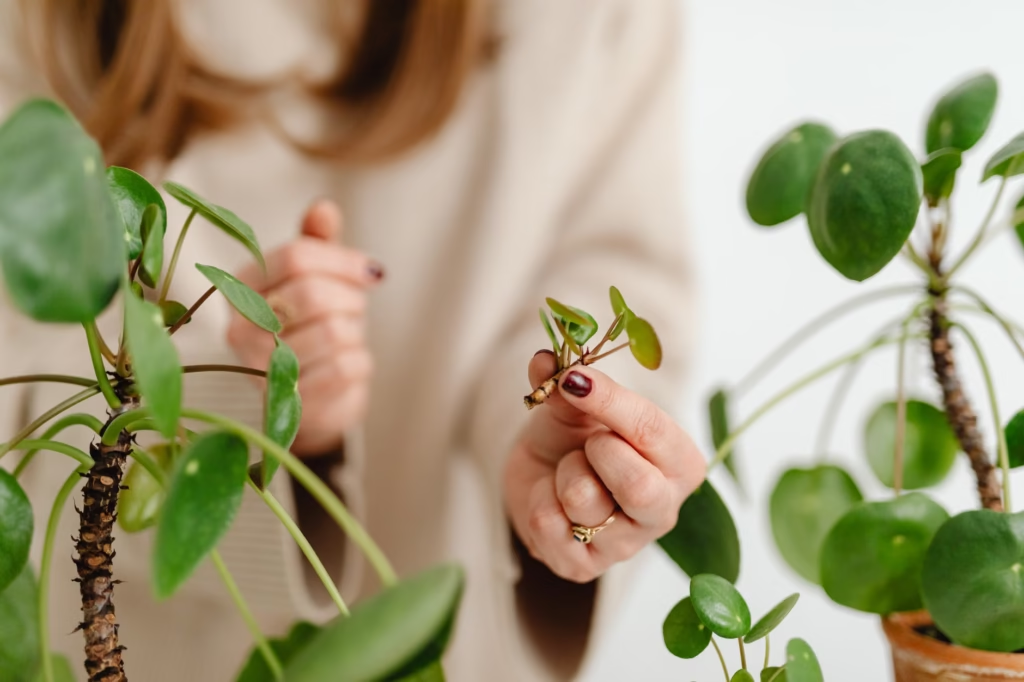
A sale plant is only a good deal if the problem is cosmetic. If the issue is pests, rot, or a root system that is badly compromised, a beginner will usually spend more trying to rescue it than buying a healthy plant in the first place. (extension.psu.edu)
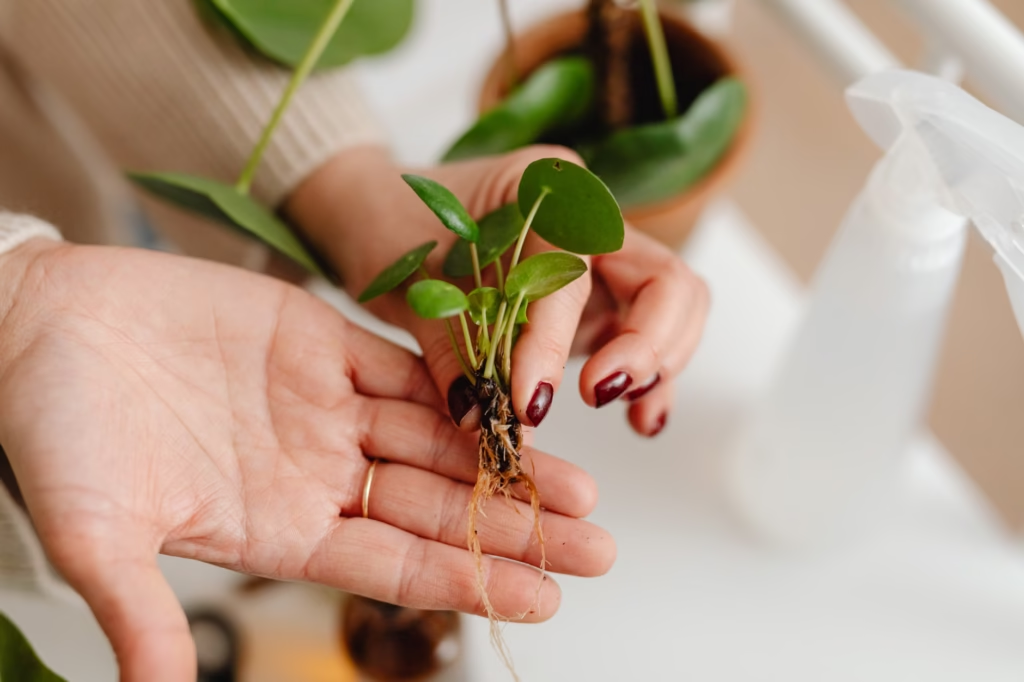
A realistic apartment example
Imagine a renter in a one-bedroom apartment with one bright east window, a bookshelf six feet back from the glass, a habit of leaving town some weekends, and a cat that samples leaves when nobody is looking. The risky buy is a large monstera or pothos placed deep in the room because both are popular, fast to buy, and toxic to pets according to ASPCA. The lower-risk buy is a smaller plant that can actually live in the brightest part of the east window and has confirmed non-toxic status, such as an African violet, spider plant, or Peperomia obtusifolia, after you verify the exact plant label. (extension.umd.edu)
That recommendation is not about buying the “most beginner” plant on a list. It is about reducing the number of things that can go wrong at once. Good morning light, manageable size, a pot with drainage, and a safer pet status remove several failure points before care even begins. That is exactly why the buying stage matters so much in apartments.
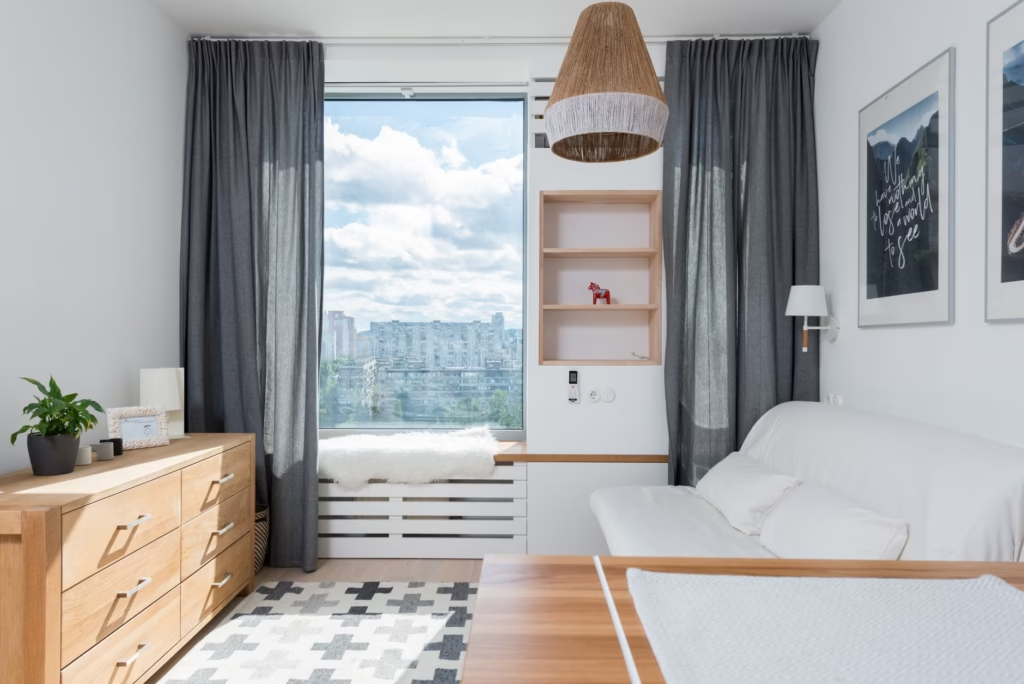
The expensive beginner mistakes that repeat over and over
- Buying for the photo, not for the window. The store display may be staged under greenhouse or retail lighting that your apartment cannot match. (extension.umn.edu)
- Assuming “low light” means “no light.” Low-light plants tolerate less light, but they still need light to photosynthesize and stay healthy. (extension.umn.edu)
- Trusting a weekly watering calendar. Utah State says there is no general watering schedule for all indoor plants, because light, temperature, humidity, container size, and potting mix all change how fast soil dries. (extension.usu.edu)
- Paying extra for a cachepot and forgetting the nursery pot. Decorative outer pots are fine, but standing water and poor drainage are not. Roots in constantly wet media are prone to oxygen loss and rot. (extension.usu.edu)
- Skipping the pest inspection because the plant looks shiny from the front. Many houseplant pests hide on the undersides of leaves, in leaf axils, or near the soil and drainage holes. (extension.psu.edu)
- Buying a plant that is already badly rootbound and hoping fertilizer will fix it. Fertilizer does not solve poor light, rotting roots, or a damaged root system. (extension.psu.edu)
- Ignoring pet safety because the shelf tag says “easy care.” Easy care and non-toxic are not the same thing. Pothos, philodendron, monstera, and snake plant are all widely sold and all appear on ASPCA toxic listings. (aspca.org)
What this checklist cannot solve
A good checklist cannot create sunlight that your apartment does not have. If every usable spot is dim, your real choice may be a true low-light plant, supplemental lighting, or simply fewer plants. The University of Minnesota explicitly notes that supplemental lighting can make up for a lack of natural sunlight. (extension.umn.edu)
It also cannot guarantee that a seemingly healthy plant has no hidden issues. Some problems show up later: roots may already be damaged, pests may still be in early stages, or the plant may have been stressed by shipping and temperature swings. That is why inspection matters, but so does a short observation period after you bring the plant home. (extension.psu.edu)
How to verify that you made the right purchase
- Keep the new plant separate from existing houseplants for a while and inspect it regularly. Clemson recommends isolating new plants for six weeks to reduce the chance of spreading pests. (hgic.clemson.edu)
- Watch the first two to four weeks instead of repotting immediately just because the internet said to. If the plant is stable, draining properly, and not severely rootbound, observation can tell you more than an instant pot upgrade. Signs that repotting may truly be needed include roots circling tightly, roots growing through drainage holes, or soil drying unusually fast. (extension.umn.edu)
- Track how quickly the mix dries in your apartment. A plant in lower light will generally need water less often than one in strong light, and a heavy, wet pot is a sign to wait. (extension.umn.edu)
- Look for confirmation, not perfection. Good signs include no rapid leaf drop, no sticky residue or webbing, and some fresh growth when the plant is in active season. Warning signs include continued yellowing, leggy stretching, soggy soil, or a wilting plant in a pot that still feels heavy. (extension.umn.edu)
- If the match is wrong, change one thing at a time. Move the plant closer to better light, correct the watering pattern, or use a grow light before you start adding fertilizer or treatment products. That makes it easier to tell what actually helped. (extension.umn.edu)
Do not use pesticide or fertilizer as blind first aid. Clemson notes that many plant problems come from improper care rather than pests, and pesticide injury itself can damage leaves. If you use any pest-control or fertilizer product, follow the product label carefully. (hgic.clemson.edu)
The short version
A successful first apartment plant is usually not the rarest, trendiest, or biggest plant in the store. It is the one that fits your window, your watering habits, your budget, and your household. If you use the MATCH rule and do a quick pest-and-root inspection before buying, you will avoid most of the expensive beginner mistakes that leave people convinced they are “bad at plants.”
FAQ
Should beginners buy small plants or large statement plants?
Usually, small to medium healthy plants are the safer first buy. They cost less, are easier to inspect for pests, adapt more easily to a new space, and make a light mismatch less expensive. Large plants can work, but only if you are confident about the location and the plant is genuinely healthy. (extension.psu.edu)
Is a drainage hole really that important?
For most beginners, yes. Standard indoor watering guidance relies on watering thoroughly, letting excess drain, and discarding standing water. Pots that trap water make overwatering much easier, and saturated media can lead to root problems. (extension.usu.edu)
What are a few safer beginner choices for homes with pets?
After confirming the exact label, ASPCA lists spider plant, African violet, baby rubber plant or blunt-leaf peperomia (Peperomia obtusifolia), and ponytail palm as non-toxic to cats and dogs. That still does not mean pets should chew them freely, but they are lower-risk choices than pothos, monstera, philodendron, or snake plant. (aspca.org)
Should I repot a new plant right away?
Not automatically. If the plant is stable, has drainage, and is not badly rootbound, it is reasonable to observe it first. Repot sooner when roots are circling tightly, growing out of drainage holes, or when the plant dries out unusually fast. Choose only the next pot size up rather than a much larger pot. (extension.umn.edu)
How can I tell if my apartment is simply too dark for the plant I want?
If the only available spot is far from a window, or if plants there become pale, stretched, and lean toward the light, the location is probably too dim for anything beyond true low-light choices. In that case, either change the plant choice or add supplemental lighting. (extension.umn.edu)
References
- University of Minnesota Extension – Lighting for indoor plants and starting seeds – https://extension.umn.edu/planting-and-growing-guides/lighting-indoor-plants
- University of Maryland Extension – Lighting for Indoor Plants – https://extension.umd.edu/resource/lighting-indoor-plants
- University of Minnesota Extension – Managing insects on indoor plants – https://extension.umn.edu/yard-and-garden-insects/insects-indoor-plants
- Penn State Extension – Pest and Disease Problems of Indoor Plants – https://extension.psu.edu/pest-and-disease-problems-of-indoor-plants
- Utah State University Extension – Care and Feeding of Indoor Plants – https://extension.usu.edu/archive/care-and-feeding-of-indoor-plants
- University of Minnesota Extension – Spring houseplant care – https://extension.umn.edu/houseplants/spring-houseplant-care
- University of Minnesota Extension – Winter houseplant tips – https://extension.umn.edu/news/winter-houseplant-tips
- Penn State Extension – Planting Ornamentals – https://extension.psu.edu/planting-ornamentals
- Clemson Home & Garden Information Center – Common Houseplant Insects & Related Pests – https://hgic.clemson.edu/factsheet/common-houseplant-insects-related-pests/
- Missouri Botanical Garden – How to Water Indoor Plants – https://www.missouribotanicalgarden.org/gardens-gardening/your-garden/help-for-the-home-gardener/advice-tips-resources/visual-guides/how-to-water-indoor-plants
- ASPCA – Toxic and Non-Toxic Plants – https://www.aspca.org/pet-care/aspca-poison-control/toxic-and-non-toxic-plants?ad=1
- ASPCA – Spider Plant – https://www.aspca.org/pet-care/aspca-poison-control/toxic-and-non-toxic-plants/spider-plant