The most expensive plant mistake usually is not the price tag. It is the mismatch. University extension guidance says indoor plants should be chosen for the natural light you actually have, not the light you wish your apartment had. North windows and fairly dark corners count as low light, east windows are usually medium light, and the brightest natural light typically comes from an unobstructed south-facing window. Extension sources also warn that many decorative containers lack drainage holes, and poor drainage plus overwatering can damage roots. Add pet safety to the equation, and a quick impulse buy can turn into replacement costs, pest problems, and gear you never planned to buy. (extension.umn.edu)
- Buy for the final window, not the prettiest shelf. North windows are low light; the brightest natural light is usually an unobstructed south-facing window. (extension.umn.edu)
- Count the full setup cost: drainage, saucer, potting mix, and possibly a grow light if your space is too dim for the plant you want. (extension.umd.edu)
- If you have pets, verify the plant by both common and scientific name before checkout. Spider plant and blunt leaf peperomia are ASPCA non-toxic; snake plant and pothos are listed as toxic. (aspca.org)
- Water by soil dryness and drainage, not by the calendar. Lower-light plants use less water, and excess moisture can damage roots. (extension.umn.edu)
- Quarantine new plants before putting them next to your existing ones. University of Minnesota Extension recommends isolating new additions and monitoring for pests for a couple of weeks. (extension.umn.edu)
Why the cheap plant becomes the expensive plant
Beginners often treat a plant like a single purchase. In practice, it is more like a small system purchase. A $16 plant can become a $60 decision once you add a cover pot, saucer, fresh mix, and a lighting fix because the only open spot in the apartment is too dark. That is why the smartest plant budget starts with compatibility, not aesthetics. If the final location does not match the plant’s light needs, extension guidance says you either need a different plant or supplemental lighting. (extension.umn.edu)
The hidden costs are predictable. Decorative ceramic pots often lack drainage holes. Overwatered plants can wilt, yellow, scorch, drop leaves, and eventually die because excess moisture reduces oxygen in the soil and damages fine roots. Pests are another budget leak. Extension guidance recommends buying healthy plants, inspecting them carefully, and quarantining new additions because wet soil and stressed plants are more likely to attract or worsen common indoor pest problems. (extension.umd.edu)
Use the RENT Test before you check out
To make a first purchase affordable, apply the RENT Test: Real light, Exposure risk, Negligence test, and Total first-year expenditure. Each category will receive a score from 0-2. Any plant that falls below this level is not a good buy under any any discounts.
- Real light: 0 if you do not know the final location or the only spot is far from a window; 1 if the plant could work only with added lighting; 2 if its needs match the actual window. Low-light plants suit north windows and dark corners, medium-light plants suit east windows or near west windows out of direct sun, and high-light plants do best in bright south or southwest exposures. (extension.umn.edu)
- Exposure risk: 0 if the plant is toxic to a pet that chews leaves or if it already shows signs of pests or disease; 1 if care or safety details are unclear; 2 if the plant is healthy and safe for your household. ASPCA lists spider plant and blunt leaf peperomia as non-toxic to cats and dogs, while snake plant and pothos are listed as toxic. Penn State also advises rejecting plants that show signs of disease or pests. (aspca.org)
- Neglect tolerance: 0 if the plant needs more attention than your routine allows; 1 if you can probably manage it; 2 if it fits how you really live. Lower-light plants grow more slowly and use less water, snake plants are known for minimal watering, pothos is watered when dry, and peperomia prefers the top inch or two of soil to dry between waterings. (extension.umn.edu)
- Total first-year cost: 0 if add-ons cost more than the plant or you already know you will need a new pot, saucer, mix, and a grow light; 1 if you need one or two extras; 2 if the nursery pot already drains and your space already fits the plant. Extension guidance supports using a draining nursery pot inside a decorative cachepot and warns that many ceramic containers lack drainage. (extension.umd.edu)
A new plant has to achieve a minimum of 6 or more points out of a possible 8. If it scores 5 or less, you should leave the premises unless you have planned a specific method of resolving the issue well in advance, for example, purchasing a grow light or choosing another plant variety that can be considered safer.
A quick decision table for common apartment setups
| Your apartment reality | Reasonable first pick | Why it fits | What can make it expensive |
|---|---|---|---|
| North window or dim corner; no pets | Snake plant | Snake plant is widely treated as a low-light plant and is known for minimal watering. (extension.umn.edu) | If cats or dogs can reach it, skip it. ASPCA lists snake plant as toxic. (aspca.org) |
| North or east window; pets in the home | Spider plant or blunt leaf peperomia | Spider plant is listed among low-light plants, and ASPCA lists spider plant and blunt leaf peperomia as non-toxic to cats and dogs. Peperomia also has low-light tolerance and prefers indirect light. (extension.umn.edu) | Do not plant directly into a decorative pot without drainage. That creates an overwatering risk on day one. (extension.umd.edu) |
| Bright east or west light; no pets; want a trailing vine | Pothos | Penn State describes pothos as easy to tend, happiest in bright indirect light, and best watered when dry. (extension.psu.edu) | ASPCA lists pothos as toxic to cats and dogs, so it is a poor buy for a pet household. (aspca.org) |
| Sunny south or southwest windowsill | Cactus, succulent, or jade-type plant | High-light areas are best for cacti and succulents, and Penn State notes succulents thrive in direct light. (extension.umn.edu) | If the real location is a dark shelf or interior room, the plant may need supplemental light, which changes the budget. (extension.umd.edu) |
| Bright indirect spot with floor space; no pets; willing to size up later | Monstera | Penn State says monstera wants bright light but not direct sun. It can become large and may need support. (extension.psu.edu) | It is toxic if ingested and may eventually need a stake, support, and a larger container. (extension.psu.edu) |
A realistic example with numbers
Consider an illustrative renter budget. Maya has one east-facing window, a cat, and room for only one plant on a small table near the glass. At the store, she likes a $28 snake plant in a $22 ceramic cachepot and an $18 blunt leaf peperomia in its nursery pot. Using the RENT Test, the snake plant gets Real light 2, Exposure risk 0 because ASPCA lists it as toxic to cats, Neglect tolerance 2, and Total cost 1 because the decorative pot needs a drainage plan. The peperomia gets Real light 2, Exposure risk 2 because ASPCA lists it as non-toxic, Neglect tolerance 1, and Total cost 2 if she keeps the draining nursery pot and adds only a saucer. (aspca.org)
Now the money. The snake plant path is roughly $28 for the plant, $22 for the cachepot, $5 for a saucer, and $8 for potting mix, or about $63 before any replacement cost. The peperomia path is roughly $18 for the plant and $5 for a saucer, or about $23. The lower-cost choice is not the plant with the fewest care claims. It is the plant that fits the apartment and the household with the fewest failure points.
The dollar figures in this example are illustrative starter-budget numbers, not store quotes. The point is to budget the setup, not just the sticker price.
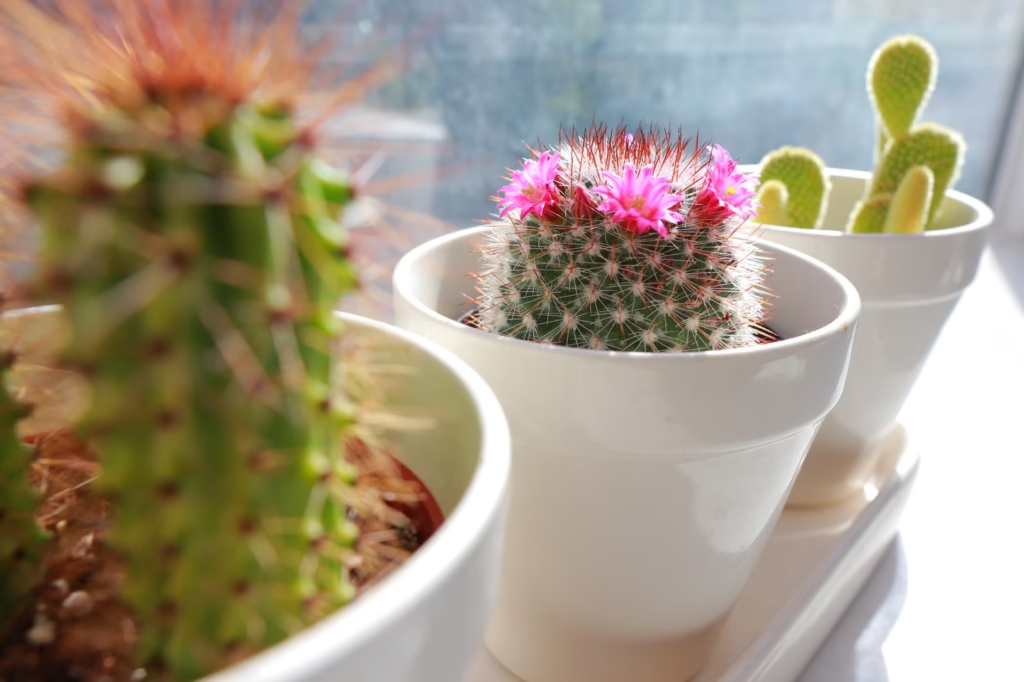
The checkout checklist
- Pick the final location before shopping. Write down the window direction and how far the plant will sit from the glass. Extension guidance starts with matching the plant to the light you already have. (extension.umn.edu)
- Read the plant tag, then verify the common and scientific names if pets are involved. ASPCA listings are organized by plant identity, not by how the pot is marketed in a store. (aspca.org)
- Inspect the plant like you are buying used equipment. Look under leaves, along stems, and at the soil surface for sticky residue, webbing, cottony spots, or visible insects. Penn State and UMN both emphasize starting with a healthy, pest-free plant. (extension.psu.edu)
- Choose drainage before décor. A decorative cover pot is fine, but the actual growing container should drain, and extra water should be emptied out after watering. (extension.umd.edu)
- Check whether the plant is already begging for a repot. Extension advice says roots poking from drainage holes are a sign it may need a bigger home soon. That is not a dealbreaker, but it is a cost you should know before buying. (extension.umn.edu)
- Skip common shortcuts. University of Maryland advises against filling the bottom of a pot with gravel, and Penn State warns against using garden soil in indoor containers because of disease and pest problems. (extension.umd.edu)
- If you already own plants, plan a quarantine zone before the new one comes home. UMN recommends isolating new additions for a couple of weeks and watching for pests before placing them near the rest of your collection. (extension.umn.edu)
Common mistakes that cost beginners money
- Buying for shape or trend before checking light. A plant that needs bright conditions but lives in a dark corner may force you into extra gear or an eventual replacement. (extension.umn.edu)
- Planting straight into a pretty pot with no drainage hole. Extension sources repeatedly flag poor drainage and trapped water as a root problem. (extension.umd.edu)
- Watering every Saturday because it feels organized. Overwatering and poorly drained soil can cause the same visible stress symptoms people often mistake for thirst. (extension.umd.edu)
- Assuming low light means no light. Low-light plants still need an appropriate spot near available light, and plants in lower light use less water, not zero care. (extension.umn.edu)
- Ignoring pet risk because the plant is common. ASPCA lists several familiar beginner picks, including snake plant and pothos, as toxic to cats and dogs. (aspca.org)
- Skipping inspection and quarantine. Pests are cheaper to prevent than to manage after they spread. UMN recommends scouting and quarantining new additions. (extension.umn.edu)
- Buying a cluster of plants because you expect dramatic air-cleaning benefits. Penn State notes a 1,500-square-foot house would need roughly 680 plants to match the airflow from a couple of open windows. (extension.psu.edu)
If your apartment is the problem, not the plant
Some apartments are genuinely difficult plant spaces. If your only open surface is far from a window, or your routine means you leave for a week at a time, the market can make you feel like the right accessory will solve everything. Usually, the cheaper answer is simpler: buy a plant that matches the light you have, or budget honestly for supplemental lighting from the start. Extension guidance is direct on this point. Natural light availability should drive plant selection, and artificial light is the backup when your space falls short. (extension.umd.edu)
There are also real constraint combinations that narrow your options. Pet-safe plus low-light plus low-maintenance is a shorter list than social media suggests. That is not a failure; it is useful information. In those cases, a smaller number of better-fit plants is smarter than a large starter haul. A spider plant or blunt leaf peperomia may be a better first purchase for a pet household than hoping a toxic plant stays untouched. If the space is too dark for the plant you want, price the grow light before you pay for the plant. (aspca.org)
How to pressure-test the purchase after you get home
- Keep the plant in its nursery pot at first and place it in the exact spot where it will live. This lets you confirm the light fit before spending more on containers. (extension.umn.edu)
- Water correctly the first time. University of Maryland advises watering thoroughly so water comes out of the bottom of the pot, then dumping any water left in the saucer or cachepot. (extension.umd.edu)
- Inspect again on day 3 and day 7. Look under leaves and at the soil line for pests, especially if the plant came from a crowded display table. (extension.umn.edu)
- If the soil stays wet for too long, or the plant wilts while the mix is still wet, treat that as a drainage or overwatering warning, not as a cue to add more water. (extension.umd.edu)
- At the end of the quarantine period, move the plant near others only if it still looks clean and healthy. (extension.umn.edu)
ASPCA toxicity pages are a screening tool, not veterinary advice. If a cat or dog chews a potentially toxic plant or shows symptoms, contact your veterinarian or ASPCA Poison Control promptly. (aspca.org)
Bottom line
Quite the opposite, the best choice of the first plant for your new apartment has nothing to do with various advertising campaigns. It involves understanding what fits into your apartment, what kind of care schedule you would like to follow, what type of vessel you are going to use and how much risk it could potentially bring. The only rule that you must remember when thinking about your first apartment plant can be summed up in one simple phrase: never buy a plant unless you know where you are going to put it and how much it is going to cost you.
FAQ
Do I need a grow light for an apartment plant?
Not always. If the plant matches your existing light, probably not. But extension guidance says plant selection should follow the natural light in your home, and if that light is insufficient, artificial lighting is the backup. North windows are low light; the brightest natural light is usually an unobstructed south-facing window. (extension.umn.edu)
Is a decorative pot without a drainage hole a dealbreaker?
It is a problem if you plant directly into it. It is workable if you use a draining nursery pot inside the decorative pot and remove extra water after watering. Extension sources also warn that many ceramic containers lack sufficient drainage holes. (extension.umd.edu)
Which beginner plants are safer around cats and dogs?
ASPCA lists spider plant and blunt leaf peperomia as non-toxic to cats and dogs. It lists snake plant and pothos as toxic. If you have pets, check both the common and scientific names before buying. (aspca.org)
Should I water on a set weekly schedule?
Usually no. University of Maryland says plants should be watered when needed, not by a fixed calendar, because watering needs depend on the mix, growth stage, pot type, humidity, and temperature. Lower-light plants also use less water. (extension.umd.edu)
What is the cheapest smart starter setup for a true beginner?
Usually one plant, not a batch. Keep the included nursery pot if it drains, add a simple saucer, and choose a plant that fits your real window so you do not have to buy a new container or light immediately. For pet homes, a spider plant or blunt leaf peperomia is often a safer starting point than a toxic common plant. (extension.umd.edu)
References
- University of Maryland Extension: Potting and Repotting Indoor Plants – https://www.extension.umd.edu/resource/potting-and-repotting-indoor-plants
- University of Maryland Extension: Overwatered Indoor Plants – https://www.extension.umd.edu/resource/overwatered-indoor-plants
- University of Maryland Extension: Lighting for Indoor Plants – https://www.extension.umd.edu/resource/lighting-indoor-plants
- University of Minnesota Extension: Lighting for indoor plants and starting seeds – https://extension.umn.edu/planting-and-growing-guides/lighting-indoor-plants
- University of Minnesota Extension: Houseplant pests – https://extension.umn.edu/news/houseplant-pests
- University of Minnesota Extension: Managing insects on indoor plants – https://extension.umn.edu/yard-and-garden-insects/insects-indoor-plants
- University of Minnesota Extension: When houseplants go outside – https://extension.umn.edu/yard-and-garden-news/when-houseplants-go-outside
- Penn State Extension: The Argument for Houseplants – https://extension.psu.edu/the-argument-for-houseplants
- Penn State Extension: Low Light Houseplants – https://extension.psu.edu/low-light-houseplants
- Penn State Extension: Pothos as a Houseplant – https://extension.psu.edu/pothos-as-a-houseplant
- Penn State Extension: Monstera as a Houseplant – https://extension.psu.edu/monstera-as-a-houseplant
- Penn State Extension: Repotting Houseplants – https://extension.psu.edu/repotting-houseplants:443/