- What “Low Light” Usually Means in an Apartment
- Quick Picks: The Best Starter Plants for Low Light Apartments
- The Low-Light Care Routine (Simple, Repeatable, Beginner-Proof)
- Common Low-Light Plant Problems (and What to Do First)
- When a Grow Light Is Worth It (and How to Keep It Simple)
- Pet and Kid Safety: A Quick Way to Sidestep Regret Purchase
- Your Beginner Buying Checklist
- FAQ
- References
TL;DR
- Low light doesn’t mean dark. Most “low-light” plants will survive in dim spots but will grow very slowly.
- If you’re prone to forgetting to water, start with a ZZ plant, snake plant, or cast iron plant — the true plant trifecta.
- In low light, err on the side of watering less often. The most common mistake is to keep them too wet, leading to root rot.
- Have pets? A number of popular no-light plants are toxic to dogs and cats including pothos, philodendron, peace lily, Chinese evergreen, and dracaena. Opt for pet-safe picks like cast iron plant, parlor palm, and spider plant.
- A little grow light on a timer can help go from surviving “no-light” plants to thriving, especially during winter.
Low-light apartments can absolutely support beautiful indoor plants if you choose your plants wisely, and (even more importantly) adjust your watering routine. This guide is all about “beginner friendly” plants that tolerate low light, forgive missed waterings, and don’t require elaborate setups with high humidity.
What “Low Light” Usually Means in an Apartment
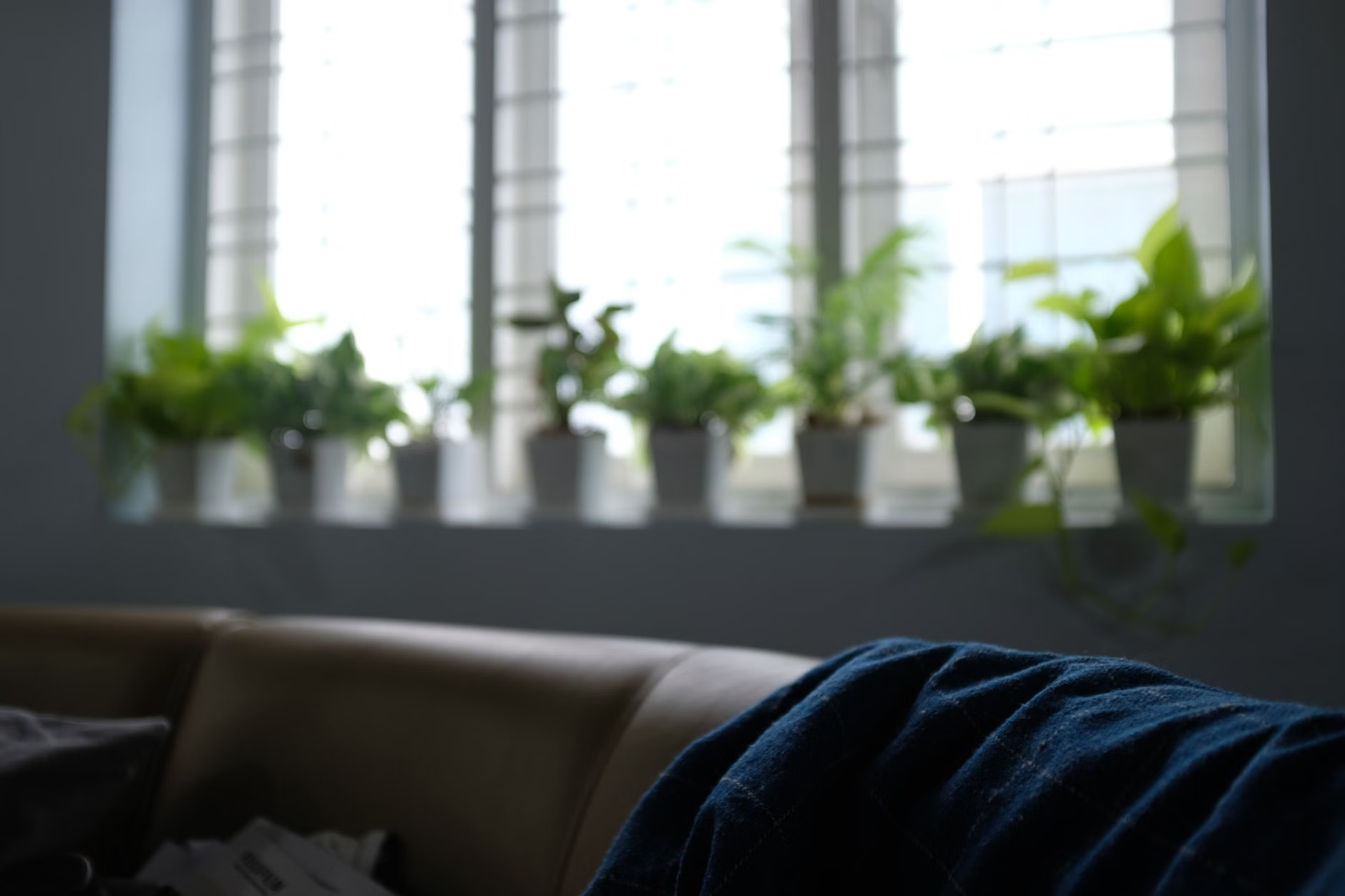
So much plant fiasco comes from a misunderstanding of the light in your home. A plant label might say low light, and so it thinks a predictable factor is light. Light that comes from a window, but not from direct sun. One realistic way to think about “low light” compared to “medium light” is that it may simply be short distance away from windows. University of Illinois Extension describes “low light” as being a few feet back from a north window, farther back from east/west windows (even farther from a south window).
| Test | What you see | What it means for plant choice |
|---|---|---|
| Shadow test at midday | Soft, blurry shadow | Good for most “low to medium light” houseplants |
| Shadow test at midday | Barely any shadow | Choose the toughest low-light plants (ZZ, snake, cast iron) or add a grow light |
| Reading test | You can comfortably read a book near the plant spot during the day | Usually enough for many low-light-tolerant plants |
| Reading test | You need lamps on most of the day to read there | Treat it as “very low light”; consider grow lights |
Tips:
- Pick 2–3 “candidate spots” where you want plants (by the couch, on a shelf, in the bedroom, etc.)
- At midday, do a quick shadow check in each spot (cloudy days will look dimmer—repeat another day if you can)
- Note your window direction (north/east/west/south) and how far the spot is from the glass
- Start with one plant per spot. Don’t buy five plants for a low-light corner until you’ve proven the corner works.
Quick Picks: The Best Starter Plants for Low Light Apartments
If you want the shortest path to winning, start with one of these and match it to your rhythms (especially watering).
Shortlist of Low-light Plants (and Easy on Beginners)
| Plant | Best for | Watering style | Pet safety (cats/dogs) |
|---|---|---|---|
| ZZ plant (Zamioculcas zamiifolia) | People who forget to water | Let soil dry well between waterings | Toxic if ingested (keep out of reach) |
| Snake plant (Dracaena/Sansevieria trifasciata) | The “set it and forget it” crowd | Dry out between waterings; less in winter | Toxic |
| Cast iron plant (Aspidistra elatior) | Low-light shelves and corners | Moderate; don’t keep soggy | Non-toxic |
| Heartleaf philodendron (Philodendron hederaceum) | A trailing plant that tolerates low light | Keep slightly moist; don’t swamp it | Toxic |
| Golden pothos (Epipremnum aureum) | Fast-growing vines in less-than-ideal light | Water when partly dry | Toxic |
| Chinese evergreen (Aglaonema) | Durable foliage plant for low to moderate light | Lightly moist; let top inch or two dry | Toxic |
| Parlor palm (Chamaedorea elegans) | A pet-safer “tropical look” | Even moisture; avoid bone-dry | Non-toxic |
| Spider plant (Chlorophytum comosum) | A forgiving starter plant (best nearer windows) | Even moisture; let top dry a bit | Non-toxic |
Plant-by-Plant Beginner Guide (Low Light Edition)
1) ZZ Plant (Zamioculcas zamiifolia): best for chronic underwaterers
If you’re after a “starter” plant for a dim apartment, few can match ZZ. It does well in low light and stores water in its rhizomes so it can “miss a watering”. Placement: a few feet back from a window, or turn the plant into a bright room that doesn’t get direct sun on the leaves. Watering: wait until it is very dry, and never let it sit soggy. Beginner Mistake: Watering on a “schedule” in low light will cause root rot. Growth Expectation: Slow, especially in low light.
2) Snake Plant (Dracaena/Sansevieria trifasciata): Toughest upright. Low light tolerated, be sure to let it dry out between waterings. In winter, it may only need water every 1–2 months. Beginner Mistake: Planting in a pot without drainage. Pet note: Toxic to cats and dogs.
3) Cast Iron Plant (Aspidistra elatior): best true low-light houseplant that’s also pet-safer. “Cast Iron” earned its name by tolerating heavy shade and neglect. Placement: deep shade or low light, avoid direct sun. Water: moderate, let it dry partway. Pet safety: Non-toxic to cats and dogs.
4) Heartleaf Philodendron (Philodendron hederaceum): easy trailing plant for low-to-medium light. Placement: near a north or east window is ideal; farther back can work, but expect leggier growth. Water: keep soil slightly moist. Pet note: Toxic to cats and dogs.
5) Golden Pothos (Epipremnum aureum):
Fast, forgiving, and great for beginners (but not pet-safe). Placement: best within a few feet of a window, but can manage in a bright room. Water: when the top quarter is dry. Beginner tip: Propagate in water!
6) Chinese Evergreen (Aglaonema):
Durable foliage for low to moderate light. Solid green varieties usually tolerate lower light better. Placement: indirect light, avoid direct sun. Water: let top 1–2 inches dry before watering again. Beginner mistake: Putting a variegated/pink cultivar in a very dim spot.
7) Peace Lily (Spathiphyllum): tolerant of lower light, but happiest with some brightness. Placement: medium to low indirect; avoid direct sun. Water: keep mix lightly moist. Beginner tip: Wipe dusty leaves to maximize available light.
8) Dracaena (including ‘Janet Craig’ and dragon tree): good “floor plant” for lower light rooms. Placement: low to bright indirect; slower growth in low light. Water: avoid waterlogged soil. Practical tip: Some dracaenas are fluoride-sensitive—use distilled water if necessary.
9) Parlor Palm (Chamaedorea elegans): a pet-safer palm that tolerates lower light. Placement: low to medium indirect light. Water: evenly moist, not soggy. Beginner mistake: Don’t put next to a heating vent.
10) Spider Plant (Chlorophytum comosum): forgiving and pet-safer (best in brighter “low light”). Placement: indirect light near a window. Water: let top slightly dry then water. Beginner tip: If it looks sparse, move closer to the window.
The Low-Light Care Routine (Simple, Repeatable, Beginner-Proof)
Low light changes the whole game: plants photosynthesize less, grow slower, and use water more slowly. That’s why “I watered it like the tag said” can still end in a mushy, overwatered plant.
- Pot accordingly: Start with a pot that has a drainage hole or use the nursery pot inside a decorative cover pot to drain after watering.
- Test before watering: Use a finger test (top 1–2 inches) or lift the pot—light pot usually means it’s time.
- Water thoroughly: Water until some excess drains out, then dump the saucer.
- Rotate monthly: Plants lean in low light; turn them a quarter turn every few weeks.
- Clean leaves: Dust blocks scant light—wipe leaves occasionally.
Common Low-Light Plant Problems (and What to Do First)
| Symptom | Most likely cause | Best first fix |
|---|---|---|
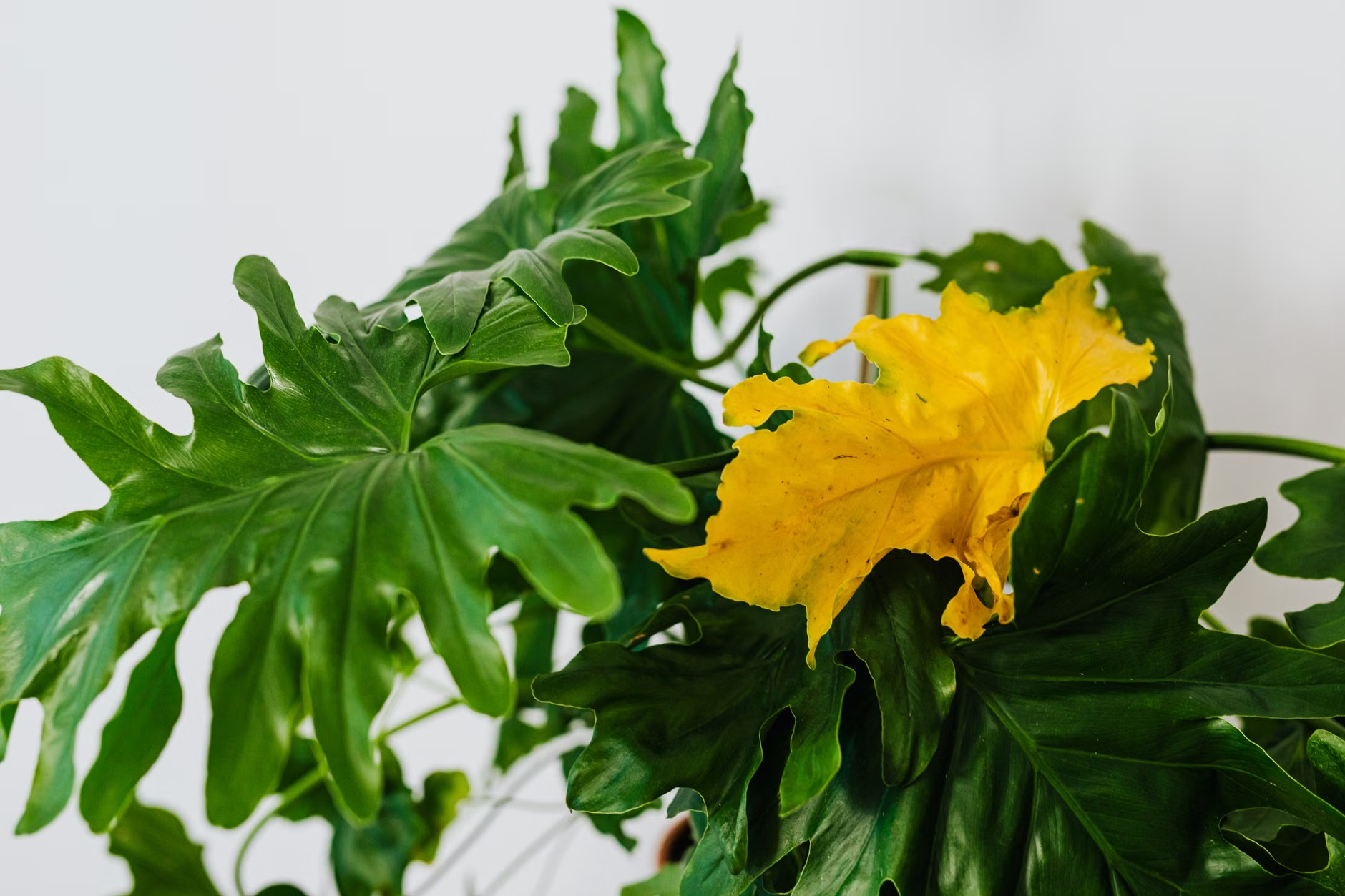
| Yellow leaves + soggy soil | Overwatered/pot is soggy | Stop watering; check drainage; let soil dry longer |
| Long bare legs + smaller leaves (leggy plant) | Not enough light | Move 1–3 ft closer to window, or add a grow light on a timer |
| Brown crispy tips | Dry air, inconsistent watering, or water quality issues | Stabilize watering; avoid vents; try different water |
| Leaves are pale or have bleached patches | Too much direct sun | Move back from window or use a sheer curtain |
| Lots of gnats in the soil | Soil staying wet too long | Let soil dry out more, try sticky traps, bottom watering if appropriate |
When a Grow Light Is Worth It (and How to Keep It Simple)
If that plant spot is still pretty dim, a small grow light can mean the difference between a plant that just survives and one that actually grows.
- Pick a simple setup: a clip-on or tabletop grow light + plug-in timer.
- Start with 10–12 hours per day (adjust if signs of deficiency appear).
- Keep the light fairly close (follow manufacturer’s guidance).
- Plants may dry out more quickly, so check watering more often.
Pet and Kid Safety: A Quick Way to Sidestep Regret Purchase
Most easygoing low light houseplants are toxic or irritating if chewed. You cannot trust “pet-friendly” labels—always look up the full name in a reliable database.
Pet-safer choices from this guide: cast iron plant, spider plant, parlor palm.
Common low-light plants that are toxic to pets: pothos, philodendron, peace lily, Chinese evergreen, dracaena, snake plant.
Your Beginner Buying Checklist
- Check for healthy leaves: avoid yellowing, mushy, or spotty plants.
- Look for pests (sticky residue, webbing, cottony clusters).
- Pick a smaller plant for easier recovery from any care issues.
- Have a drainage plan before you buy.
- Don’t choose a variegated plant for your dimmest spot—they need more light.
FAQ
What’s the easiest low-light plant for a total beginner?
Can any plant live in a windowless bathroom or windowless hallway?
Why do low-light plants die more from overwatering than underwatering?
Do “low light” plants need fertilizer?
How can I check the toxicity level of a plant I want to get?
References
- University of Illinois Extension — Lighting (Houseplants)
- University of Missouri Extension — Lighting Indoor Houseplants (G6515)
- UF/IFAS Gardening Solutions — ZZ Plant
- NC State Extension Gardener Plant Toolbox — Snake Plant (Dracaena trifasciata)
- NC State Extension Gardener Plant Toolbox — Cast Iron Plant (Aspidistra elatior)
- Clemson Extension HGIC — Chinese Evergreen (Aglaonema) Care Guide
- Clemson Extension HGIC — Dracaena (HGIC 1504)
- Penn State Extension — Palms as Houseplants
- RHS — Houseplants for shade
- ASPCA — Golden Pothos (Epipremnum aureum)
- ASPCA — Heartleaf Philodendron (Philodendron hederaceum)
- ASPCA — Peace Lily (Spathiphyllum)