A practical guide to truly low-light-tolerant houseplants, where to place them, and simple care routines that prevent the most common beginner mistakes.
Low light doesn’t mean no light: Most plants in lower-light rooms will still do best with a window nearby or a small grow light turned on a few hours a day to look their best long-term.
In lower light, plants can go drier between waterings (unless you have a crazy-cheerful sunny window, overwatering is the #1 way beginners kill "low light" plants. The plants that can take crummy light can also take crummy care.)
Want the easy wins? Cast iron plant (pet safe), parlor palm (pet safe), ZZ plant, snake plant.
If you want good light: Classic vining easy care plants like pothos and heartleaf philodendron will also tolerate low light pretty well, but get them to the window or out of reach of those fanged puppy teeth—they’re all toxic.
Want fast growth? Can you say “survive”? Those low-light champs can survive, but they’re not going to get big and blooming without normal bright indirect light.
Low-light apartments exist when small windows allow close space neighbors or trees to shade it. Sometimes tinted glass brings down the light. It’s often simply that the “best” spot for plants is far from the light source. Fortunately, you can still keep plants indoors. You’ll simply have to pick species that can survive in lower light and be careful not to water as often. Low light means less water as a general rule.
Auto-reality check: No houseplant runs well in a windowless room with the light off. “Low-light tolerant” far more commonly denotes “survives and looks decent” rather than “grows fast.” If you want steady growth in a room that’s really quite dim, plan on using a small LED grow light on a timer.
What does “low light” mean indoors (and how can you tell if the light is low in your home)?
Plant labels can be vague (they list low light or bright indirect), so it’s useful to have a simple definition in mind. Extension and horticulture sources commonly define low light, indoors, in foot-candles (FC).
A phone lux-meter app can give you a decent approximation (it’s not lab-perfect, but it’s good enough to guide placement decisions).
Quick indoor light guide (practical, not perfection)
| Light level | What it often looks like in an apartment | Typical placement clue | What to expect from plants |
|---|---|---|---|
| Low light | You can see fine, but it’s never “sunny” in the room | North-facing window area, or several feet back from any window | Slow growth; water use is low; variegation often fades |
| Medium/bright indirect | Room feels bright but sun doesn’t hit leaves for long | Near an east/west window, or back from a south window behind a sheer curtain | Steady growth; more forgiving watering |
| Direct sun (through glass) | Hard sun patches on floors/walls | Right on a sunny sill | Risk of leaf scorch for shade plants |
Two easy “no-tools” checks:
- Shadow test at midday: sharp, dark shadow usually means high light; soft, fuzzy shadow=mod; nearly no shadow=low.
- Distance test: light drops fast as you move away from the window. Even a foot or two can make a difference.
The beginner success formula in low light
- Choose a pot with a drainage hole (or keep the plant in a nursery pot placed inside a decorative cachepot).
- Use a well-draining indoor potting mix.
- For drought-tolerant plants (snake plant, ZZ plant), mix in more perlite or cactus mix.
- Water less often than you may assume. In low light, soil stays wet longer—root rot creeps up silently.
- Rotate all plants every 1-2 weeks so they don’t lean hard toward the window.
- Wipe dust off leaves occasionally so the plant can use our limited light a bit more efficiently (and it helps you spot pests before they spread).
Before watering: check by pushing a finger 2 inches in or using a wooden skewer. If it feels cool/damp to the touch or soil sticks to the skewer, wait.
When it’s time to water: water thoroughly and let it drain out the bottom, then empty the saucer after 10-15 minutes.
Adjust… dried down fuller plants (snake plant, ZZ) will dry down more completely than tropical foliage plants (peace lily, parlor palm).
In the winter or very dim rooms extend periods between watering. Do not be alarmed when you see the plant grow slower and develop fewer new leaves.
If in doubt, opt for the “wait 3 more days” button. Usually, not enough water is much easier to remedy than root rot.
Top starter low light apartment plants (with light rules of thumb)
Pet safety note: A number of popular low light plants become toxic if chewed (notably aroids like pothos, philodendron, peace lily, Chinese evergreen, ZZ plant, etc.). If you have pets/toddlers, keep plants out of their reach and check toxicity by
-
1) Cast iron plant (Aspidistra elatior)
If you want the most “I can’t believe it’s still alive” houseplant for dim rooms, this is a winner. It’s notorious for taking all the low light shade and neglect it can withstand, and it’s also a decent choice for pet households.
Light: Low to moderate; avoid direct sun (it can scorch/bleach leaves.)
Water: Let the top of half of the pot dry, then water. In low light, that might be 2–4 weeks.
Beginner mistake to avoid: “Love” watering. This plant would prefer a little drier than damp all the time.
Pet safety: Listed as non-toxic to cats and dogs by ASPCA.
Style tip: It’s a slow mover—buy the size you want, then let it chill.
-
2) Parlor palm (Chamaedorea elegans)
Parlor palm is a tried-and-true apartment plant for its ability to take indirect light and stay looking classy for years, and it’s a great “pet-safe vibe” rec compared to lots of other low-light faves.
Light: Bright indirect is best, but will cope in lighter shade/low light (growth will slow).
Water: Keep lightly moist, not soggy. Water when the top inch feels dry.
Beginner mistake to avoid: placing it next to heat vents or radiators (crispy tips).
Pet safety: Listed as non-toxic to cats and dogs by the ASPCA.
Troubleshooting: Brown tips are often
-
3) ZZ Plant (Zamioculcas zamiifolia)
ZZ plant is a beginner legend! It stores water in thick fleshy rhizomes, tolerates low light, and rarely throws tantrums. If you travel/or are forgetful ZZ is one of your best choices. Light: From low light to bright indirect light, avoid harsh direct rays. Water: Make sure the soil dries out between watering’s; in low light you may find you’re watering once a month (or less!). Beginner mistake to avoid: Giving ZZ regular sips of water. Full soak, then full dry-down. Pet safety: Assume toxic if ingested and keep away from pets/children! Bonus! Can tolerate the fluorescent-only light of most offices better than other house plants.
-
4) Snake Plant (Dracaena trifasciata / Sansevieria trifasciata)
One of the most forgiving low-light choices and a great “architectural” plant for small spaces. Super drought tolerant and not fussy about looking good! Light: Tolerate low light, but grow faster and sturdier in medium light. Water: Make sure the soil dries completely before watering. Overwatering always the killer. Beginner mistake to avoid: Planting in heavy, water-holding soil without good drainage. Pet safety: Toxic to cats and dogs if ingested (ASPCA). Apartment tip: If leaves start stretching and flopping it usually wants a brighter situation (or less WATER!).
-
5) Pothos / Devil’s ivy (Epipremnum aureum)
Pothos is a fast way to make an apartment feel lush: trail it from a shelf, train it up a pole, or let it cascade from a hanging pot. It tolerates low light well, but it looks best with some brightness.
Light: Low to bright indirect. Variegated types usually need more light to keep their pattern.
Water: Water when the top 2 inches of soil are dry.
Beginner mistake to avoid: leaving it in a dark corner and still watering weekly (leads to yellowing + mushy stems).
Pet safety: Toxic to cats and dogs (ASPCA).
Easy win: Trim leggy vines and root the cuttings in water to make the pot fuller.
-
6) Heartleaf philodendron (Philodendron hederaceum)
This is a close “cousin” in vibe to pothos: trailing, easy, and tolerant of lower light. It’s especially useful if you want a classic green plant that stays beautiful even when growth slows down.
Light: Prefers medium indirect, but can tolerate very low light for long periods (expect slower growth and smaller leaves).
Water: Let the top inch or two dry, then water thoroughly.
Beginner mistake to avoid: direct sun on the leaves (scorching).
Pet safety: Toxic to cats and dogs (ASPCA).
- How to keep it bushy: pinch/prune at the top above a node; it will branch and fill in.
7) Chinese evergreen (Aglaonema)
Chinese evergreen is one of a small set of lovelies that do well holding shape and living indoors in dimmer rooms. It’s abundant in leaf patterns. In low light, opt for darker colors if you want the plant to do well.
Light: Low to medium indirect; too much direct sun can scorch.
Water: Allow the top couple inches to dry between waterings (and use a moisture meter if you want super love).
Beginner mistake to avoid: cold drafts (it’s tropical).
Pet safety: Toxic to cats and dogs (ASPCA).
Low-light styling info: Silver or pale variegated varieties often need brighter indirect light than deep-green varieties.
8) Peace lily (Spathiphyllum)
Peace lilies have a reputation for surviving medium to moderate lower light levels, though they’re one of the easier flowering houseplants—as long as the room isn’t too dim. In low light you’ll get a lot of lush leaves, but few if any blooms.
Light: Partial shade/Low to medium indirect. Avoid direct sun.
Water: Water to keep evenly moist but not soggy. Let the surface of the soil dry slightly before watering again.
Beginner mistake to avoid: letting it sit in standing water ( root problems) or swinging from dry as a bone to soaking wet.
Pet safety: Toxic to cats and dogs according to the ASPCA.
Visual cue: Drooping LEAVES means thirsty, but it also might mean “hey! Roots are struggling.” Check the soil before jumping to conclusions.
9) Corn plant / Janet Craig dracaena (Dracaena fragrans)
Dracaenas make great “green furniture” plants—upright slow-growing plants that tolerate less-than-perfect light, especially if you need height without a big footprint. Size: 3 to 10 feet depending on conditions.
Light: Bright to moderate filtered light; lower light acceptable but leaf shape and growth may change.
Water: Allow top inch to dry out between waterings; reduce in winter.
Beginner mistake to avoid: Not using very mineral-rich tap water if your dracaena is getting brown tips—try filtering it out, and flushing regularly in bottom of pot.
Pet safety: Toxic to cats and dogs (ASPCA).
Placement tip: Away from cold windows in winter; chilling delays growth and spoils foliage.
University of Florida/IFAS lists both snake plant (Sansevieria/Dracaena trifasciata) and pothos (Epipremnum aureum) as high invasion risk in Florida—keep them as indoor plants and dispose of trimmings in the trash, not outside.
If you have pets: a safer low-light shortlist
If your pet is a plant-eater you’ve probably already narrowed your plant criteria to “ low light + non-toxic.” Here are three of the easiest to find of the most common indoor plant varieties that are considered non-toxic by the ASPCA.Common low-light pet-safe picks
If you have pets and want to add low-light plants to your home, check out these options:
| Plant | Light tolerance | Why beginners like it | ASPCA pet status |
|---|---|---|---|
| Cast iron plant (Aspidistra elatior) | Low–moderate | Handles shade + missed waterings | Non-toxic to cats and dogs |
| Parlor palm (Chamaedorea elegans) | Moderate, can cope with lower light | Soft, tropical look; slow-growing | Non-toxic to cats and dogs |
| Spider plant (Chlorophytum comosum) | Medium–bright is best; can tolerate lower light | Hardy, makes “babies” you can replant | Non-toxic to cats and dogs |
Even “non-toxic” plants can still cause mild stomach upset if eaten. If a pet ingests any plant and shows symptoms, contact your veterinarian. For urgent guidance in the U.S., you can also call ASPCA Animal Poison Control (fees may apply).
Common low-light problems (and fast fixes)
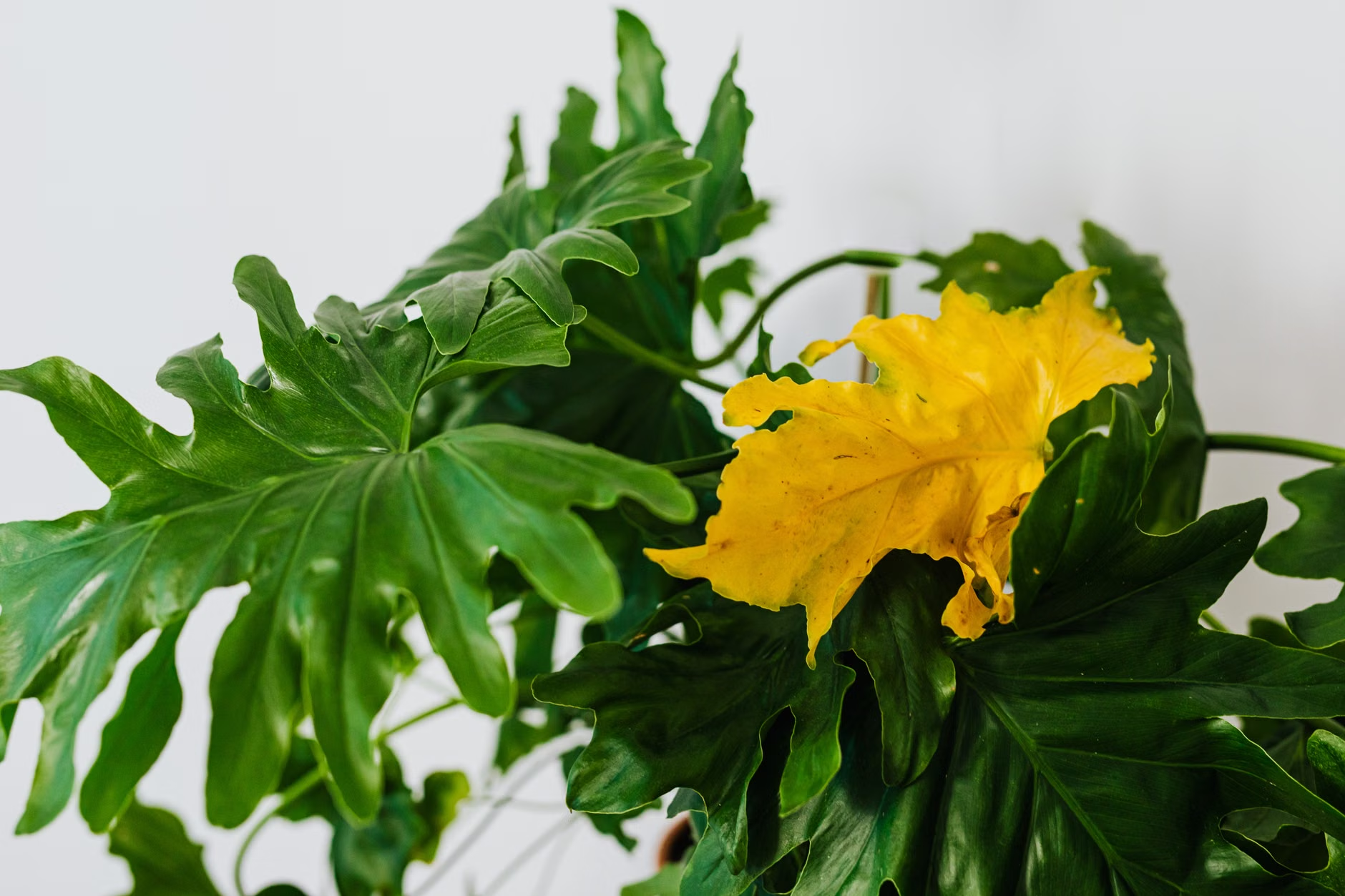
Yellowing leaves + sodden, dark soil in the pot = overwatered; take a break, improve drainage, or replant in a fresher, fluffier mix.
Leggy vines (long gaps along the stem) = light not bright enough; bring closer to the window, or add a small grow light for 10–14 hours/day.
Brown crispy tips = dry air, inconsistent watering, even minerals; try a humidifier, more even watering, maybe even filtered water.
Nothing’s growing for months = normal in low light, and especially in winter; if you want the plant to grow, give it more light not fertilizer.
- Pests (particularly fungus gnats): generally related to perpetually wet soil. Allow the pot to dry more between waterings, and eliminate rotting leaves.
Buying checklist (so you don’t bring home a headache)
- Pick the right plant for your light to start with (don’t “rescue” a sun risk to a dark cave).
- Opt for a pot with drainage (or a nursery pot in a decorative outer pot).
- Look for pests on the leaves, and rotting stems. Avoid partners for your plant who have wet cotton candy bases or too many yellow leaves showing.
- Ask the vendor what light the plant grew in. A big light drop means a bigger adjustment period.
- Save the plant tag (or take a photo of the scientific name)—it saves a lot of guesswork verifying care (and whether they are pet-safe).
FAQ
Q: Can I keep a plant in a room with no windows if I use regular ceiling lights?
A: Not usually. Most standard room lighting is too dim for sustained growth in your plants. If you want plants in a room with no windows, opt for an LED grow light on a timer (often 10–14 hours/day for foliage).
Q: Which low-light plant is best for a total beginner?
A: For most people: snake plant or ZZ plant (because they like to miss waterings), if you need pet-safe options start with cast iron plant or parlor palm
Q: Why did my “low light” plant die right after I moved it into a darker corner?
A: “Low light” still means usable light. When light drops, the plant is using less water. If you kept the same schedule, the soil is too wet for too long and the roots can rot. The fix is usually more light (closer to a window or grow light) and less frequent watering.
Q: Do low-light plants clean the air?
A: While there’s potential for plants to absorb certain compounds in controlled settings, the impact in most apartments is negligible. Pick plants for enjoyment and well-being first, and the air-quality bonus is just that. A bonus.
Q: I’m in a warm climate—can I put pothos or snake plant outside on a patio?
A: In some warmer regions they can grow outdoors, but be careful, both of those are considered invasive risks in places like Florida. Keep them contained, don’t plant them in ground, and never discard cuttings outdoors.