Beginner Glossary: Indoor Plant Terms Explained in Plain English
Confused by labels like “bright indirect light,” “node,” “well-draining mix,” or “root bound”? This beginner-friendly indoor plant glossary explains common houseplant terms in plain English, with quick ways to recognize.
TL;DR Quick Definitions
- “Bright indirect light” = a bright room near a window, not getting strong sunbeams on the leaves.
- “Well-draining mix” = potting mix with air pockets so roots don’t stay wet too long (thanks to bark/perlite/pumice).
- “Node” = point where leaves join a stem, and where new growth or roots can form.
- “Root bound” = roots are crowded and circling in the pot, may cause plant to dry out quickly and need repotting.
- When troubleshooting, sort problems into biotic (living/pests/pathogens) or abiotic (care/environment).
How to Use This Glossary (Fast)
- Circle 2-3 care words in advice you don’t understand (e.g. indirect, dry out, airy mix, node, acclimate).
- Look them up below by category (Light, Water, Soil, Anatomy, Propagation, Pests).
- Try the “quick check” next to each definition—seeing the real plant helps!
- If advice conflicts, trust what you can measure: pot dryness, distance from window, look of the roots.
Light terms (the most confusing ones)
You’ll see “bright light” and other terms tossed around in plant descriptions. A plant guru has simplified a bunch of common light terms. Here’s her glossary:
| Term you’ll see | Plain-English meaning | Quick way to verify at home |
|---|---|---|
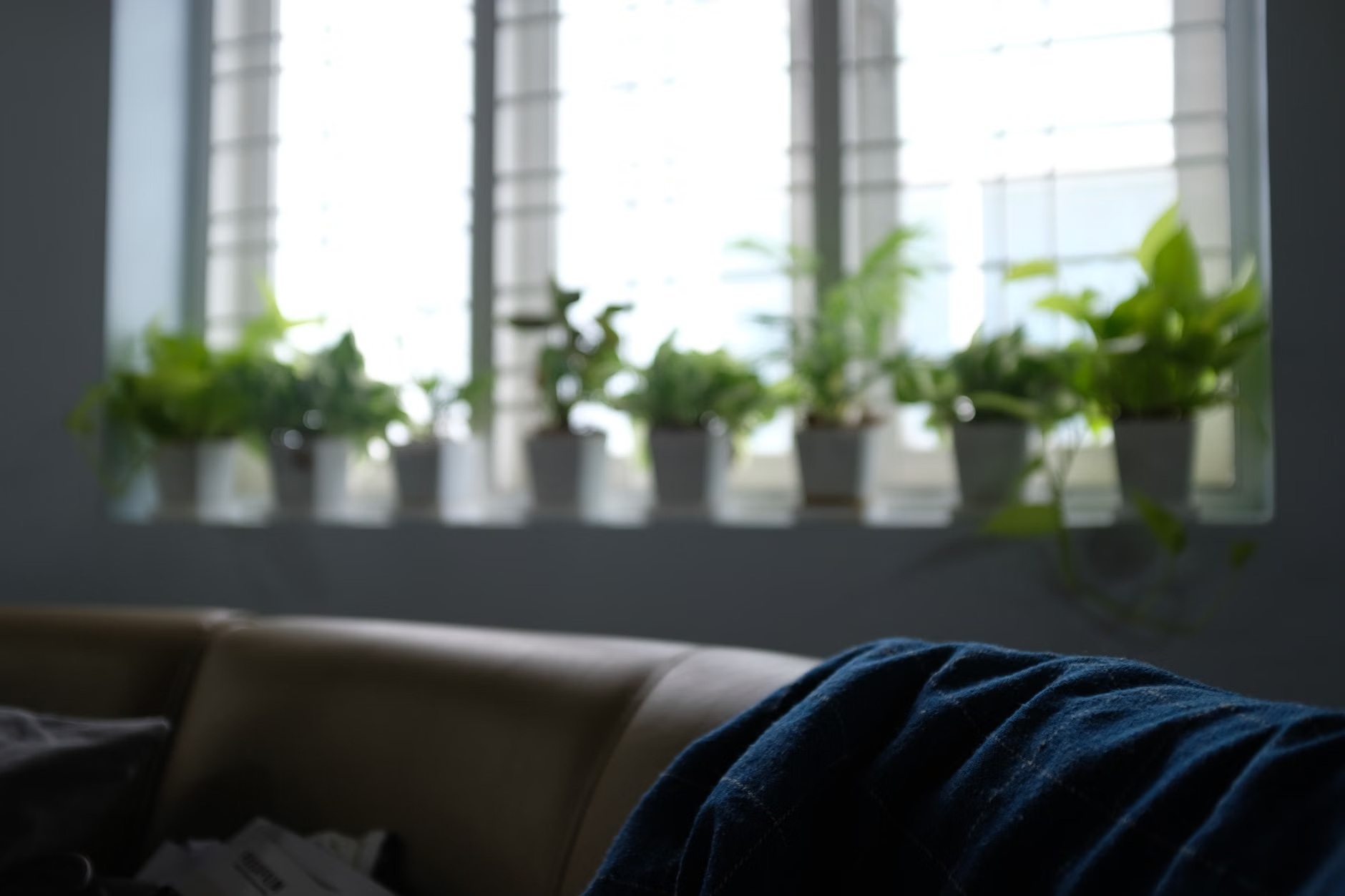
| Bright indirect light | A bright spot near a window, can “see the sky,” but direct sunbeams aren’t hitting the leaves for long stretches. | Stand at the plant at midday: if you see strong sun patches on surfaces, that’s direct sun. No patch but still bright = indirect. |
| Direct light / full sun | Sunlight hits the plant directly (sunbeams on leaves). Even 1–3 hours of hot AF sun can scorch sensitive plants. | Hard-edged shadows on the plant/pot? Sharp = direct light. |
| Low light | Not zero light. Plant will survive, maybe grow slow or get leggy. | If you need a lamp on during daytime, most common plants struggle here without a grow light. |
| Filtered light | Direct sun softened by sheer curtain/blinds/tree canopy. Light looks “hazy”, shadows on wall are softer. | If sunbeams appear but look hazy and soft-edged = filtered. |
| Grow light | Electric light built for plants (not just for looks). | Only helpful if it is for plants and used 10–14hrs/day near the leaves. |
| Photoperiod | How many hours/day the light is bright in the plant area (affects blooming cycles). | Count how many hours it’s bright in the plant’s spot (sun + grow light combined). Consistency matters more than perfection. |
Watering terms (what they really mean)
| Term you’ll see | Plain-English sense | Normal people how to do it |
|---|---|---|
| Water thoroughly | Soak the whole root zone, not just a sprinkle on top. | Water until you see excess drain from the drainage holes, then empty saucer/cachepot. |
| Let it dry out | Let a good chunk of mix lose moisture before next watering (amount depends on the plant). | Use a finger/skewer; if dry at the right depth, water. |
| Keep evenly moist | Don’t let it go bone-dry or stay soggy; keep things steady. | Check more often, water smaller amounts to keep root ball moist but not soggy. |
| Overwatering | Usually means watering too often for light/temperature/mix, NOT how much you use in one session. | If pot stays wet for days, give more light/airflow, use chunkier mix, or repot with drainage. |
| Soggy / waterlogged | Mix stays saturated and roots can suffocate/rot; often smells sour/swampy days after watering. | Treat as a major drainage problem; fix in a hurry. |
| Bottom watering | Letting pot “drink” from below (in water) as mix wicks it up. | |
| Root rot | Roots die and decay, often from long wet periods. Firm roots are healthy; mushy, hollow, often brown roots = rot. | Slide plant out and inspect roots. |
| Humidity (RH) | Percent of moisture in the air compared to max possible at current temperature. | Normal home is ~50–60% RH; higher means slower leaf drying. |
| Microclimate | A small space with its own light, humidity, airflow. | Ex: by the humidifier, in the bathroom, by a draft. |
| Draft | Constant flow of air from open window/door. | Can dry and damage leaves. |
| Airflow | Gentle breeze or movement of air. | Keeps leaves/soil dry, prevents soggy mix/fungal issues. |
Soil, potting mix and container terms
Many indoor plant problems are actually “mix + pot + light” problems. If your plant stays wet too long, don’t just water less forever—improve aeration/drainage and adjust pot size!
| Term you’ll see | Plain-English meaning | Why it matters indoors |
|---|---|---|
| Medium / growing medium | Whatever roots grow in—potting mix, bark, moss, etc. | Controls how long roots stay wet and how much air they get. |
| Well-draining | Mix allows extra water to run through quickly. | Reduces risk of roots sitting wet for days in low light/temps. |
| Airy / chunky mix | Bigger particles with air gaps (bark, perlite, pumice). | Lets roots breathe; great for aroids and epiphytes. |
| Water retention | How much water the mix holds after draining. | High = good for thirsty plants in bright light, bad in low light. |
| Compacted mix | Pressed so tightly little air remains. | Slow drying, roots suffocate—even if you “water less”. |
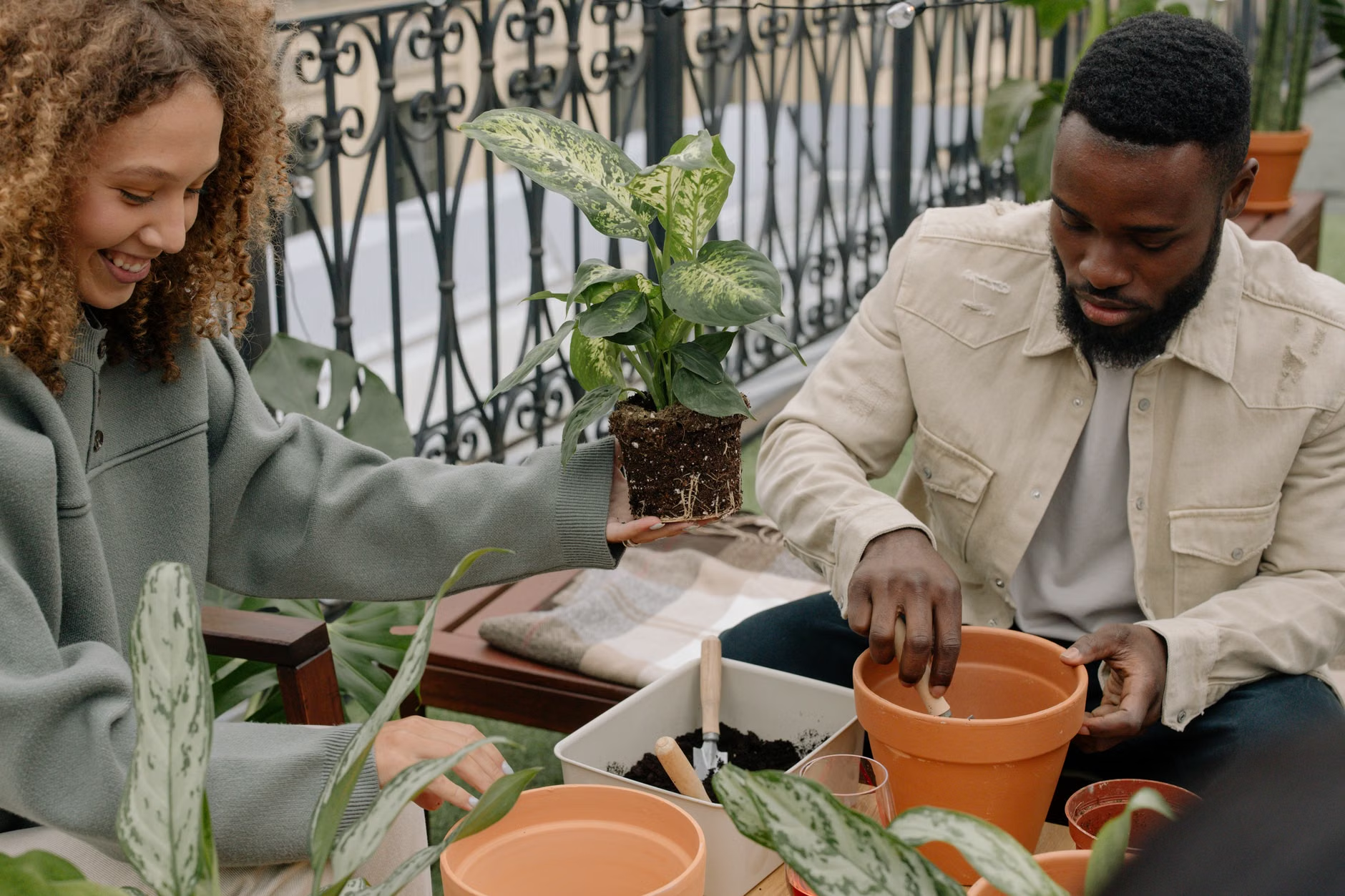
| Root bound / pot bound | Roots fill and circle the pot tightly. | Plant may dry out quickly or resist watering. |
| Cachepot | Decorative outer pot without drainage. | If water pools, roots stay wet. Always dump extra water. |
| Soil pH | How acidic/alkaline the mix is. | pH affects nutrients; test to know, don’t guess. |
Plant anatomy terms (that finally make propagation guides intelligible)
| Term | Plain-English meaning | How to find it |
|---|---|---|
| Node | Bump or joint on the stem where leaves attach and buds can grow. | Find by looking for bumps along stem; key for cuttings. |
| Joint | Point on a vine where a leaf emerges. | Where leaves grow from stem. |
| Internode | Section of stem between two nodes. | Long on leggy growth, short on compact plants. |
| Petiole | Stalk attaching the leaf blade to stem. | Narrow piece holding the leaf. |
| Leaf blade | Broad flat part of the leaf. | The wide area catching most light. |
| Stem | Structural base for leaves and buds; can be above or below ground. | Obvious on vining plants; mostly below ground on ZZ. |
| Bud | Area that can develop new leaf/branch/flower. | At or near nodes; sometimes tiny/recessed. |
| Adventitious root | Root growing from stem tissue (not existing roots). | Common on “aerial roots” of Monsteras, climbers. |
| Aerial root | Root growing above soil, seeking support/moisture. | Look for nubs or root-like growths on vines/climbers. |
| Crown | Where new leaves emerge (center of plant). | Protect on rosette plants—damage = stopped growth. |
| Rosette | Leaves radiate from one point. | Found in bromeliads, some succulents. |
- Variegation: Multi-colored leaves (green + white/cream/yellow); brighter light is often needed.
- Leggy: Long, weak stems with fewer leaves—usually from not enough light.
- Vining / trailing: Stems spill out or grow along the pot; easy to prune and propagate.
- Climbing: Stems want to grow up/support (moss pole, plank, trellis).
- Epiphyte: Plant that grows on other plants for support but not parasitically (needs airy mix and drier roots).
- Dormancy: Plant slows or stops growing (often winter or low light); needs less water/fertilizer.
- Acclimatization: Gradually adjusting plant to less/more light to prevent shock.
- Hardy: Can survive outdoor seasonal changes—including frost (not an indoor promise!).
Propagation terms (cuttings, division, and what’s realistic indoors)
| Term | Plain-English meaning | What beginners should know |
|---|---|---|
| Propagation | Making a new plant from an existing one (cuttings, division, etc.). | Start with easy plants: pothos, philodendron, spider plant, tradescantia. |
| Stem cutting | Piece of stem used to grow a new plant. | Needs at least one node to root and grow new leaves. |
| Leaf cutting | Using a leaf or leaf+petiole to grow roots/new shoots. | Not all plants work this way; check before trying. |
| Softwood cutting | Cutting from soft, new growth (often outdoors). | Tender growth wilts fast; more common in woody plants outdoors. |
| Heel cutting | Cutting includes a bit of older wood (“heel”). | Rarely needed for typical houseplants; good to know for reference. |
| Division | Splitting one plant into several, each with roots and growing tips. | Best for clumping plants (ex: snake plant, peace lily, ferns). |
| Offset / pup | Baby plant growing from parent’s base. | Can remove when it has roots (common in spider/bromeliads/succulents). |
| Rooting hormone / auxin | Product (powder/gel) that encourages root growth on cuttings. | Optional for most houseplants—helpful for slow/wild cuttings. |
| Callus | Healed over “scab” on a cut surface before planting. | For succulents, callus helps prevent rot when rooting. |
Pest, disease, and troubleshooting terms
When a plant looks “sick,” first sort into two buckets: biotic (living—fungi, bacteria, viruses, insects) or abiotic (nonliving—water, nutrients, temperature, light). This stops a lot of unnecessary treatments.
- Biotic: Living causes of plant problems (spider mites, mealybugs, fungal spots).
- Abiotic: Nonliving causes (over/under water, sunburn, cold damage).
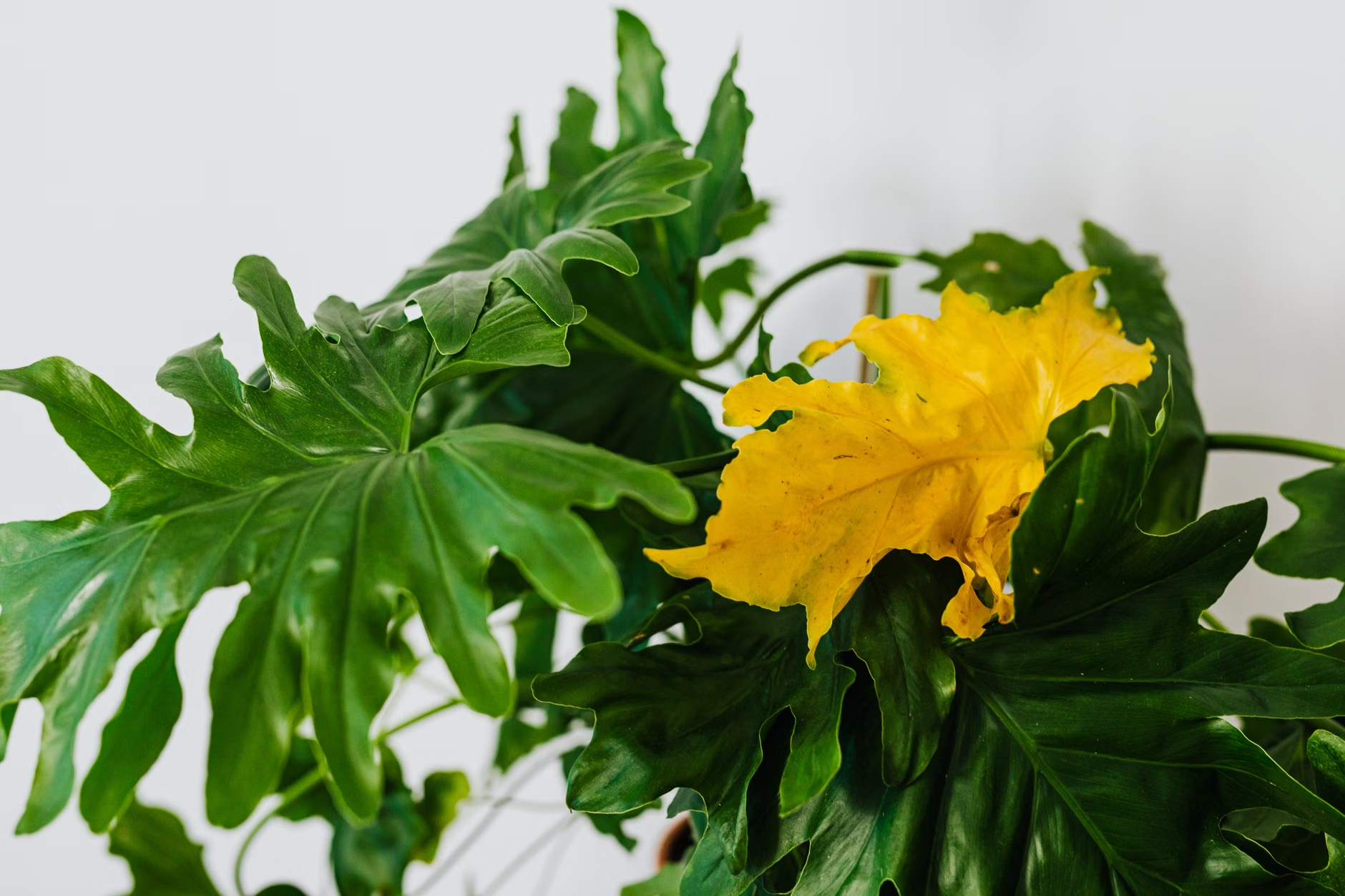
- Chlorosis: Yellowing leaves, can be from many sources (not just fertilizer!).
- Systemic (pesticide/weedkiller): Absorbed/moved through plant after application.
- Quarantine: Isolate plants to prevent pest spread.
Mini checklist: decode a typical plant tag in 60 seconds
- Light: Translate label (“bright indirect”, “low”, “direct”) into an actual spot. Look for sun patches, check shadow sharpness.
- Water: Change “let dry”/“evenly moist” into how far down the pot goes dry before you water again.
- Pot/mix: If pot stays wet for days, improve drainage/aeration (mix, pot size, drainage holes).
- Growth: Expect slow growth in winter/low light; don’t add more water.
- New plant: Quarantine and check undersides of leaves, stems, and soil for pests before placing with others.
FAQ
Q: I get “bright indirect light” in my North facing apartment — what do I do with that?
A: Generally place your plant as close to that window as is practical. Use the ‘sun patch’ test—no sunbeam, but still bright = indirect.
Q: I seriously like an “ignore it” kind of plant — do I need a “well-draining” mix if I’m careful about watering?
A: Yes—because the mix controls oxygen to roots. In lower light/cool homes, standard mixes stay wet too long. A chunkier, airier mix is more forgiving.
Q: Why do propagation guides talk so much about a plant’s nodes?
A: For many common houseplants, the node is where new growth can emerge. Cuttings without a node may not root or grow at all.
Q: Is yellowing always a fertilizer issue?
A: Nope. Yellowing (chlorosis) has lots of causes—watering, roots, light, pests, OR nutrients. Check everything before blaming fertilizer.
Q: What’s the first thing I should do when I suspect pests?
A: First, isolate the plant (quarantine), gently rinse/wipe leaves (especially undersides), and inspect closely before deciding on treatment. Follow all product labels if you use chemicals.
References
- UH/IFAS Gardening Solutions – Gardening Glossary (abiotic, biotic, acclimatization, chlorosis, etc.) — https://extension.umaine.edu/gardening/manual/glossary/
- Royal Horticultural Society (RHS) & Gardening Glossary (medium, hardy, rosette, systemic, etc.) — https://www.rhs.org.uk/advice/beginners-guide/glossary
- The Sill – Key Plant Terms Glossary (node, petiole, stem, adventitious root) — https://www.thesill.com/blogs/care-miscellaneous/key-plant-terms-glossary
- UF/IFAS PropG – Leaf Cuttings (definition and examples) — https://propg.ifas.ufl.edu/05-cuttings/02-types/05-cuttingtypes-leaf.html
- UF/IFAS PropG – Softwood Cuttings (definition and context) — https://propg.ifas.ufl.edu/05-cuttings/02-types/08-cuttingtypes-softwood.html
- UF/IFAS PropG – Heel Cuttings (definition and context) — https://propg.ifas.ufl.edu/05-cuttings/02-types/03-cuttingtypes-heel.html