Fertilizer basics: NPK explained and an easy indoor feeding routine
Learn what NPK numbers really mean on fertilizer labels, how to pick a formula for houseplants, and a simple feeding routine that prevents burn and salt buildup.
- Choosing a fertilizer for indoor plants
- The easy indoor feeding routine (beginner-friendly and hard to mess up)
- How to fertilize indoors with no mess, no root burning
- Common mistakes with indoor fertilizing (and what to do instead)
- “Which Plants Need More?” Cheat Sheet
- FAQ: NPK and indoor plant fertilizing
- References (for further reading)
TL;DR
- NPK is the “grade” on a fertilizer label: the three numbers show the minimum percent (by weight) of nitrogen, phosphate (P₂O₅), and potash (K₂O).
- NPK is about concentration, not magic. A 20-20-20 is “stronger” than a 10-10-10, but you can use them similarly if you dilute as needed.
- Most indoor plants do best with a balanced fertilizer (roughly equal N-P-K) plus micronutrients, used lightly and consistently during active growth.
- Easy indoor routine: during active growth, apply ½-strength liquid fertilizer every other watering (or ¼-strength for sensitive plants). In low light/winter, use little or none unless it’s a growing plant.
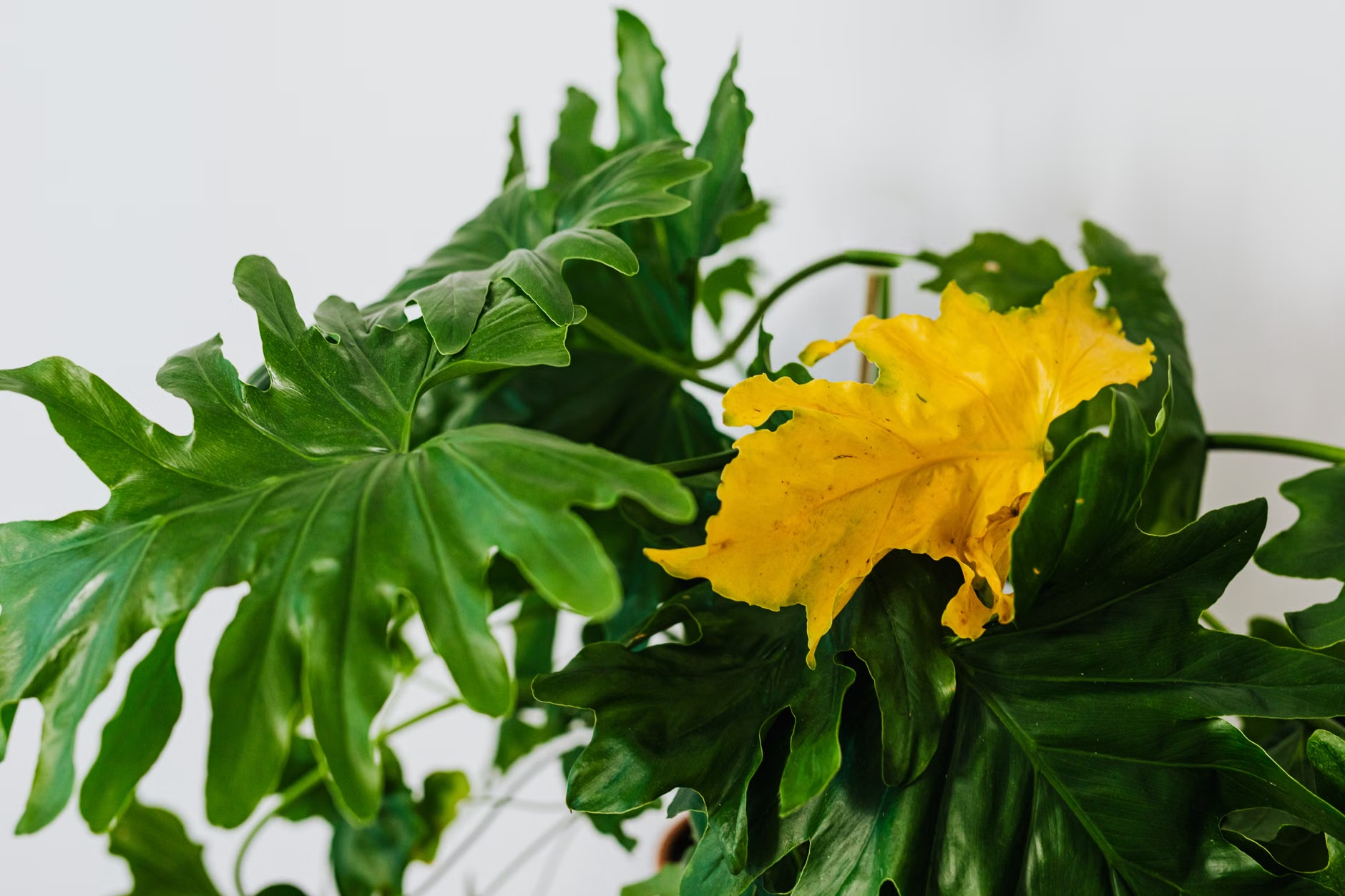
- If you see crispy tips, wilting after fed, or white crust on soil, stop feeding and flush (“leach”) the pot with plain water to remove excess salts.
Fertilizer is one easy way to encourage your indoor plants to grow, and also one of the easiest ways to stress a plant if you use it too strong, too often, or at the wrong time. Fortunately you don’t need to tool up a complicated program. If you understand what the letters mean, and what “NPK” actually reads on the label, you can have a one-size-fits-all routine that works for most houseplants.
This guide will focus on the practical use indoors: reading NPK numbers, picking the right beginner’s formula, and falling into a feeding rhythm that you can count on “just right” enough.
What does NPK mean? And what do the numbers measure?
Around most fertilizers you’ll see the three numbers like 10-10-10 or 9-3-6. This is the fertilizer “grade” (aka “analysis”). By law, fertilizers in the U.S. follow a standardized labeling format showing the minimum percentage (by weight) of these three nutrients, always in this order:
- First number = N (for nitrogen)
- Second number = P₂O₅ (phosphate, a way fertilizer labels express phosphorus content)
- Third number = K₂O (potash, a way fertilizer labels express potassium content)
Quick note: while you may see the second and third numbers listed as elemental phosphorus (P) and potassium (K), they’re traditionally reported by fertilizer labs as P₂O₅ and K₂O equivalents. This is why you’ll sometimes see them written as phosphate and potash on university extension resources.
Example: a 20-10-5 fertilizer is 20% nitrogen, by weight, 10% phosphate (P₂O₅), and 5% potash (K₂O). The rest are other ingredients (eg, other nutrients, fillers, coating material).
NPK ratio vs. NPK strength (the common confusion area)
Two fertilizers can have the same “shape” (ratio), but different strength. For example, 10-10-10 and 20-20-20 are both balanced (1:1:1), but one is twice as concentrated, if you will. Indoors, the concentration is especially important because containers have limited soil volume and salts can build up.
| N | P | K | What it suggests | Indoor-friendly use case (when diluted) |
|---|---|---|---|---|
| 10-10-10 | Balanced, moderate concentration | General houseplant feeding during active growth | ||
| 20-20-20 | Balanced, higher concentration | Works well if you’re careful to dilute (often better for people who measure precisely) | ||
| 9-3-6 (or similar) | Higher nitrogen and potassium relative to phosphate | Common “foliage” style blend; often a solid all-around choice for many houseplants | ||
| 0-0-0 or no NPK listed | Not a complete fertilizer (may be a soil amendment/biostimulant) | Use as a supplement only if you already have a complete fertilizer plan |
What N, P, and K do for indoor plants (in plain English)
NPK doesn’t tell you everything about a fertilizer, but it does tell you the headline nutrients plants use in larger amounts. Here’s how to think about each one for houseplants:
- Nitrogen (N): “Leaf + stem energy.” Supports green, vegetative growth. Too much indoors can mean fast-but-weak growth (leggy stems), or increased sensitivity to pests in some setups.
- Phosphate (P₂O₅): “Roots + blooms support.” Often associated with rooting and flowering. Indoors, extra-high phosphate isn’t automatically better—and many plants don’t need a “bloom booster” unless conditions are already excellent.
- Potash (K₂O): “Overall resilience.” Supports many internal processes linked to vigor and stress tolerance. In practical indoor terms, it’s what saves you no-hair-pulling growth challenges in the long run.
Choosing a fertilizer for indoor plants (without overthinking it)
For most homes, the safest “starter” fertilizer is something that’s simple to measure, includes micronutrients, and isn’t going to shove plants into Ferngully. Consult this short checklist while you’re shopping for a go-to:
- Choose a complete fertilizer that lists N-P-K right on the label, and hopefully includes micronutrients too. (Those often appear on the label as iron, manganese, zinc, boron, copper, molybdenum.)
- Balanced or slightly foliage-leaning NPK is usually safe for mixed collections (Something in the realm of 1:1:1 or so is just fine; you can think 3:1:1 or 3:1:2 too, as long as you’re not too obsessed with perfect amounts).
- Water soluble (see? Liquid or crystals) is the easiest to control indoors. You can dilute easily! You can also reduce frequency or increase frequency as you get to know your plants.
- “Slow-release” little pellets still can be ok, just be careful. It’s not easy to “undo” the effect when you’ve overapplied or if the light levels at your plant drop and it stops “using” the nutrients very effectively.
- Avoid stacking products. (Don’t use two different things like the “slow release” stuff in your soil + a weekly light liquid feed unless you’re deliberately running a heavier program and tracking the results.)
The easy indoor feeding routine (beginner-friendly and hard to mess up)
A good indoor routine is built on the realities that (1) most of our houseplants grow more slowly than plants out of doors and (2) the quality and intensity of light changes a lot through the seasons and from window to window. Think of steady light nutrition, not smack ‘em on the next leaf with the heavy doses.
Step 1: To feed or not to feed
Growth factor! Rather than just going by the calendar, only feed if the plant is actually actively growing. Signs of growth include: new leaves unfolding or stem elongation visible, or new roots visible at the drainage holes. In most homes, stronger growth will happen in late spring and summer, but some plants growing under strong grow lights grow year-round.
Step 2: Mix weaker than the label (most houseplants).
Many extension resources recommend diluting general purpose fertilizers for the average houseplant precisely because houseplants on average grow slower than the outdoor plants that the label rates those plants on. A handy off the top of my head starting point is:
- Standard houseplants… Mix at ½ the rate on label
- Sensitive plants (many of the succulents, certainly hoyas, some orchids depending on growth media, certainly stressed plants, etc.)… Start with ¼ strength
When in doubt, start lower for 2–3 feedings. You can and probably should each time you feed, slightly up that ratio if growth and color indicate that the plant is hungry, but going too heavy too soon can block that food and nutrient uptake and lead to fatal problems with a plant.
Step 3: Use an easy rhythm you can remember
Here are two CTQV feeding rhythms that are good for most indoor collections. Pick one you can remember and stick with it for a month, then see how things look and adjust.
| Routine | How it works | Best for |
|---|---|---|
| ½-strength every other watering | Fertilize at only ½-strength at watering number 2, then number 4, then number 6…using plain water in between. | People who water on a fairly regular pattern; mixed foliage plants. Growers who want “set it and forget it.” |
| ¼ to ½ strength every 2 to 4 weeks | Pick a day (Like the first watering of the month) and fertilize lightly. Use plain water the rest of the time for couple of weeks. | People with water schedules that vary a lot; drought-tolerant plants; anyone who doesn’t want to worry about underfeeding. |
Either of these routines should work for you because they’re conservative and consistent. The “right” routine is the plug and play one that you can use without much guesswork.
4. Adjust for winter (or low-light months) In many homes across the US light for indoor planting typically drops significantly in late fall and winter. When light drops, plants use less water and generally slow growth—which usually means they need less fertilizer. A simple approach: If your plant is not growing, stop feeding it until you see signs that starting fertilizer is appropriate.
- If your plant is growing (bright window or grow light): feed as normal, but you may want to reduce to ¼–½ strength and/or stretch out the time between.
- If unsure: very lightly feed, then watch. Your plant’s new growth (or lack of) will let you know what to do next.
How to fertilize indoors with no mess, no root burning
- Water check: If the potting mix is bone dry, water and let the plant drain. Fertilize later the same day or at the next watering.
- Mix precise measurements: Measure your fertilizer and your water (don’t “eyeball” concentrates). Make a dedicated “plant jug” so you can use the same math each time.
- Apply evenly: Pour slowly around the surface of the potting mix until you see a little runoff. (If you have a bottom watering setup, you should use fertilizer sparingly—salts build up if you never flush from the top.)
- Drain completely: Don’t let the pot sit in runoff. Empty saucers/cachepots after drainage.
- Track once: Put a tiny note in your phone with the dilution you used and the date, so you don’t accidentally feed too soon a second time, having forgotten you already did.
In containers, salts can build up over time—especially if you fertilize frequently, have hard water, or rarely water deeply enough to produce runoff. A white crust on the rim of the pot or surface of the soil is a common sign. Plants may show browning tips, or suddenly droop after feeding.
The quick fix: “leach” the pot with plain water
- Move the plant to the sink, shower, or tub (or outside if it’s mild weather). Flush run of room-temperature water through the mix well, letting it drain freely. You can do this a few times.
- Let the pot drain thoroughly before returning it to its usual spot.
- Skip fertilizing for at least the next watering or two, then start up again at a lighter dilution/frequency.
Common mistakes with indoor fertilizing (and what to do instead)
- Mistake: “I should feed because the plant looks sad.” Nutrient isn’t the be-all end-all; often, watering and light issues are at play. Instead: check light, and your watering model; then feed lightly if you’ve got signs of actively growing plants.
- Mistake: “I’ll use the full-strength rates on the label.” Many assume you’re outdoors and grow faster. Instead: start with ½ rates (or ¼ for sensitive plants).
- Mistake: Fertilizing on Dry Soil. Concentrated salts can “burn” the roots. Instead: fertilize on moist mix, or immediately after a normal watering.
- Mistake: Doubling Up Fertilizers. Slow-release + frequent liquid feeding can stack on top of each other quickly. Instead: pick a primary fertilizer method, and keep it simple.
- Mistake: Expecting fertilizer to Replace Good Care. Without adequate light, fertilizer can’t “force” the plant to build good green growth. Instead: treat fertilizer as the final 10, or 20%, after light and watering are stable.
“Which Plants Need More?” Cheat Sheet
Every houseplant has a different appetite, but here is a guideline based on how fast it tends to grow in your conditions. Use this guide as a starting point. Adjust based on leaf color and new growth.
| Plant type (example plants) | Starting routine | Notes |
|---|---|---|
| Fast growers (pothos, philodendron, monstera in bright light) | ½-strength every other watering when plants are growing actively. | If growth is strong under grow light you may continue in winter at reduced strength. |
| Flowering indoor plants (African violets, peace lily) when they are actively blooming | ½-strength every 2–4 weeks during active growth. | Feeding helps most if light is strong enough to bloom. |
| Slow growers (ZZ plant, snake plant) | ¼ strength every 4–6 weeks during active growth. | More often fertilizer is applied in excess than underfertilized. |
| Succulents and cacti | ¼ strength every 4–8 weeks during active growth. | Most prefer a lighter touch, and stop when growth slows. |
| Newly potted / newly purchased plants | Wait, then start lightly | Fresh mix is often already nutrient-rich; begin fertilizing once the plant is settling in and growing. |
How to tell if your plant is underfed vs overfed (indowers) – Nutrient problems can look like other issues, so think of these as hints, not a health checklist! If you see signs below, also check for pests, root problems, and mismatches in light/watering, too. Try not to overthink it. Here are some of the most common signs, potential explanations, along with the safest next step in each scenario.
| What you see | More consistent with… | Safest next step |
|---|---|---|
| White crust on soil/pot or leaf tip browning after feeding | Overfeeding or salt buildup | Flush the pot with plain water; pause fertilizer; restart at lower strength if resuming |
| No growth after months of indoor hibernation (winter) | Low light / seasonal slowdown | Reduce or stop fertilizing; focus on light and consistency of watering |
| Pale leaves + slow growth during spring/summer | Possibly underfeeding (or low light) | Increase light if possible, then gentle repeated feeding for 4-6 weeks |
| Sudden wilting right after fertilizing | Fertilizer burn | Flush, let drain, don’t fertilize until the plant shows better recovery. Controls for water and other issues too. |
FAQ: NPK and indoor plant fertilizing
Is a “bloom booster” (high phosphorus fertilizer) necessary for flowering houseplants?
Should I fertilize houseplants in winter?
What is the safest way to start fertilizing my plants?
I over fertilized; how can I fix this?
Do I need to understand the pH of my plants soil/roots or do fancy calculations in general?
References (for further reading)
- Colorado State University Extension — Understanding Fertilizers (fertilizer grade/analysis, P2O5 and K2O label terms)
- UMass Amherst — Step-by-Step Fertilizer Guide for Home Grounds and Gardening (interpreting X-X-X as N, P2O5, K2O)
- Iowa State University Extension — Fertilizer Rates and Requirements for the Home Garden (houseplant dilution guidance)
- NC State Cooperative Extension — How to Fertilize House Plants (half-strength, every other watering)
- University of Vermont Extension — Hibernating Houseplants (seasonal rest, fertilizer reduction and salt buildup risk)
- The Old Farmer’s Almanac — N-P-K Ratio: What Do The Numbers On Fertilizer Mean?