The Harsh Reality of Apartment Plant Care: Light, Humidity, and the Excuses to Stop Making
Most apartment “plant problems” aren’t mysterious—they’re predictable outcomes of low light, dry air, and mismatched plants. Here’s how to measure what you actually have, fix what’s fixable, and stop blaming yourself (or
- Resumo e principais pontos
- Reality #1: Your apartment is probably darker than you think.
- A practical light-level cheat sheet
- Unsexy fixes that actually increase light
- When you should stop rearranging and just use a grow light
- Reality #2: Humidity matters—but misting is mostly an illusion
- The most savage way to select plants for your apartment
- Stop Using These Excuses for Apartment Plant Problems, and Do This Simple Fix
- A simple apartment plant care system (so your plants don’t depend on your mood)
- Troubleshooting: stop blaming the wrong thing
- Perguntas frequentes (FAQ)
TL;DR
- If you’re not measuring light and humidity, you’re guessing—and most apartments are dimmer (and drier) than plant tags suggest.
- In most settings, light is the limiting factor. You can’t “water harder” or “mist more” to overcome chronic low light.
- Most homes are healthiest at about 30–50% relative humidity while many popular houseplants want roughly 40–50%—so you need specific fixes, not a tropical living room.
- Stop buying plants for the vibe. Buy plants that match your windows, your HVAC, and your routine.
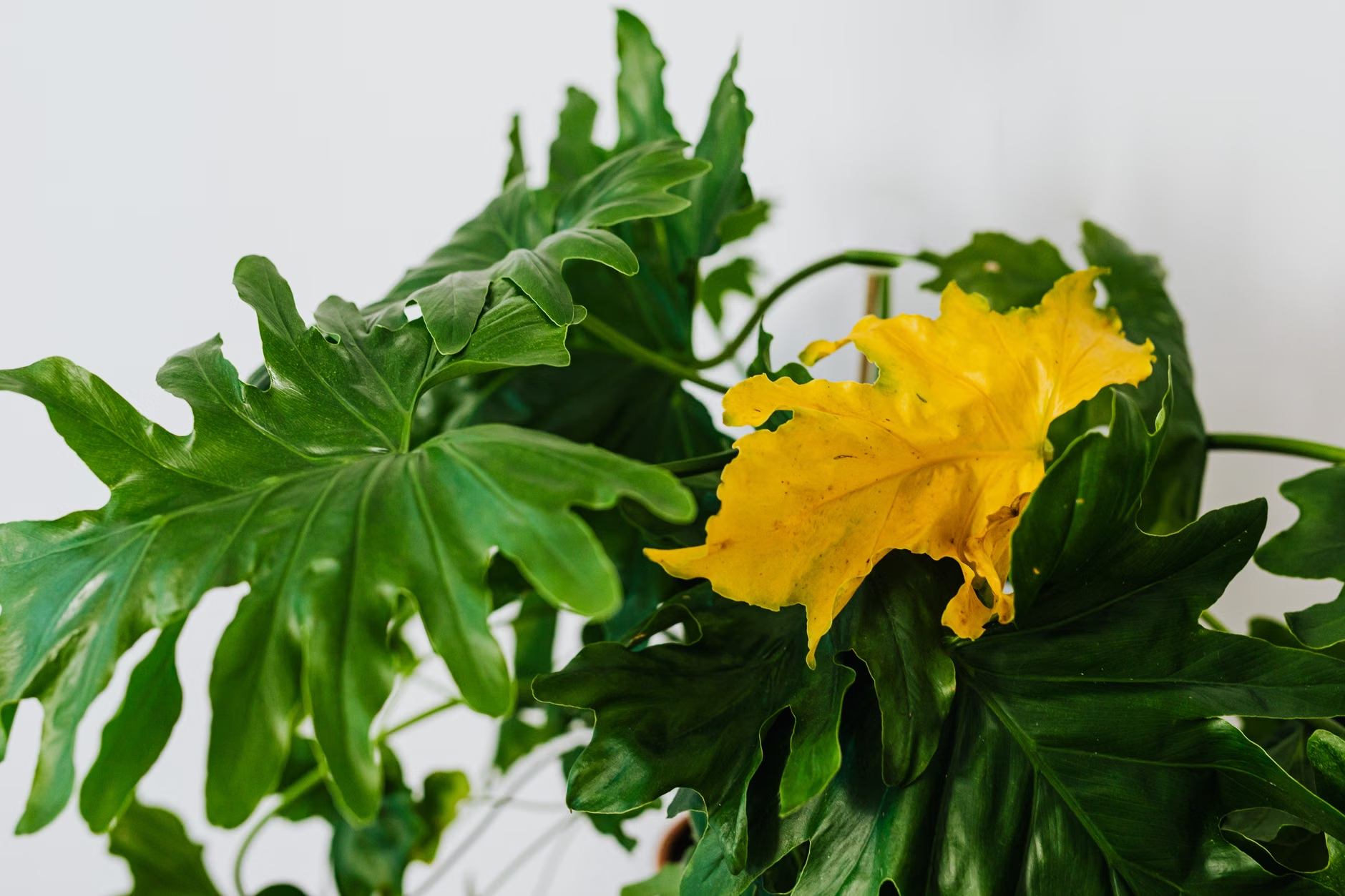
Apartment plant care gets marketed to you as a relaxing hobby. All you need to do is find a cute pot, grab something with a “low-light” tag, and give it a splash of water once a week. Easy-peasy, except that’s not how reality works. Instead, you’re left with leggy growth, crispy edges, yellowing leaves and a slow decline that makes you feel weirdly guilty.
Look. Most “I kill plants” stories boil down to “I live in an apartment with limited light and dry air and I keep buying plants that can’t handle that”. This is a blunt reset to assess what you actually have (light+humidity), what you can feasibly change, and which excuses you can kick to the curb today.
Reality #1: Your apartment is probably darker than you think.
We’re so good at acclimating to different levels of brightness, we’re terrible at assessing useable plant light. A room can feel “bright” to you and still be “survival mode” for a plant.
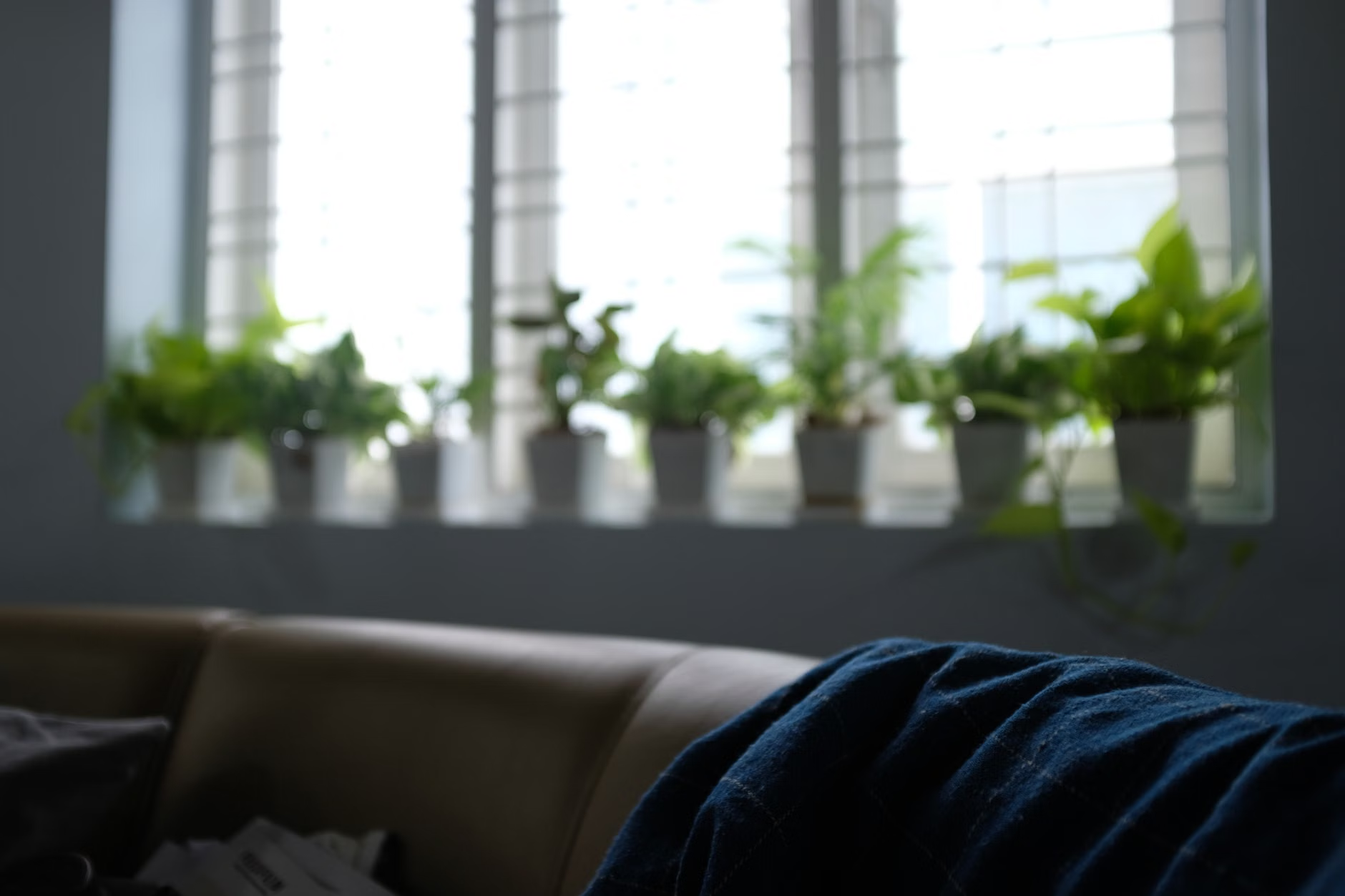
To plants, the distance from the window is everything. One example from a Kentucky Cooperative Extension publication is chillingly succinct: light can be around 1,000 foot-candles right next to a sunny window, but closer to 100 foot-candles about 10 feet away; normal indoor task lighting may be around 50 foot-candles. That’s the difference between a healthy plant and one gradually running out of energy.
What “bright indirect light” means in the real world
“Bright indirect light” is marketing lingo, not a measurement. It only becomes useful if you break it down into something that you can check in your own home.
- Best: use a light meter (or decent phone app) and measure at leaf level. Repeat in different seasons.
- Good enough: define zones by window direction + distance from glass, and confirm with a few measurements.
- Emergency shortcut: if your plant is more than a few feet from a window and not getting direct sun, it’s probably not “bright.” It’s medium-to-low light. Adjust care accordingly.
A 15-minute “light map” you can do today
- Pick 3–5 plant spots that you usually use (the shelf, the coffee table, the kitchen counter, the “plant room”).
- At the brightest part of the day, take a light reading at plant height. If you’re using a phone app, think of it as approximate—concentrate on comparing spots in your home.
- Write down each spot with two facts: (1) direction of window and (2) distance from the glass. Repeat once in a different season (or at least once on a cloudy day). Your “best spot” can change a lot across the year.
- Now choose plants (or grow lights) based on the numbers you keep seeing—not on the label that came with the plant.
A practical light-level cheat sheet (use as a starting point, not a promise)
| Light level | What it usually looks like | Ballpark readings (foot-candles) | What tends to happen |
|---|---|---|---|
| Low | Far from windows or heavily shaded; overhead lights do most of the work | ~25–100 | Plants often survive but grow slowly; stretching (leggy growth) is common. |
| Medium | Near a window but little/no direct sun hits leaves | ~100–500 | Many common houseplants can maintain decent growth if watering is correct. |
| High / bright | Close to a window; may get some softened direct sun | ~500–1,000 | Better growth and faster drying; mistakes show up faster (underwatering happens). |
| Direct sun | Sunbeams hit foliage through clear glass | ~1,000+ | Great for sun-lovers; risky for shade plants (leaf scorch). |
Those foot-candle categories are widely used as general guidelines by Extension programs. Different guides define cutoffs differently, which is exactly why measuring your own space matters more than memorizing a single chart.
The unsexy fixes that actually increase light (without buying anything)
- Move the plant closer to the window—then protect it (sheer curtain) if it’s a leaf-scorcher.
- Rotate the plant weekly (or every 2 weeks) so it doesn’t lean like it’s trying to escape.
- Clean the glass and the plant leaves. Dust is a light blocker.
- Open blinds during the day. Sounds obvious. Still the #1 “why is this dying?” fix in many apartments.
- Don’t waste your brightest window on a “low-light” plant that would tolerate the hallway anyway. Put your high-demand plants where the photons are.
When you should stop rearranging and just use a grow light
If your best reading is consistently low-to-medium and you want to grow plants that demand high light (or you want faster growth), a grow light isn’t a failure. It’s the correct tool. University/Extension guidance commonly recommends measuring at foliage level and adjusting setup based on what the plant is actually receiving—not what the bulb box claims.
- Measure your current light at leaf level.
- Add a grow light and re-measure at leaf level (same spot).
- Adjust distance/brightness until you hit a realistic target for that plant.
- Put the light on a timer so the routine doesn’t rely on your memory.
- Re-check after you move furniture, change curtains, or change seasons.
Reality #2: Humidity matters—but misting is mostly an illusion
Many popular houseplants are tropical and prefer around 40–50% relative humidity. The issue: in winter (and in air-conditioned apartments), indoor humidity can drop. Iowa State University Extension reminds us that many homes may be far below what many houseplants want, and explicitly calls out two things that surprise people: humidifiers work, and misting is not an effective long-term strategy because leaves dry quickly.
Check the humidity before working on it
- Get a basic hygrometer (humidity gauge). “Dry” and “humid” are just vibes unless you have a way to measure.
- Check the number morning and night for a few days. HVAC cycles matter.
- If you’re around 30-50% RH portably regularly, you may not need to chase jungle humidity very far; many plants adapt fine there.
- If you’re consistently under ~30-35% RH, but you keep buying humidity-sensitive plants, you’re asking for extra work.
Humidity methods that work (and what they’re actually good for)
| Method | Best for | Pros | Cons / gotchas |
|---|---|---|---|
| Room humidifier | Humidity-sensitive plants (ferns, calatheas, many aroids) | Most effective; adjustable; helps more than one plant | Needs cleaning and monitoring; don’t push humidity so high you get condensation/mold. |
| Group plants together | A small collection in one area | Simple; boosts local humidity via transpiration | Modest effect; doesn’t replace a humidifier in very dry apartments. |
| Pebble tray (water below pot) | A little extra humidity right around one plant | Cheap; local effect | Limited impact in large/dry rooms; keep pot above waterline to avoid root issues. |
| Misting | Mostly aesthetics / dust removal | Feels productive; can rinse leaves | Not a reliable way to raise RH (foliage dries fast); can increase leaf-spot risk if leaves stay wet. |
If you hate maintaining a humidifier, that’s useful information—not evidence of character flaw. It means you should buy plants adapt to your ambient humidity instead of trying to mold your life into the incorrect humidity ‘morality’. This means that the most essential skill in apartment plant care is selection; selecting plants that will work within the constraints you have.
The most savage way to select plants for your apartment
- Choose your two best light spots and measure them. Those are your “premium” spots. Pick two, not ten.
- Decide if you’re willing to run a humidifier regularly, yes or no. That is now part of this equation.
- Now shop for plants that work with those two facts—before you shop for the look of it.
- Only buy one “challenge plant” at a time. Earn your way up into hard-mode plants instead of buying five and hoping for growth-magic.
Stop Using These Excuses for Apartment Plant Problems, and Do This Simple Fix
| Excuse | What’s usually true | Do this today |
|---|---|---|
| “My apartment gets no light.” | You may have low light overall—but you almost always have one spot that’s better than the others. | Do the 15-minute light map. Then move your light-needy plant in closest proximity to that best spot. |
| “It says low light, so it should be fine.” | “Low light” often means “okay low light,” not “does great in low light.” | Measure light where it currently sits. If it’s really low, accept slow growth—or add a grow light. |
| “I water the same day every week.” | In apartments, drying time varies by light, temperature, pot size, and season. | Switch to a check-based system: Only water when the mix is really dry enough (system below). |
| “My plant needs humidity so I mist it.” | Misting often fails to change room humidity for long, and may harm leaves. (If leaves stay wet, look out!) | Measure RH—in a plant room full of plants and/or a run of the humidifier; measure please! Mist for cleaning, sporadically. |
| “It hates tap water.” | True for some fussy plants occasionally—but likely light and watering patterns fall into the common-cause camp. | Correct light first. Then watering. Only then experiment with filtered or distilled water. |
| “I’m just bad with plants.” | Nope; you have real constraints and vague labels to deal with. Treat your apartment like a growing environment you can measure and change. |
A simple apartment plant care system (so your plants don’t depend on your mood)
- Weekly: a 3-minute check per plant
- Check soil moisture with a finger (top 1–2 inches) or a wooden chopstick (if you can, pull it out: wet mix sticks, dry mix does not).
- Lift the pot. Light = likely dry; heavy = likely still wet. You’ll develop this skill quickly.
- Look at the newest growth first. New growth tells you the truth about light and stress than old leaves do. Only water if the mix is dry enough for that plant type. When you do water, water thoroughly until the pot drains, then empty the saucer.
- Monthly: reset the environment (light + humidity)
- Re-check humidity (especially when heating/AC begins).
- Re-check light if you changed out curtains, moved furniture, or the season changed.
- Dust leaves (dust builds up slowly; plant decline builds up quietly).
- Turn the pot a quarter turn to keep the growth even.
- Each season: change the plan before the plant suffers.
- Seasonal shifts are where apartment plants get quietly wrecked. The angle of the light shifts, the windows get hotter/colder, HVAC dries out the air. Count on having to move plants a little, and not to keep them “in the exact perfect spot forever.”
- If a plant was happy all winter, but begins scorching in spring/summer, back it off the glass or add a sheer curtain.
- If a plant was happy in summer but stalls in winter, move it closer to the window, or try adding supplemental light.
- If leaf edges crisp up when the heat comes on, check the humidity—and check to see if this plant is next to that vent.
Troubleshooting: stop blaming the wrong thing
Light, humidity, and watering can produce similar symptoms. The aim is to change one of them without disturbing the other two and verify with measurements.
| Symptom | Often blamed on… | More often caused by… | How to verify |
|---|---|---|---|
| Leggy stems, wide gaps between leaves | “It needs fertilizer” | Low light | Measure light at leaf level; move closer to window or add grow light and watch new growth tighten. |
| Yellow leaves + wet soil | “It’s thirsty” | Overwatering in low light (slow drying) | Check pot weight + drainage; reduce watering frequency; increase light/airflow. |
| Crispy edges | “I forgot to water once” | Low humidity, vent drafts, or inconsistent watering | Measure RH; move away from vents; stabilize watering; don’t let it yo-yo from bone dry to soaked. |
| No growth for months | “It’s dormant” | Light too low for that plant (or pot always wet) | Check light and drying time; most houseplants will at least slowly grow in adequate light. |
| Leaf scorch / bleached patches | “It hates me” | Too much direct sun too fast (no acclimation) | Did you move it closer to sun suddenly? Add sheer curtain; acclimate gradually. |
——- Bottom line: you don’t need a greener thumb—you need better inputs ——-
Apartment plant care gets easier the moment you treat it like a simple environment problem: measure light, measure humidity, and pick plants that match. After that, you’ll still lose a plant occasionally—everyone does—but you’ll stop losing the same way over and over.
Perguntas frequentes (FAQ)
Q: What’s the biggest reason apartment plants die?
A: In most apartments, the #1 limiting factor is light. Low light slows growth and slows soil drying, which makes overwatering more likely. Measuring light at leaf level is the fastest way to stop guessing.
Q: Do “low-light plants” actually like low light?
A: Usually they tolerate low light—they don’t prefer it. Many will survive, but they often grow slowly and may get leggy. If you want a plant to look full and actively grow, give it more light (within what it can handle).
Q: Is a phone app accurate enough to measure plant light?
A: It can be useful for comparing spots in your home (brighter vs dimmer). For absolute accuracy, a dedicated light meter is better, but an app is still a big upgrade from guessing.
Q: Should I mist my plants for humidity?
A: Misting can help clean leaves, but it’s not a reliable way to raise relative humidity for long. If it really is low, then humidifier, grouping plants together, and pebble trays are more useful tools.
Q: how low should I keep humidity if I’m renting and on guard against mold?
A: A usual approach is to keep your home in a healthy range for you and the building (generally 30-50% RH and below 60% to mitigate the chance of mold appearing) and use special humidity boosts only where plants need it. Use a hygrometer and look for condensation.
Q: how will I know if my plant needs more light or less water?
A: If plants drop when the soil is “wet” for a long time, presumably it’s too much water for the light it receives and we increase light, frequency of the interval of watering and/or the amount of actual water delivered. Verify; i.e., how long is the pot usually dry for after you changed one thing?