Most plant shelves fail for boring reasons: the light is weaker than it looks, the watering routine is awkward, or the setup traps heat, drafts, and standing water. Extension guidance on indoor plants consistently starts with the environment, not the styling. If the shelf does not fit the room’s real light, temperature, humidity, and drainage conditions, it may look finished on day one and still decline by week three. (extension.arizona.edu)
The practical goal is not to build a wall of random plants. It is to build a repeatable system: a shelf close enough to useful light, easy enough to water correctly, and simple enough to inspect every week. Done well, that can also save money, because replacing struggling plants is usually more expensive than getting the shelf mechanics right the first time. (extension.umn.edu)
- Start with the shelf location, not the shelf
- Use the L.I.V.E. Shelf Scorecard before you buy anything
- Build the layout around plant behavior
- The drainage plan that saves the shelf
- A realistic apartment example with numbers
- When the room fights back
- Common mistakes that kill a pretty shelf
- How to pressure-test the shelf after 30 days
- Bottom line
- FAQ
- References
TL;DR
- Start with the window exposure and room conditions, not the empty wall you want to decorate. North windows are low light, east windows are often the most flexible, and south or southwest windows are the brightest. (extension.umn.edu)
- Use the L.I.V.E. Shelf Scorecard before buying a shelf. If the setup scores below 8 out of 10, fix the location or lighting first.
- Every plant on the shelf should have a drainage plan. Water thoroughly, let excess drain, and do not leave pots sitting in water. (extension.missouri.edu)
- Treat lower tiers as lower-light zones unless they have their own light source. Supplemental lighting on a timer is often the difference between a living shelf and a decorative one. Foliage houseplants generally need about 12 to 14 hours of total light; many flowering plants need 14 to 16. (extension.umn.edu)
- Audit the shelf for 30 days. Watch for stretching, yellowing, crispy edges, standing water, and pests before the whole shelf declines. (extension.umn.edu)
Start with the shelf location, not the shelf
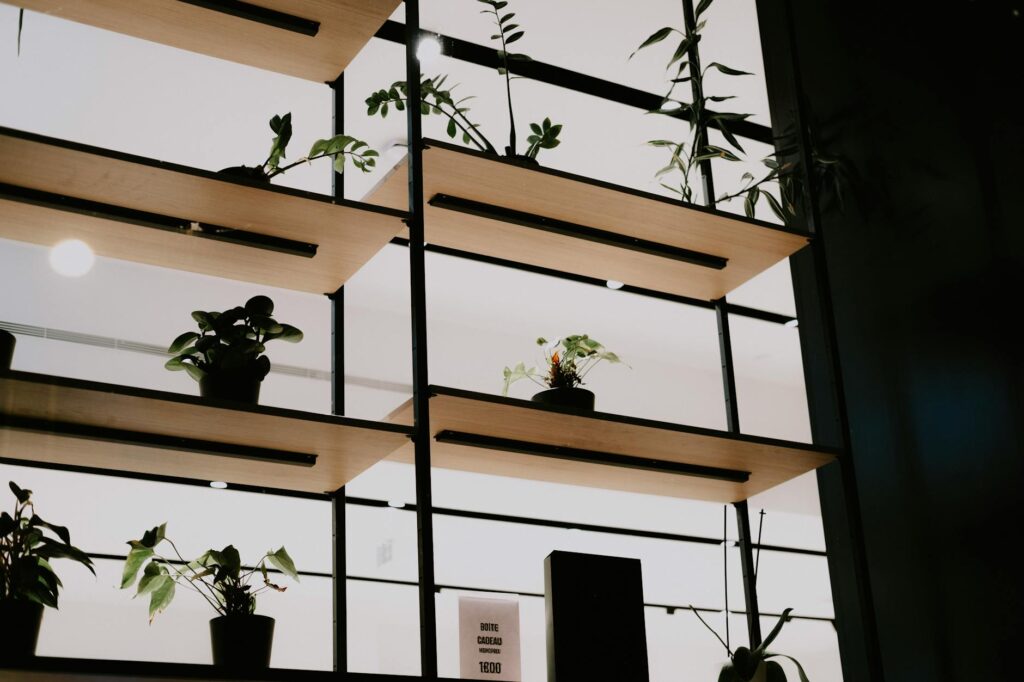
A shelf in a dim corner may work as decor, but that does not make it a good plant shelf. University extension guidance breaks indoor growing conditions into low, medium, and high light. In general, north windows suit low-light plants, east windows work well for many medium-light plants, and south or southwest windows provide the strongest natural light. West-facing setups can work too, but they often need more caution because of stronger afternoon sun. (extension.umn.edu)
| Shelf location | What usually works there | Good candidates | Main risk |
|---|---|---|---|
| North window | Low-light shelf. | Snake plant, pothos, philodendron, peace lily, Chinese evergreen, ZZ plant. (extension.umn.edu) | Expecting flowers, herbs, or most succulents to stay compact without extra light. (extension.umn.edu) |
| East window | Often the best all-around natural-light shelf for many apartments. | Ferns, spider plant, peperomia, hoya, and many foliage plants. (extension.umn.edu) | Crowding delicate leaves against the glass or assuming every lower tier gets the same light as the top. (extension.umn.edu) |
| West window | Usable for medium-light plants and some brighter-light plants, especially near the window. | Hoya, jade, rubber plant, and sturdier foliage plants. (extension.umn.edu) | Leaf scorch if shade-loving plants are pushed into strong afternoon sun too quickly. (extension.umn.edu) |
| South or southwest window | High-light shelf. | Succulents, cacti, herbs, and many flowering plants. (extension.umn.edu) | Fast dry-down, heat buildup, and stress near intense sun or hot glass. (extension.umn.edu) |
| No strong window | Only realistic if you plan a dedicated lighted shelf. | A small group of foliage plants under LED or fluorescent supplemental light. (extension.umn.edu) | Buying a large shelf and too many plants before solving the light problem. |
Use the L.I.V.E. Shelf Scorecard before you buy anything
The L.I.V.E. plant shelf scorecard is helpful to determine if your plant shelf idea will work in an actual apartment setting. Points are assigned between 0 and 2 per category/answer. If you have 8-10 points, the shelf is ready for construction. If you have 5-7 points, the shelf may still have an attractive appearance, but the shelf will require compromise. A score of 0-4 indicates that the shelf is primarily a decorative project that is masquerading as a plant project.
- L is for Light. 0 if the shelf is in obvious low light and you do not plan to supplement. 1 if only the top tier has useful light. 2 if every occupied tier either matches the plant’s light needs or has its own supplemental light. (extension.umn.edu)
- I is for Irrigation. 0 if there is no clear drainage plan. 1 if some plants can drain safely but watering will still be messy or inconsistent. 2 if every plant can be watered thoroughly, drained, and returned without pooling water on the shelf. (extension.missouri.edu)
- V is for Ventilation and temperature. 0 if the shelf is beside a heat register, fireplace, or recurring cold draft. 1 if the area is mostly stable but has one seasonal problem. 2 if air and temperature stay steady year-round. (extension.arizona.edu)
- E = ergonomics – 0 if you can’t easily inspect soil / lift containers / wipe leaves; 1 if inspection is possible but tedious; 2 if weekly inspections take no more than a few minutes and no access barriers exist.
- Bonus mindset check: if the layout only works when every plant grows exactly as expected, it is too tight. Leave room for at least one plant to outgrow the plan.
Tip: If you need to remember a complicated exception for one shelf to work, the shelf is probably wrong. Good shelves make correct care easy.
Build the layout around plant behavior
Once the location passes the scorecard, assign plants by need, not by pot color or leaf shape. Put higher-light plants on the brightest tier or the side closest to the window. Use middle tiers for medium-light foliage. Reserve the lowest tier for true low-light plants, or install a light there. Low light is not the same as no light. (extension.umn.edu)
- Brightest tier: succulents, cacti, jade, herbs, and many flowering plants belong here, especially near south or southwest light. (extension.umn.edu)
- Middle tier: spider plant, peperomia, hoya, rubber plant, and many ferns do well in medium light, such as an east window or a little back from stronger exposure. (extension.umn.edu)
- Lower tier: pothos, philodendron, snake plant, Chinese evergreen, peace lily, and ZZ plant are better candidates than sun-hungry plants, but they still need real ambient light or supplemental light. (extension.umn.edu)
- Humidity cluster: if you keep ferns or other moisture-loving plants, grouping them can raise local humidity. Succulents do not need that treatment. (extension.arizona.edu)
- Leave enough clearance to remove each pot without brushing through neighboring foliage. A shelf that is hard to maintain gradually becomes a shelf that is not maintained.
The drainage plan that saves the shelf
Improper watering is one of the most common reasons houseplants fail indoors, and poor drainage makes the problem worse. Extension guidance recommends wetting the full root ball, letting water exit through the drainage hole, and discarding excess water rather than leaving pots standing in it. (extension.missouri.edu)
In practice, one of the best apartment setups is a nursery pot with drainage holes hidden inside a decorative cachepot or placed on a clear saucer. You get the look you want and the watering control plants need. It is also often cheaper than replacing decorative pots every time a plant outgrows its container. (extension.missouri.edu)
- Score the spot with the L.I.V.E. Shelf Scorecard before buying the shelf.
- Choose a shelf shape that keeps plants close to available light instead of pushing them deep into the room.
- Put a saucer or waterproof tray on every shelf level that will hold plants. Use growing pots with drainage holes. (extension.missouri.edu)
- Assign plants by light need: brightest tier for high light, middle for medium light, and lowest for low-light plants only or a supplemental-light zone. (extension.umn.edu)
- If lower tiers need help, add full-spectrum LED or fluorescent supplemental lighting on a timer. Foliage plants generally need 12 to 14 hours of total light; many flowering plants need 14 to 16. (extension.umn.edu)
- Create one simple watering route. Either carry pots to the sink or water in place and empty excess water within about an hour. (extension.missouri.edu)
- Leave visible space between plants. You are building a care system, not a puzzle.
A realistic apartment example with numbers
Consider a renter with one east-facing living-room window who wants a shelf for six plants and has a $175 starting budget. Instead of buying six matching ceramic pots first, it makes more sense to buy the shelf mechanics first and let the styling come second.
| Item | Example cost | Why it earns its keep |
|---|---|---|
| Four-tier open metal shelf | $84 | Gives vertical space without blocking airflow or making every plant the same distance from the window. |
| Six clear saucers and one waterproof liner | $18 | Protects the shelf and makes it obvious when water is pooling. |
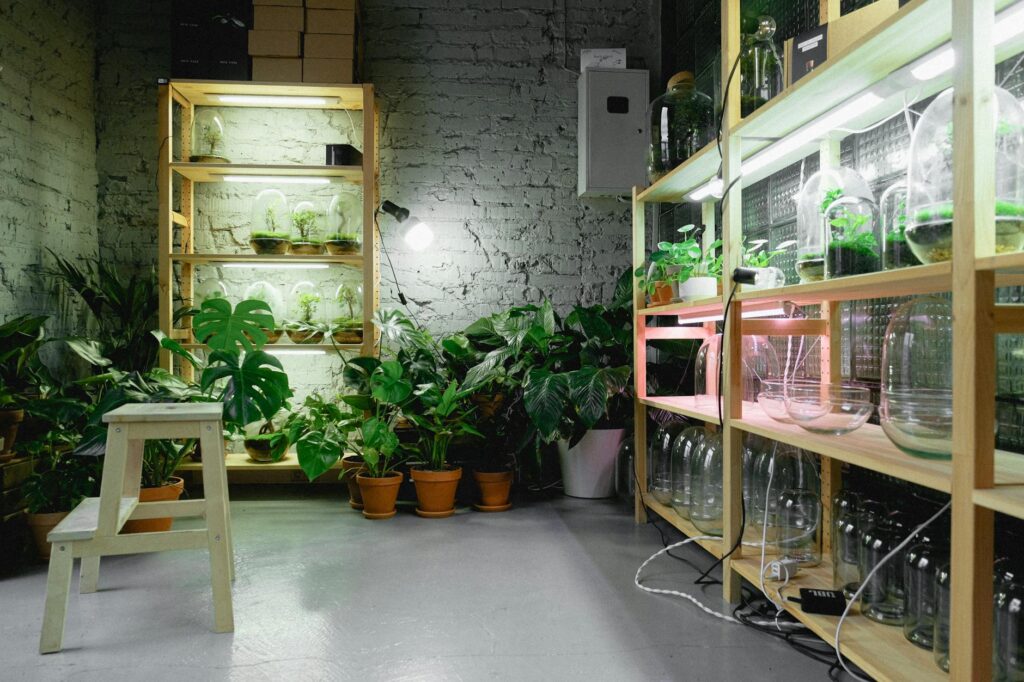
| Two slim LED light bars for lower tiers | $36 | Lets the bottom half of the shelf function as plant space instead of dead space. |
| Simple plug-in timer | $12 | Prevents inconsistent light schedules. |
| Potting mix and two replacement nursery pots | $16 | Cheap insurance when a plant arrives in poor soil or a pot without useful drainage. |
| Pebble tray materials for one humidity-loving section | $9 | Helpful for a fern cluster if the room is dry. |
| Total | $175 | Notice what is missing: extra decorative purchases before the system works. |
With that setup, the top tier might hold a hoya and a jade plant, the middle tiers a spider plant, peperomia, and pothos, and the lowest tier a snake plant and ZZ plant with the LED bar above them. A fern may be worth skipping if the shelf sits near forced-air heat, because a poorly matched plant is not a bargain at any price. (extension.umn.edu)
When the room fights back
Not every apartment can support the dream shelf from a styling photo. Dry air can damage humidity-loving plants. Sudden drafts can stress foliage. Strong window heat can scorch one plant while the bottom shelf stays dim. Pebble trays and plant groupings can help, but if the room still fights the setup, the practical move is to change the plant mix, reduce the shelf count, or add lights. (extension.arizona.edu)
- If there is no strong window, keep the collection smaller and spend on lighting before buying more plants. (extension.umn.edu)
- If the air is very dry, group plants, use a pebble tray correctly, or switch to plants that tolerate lower humidity, including many succulents. (extension.arizona.edu)
- If the shelf is near a vent, radiator, or fireplace, move the shelf or change the plants. Fighting heat and drafts is usually harder than choosing tougher plants. (extension.arizona.edu)
- If watering keeps turning into a mess, reduce the number of pots or keep every plant in a removable nursery pot so sink watering is fast and consistent. (extension.missouri.edu)
- If one plant develops a serious pest problem, isolate it immediately. In some cases, discarding one badly infested plant is more economical than risking the whole shelf. (extension.umn.edu)
Common mistakes that kill a pretty shelf
- Building around a blank wall instead of actual light. A beautiful wall across the room from the window is often just a low-light zone. (extension.umn.edu)
- Treating every shelf level as equal. The brightest tier and the lowest tier should almost never hold the same plant mix unless you added lighting.
- Using decorative pots with no drainage and hoping careful watering will compensate. Usually it does not. (extension.missouri.edu)
- Watering everything on the same day every week, regardless of soil dryness. Extension guidance is clear that plant size, light, temperature, and humidity all change water needs. (extension.missouri.edu)
- Putting humidity-loving plants near dry forced air and calling the browning a mystery. (extension.arizona.edu)
- Mixing succulents and thirsty tropicals on one tightly packed shelf for symmetry. Their care needs are too different. (extension.arizona.edu)
- Skipping pest checks when a new plant comes home. Early isolation and inspection are much easier than treating an entire shelf later. (extension.umn.edu)
How to pressure-test the shelf after 30 days
A shelf is working when care becomes predictable. After the first month, you should know which plants dry fastest, which ones lean toward the light, and whether any tier is hiding water or pests. Regular inspection is a standard recommendation because early detection is cheaper, easier, and less disruptive than rescue care after the whole shelf declines. (extension.umn.edu)
- Take one photo from the same angle each week. If a plant is noticeably stretching or leaning, rotate it or move it to a brighter spot. (extension.umn.edu)
- Track dry-down time. Note how many days it takes each plant to reach its watering point. If two plants on the same tier dry at very different speeds, separate them.
- Lift every cachepot or saucer after watering and confirm there is no standing water. (extension.missouri.edu)
- Inspect the tops and undersides of leaves, plus pot rims and saucers, for webbing, sticky residue, eggs, cottony clusters, or tiny flying insects. (extension.umn.edu)
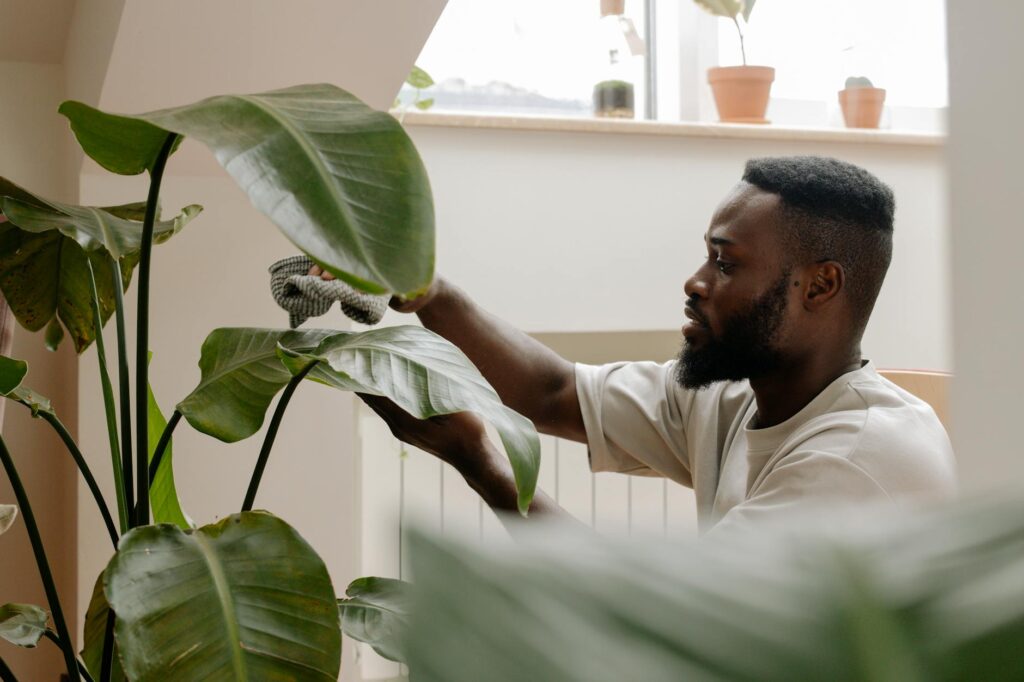
- Wipe dust from broad leaves so they can use available light more efficiently. (extension.umn.edu)
- Read symptoms by pattern. Yellow leaves plus wet soil usually point first to watering or drainage trouble; pale, stretched growth points first to inadequate light. (extension.missouri.edu)
Note: If two or more plants on the same tier show the same stress at the same time, troubleshoot the shelf zone before blaming the individual plants.
Bottom line
A plant shelf that actually keeps plants alive is not a styling trick. It is a small indoor growing system built around real light, safe drainage, stable air, and easy access. Start with the window, use the L.I.V.E. Shelf Scorecard, spend money on trays and lighting before extra plants, and audit the setup for a month. The prettiest shelf is usually the one whose care routine is easy enough to repeat. (extension.umn.edu)
FAQ
Can a plant shelf work away from a window?
Yes, but it should be treated as a lighted shelf, not a natural-light shelf. Supplemental LED or fluorescent lighting on a timer is usually the practical answer, especially for lower tiers. Foliage plants generally need about 12 to 14 hours of total light, and many flowering plants need 14 to 16. (extension.umn.edu)
What plants belong on the lowest shelf?
Use the most light-tolerant foliage plants there, such as snake plant, pothos, philodendron, Chinese evergreen, peace lily, or ZZ plant. If the shelf is very dim, add a light or leave that tier decorative. (extension.umn.edu)
Do all pots need drainage holes?
The growing pot should. A decorative outer pot is fine if the plant sits in a removable pot with drainage and you empty any excess water after watering. (extension.missouri.edu)
How long should grow lights stay on for a plant shelf?
As a starting point, aim for about 12 to 14 hours of total light for foliage plants and 14 to 16 hours for many flowering plants. A timer makes the schedule easier to keep consistent. (extension.umn.edu)
What is the fastest way to ruin a plant shelf?
Weak light, overwatering, and poor drainage are the classic combination. Houseplants can survive a lot of styling mistakes, but they generally do not handle that trio well. (extension.missouri.edu)
References
- University of Minnesota Extension: Lighting for indoor plants – https://extension.umn.edu/planting-and-growing-guides/lighting-indoor-plants
- University of Minnesota Extension: Spring houseplant care – https://extension.umn.edu/houseplants/spring-houseplant-care
- University of Arizona Cooperative Extension: Indoor Plant Selection and Care – https://extension.arizona.edu/publication/indoor-plant-selection-and-care
- University of Missouri Extension: Caring for Houseplants – https://extension.missouri.edu/publications/g6510
- University of Minnesota Extension: Winter houseplant tips – https://extension.umn.edu/news/winter-houseplant-tips
- University of Minnesota Extension: Managing insects on indoor plants – https://extension.umn.edu/product-and-houseplant-pests/insects-indoor-plants
- University of Minnesota Extension: Growing tropical ferns indoors – https://extension.umn.edu/houseplants/tropical-ferns
- University of Minnesota Extension: Tips for growing succulents in containers – https://extension.umn.edu/yard-and-garden-news/tips-growing-succulents-containers
- University of Minnesota Extension: African violets – https://extension.umn.edu/houseplants/african-violets