- Workflow for diagnosing yellow leaves
- The 10 most common causes of leaf yellowing
- 1. Old age (senescence)
- 2. Overwatering/Root Hypoxia
- 3. Underwatering and Heat Stress
- 4. Wrong Light (Too Little or Too Much)
- 5. Low Fertility (Nutrient Problems)
- 6. Iron or Manganese Chlorosis (High pH)
- 7. Excess Fertilizer/Mineral Salts/De-icing Salt
- 8. Root Restriction/Transplant Shock
- 9. Pests, Diseases, or Chemical Injury
- When to test soil (and what to look for)
- FAQ
TL;DR
- Diagnose yellow leaves by pattern first: older vs. newer leaves, uniform vs. between veins, and whether leaves are mushy, crispy, spotted, or stippled.
- Fix your watering/drainage before jumping to fertilization; overwatering is a super common trigger for yellowing in houseplants.
- Interveinal yellowing (between green veins), especially on new growth, often correlates to iron or manganese availability issues—often tied to higher pH (alkaline soil/hard water).
- Leaf-tip burn plus white crust on mix or pots suggests feed/mineral build-up—flush or repot as opposed to adding even more feed.
- If yellowing comes with stippling/webbing, sticky honeydew, distortion to new leaves, or interspersed patchy spreading, suspect pest, disease, or chemical drift. Confirm and treat accordingly.
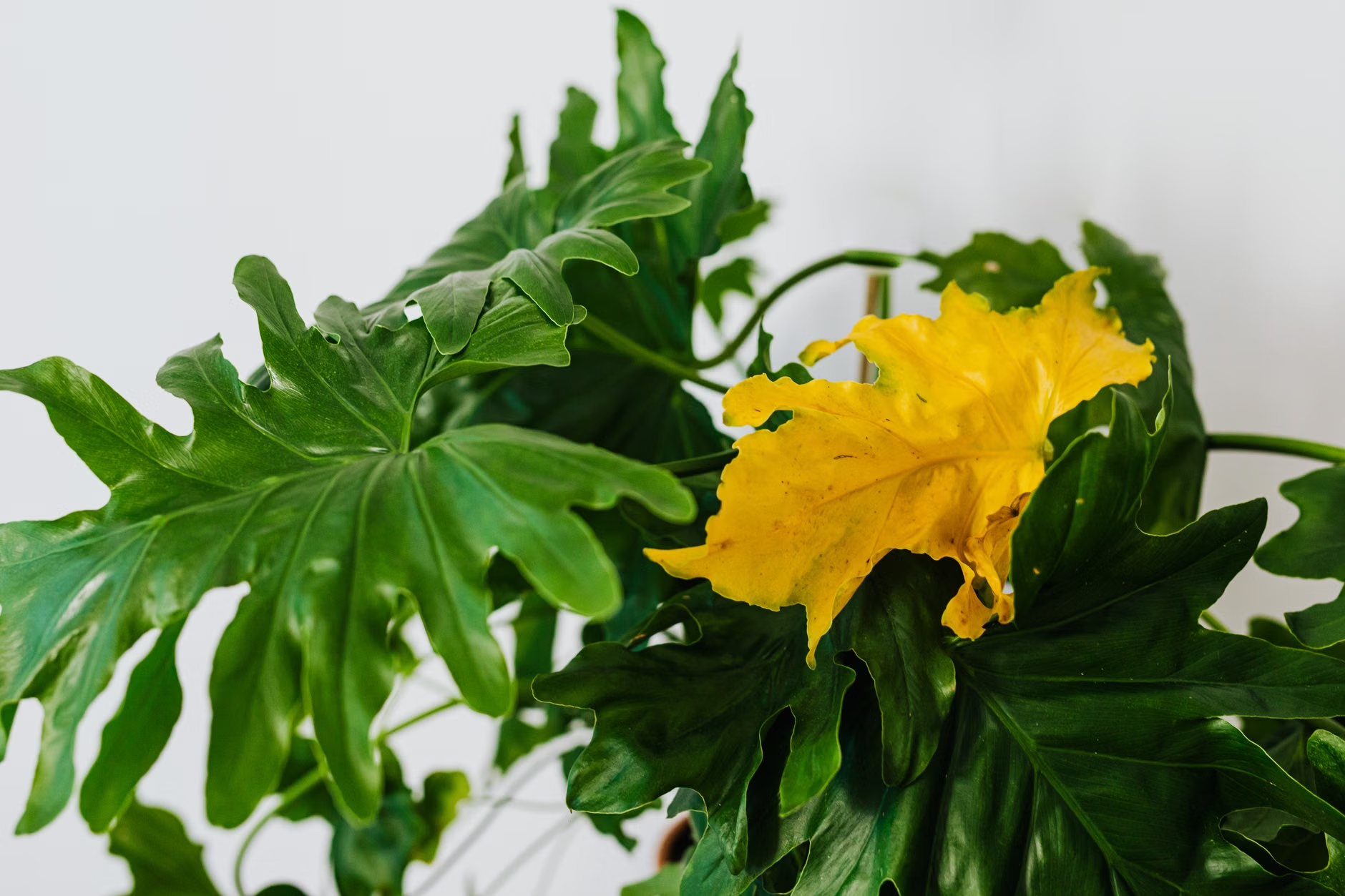
Yellowing leaves (often called chlorosis) is when a leaf contains less chlorophyll than it should. The important thing to remember is this: chlorosis = indication of a problem, not the problem itself. The quickest way to get on the right track is to (1) read the pattern on the plant and (2) do a couple of simple tests to confirm a diagnosis rather than guessing and “trying anything.”
Workflow for diagnosing yellow leaves
- Circle the pattern: Are the oldest/lower leaves yellowing first, or the newest growth?
- Check texture: Are the yellow leaves mushy/soft (often due to too wet, or root trouble) or dry/crispy (often too dry, heat/sun stress)?
- Check the soil/root zone: Feel 2–4 inches down (or further down into the pot if it’s large). Decide if the soil is mushy wet, evenly moist, or astoundingly dry. Make sure the container drains freely.
- Look on the undersides of leaves: Use a bright light + hand lens. For stippling/webbing/insects/honeydew/leaf spots.
- Think back over the last 2–4 weeks: Was there any change in watering, fertilizer, exposure to light (moving to a sunnier window/outdoors), or repotting? Workshop use of herbicides nearby?
- Only then does it make sense to think nutrients and pH. If the symptoms fit, test that potting mix/soil for pH and broad range of nutrients before any major changes are made.
Yellowing patterns cheat sheet (what you see → what it almost always means):
| What you see | Most likely causes | Fast confirmation |
|---|---|---|
| Older/lower leaves turn uniformly pale green → yellow | Natural aging; low fertility (often nitrogen); low light | If it’s the few oldest leaves that are dropping and new growth still looks good, it may just be normal. If many old leaves sag and it’s not a vigorous grower overall, they may be yellowing/losing color as a result of a lack of nitrogen or some other nutrient/nutrients. |
| New leaves are yellow but the veins stay green (interveinal chlorosis) | Iron or manganese deficiency / lockout (often high pH) | See if the veins stay greener (10-15% difference is notable) between them on new growth; test the potting mix/soil for pH. |
| Yellowing + wilting while soil is wet | Overwatering/poor drainage; root damage/rot | Smell soil; inspect roots if possible (healthy roots are typically firm and light; rotting roots are dark and mushy). Ensure pot has drainage holes and isn’t sitting in water. |
| Yellowing + crispy edges / leaf scorch | Underwatering; heat stress; sun scorch | Check soil dryness and recent hot weather or sudden exposure to strong sun; look for browning at margins. |
| Tiny pale dots (stippled look), bronzing, webbing; leaves drop | Spider mites and other sap-suckers | Check undersides for mites and webbing; stippling is a classic clue. |
| Patchy yellowing, curled/distorted new growth; sticky leaves (honeydew) | Aphids (and sometimes other honeydew-producing pests) | Look for aphids clustered on soft new growth; check for honeydew and sooty mold. |
| Leaf tips/margins brown; possible yellowing; white crust on soil/pot | Excess fertilizer/mineral salts; de-icing salt exposure outdoors | Look for white deposits; review fertilizer frequency and concentration; flush or repot if salts are high. |
The 10 most common causes of leaf yellowing (and how to confirm each one)
1) Old age – leaves simply yellow over time and fall off naturally
- Symptoms: The yellowing is limited to older leaves; new leaves look healthy; the plant is otherwise doing its thing and growing.
- How to confirm: Check whether new leaves look good (they should), and whether the yellowing is concentrated in older leaves (it is); and generally see that the plant is growing.
- What to do: Prune to your personal taste if you like tidy. Carefully monitor your light conditions, watering schedule, and feeding regimen rather than “treat” the yellow leaf.
- Common mistake: Fertilizing the plant heavily to “green it up,” when the plant is otherwise just fine.
2) Drowning, root hypoxia (too much water in a pot → rotten roots)
Soil that is constantly wet denies the roots oxygen. When the roots are rotten (more accurately, when the roots are “dying” because they don’t have enough oxygen), they can’t take up water and nutrients effectively: the leaves turn yellow, droop, and may die and drop, even though the soil is wet. Overwater is frequently quoted as the number one cause of type plant death and yellowing.
- What it looks like: The yellowing of leaves often starts lower down and on the inside; leaves do feel limp in general; soil is often wet and stays so for days; and fungus gnats may appear.
- How to confirm (quick): Stick your finger or a skewer 2 -4” into the soil and test the moisture; make sure the pot actually drains; if possible slide the plant out of its pot to observe the roots! Healthy roots are firm and light, rotten roots may be dark and mushy.
- What to do now: Dry it out to the plant’s safe range, and then resume watering only when that zone has dried appropriately for that plant type. Improve drainage (use a pot with holes and a better mix). Severely rotten roots usually need to be trimmed out, and the plant repotted in fresh, well-draining media.
3) Underwatering or drought stress (plants drying out rapidly), heat stress (leaves yellow/brown and falling in a conservatory-climate saving measure, usually showed up during the heat).
- What it looks like: Yellows with crispy tips or edges. Wilts then improves after watering (at first). Rapid drop tenth of leaves. Most leaves drop in prolonged heat.
- How to prove: Leathery leaves when touched. Soil down there is dry. Pot feels unusually light. Leaves feel thin/dried out (not soft). Symptoms worsen after a hot afternoon.
- What to do: Water thoroughly and allow for good soak-in for large root balls, then adopt a consistent watering schedule adjusted seasonally. Move highly stressed plants out of intense heat/sun if possible.
4) Wrong light (too little, too much, or moved into a brighter place all at once)
- Clues for too little light: Leggy stems, slow growth, yellowing forms at top, overall pale look.
- Clues for too much light: Patching, hot brown crispy areas, scorches on sides exposed to window or glass.
- How to confirm: Observe if yellowing/browning appears soon after a move to a brighter/darker spot, or after a window is opened. Cold injury after moving also can be confused: browning at the leaf edges or tips often follows a cold draft.
- What to do: Move plants to a location matching their light preferences and avoid abrupt changes. Watch for yellowing to subside with stable conditions.
5) Low fertility (N & particularly of the potting mix)
- Symptoms: A series of light green foliage, turning yellow tends to grow prolongedly. Plant slowly loses color, especially in older leaves; growth is slow.
- How to confirm: Care has been stable (no watering/light shock), but you haven’t fed it in a long time; potting mix is old; and growth is consistently slow.
- What to do now: Feed with a fertilizer appropriate for the plant while it is actively growing and see if that solves anything, or renew your potting mix for long-term correction. Do not feed a plant currently waterlogged or too far into drought stress.
6) Iron or manganese chlorosis (often high pH / lime induced chlorosis)
- What it looks like: New leaves yellow (pale greenish) with veins obviously greener; leaves eventually can be very pale (and may scorch in severe cases).
- How to confirm: Pattern matches interveinal chlorosis alone on new growth; soil/irrigation water probably alkaline/hard; concrete/limestone nearby outdoors.
- What to do now: Test soil/potting mix pH and correct if needed. For many plants it’s easier to deal with pH/availability, than try to repeatedly apply iron.
- Prevention: Grow plants suited to your pH, avoid practices raising pH where acid-loving plants grow.
7) Excess fertilizer, mineral salts, or de-icing salt exposure
- Signs: Brown tips/edges, leaf drop, possibly wilted, white crust(s) in potting mix or at pot rim.
- Living In Salt confirmation: Fertilizer has been applied in stronger concentration/more frequent applications compared to the label; visible fertilizer salt build-up (white crusty deposits); injuries can occur shortly after feeding.
- What to do now (containers): Leach/flushing potting media with clear water allowing for full drainage, re-pot into new potting mix if issue is severe.
- What to do now (in-ground): Stop feeding, irrigate properly (not too wet), do not allow tons of de-icing salts contaminating planting bed.
8) Root restriction (pot-bound roots, soil compaction) or transplant shock
- Pot-bound: Roots circling densely at bottom, water rushing through the pot, plant drying out fast, marginal browning (tip dieback) may follow.
- Transplant shock: Symptoms appearing soon after planting or moving, leaf scorching/yellowing while establishing.
- What to do: Repot one size up (or root-prune/loosen the root mass) for pot-bound plants; for new transplants, prioritize correct watering and avoid heavy pruning until established.
9) Pests, diseases, or chemical injury (biotic problems and look-alikes)
- Spider mites: Stippling, bronzing, webbing; worse in hot/dry conditions. Confirm by checking undersides of leaves.
- Aphids: Curled/distorted new growth, patchy yellowing, sticky honeydew, possible sooty mold.
- Diseases: Certain wilts can cause yellowing/wilting and vascular discoloration; confirmation may involve cutting into stems or getting diagnostic help.
- Herbicide injury: Curling/distortion/chlorosis. Drift pattern is often found on one side of plant or side facing place of application. Document timing/weather and monitor for improvement.
- What to do: Avoid unnecessary spraying. Use lowest-toxic method for confirmed pest problems. Physical removal (rinse, wipe) and improved growing conditions are first step; only escalate to products if truly needed.
When to test soil (and what to look for)
Soil/potting mix testing is most useful when (1) symptoms persist after correcting watering and light, or (2) the pattern strongly suggests nutrient availability problems—especially interveinal chlorosis tied to pH. High pH (alkaline conditions) is a common driver of “chlorosis despite fertilizing.”
- For in-ground plants: Request pH and basic nutrient levels; follow local extension guidance for sampling.
- For containers: If you see salt crusting or chronic tip burn, consider a soluble salts issue; flushing or repotting is often more practical than testing.
- If you’re diagnosing iron chlorosis in woody plants: pH testing is often recommended as part of confirming the cause.
FAQ
Will yellow leaves turn green again?
Usually, no. If a leaf has turned truly yellow it has lost chlorophyll and probably won’t turn green again. Use improvement in new growth and the reduction of new yellowing as your main indicators of success.
Should I cut off yellow leaves?
If a leaf is fully yellow and drops off easily then you can clip it off for aesthetic reasons. If it is partially yellowed, however, keep it attached until you’ve resolved the concern—it’s still possible to move sugar (especially if the yellowing is due to nitrogen deficiency) out of the leaf.
What is the single likeliest cause to check?
Watering/drainage. As in, did you have your plant sit in water recently? Overwatering is the leading cause of decline and yellowing of indoor plants and drought and heat stress is one of the most common sources of yellowing outdoors.
How to distinguish nitrogen deficiency from iron chlorosis, quickly?
General yellowing of all the old leaves, first (nitrogen deficiency). Yellowing of the new leaves starting between green leaf veins (iron or manganese chlorosis).
When to consult a local extension office or a pro?
With a valuable tree/shrub that keeps showing chlorosis or if you suspect herbicide drift, wilting (plus) yellowing that keeps worsening (possible vascular disease). Pictures bring more accurate help; make sure to include the whole plant and close-ups of leaves and stems.