- What does it mean to have a true North-facing Window for Successful Plant Growth?
- Step 1: Divide your small room into 4 separate light zones from the north window
- Putting plants in their place for a small space (Placement Map & Table)
- Section 2. Make Plants Small on Purpose (Small pots = less growth)
- Section 3. Weekly Care Routine (Northern Window)
- Common North Window Mistakes (and easy solutions)
- FAQ
- References
Summary
- North-facing windows are typically the lowest-light source in a building, making plant location (height and distance from window) more critical than plant species. (aos.org)
- Plant light conditions can be grouped into 4 zones: Sill (0-12 inches), Near (1-3 feet), Mid (3-6 feet), and Far (6-10 feet). It is best to start all plants at or near Sill Zone and only move back if they are growing well.
- There are 10 compact plant species in this plan that will be manageable in size by using pot size control, pinching, and slow-growing care.
- If your north window is heavily shaded by trees, buildings, or has a deep eave, treat it like Far Zone light and consider using an additional small grow light with plants that will bloom.
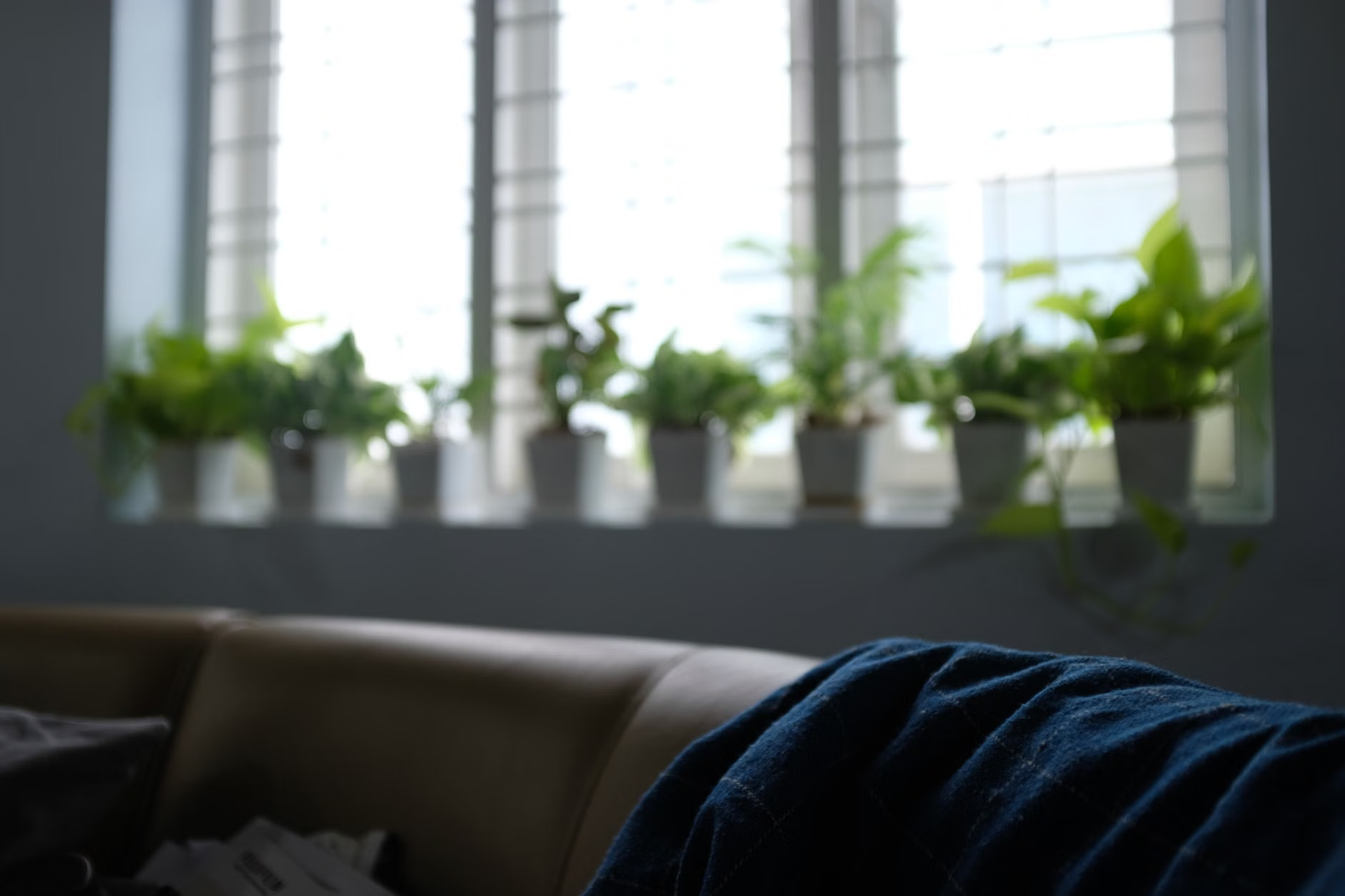
What does it mean to have a true North-facing Window for Successful Plant Growth?
In most homes in the USA, a true north-facing window is considered “the lowest light window” compared to an East, West, or South-facing window when all are treated equally (assuming the glass is unobstructed by trees/buildings). The fact that the lowest amount of light enters the house through a north-facing window is not a bad thing; rather, it is just “different”. Generally, all types of plant growth occur relatively slower with less than optimal light; especially with plants needing a high quantity of light to bloom or flower, you will need to place these types of plants closer to the glass, or provide them supplemental light with a grow light. (aos.org)
Step 1: Divide your small room into 4 separate light zones from the north window
Use distances from the glass (and also by their heights) rather than generalizing whether each will receive “low/medium” light when determining where to put your plants—this should result in a much more accurate setup. Use these initial zones and then adjust as needed during the first 2–4 weeks that you maintain your plants.
(North) Window Light Zones
The following table correlates each (location/distance) zone to typical spots in a small room and lists the types of plants that will do best in each zone.
| Zone | Distance from North Window | Typical Placement | Best Types of Plants |
|---|---|---|---|
| Zone A – Window Sill | 0-12 inches | A window sill or any surface directly adjacent to your northern window | Plants that flower and/or have leaves that need moderate-to-bright filtered light |
| Zone B – Near | 1-3 feet | The top of a dresser, desk, etc. within close proximity to your northern window | Most types of “indirectly lit” houseplants that still need bright lighting |
| Zone C – Mid | 3-6 feet | Shelves, night tables, or plant stands when measured to the mid-third of the room | Plants that tolerate low-to-moderate light and have slower growth |
| Zone D – Far | 7-10 feet | Far corners of your room and/or shelves fixed to the inner walls of your room | True low-light plants only (slow growth expected). |
10 Compact Plant Types (Sorted by Zone)
1. African violet (Streptocarpus ionanthus / Saintpaulia spp.)
- Reason for success: These will thrive in bright, indirect light; typically recommended indoors for north or east window placement. (reference)
- Location: Zone A (sill/stand), but do not let leaves touch the cold winter pane of glass.
- Keeping it compact: Use small pots, prefer a tight root ball—trim outer leaves to maintain a tight rosette.
- ASPCA pet safety rating: Reported as non-toxic for both cat and dog.
2. Phalaenopsis orchid (moth orchid)
- Reason for success: Can grow in an east window indoors with little to no sun; also successful in a bright northern window.
- Location: Zone A (brightest location on the glass).
- Keeping it compact: Use a mini orchid or create a snug fit; do not re-pot until roots overflow or medium breaks down.
- ASPCA pet safety rating: Non-toxic for both cat and dog.
3. Baby rubber plant (Peperomia obtusifolia)
- Reason for success: Thrives in low-light for long periods (all-green/solid types) but prefers bright, indirect light. (See reference)
- Optimal Habitat: Zone A and Zone B (if stretching, move closer).
- Compact Planting: Pinch growth to stimulate branching. Use fast-draining pot mix, and avoid oversized pots.
- Pet Safety: Listed as non-toxic by the ASPCA.
4. Fittonia albivenis: Nerve Plant
- Why it Works: Remains small in bright to medium light, good as a desktop compact house plant.
- Optimal Habitat: Zone B, optionally Zone A in low-light situations.
- Compact Planting: Pinch to maintain bushy appearance; use shallow pot, keep moist but not soggy.
- Small Room Use: Great for shelf/desktop color without height.
5. Maranta leuconeura: Prayer Plant
- Why it Works: Thrives in bright, indirect or low-to-moderate light—stays compact and spreads rather than growing tall.
- Optimal Habitat: Zone B (or Zone C with protection from direct sunlight—low intensity dulls leaf pattern).
- Compact Planting: Grows horizontally in a wide pot. Prune and re-root for fullness.
- Pet Safety: Non-toxic, ASPCA-listed.
6. Rex Begonia (Begonia rex-cultorum group) or compact rhizomatous begonias
- Why it Works: Naturally understory plants; handle shade/indirect indoor light.
- Zone Placement: Zone A or B (better color/density closer to window).
- To Keep Compact: Choose compact type, maintain even (not soggy) moisture, avoid large containers.
- Safety: Poisonous to pets—keep out of reach.
7. Button fern (Pellaea rotundifolia)
- Why it Works: Compact, thrives in medium/bright indirect, adapts to low light slower growth.
- Zone placement: Zone B or bright Zone C.
- Keep Compact: Grow in small pot inside cache-pot. Trim fronds at ground level.
- Small Room Bonus: Adds “soft texture” without big footprint.
8. Bird’s Nest Snake Plant (Dracaena trifasciata ‘Hahnii’)
- Why it Works: Drought-tolerant, compact (select ‘Hahnii’), slow-grow in low light.
- Zone placement: Zone C or D (will survive further from window).
- Compact: Use a small pot, minimal watering/fertilizer.
- Pet Safety: Toxic, keep away from pets.
9. Zenzi (ZZ) Plant (Zamioculcas zamiifolia ‘Zenzi’)
- Why it Works: Bred for compactness, thrives in low light, suitable for desk space.
- Zone placement: Zone C/D (start in C until recovered).
- Compact: Slightly under-pot, less frequent watering, slow growth.
- Pet Safety: Toxic/irritant, keep away from pets.
10. Aspidistra (Cast Iron Plant)
- Why it Works: Exceptionally shade-tolerant; very slow grower.
- Zone placement: Zone C or D (anchors a corner or wall).
- Size Control: Pot size restricts spread; divide every 2–3 years to prevent outgrowth.
- Style Tip: Tall, slim pot on floor saves shelf space.
Putting plants in their place for a small space. (Placement Map & Table)
This example setup for a “single-window small room” optimizes the amount of light for faster-growing, smaller plants and positions slow-growing tall plants behind them to keep everyone illuminated. Adapt the furniture labels to your own room; the only constants are window distance (zone) and plant height limits.
| Area of the Room | Plant Zone | Selection of Plants | Justification for Plant Location |
|---|---|---|---|
| Center of Windowsill | Zone A | Mini Phalaenopsis Orchid & African Violet | The brightest spot in your home, and easy to check on as well as rotate out |
| To the Left or Right of the Window on a Plant Stand | Zone A | Mini Rhizomatous Begonia or Mini Rex Begonia | Closer distance improves color and reduces stretching |
| Beside a Desk/Dresser, Near a Window | Zone B | Fittonia & Peperomia Obtusifolia | Sufficient light for compact growth; easy moisture checks |
| On a Shelf or Nightstand, 3-6 Feet Away from Window | Zone C | Button Fern & Prayer Plant (Maranta) | Moderate/low light needed; prefers stable, draft-free conditions |
| Back Corner of Room, 6-10 Feet from Window | Zone D | Cast Iron (Aspidistra) | Low maintenance; shade-loving green anchor |
| Top of Bookcase/Top Shelf (Back Half of Room) | Zone D | Dwarf ZZ (‘Zenzi’) & Hahnii Snake Plant | Grows in low light; safe for upper placement, out of pet’s reach |
If you have no more than 3 plants: Try African Violet in Zone A, Peperomia Obtusifolia in Zone B, and Cast Iron in Zone D. These offer bloom, texture, and low-maintenance options for low-light, compact, clutter-free growing.
Section 2. Make Plants Small on Purpose (following the “small pot = less growth” rule)
The goal is to have compact, healthy plants. Below are 5 items you should consider when starting your new plants.
- Pick the smallest, healthiest available (2″ or 4″ nursery pots establish quickly).
- Do not jump more than 1 pot size when repotting. Oversized pots hold more moisture, can cause root issues in low light.
- Group by watering needs: (A) dry after watering (snake plant, ZZ, peperomia), (B) evenly moist (fittonia, maranta, button fern, African violet). This prevents overwatering.
- Pinch/prune regularly: pinch fittonia/peperomia tips, cut maranta runners, remove older outer African violet leaves, trim damaged begonia leaves at the base.
- Rotate pots weekly (a quarter turn) to avoid leaning and promote even growth.
Section 3. Weekly Care Routine (using light provided by Northern Window)
- Twice per week (2 minutes): Touch-test soil before watering; water by group needs only—never all at once.
- Once per week (5 minutes): Rotate plants. Dust thick-leafed types (ZZ, peperomia, snake plant) for optimal light absorption.
- Check for ‘stretching’ every 2–4 weeks (long stems, gaps, small new leaves); if seen, move plant 6–18” closer to the window or elevate.
- Adjust seasonally: If plants stop blooming or produce tiny new leaves in winter, move to Zone A or add a small grow light.
Common North Window Mistakes (and easy solutions)
- Mistake: Placing bloomers (African violets, orchids) in Zone C/D, or against cold glass.
Solution: Move to Zone A, use an insulated stand or shelf. - Mistake: Watering Snake/ZZ on the same schedule as ferns.
Solution: Group and water by category: dry vs. moist soil lovers. - Mistake: Believing “low-light” equals “no light” (windowless corner).
Solution: Even low-light plants need some light—keep all plants in the windowed room. - Mistake: Using bigger pots for growth.
Solution: Use a slightly smaller pot for compactness/preventing overwatering. - Mistake: Ignoring drafts.
Solution: Keep tropicals away from HVAC blasts/cold panes.
Quick shopping list for a small room:
- 2–3 small stands (Zone A tall, Zone B/C medium, optional D floor stand)
- Saucers or waterproof tray for protection
- Narrow-spout watering can
- 1 bag chunky/faster draining mix (peperomia/snake/ZZ), 1 bag moisture-retaining mix (maranta/fittonia/fern/begonia)
- If you own pets—keep toxic varieties (snake plant/ZZ/begonias) on high shelf or wall-mounted
FAQ
Are there plants that can live in north-facing windows?
Why do some of my plants become leggy when I put them in my north window?
What are the safest plants for cats or dogs to eat within this arrangement of plants?
Are any plants in this arrangement poisonous to cats or dogs?
If I am growing my plants in an indoor garden facing north toward my window, will I need an indoor grow light?
References
- American Orchid Society, Growing Under Lights (determining window direction, light levels) – aos.org
- American Orchid Society, Phalaenopsis Culture Sheet (orientation and light) – aos.org
- Iowa State University, African violet – northern and eastern window (plant placement recommendations) – yardandgarden.extension.iastate.edu
- NC State Extension Gardener Plant Toolbox, African violet (Streptocarpus ionanthus) – plants.ces.ncsu.edu
- NC State Extension Gardener Plant Toolbox, Peperomia obtusifolia (baby rubber plant) – plants.ces.ncsu.edu
- NC State Extension Gardener Plant Toolbox, Fittonia albivenis (nerve plant) – plants.ces.ncsu.edu
- NC State Extension Gardener Plant Toolbox, Maranta leuconeura (prayer plant) – plants.ces.ncsu.edu
- NC State Extension Gardener Plant Toolbox, Begonia (genus/rex type notes) – plants.ces.ncsu.edu
- The Spruce, Button Fern Care (Pellaea rotundifolia) – thespruce.com
- NC State Extension Gardener Plant Toolbox, Dracaena trifasciata (snake plant) – plants.ces.ncsu.edu
- NC State Extension Gardener Plant Toolbox, Aspidistra elatior (Cast iron plant) – plants.ces.ncsu.edu
- ASPCA, African Violet (non-toxic plant landscape) – aspca.org