How to Tell If Your Plant Needs Water (Finger Test vs. Moisture Meter)
Stop guessing (or watering on a schedule). Learn two reliable ways to check soil moisture—the finger test and a moisture meter—plus exactly how deep to check, how to interpret results, and what mistakes cause over- and a
Using a finger: Simply push a clean finger about an inch down into the soil, 2 inches for larger pots (deeper for a larger plant and pot). We are looking for a general sense of “cool/damp” vs dry/crumbly soil.
Using a moisture meter: Insert into the plant’s root zone, in several spots around the pot. No matter which tool you pick to measure soil moisture, you should always go and check with your eye and another tool or method. Not everyone’s sticks are made of the same content, and this is only a second opinion, not your attorney! (Third party, judge of a court, get it?)
Please confirm with at least one other breast of help: the weight of the pot (the dry plant is light, the saturated plant is heavy); amended drainage or runoff produced with the watering; plant preference – can be as individual
- Pick the right spot: test a few inches away from the stem (not right against it) so you don’t end up disturbing the crown or scraping the main roots.
- Insert your finger straight down: about 1 inch for small pots; closer to 2 inches for medium pots; and for large pots, test in several spots (because moisture can vary a lot).
- Feel for moisture, AND texture as well as moisture: damp soil almost always feels cooler than dry soil; dry soil feels warmer (especially if you haven’t watered in a while), crumbly, and does NOT stick to your finger.
- Decide: if you found moisture at that depth, wait. If it’s dry at that depth, it’s usually time to water (then check your instincts against someone else’s lame cross check: grab the pot, or flip it over, or poke a hole in the bottom if it’s plastic).
What the finger test is great at (and where it may mislead you): Great for: common houseplants, in typical potting mix; quick checks; for beginners, developing a gut feel for how moist soil is, based on feel alone. Can mislead you, when: the pot is massive and potted plants are very large and heavy (the top layer may dry while lower layers stay moist), if the mix is chunky (bark or perlite creates air pockets, displacing soil), or if the roots are extremely dense (the entire lower half of the pot can EXTERMINATE everyone with its ulnike diabolic dry pockets).
If you don’t like putting your fingers in dirt: use a blade of grass or a wooden chopstick or skewer—a clean one! Stick it into the soil. Wait 10 – 30 seconds. Then pull it out and see if we got a dark, wet stick or an almost-clean, almost-dry one off the drippy end.
How to use a moisture meter (good—and, if you know its limitations): A basic moisture meter can be a useful tool for someone who is coming to plantism from lives of hard watering, for large pots which can’t easily be “finger tested,” or just for more insecure people. It will also make sure and lie to you when: It is your moisture meter and it is smarter than you, and it’s dissenting opinion is proudly written out.
These low-cost meters derive estimates of moisture by measuring some electrical property of the soil. Unfortunately, this measurement can be skewed badly due to the salinity of fertilizers, bad contact on the probes, or when the mix is too chunky to warrant pushing the probes into.
Things you can do:
Wipe the probe clean with a dry cloth after each use, especially before inserting again. Not only will this cut down on corrosion, but it will also minimize pot-to-pot cross-contaminating effects.
Be aware that it’s easy to bend/break the probes when attempting to insert them. If you meet any real resistance in the soil, pull the probe out and try again in a different location! You could be driving it into roots. Trotting out already-smashed probes isn’t sexy.
Pi1883.me/c174628 just snap a quick and dirty test of moisture content (to get the ‘look and feel’ factor coordinated with your potting mix). As a general rule: if your plant hasn’t been watered recently—and whodunnit?! You say it feels encouraging to use the meter, though? Now, I’ll show you how to really get to know how ‘wet’ it/they are! Dig right down in the mix to just above the root zone. You will get the feel of its depth relative to the top of the pot and the count (or multiple short stabs). This will take about a minute.
Do the ‘finger’ (and pot weight) test, right before watering. Do a few readings with the meter, exactly as you did the last one.
Learn what “dry enuff to water” is for this plant and pot and Assume This Pot Therefore.
If the reading is “wet” per your abdomen, don’t water.
If “dry” confirms with second evaluation (finger test and pot weight?), then it’s close enough. Love the meter, but don’t do what it says besides this last one.
Quick “calibration” of your meter to your pot (easy check):
Right after watering in the pot (thorough watering till you see some run out), take a few readings with the meter, at different locations and learn how “wet” it’ll indicate Totally As Yet UnWatered Potted Garden! of Dew as well plus withinof your plants per eye hole inner workings.
Next day, or so, compare by Hooking finger up on all spots and meter down; Last shot at it before actually getting it wet plus lightly thumping both eyeball holding hands outstretched documenting some more spots.
Now assume that sews it plus
if not, put above law in first place.[C]If your meter lights up “dry” but the soil feels cool/damp to your finger, trust your finger and wait—then check again 24–48 hours later.
Finger test vs meter, which to use?
| Category | Finger test | Moisture meter |
|---|---|---|
| Cost | Free | Low to moderate (depends on model) |
| Speed | Very fast | Fast, but most effective when checking multiple spots |
| Best for | Small/medium pots; learning the rhythm of your plants; most houseplants | Large/deep pots; overwater-prone people; soil that’s hard to reach |
| Common failure | Only testing the surface; not going deep; appeared dry but worse underneath | Bad moisture probe contact; soil salt/fertilizer interference; reading only from one spot |
| Accuracy help | Combine with pot-weight check | Calibrate to your pot; confirm with finger/pot weight |
A simple decision tree (so you can stop second-guessing)
Instead of memorizing plant “rules,” just do this (1) check the soil below the surface, (2) confirm by checking a second thing, and (3) match that to the age of the plant.
- Step 1 (Soil test): Fingers or moisture meter check below the surface.
- Step 2 (Cross-check); Lift the pot. Super light usually means dry and thirsty. Heavy often means moisture going on still. (It gets easier the more you do it.) “You will
start” go here.Step 3 (Plant type): Decide how dry is “dry enough” for that plant (succulents want drier soil than most tropical foliage plants).
Step 4 (Watering technique): If it’s time, water thoroughly and let excess drain—then empty the saucer so roots aren’t sitting in water.
Signs you watered too soon vs waited too long (and how to verify)
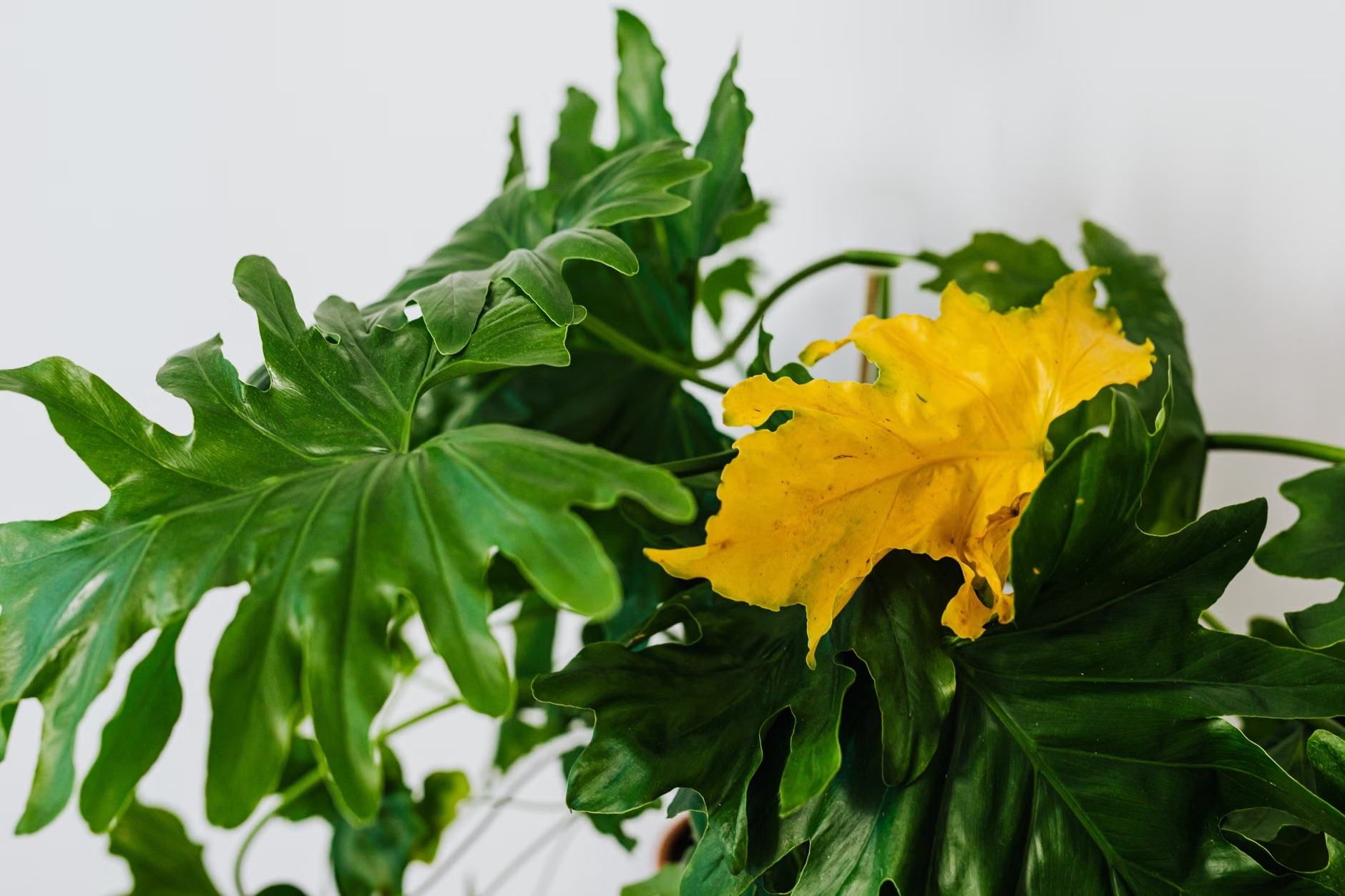
One reason watering feels confusing is that overwatering and underwatering can look similar from above, resulting in wilting, leaf drop, and yellowing in both cases. The difference is typically in the soil and roots: too wet, the roots may lose oxygen in the soil; too dry, roots aren’t getting enough water into the plant.
If you suspect UNDERwatering: soil pulls away from the pot, feels dusty/crumbly if you dig into a few inches down, and the pot is very light. A good watering often makes the plant perk up within hours (not always, but often).
If you suspect OVERwatering: soil consistently feels damp all the way down, pot stays heavy/wet for days, and there’s a musty smell (in some cases). New growth may not be super vigorous, and stems near the soil level may feel soft on some plants.
How to verify: do a soil check 1–2 inches down, with your finger or a small trowel/scoop, and confirm by weight of the pot. If it’s still damp do NOT water, even if leaves look sad.
If it keeps happening and the soil is wet, stop watering and check the basics, drainage holes, compacted soil or if the plant is sitting in runoff. That is a common root-rot scenario.
Common mistakes (and quick fixes)
Mistake: Just testing the surface. Fix: test below the top of the soil (the surface can be dry, but the soil below is still wet).
Mistake: Watering ‘a little bit’ every time. Fix: When it’s time, give it a good soak until moisture reaches the root zone. Then leave it alone until the soil test says it’s time again.
Mistake: Letting the pot sit in water. Fix: unless you want wet roots, empty the saucers/cachepots after watering.
Mistake: Relying on just one moisture meter reading. Fix: Wipe the probe, ‘map’ the soil in lots of places and check with your finger and weight of the pot.
Mistake: Drooping means ‘needs water’ switch is on. Fix: Droopy can be heat stress or transplant shock or root trouble—check the soil first.
How to water properly when it’s TIME
- Water gently all over the soil’s surface (don’t hit one spot and blast a channel through the soil). Yes, this is the old watering practice of letting it soak in.
- Water until it runs out of the drainage holes.
- Leave it alone, then dump any saucer or outer pot holding water. It shouldn’t find more water standing around underneath itself.
- If it runs right through—yikes—it should have sucked up all that hot air thus far: the mix may be too dry and therefore hydrophobic.
Soak the pot in a bowl/sink for 30–60 minutes, then let it drain, and re-check more often going forward.
A repeatable routine you can actually stick to
Name the plant + note its preference: “Let top 1–2 inches dry” vs. “Keep lightly moist.”Choose ONE primary test (finger or meter) and ONE cross-check (pot weight is easiest).Check at the same time of day when possible (morning is ideal for consistency).After you water, take 10 seconds to lift the pot and memorize the “just-watered” weight.Adjust seasonally: many indoor plants use less water in winter and more in bright, warm conditions.
Q: Is the finger test or a moisture meter more accurate?
A: Neither is perfect in every situation. The finger test is very reliable for small to medium pots and typical potting mixes. A moisture meter can help with larger pots or when you need a deeper reading, but it can be thrown off by poor probe contact or salts from fertilizer—so it’s best used alongside a second cue (like pot weight).
Q: How deep should I check the soil before watering?
A: For many houseplants, checking about 1 inch below the surface is a solid starting point, then adjust based on pot size and plant type. Bigger pots often need checks in multiple locations because moisture varies across the container.
Q: My moisture meter says “dry” but the soil feels damp. What should I do?
A: Don’t water. Wipe the probe, take readings in multiple spots, and confirm with pot weight. Meters can give false “dry” readings if the probe isn’t making good contact (air gaps, chunky mix) or if you only test one spot.
Q: What’s the #1 sign I’m overwatering?
A: The most consistent sign is soil that stays wet at depth for days (often paired with a pot that stays heavy). Above-ground symptoms can be confusing because overwatering can cause wilting too—so always verify by checking moisture below the surface.
Q: Should I mist instead of watering the soil?
A: Misting can raise humidity briefly, but it doesn’t replace root-zone watering for most houseplants. Use misting for plants that benefit from humidity (and only when it doesn’t encourage disease), but rely on soil moisture checks to decide when to water.
[Heb]MQ1: Which Soil Moisture Tests Are Best? — URL 1,2,3