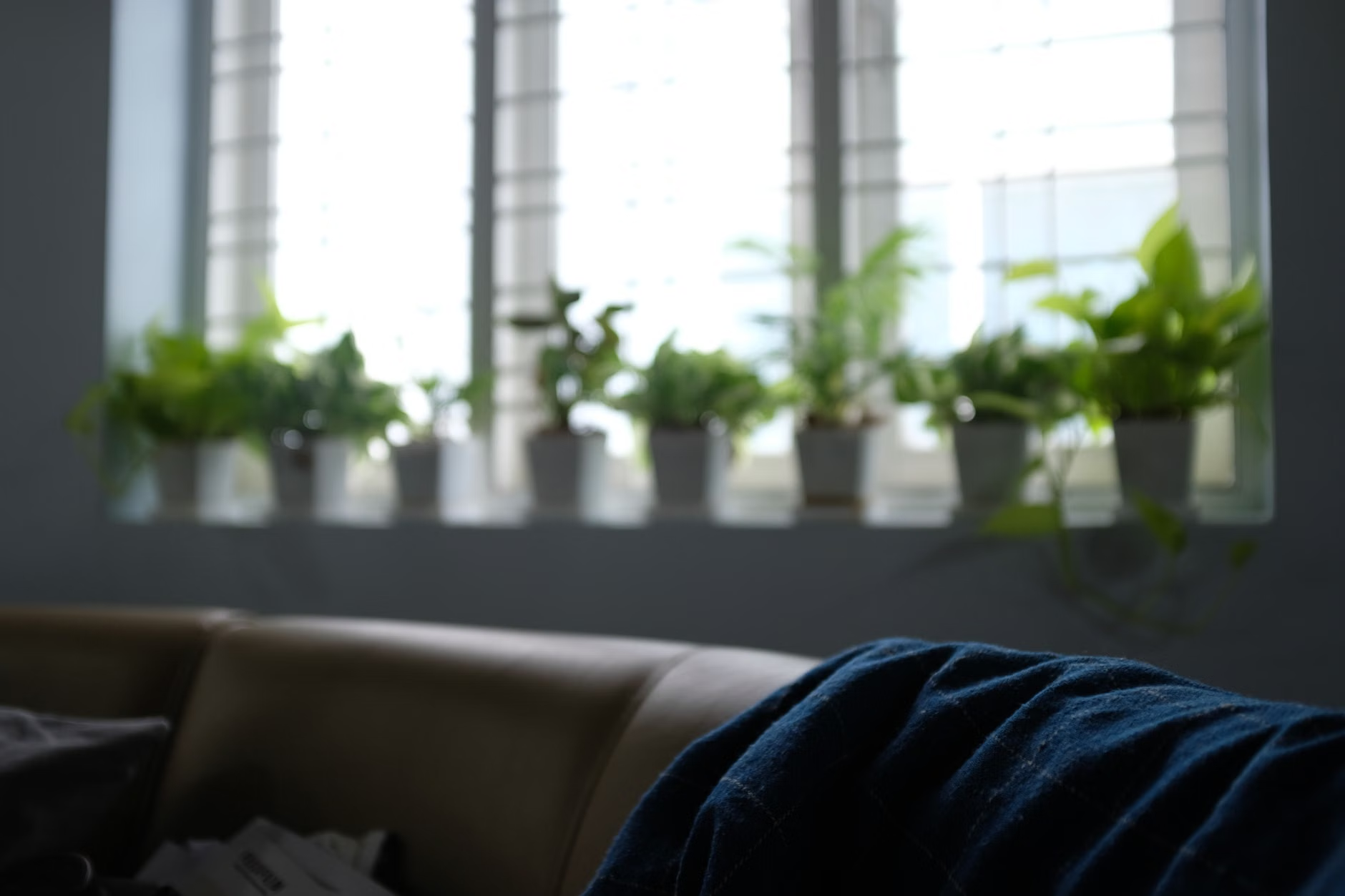
Your “bright room” might be too dim for growth—intensity drops quickly away from the window. Shelves cause self-shading: the top row climbs, while low growing shelves slowly starve themselves, resulting in leggy stretchy growth. (Looking at you, pothos.)
Pretty cachepots and saucers trap runoff that oxygen-starves roots and fosters rot. Roots can’t breathe, even while the top looks dry.
What’s the fix? Actually measure where the light levels are sitting where the leaves are. Move the shelf closer or higher. Add under-shelf grow lights. Leave spooky spacing between plants for airflow. Change how you water—Drain and dump.
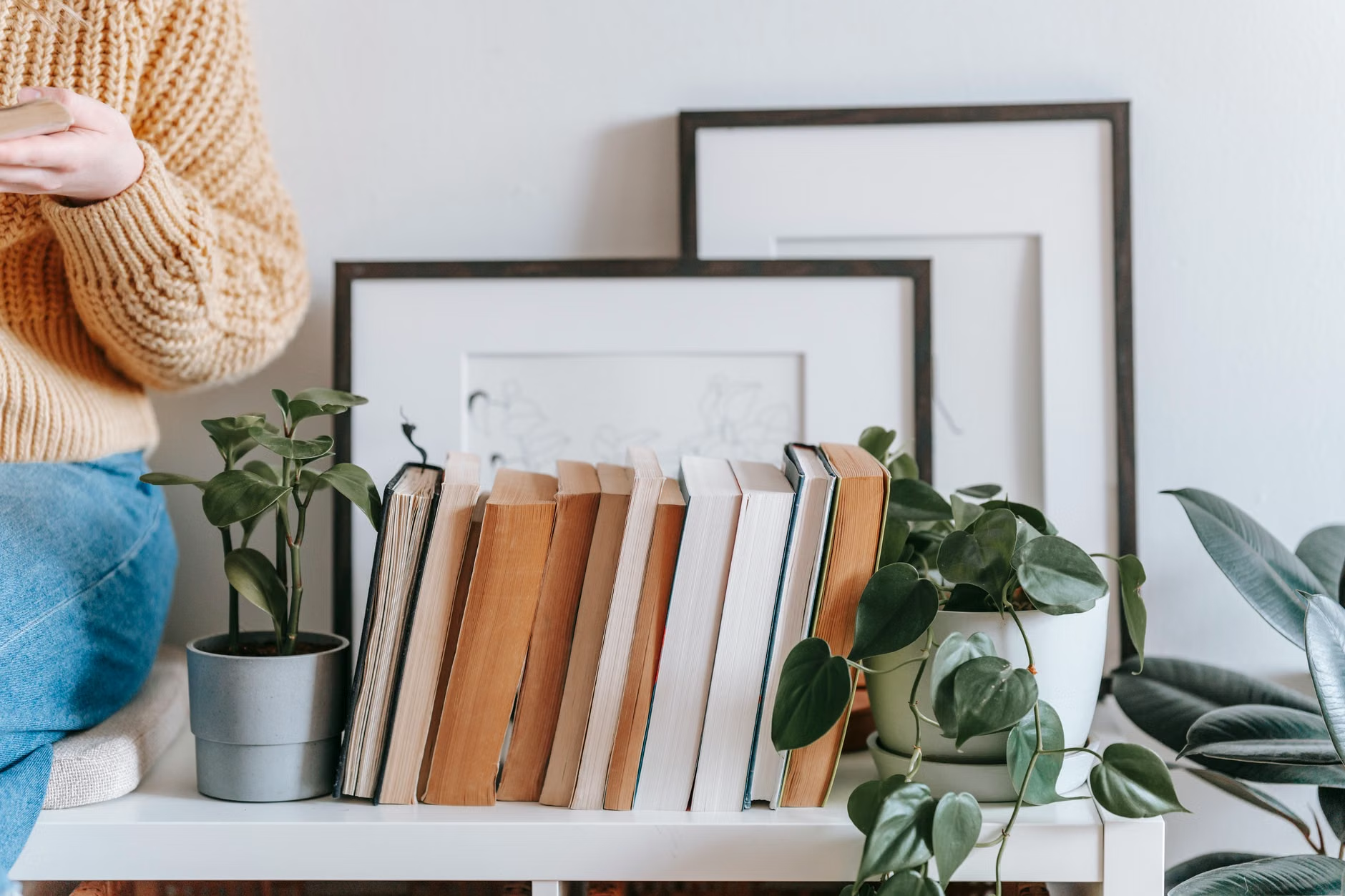
Shelf plant layout is one of the best decor hacks out there, offering height, layered looks, and that curated aesthetic that comes with “indoor jungle” styling.
The problem is, corkscrew plant stress is also the shelfplant’s best friend—the hero of many nightmare plant stories. On shelves, plants are particularly susceptible to slow light starvation—the most glaring symptom being when plants stay green for months while growth is being compromised slowly but surely. And pests show up seemingly from nowhere. Internodes get stretched out, leaves grow smaller. This happens to many of us, and no, it’s not your plant.
Beyond creating corkscrew plants, shelf grow layouts also aren’t particularly forgiving for plants or plant parents, happy plants can become cuckoo and all in that time it takes to grow straight—yes, straight—up towards their light.
This article is a self-audit of sorts; I’m going to reveal what might be going wrong, how to confirm grower suspicion without testing a lot of “what if” theories, and what the fix is to get your green buddies back into grow mode– start by not abandoning your shelf growing concept. “S.p.” means “self-pollinator” aka shelf plant.
5 “plant shelf mistakes” that quietly kill growth
1) Self-shading (top shelf winners, bottom shelf strugglers)
The shelf above is basically a little roof. Even if your room has decent window light, the lower tiers often receive a fraction of it. Over time, you’ll see classic “not enough light” symptoms: slow growth and leggy spacing. “No growth or leggy growth” is explicitly noted as a common sign of insufficient light in Washington State University Master Gardener materials. (s3.wp.wsu.edu).
2) Your shelf is simply too far from the window (or too low)
A common shelf layout is: shelf against an interior wall, window across the room. That’s a plant display, not a growing area. Even within the same room, light intensity is affected by a variety of factors—curtains, insect screening, season, weather, and even how clean your windows are! (extension.umd.edu) Some Master Gardener guidance suggests treating about 6 feet from a window as a practical maximum distance for many houseplants (without supplemental lighting). (s3.wp.wsu.edu)
3) “Decor watering”: trapped runoff in saucers and cachepots
Plant shelves love cover pots. Unfortunately, cover pots love hiding problems. When extra water sits in a saucer or cachepot, the potting mix can stay saturated and displace oxygen—leading to root deterioration while the plant may still look thirsty or wilted. UConn Extension specifically warns that excess water remaining in saucers or cachepots can keep media saturated and contribute to root death/deterioration. (publications.extension.uconn.edu)
4) Stagnant air + crowded leaves
A packed shelf looks lush, but crowded foliage dries slowly, stays damp longer after misting or spills, and creates “still air” pockets. That can increase the odds of fungal issues and makes pest outbreaks harder to notice early. UC IPM notes that houseplant decline is commonly linked to adverse environmental conditions like low light or low humidity, along with poor sanitation and root diseases. (ipm.ucanr.edu)
5) Overwatering-friendly conditions = fungus gnat party
If your shelf stays on the moist side (because it’s cool, shaded, and runoff is trapped), you may start seeing fungus gnats. Colorado State University Extension lets us know that fungus gnat larvae live within potting soil and may consume root hair, which can lead to less healthy plants; watering no more often than necessary so a few inches of soil at the top shrinks enough to dry out between waterings helps a lot. (extension.colostate.edu).
This isn’t magic, it’s physics. Light from a point-like source follows an inverse-square relationship: double the distance and the intensity drops to about one-quarter. (en.wikipedia.org).
Shelf audit: a 15-minute plant shelf check (where, what)
- Map the shelf: note the location of each, Top-Left, Middle-Right, etc. You’re looking for clues, “the bottom plant looks sickly” (#4) or, “all the bottom plants struggle.”
- Measure light at leaf level: use a basic lux meter, or a phone app, to measure. You’re looking for a rough comparison. Measure both the front and back of each shelf. If possible, once in the morning and once in the afternoon. (The comparison is more important than the number.)
- Note distance + obstructions: how far from the window is it? Facing which direction? What filters the sun (sheers, blinds, insect screens, etc). All of that likely lessens the intensity. (extension.umd.edu).
- Observe if your plant aches under its own weight: if the top shelf blocks a straight(ish) path to the window, assume that shelf beneath is on low-light mode unless you add a light.
- Take note of drainage: Does every pot have a drainage hole? Water it well, let it drain, and dump the saucer/cachepot in about an hour. (Follow all directions on instructions for the form in which plants arrive and you give them.) (Jones, H. publications.extension.uconn.edu).
- Note if the soil acted hydrophobic: pouring water not getting absorbed, and running down the sides, into the bottom of the saucer? The mix may be drawn away if too dry and you are just wetting the downy air. Soak your pots in a bowl of water for ten minutes and turn upside down to shake and help remove excess. (publications.extension.uconn.edu). Check for crowding and airflow: if the leaves overlap and nothing moves when touched, space plants out or add a gentle air movement of some sort.
- Scan for pests weekly: especially look the undersides of leaves, stems, and the soil surface for pests. If you see fungus gnats reduce moisture at the surface. (CSU Extension). (extension.colostate.edu)
Fixes that keep the shelf look, but restore growth
Fix 1: Treat each shelf like a different “light zone”
Stop organizing by aesthetics first. Organize by light. Put your highest light tolerant plants on the brightest tier (usually top/front/closest to the window) and your true lowlight tolerant plants lower/back—then verify with a light reading at leaf level.
- Top shelf (brightest): lots of plants that get “leggy” fast if light is low (many vining aroids, begonias, succulents).
- Middle shelf: “medium light” houseplants that are used to that light level, and grow steadily, but do not demand a sunbeam.
- Bottom shelf (dimmest): ONLY plants you are comfortable “maintaining” (surviving) as opposed to pushing new rapid growth- unless you actually add a grow light.
Fix 2: Add under-shelf lights (single biggest upgrade)
If you want a multi-tier shelf for plants (not just for the “look”) then usually each tier needs its own light source, or the lower tiers are living off leftovers.
- Choose a light that fits the shelf depth, typically bar/strip lights are easier to install than a single bulb (they spread light across the whole tier as opposed to the tank top).
- Lights should be mounted towards the front edge of each shelf, not the back, or the leaves will be shaded from the shelf frame.
- Time the lights so they’re consistent. (WSU Master Gardener materials say that plants need a period in the dark over a 24-hour cycle—don’t run lights 24/7.) (s3.wp.wsu.edu)
- Re-measure after—you’re not just guessing, local knowledge should confirm this basement shelf is not a low-light zone anymore.
Fix 3: Make your watering shelf-proof (drain, then ditch)
The mystery in “shelf decline” is mostly the combo of water + low light. At darker spots, plants pull from their reservoir slowly, so if you keep watering the same habit as you do on your bright windowsill, it can add up to chronic overwatering on a shelf.
- Water by need, not by calendar: check your mix an inch down (UConn Extension recommends checking rather than watering by schedule). (publications.extension.uconn.edu)
- Water well enough: my old friend UConn Extension says apply enough water so there’s some pitcher drain out the bottom of the pot. (publications.extension.uconn.edu)
- Let her drain in the sink or tub, or in a tray you can haul out of sight, to prevent backflow. Easy, right?
- Dump the saucer/cachepot in short order (UConn Extension recommends about an hour to keep roots from sitting in the waterlogged mess you made). (publications.extension.uconn.edu)
- If you bottom-water, periodically top-water to flush the salts (WSU Master Gardener materials warn bottom watering tends to encourage salt build up). (s3.wp.wsu.edu)
Fix 4: Use reflection strategically (small gains that add up)
While reflection won’t replace a grow light, it can noticeably improve a shelf that’s already closest to a window. University of Maryland Extension notes that ambient light can be increased by reflective, light-colored surfaces in the room. (extension.umd.edu)
- Put the shelf near a light-colored wall (or add a more light backdrop).
- If safe and stable, a mirror or reflective panel behind the plants will bounce window light forward (University of Kentucky notes reflected light as a way to increase intensity). (rs.uky.edu)
- Clean leaves and windows: Dusty leaves and a dirty glass reduce the light that actually gets used (UKY mentions keeping leaves free of dust and grime). (rs.uky.edu)
Fix 5: Stop crowding—leave “air gaps” on every tier
A good-looking shelf often has plants touching. A good-growing one usually doesn’t. Give each pot a little space so light reaches more leaf surface and the mix has a chance to dry more evenly. You’ll also notice pests earlier—important because decline is often multi-factored. (UC IPM includes poor sanitation, adverse conditions, and pests among common contributors). (ipm.ucanr.edu)
Symptom → Shelf cause → Fix (quick diagnosis table)
| What you see | Most likely shelf-related cause | What to do this week |
|---|---|---|
| New growth is smaller; long gaps between leaves (leggy) | Light too low or uneven across tiers (self-shading) | Move to brighter tier/closer to window; add under-shelf light; rotate plants weekly |
| Yellowing leaves + soil stays wet for a long time | Overwatering made worse by low light; trapped runoff in cachepot | Drain fully; empty saucers; water only when mix is dry at ~1 inch down |
| Wilting but soil is wet; musty smell | Low oxygen in saturated media (roots struggling) | Stop standing water; consider repotting into fresh, better-aerated mix if roots are damaged |
| Water runs straight through and doesn’t wet the mix | Mix became hydrophobic from drying too far | Soak pot until bubbles stop; then drain well (and adjust routine) |
| Tiny flies around pots; plants look weak | Fungus gnats supported by constantly moist soil | Let surface dry between waterings; use sticky traps; reduce moisture (CSU Extension approach) |
| One side grows; plant leans hard | Light coming from one direction only | Rotate regularly (WSU Master Gardener materials advise turning plants for even growth) |
Two shelf setups that work (choose your path)
To win the houseplant care game, there are many adjustments to consider. Depending on the level of work you want to put into it, here are two different ways to go about it!
- Option A: Minimal-change “window shelf” setup
- Push the shelf closer so the brightest tier gets as close as possible to the window as your room allows (even a foot or two matters).
- Shift the neediest plants up top/front.
- Change out the bottom shelf plants for true low-light-tolerant plants, or accept it as a “display tier” whose plants are mostly on slow grow.
- Water in sink, bath—all in, and return plants only for final draining; dumping any hidden water (UConn Extension). (publications.extension.uconn.edu)
- Option B: High-performance “each tier grows” setup
- Have an under shelf light for every tier, not just the top!
- Use a timer and a consistent day/night cycle (not light 24/7!). (s3.wp.wsu.edu)
- Space the plants apart enough that they do not stack leaves on each other, and treat the shelf tiers as separate zones (and thus change the watering frequency accordingly, dimmer tiers usually need less).
Common mistakes to avoid (feel “helpful” but just backfire if you do them, ugh)
- Mist rather than fix light: If the plant is light starved, vigorous watering to improve humidity is secondary (mist stands still in air is often worse at risk for further leaf spots).
- Water “a little” instead of to dripping: Watering very light also encourages poor root shoots (UConn Extension). (publications.extension.uconn.edu)
- Assume one schedule fits all: A single plant can need different watering frequencies, for example, on different tier shelves (due to light you can factor in temperature too).
- Keeping plants in decorative pots with no drainage: it’s one of the easiest ways to create chronic saturation and root decline.