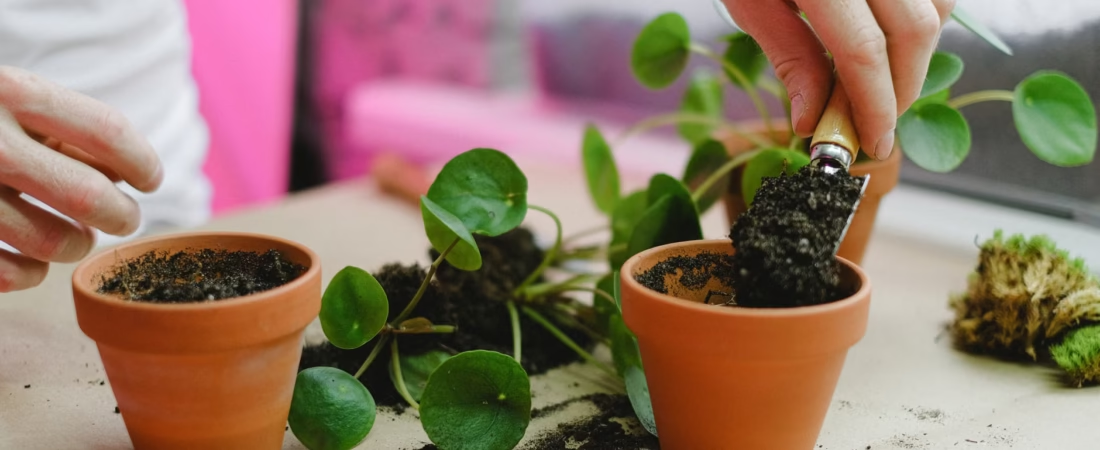
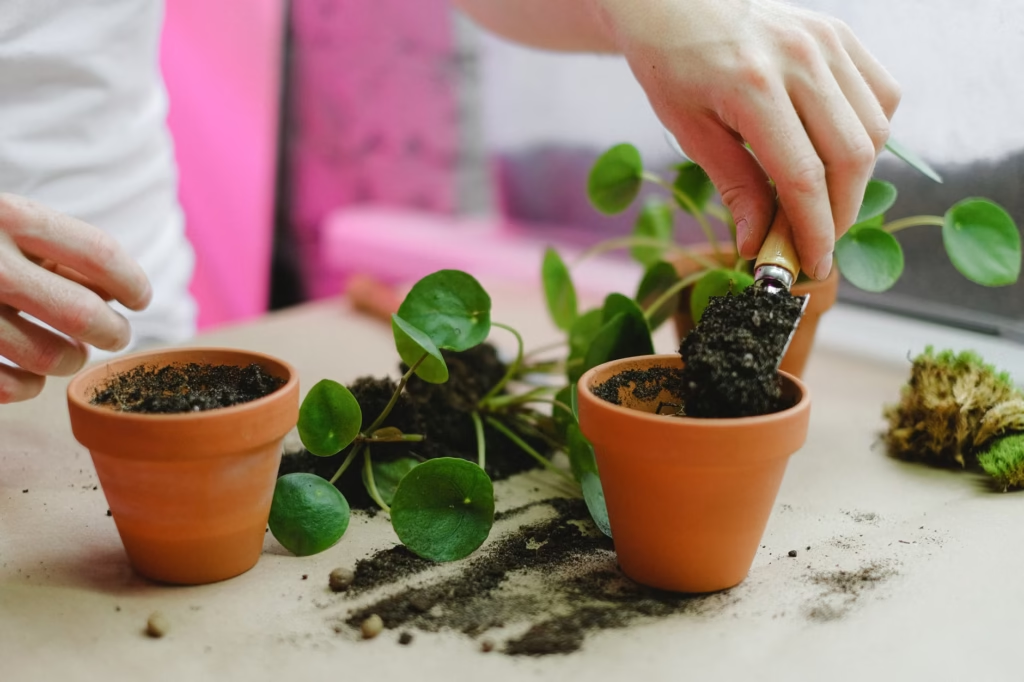
The expensive houseplant mistake is rarely the plant itself. It’s the well-intended repot into a container that looks “future-proof.” Indoors, that bigger pot often becomes a reservoir of unused wet mix around a small root ball. University extension guidance is consistent on the basic problem: when the container is much larger than the roots, the growing medium stays wet longer, oxygen drops, and poor growth or root rot becomes more likely. For most indoor plants, the safer default is to move up only one pot size, usually about 1 to 2 inches wider. (extension.illinois.edu)
This is something that will be important when you shop for your plants or pots. People often make the mistake of thinking that they can buy an oversized pot for their houseplant and be done with it. They think that they only have to be frugal about buying a nice planter, and that is it. But unfortunately, most of the time, it actually costs them more in the end since they need to repot more than once with rescue repots and replacement soil. The good side of this is that pot size is really easy to use.
Why a too-large pot stays wet longer
A houseplant does not use water evenly throughout the whole container. It mainly draws water from the root zone it already occupies. When you place a small root system into a much larger volume of mix, you create a wide ring, and often a deeper layer, of medium the plant cannot use quickly. Virginia Tech notes that larger containers store greater volumes of water and may need less frequent watering; that becomes a problem when the container is too large for the plant and the root zone stays too wet. Lower light, cooler rooms, and winter slowdown can stretch that drying time even more. (pubs.ext.vt.edu)
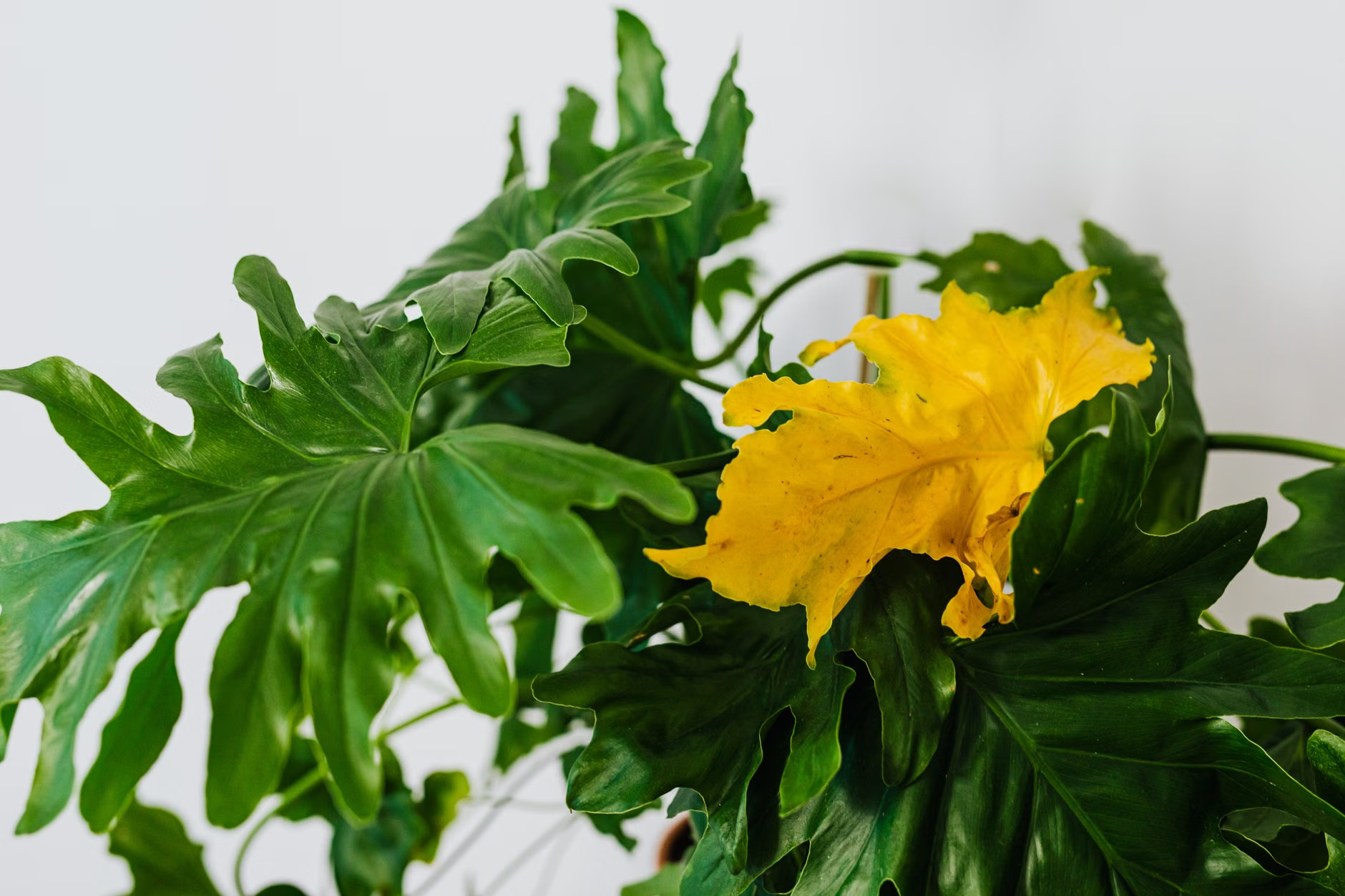
The symptoms can be misleading. Overwatered plants often wilt, yellow, stall out, or drop leaves because excess water reduces oxygen around the roots. That’s why watering on a fixed schedule is a poor system indoors. UConn recommends checking moisture about an inch below the surface instead of watering by the calendar, and Maryland suggests using pot weight or a dowel in larger containers to judge deeper moisture. (extension.umd.edu)
Use the Wet-Zone Gap Scorecard before you repot
Here’s something useful that can help you make smart purchases of house plants: the Wet-Zone Gap Scorecard. This tool will help you detect apparent quality of your plants at the store that usually results in waterlogged plants at home. You can quantify the risk: the more points you score, the more chances the plant may remain wet for a long time after its repotting.
| Factor | 0 points | 1 point | 2+ points |
|---|---|---|---|
| Width jump | Up to 1 inch wider | About 2 inches wider | More than 2 inches wider for a typical houseplant |
| Depth jump | Same depth or slightly deeper | 1 to 2 inches deeper | More than 2 inches deeper under the root ball |
| Drainage | Several open holes; saucer emptied | One small hole or inconsistent draining | No drainage hole or water often sits in the cachepot |
| Potting mix | Airy mix matched to plant type | Standard indoor mix | Dense mix, heavy “potting soil,” or compacted old mix |
| Drying conditions | Bright light, active growth | Average room conditions | Low light, winter slowdown, cool room, or recovering plant |
How to read the score: 0 to 3 points is usually a manageable repot. A score of 4 to 6 deserves caution. At 7 or more, the setup is probably relying on luck. For most foliage houseplants, the easiest improvement is usually reducing the size jump so the next pot is only one size up, about 1 to 2 inches wider. Also remember that depth matters. A pot that is only slightly wider but much deeper can still create a large wet zone below the roots. (extension.illinois.edu)
A realistic money example: the “buy once” shortcut
Say you buy a healthy pothos for $22 in a 6-inch nursery pot. At the store, you skip the modest 7- or 8-inch grow pot and buy a 10-inch glazed ceramic planter for $30 because you want something that looks finished. You also use about $12 worth of fresh mix and amendments. Your total outlay is now $64.
Three weeks later, the top surface looks dry, so you water again. But the lower mix is still damp, the roots are still small, and the plant starts yellowing. Now you buy a smaller insert pot for $7 and more mix for $8, or you replace the plant entirely. The attempted shortcut has turned into a $79 to $94 lesson. A cheaper plan from the start would have been a correctly sized grow pot inside the decorative planter, which also makes future watering and drainage much easier to manage.
How large the next pot should be
| Plant situation | Safer next move | Usually avoid | Why |
|---|---|---|---|
| Typical pothos, philodendron, peace lily, or dracaena | Go 1 to 2 inches wider | Jumping 3 or more inches wider | Keeps the wet ring around the root ball small |
| Fast grower that is clearly root-bound | Often 2 inches wider is enough | Very deep upgrade with poor drainage | The plant needs room, but it still needs a dry-back cycle |
| Succulent, cactus, snake plant, ZZ plant | Small size increase or same size with fresh mix | Oversized glazed pot | These plants generally use water more slowly indoors |
| Moisture-loving fern or calathea | 1 to 2 inches wider in a setup you can monitor closely | Huge pot on the assumption that it “likes moisture” | Moisture-loving is not the same as stagnant-roots loving |
| You want a large decorative floor planter | Keep the plant in a smaller liner pot inside it | Planting directly into a hole-less outer pot | The inner pot protects root health while the outer pot handles the look |
One important nuance: the usual 1- to 2-inch rule is a default, not a law of nature. A vigorous, heavily root-bound plant may tolerate a little more room. A slow grower in low light usually will not. Pot material matters too. Terracotta loses moisture through the pot walls, while plastic and glazed ceramic retain it longer. That means a pot that is merely a little too big in glazed ceramic can behave worse than the same size jump in terracotta. (extension.uconn.edu)
Do not put gravel or rocks in the bottom of the actual grow pot to compensate for bad sizing. Extension guidance says that does not improve drainage the way most people expect and can keep the saturated zone higher. If you want to use a decorative outer planter, keep the plant in an inner pot with drainage and empty any collected water. (extension.illinois.edu)
A repotting sequence that reduces the wet-soil risk
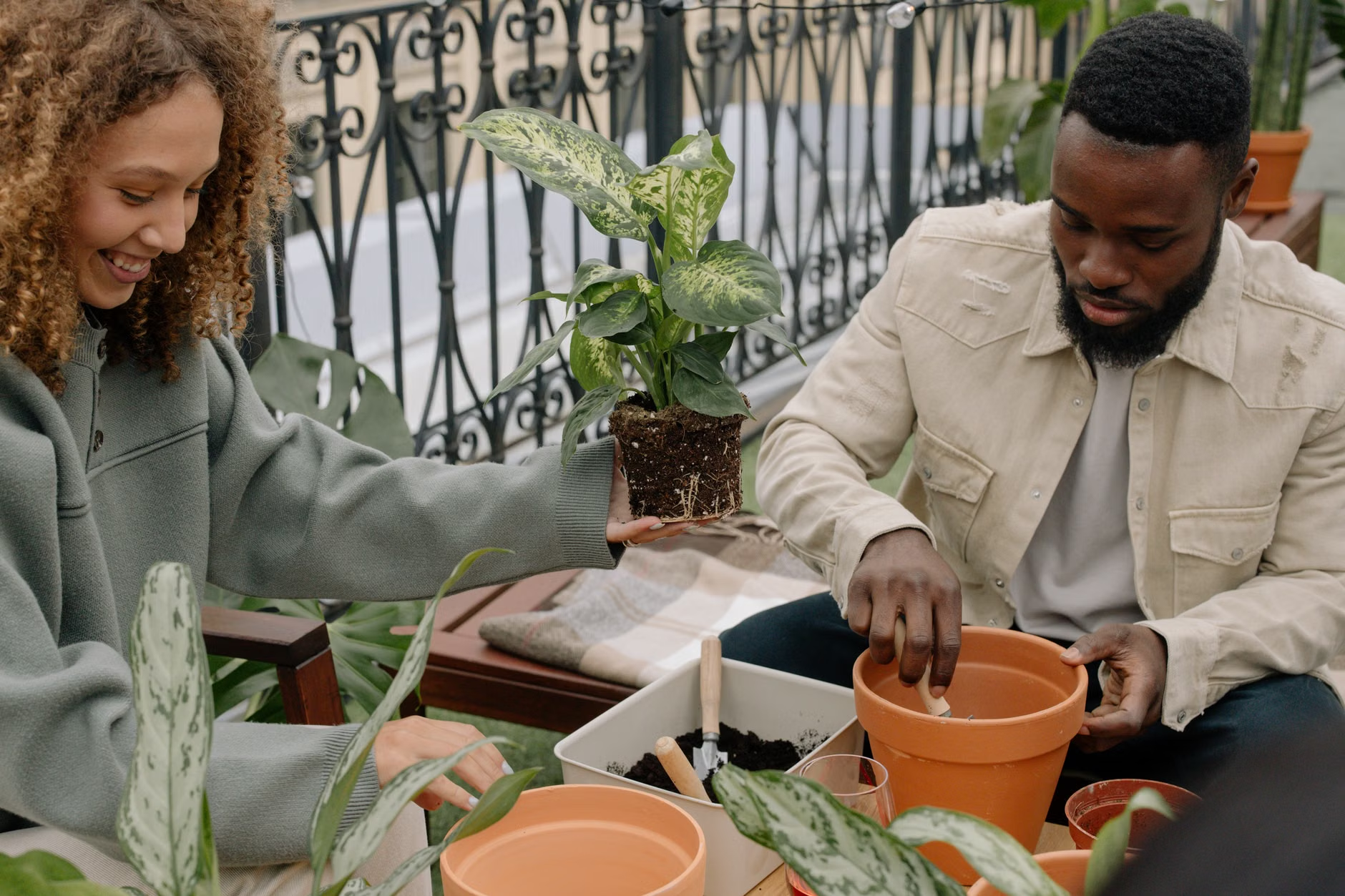
- Remove the plant from its current pot and look at the actual root ball, not the leaf spread. Measure the root mass or the current pot before you shop.
- Choose the next container only one size up for most houseplants, usually 1 to 2 inches wider, and avoid a major depth increase unless the roots truly need it. (extension.illinois.edu)
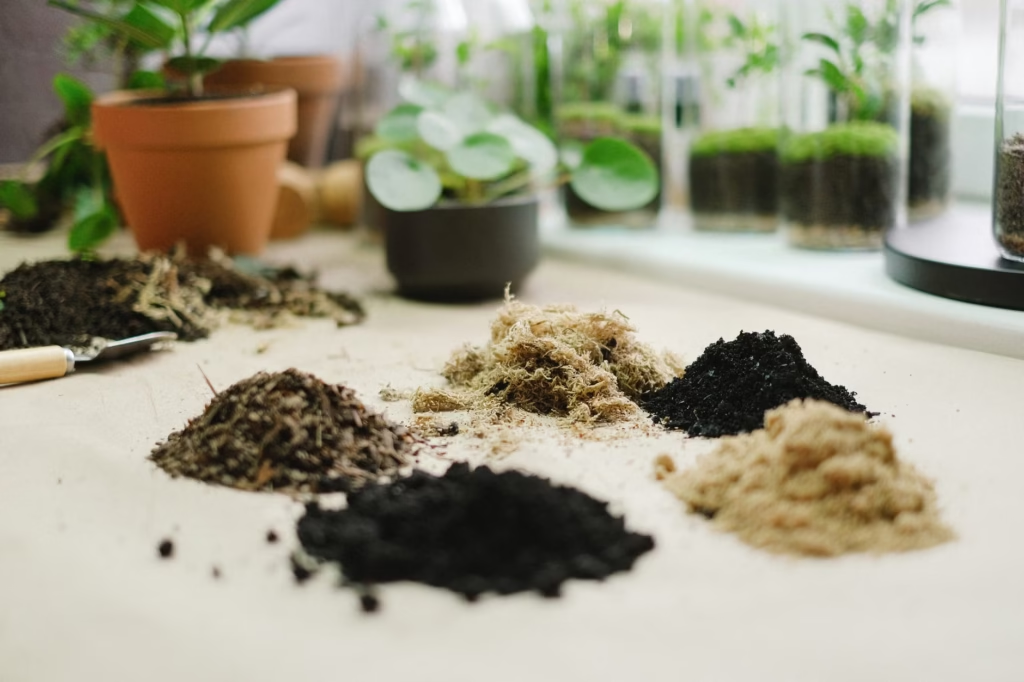
- Use a potting mix that matches the plant and has enough air space. Maryland advises against dense products sold simply as “potting soil” because they can reduce aeration. (extension.umd.edu)
- Repot at roughly the same planting depth. Do not bury stems or crowns deeper just to fill a tall container.
- Water thoroughly after repotting so the root ball and surrounding mix are evenly hydrated, then let excess water drain out fully. (pubs.ext.vt.edu)
- Empty the saucer or cachepot after watering instead of letting the plant sit in collected water. UConn suggests emptying it within about an hour, and Virginia Tech says not to leave container plants sitting in water for more than 60 minutes. (extension.uconn.edu)
- Before watering again, check below the surface. Use a finger test for small pots and pot weight or a dowel for larger ones. (extension.uconn.edu)
When the standard fix is not enough
Sometimes the pot size is wrong, but it isn’t the only problem. Dense mix, blocked drainage holes, low winter light, or a plant that has already lost roots can make even a decent pot size behave badly. Overwatered plants may wilt, yellow, stall, smell sour, or develop mushy stems and leaves because roots are deprived of oxygen for too long. (extension.umd.edu)
- If the plant is healthy but clearly oversized, down-pot sooner rather than later. The goal is to rebalance root mass and potting-mix volume.
- If roots are sparse because of rot or earlier damage, choose a container that fits the remaining healthy roots, not the size the plant used to be. Virginia Tech lists fresh potting soil and pruning dead material among common recovery steps for overwatered plants. (pubs.ext.vt.edu)
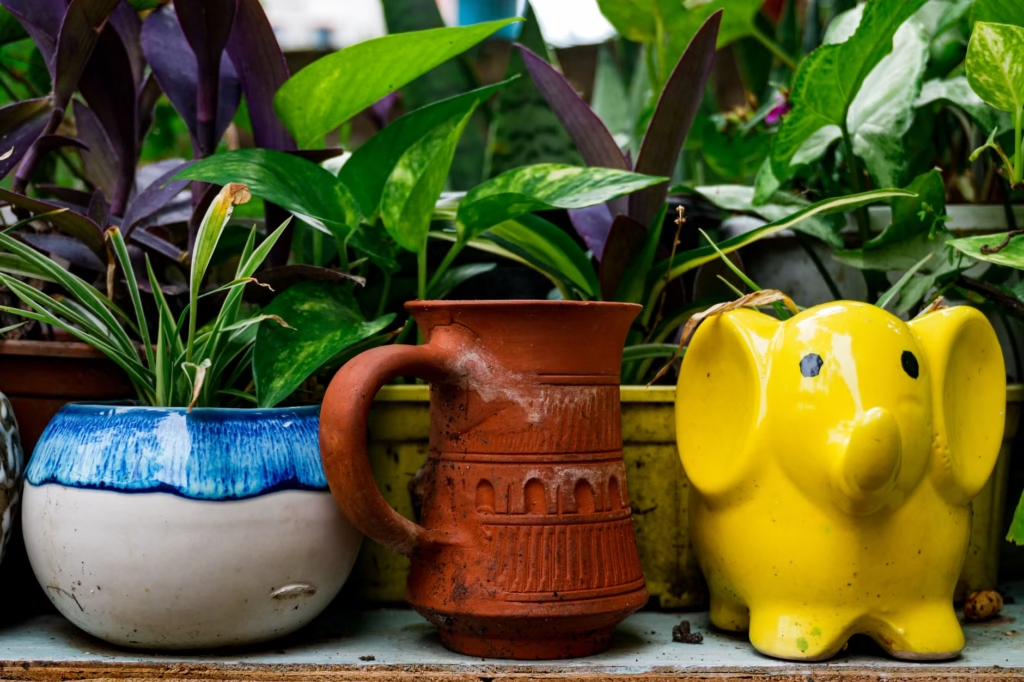
- If you already bought an expensive decorative planter, salvage the purchase by using it as an outer shell for a smaller liner pot. That gives you the look you wanted without forcing the plant to live in a swampy container. (extension.illinois.edu)
- If the mix has dried so hard that water runs down the sides without wetting the root ball, rehydrate slowly from the top or bottom-water for 15 to 30 minutes, then let it drain. (pubs.ext.vt.edu)
- If the crown is soft, the roots are mushy, or the smell is strong, pot size may no longer be the whole problem. At that point, species-specific rescue steps, propagation, or local expert help may be more useful than another routine repot. (pubs.ext.vt.edu)
Common mistakes that make the problem worse
- Buying the pot for the mature plant you imagine later, rather than the root ball you have now.
- Matching pot width but ignoring added depth. A much deeper pot can hold a wet layer below the roots even when the diameter increase looks modest. (pubs.ext.vt.edu)
- Using a hole-less ceramic pot as the actual grow pot. Decorative containers are fine; missing drainage is not. (extension.illinois.edu)
- Adding gravel or rocks to the bottom of the grow pot and assuming that solved the drainage issue. It usually doesn’t. (extension.illinois.edu)
- Watering again because the top half-inch looks dry while the lower root zone is still moist. (extension.uconn.edu)
- Leaving water in the saucer or cachepot after watering. (extension.uconn.edu)
- Using heavy, dense potting material for a plant that needs more air around the roots. (extension.umd.edu)
- Assuming a moisture-loving plant wants constant saturation. Most indoor plants still need some air in the root zone. (extension.umd.edu)
How to verify the advice actually worked
Do not judge a repot by how the plant looks the next morning. Pressure-test it with a dry-back audit over the next 7 to 10 days. You’re trying to confirm that the root zone can move from fully watered to appropriately drier without staying soggy for an unusually long stretch. (pubs.ext.vt.edu)
- Right after watering, lift the pot and memorize the “just watered” weight. Maryland recommends pot weight as a practical moisture clue. (extension.umd.edu)
- Check the top inch of mix and the pot weight daily for the first week instead of watering on autopilot. (extension.uconn.edu)
- On larger containers, insert a wooden dowel into the lower part of the pot. If it comes out damp or discolored, the lower mix is still wet. (extension.umd.edu)
- Watch for improvement in the right order: less droop after watering, steadier moisture rhythm, then new growth over time. Instant growth is not the test.
- If the pot is still staying wet far longer than expected for your room, adjust one variable at a time: a smaller pot, an airier mix, brighter placement, or a different pot material.
- Repeat the audit in winter and summer. Virginia Tech notes that plant growth, light, and watering demand change with the season, so a setup that works in May can be too wet in January. (pubs.ext.vt.edu)
This information is intended for ordinary indoor plants, where factors such as species, room temperature, humidity, light, and potting media can influence drying time. Thus, follow drying guidelines wherever possible, but check actual drying behavior for the particular plant in case they differ from general advice.
The bottom line
If your indoor plants stay wet too long, don’t start by buying more gadgets. Start with the pot. In many cases, the safer, cheaper move is a modest size increase, a real drainage hole, a mix with air space, and a watering routine based on moisture instead of the calendar. That approach is less flashy than a giant statement planter, but it’s much more likely to keep both the roots and your plant budget intact. (extension.illinois.edu)
Frequently Asked Questions
How much bigger should a pot be when repotting an indoor plant?
For most indoor plants, move up about one pot size, usually 1 to 2 inches wider than the current pot or root ball. That’s the standard starting point from multiple extension sources because it limits how much extra wet mix surrounds the roots. (extension.illinois.edu)
Can I keep a houseplant in a decorative pot with no drainage hole?
Yes, but the decorative pot should act as a cachepot, not the grow pot. Keep the plant in an inner plastic or clay pot with drainage, remove it to water if needed, and pour out any water that collects in the outer container. (extension.illinois.edu)
Does terracotta fix an oversized-pot problem?
Not really. Terracotta can help a root zone dry faster because it’s porous, but it does not cancel out a major pot-size mismatch. A badly oversized terracotta pot can still stay wet too long, especially in low light or winter. (extension.uconn.edu)
Should I repot again if I already used a pot that is too big?
If the plant is healthy and the mix is drying at a reasonable pace, you may be able to leave it alone and simply water less often. But if the container stays wet for a long stretch, leaves are yellowing, or the plant sits in a cachepot with trapped water, downsizing is often the cleaner fix. (extension.umd.edu)
Do rocks at the bottom make a big pot safer?
Not in the actual grow pot. Illinois Extension specifically warns that gravel in the bottom of the pot does not improve drainage the way most people assume. The better workaround is an inner grow pot with drainage inside a decorative outer planter. (extension.illinois.edu)
References
- Illinois Extension – Get Started | Houseplants – https://extension.illinois.edu/houseplants/get-started
- UConn Extension – Watering Houseplants – https://extension.uconn.edu/2013/12/24/watering-houseplants/
- Virginia Cooperative Extension – Properly Watering Container Houseplants – https://www.pubs.ext.vt.edu/SPES/spes-804.html
- University of Maryland Extension – Potting and Repotting Indoor Plants – https://www.extension.umd.edu/resource/potting-and-repotting-indoor-plants
- University of Maine Cooperative Extension – Tips for Growing Houseplants in Maine – https://extension.umaine.edu/publications/resource/tips-for-growing-houseplants-in-maine/
- Illinois Extension – Tips for Repotting Houseplants – https://extension.illinois.edu/blogs/good-growing/2018-03-19-tips-repotting-houseplants
- Illinois Extension – Container Drainage Options – https://extension.illinois.edu/container-gardens/container-drainage-options
- Mississippi State University Extension – Care & Selection of Indoor Plants – https://extension.msstate.edu/publications/care-selection-indoor-plants
- Colorado State University PlantTalk – Houseplants: Containers – https://planttalk.colostate.edu/topics/houseplants/1315-houseplants-containers/
- University of Maryland Extension – Overwatered Indoor Plants – https://www.extension.umd.edu/resource/overwatered-indoor-plants