- What’s Causing Your Leaves to Burn So Easily, On South and West Windows?
- Prepare Yourself for One Week Without Any Burning
- 7-Day Acclimation Plan (Works for South or West Windows)
- Sheer Curtain – When to Use One (CLEAR GUIDELINES/Rules)
- How To Use Sheer Curtains Without Creating New Problems
- Common Issues Associated with Repeat Leaf Scorch
- Commonly Asked Questions
Summary
- Fact: South-facing through west-facing ever-beaming sunny windows often cause Leaf Scorch (due to the phases of bright sunny/transitional period) when plants are not adjusted to strong light. Many [bud] leaves will burn; burned leaves present as very [powdery/bluelike] patches but [become] brown & stiff oftentimes with onset of dry soil conditions. (extension.umd.edu)
- If you take a strong, sunny location and do not put some bright, indirect or lighted setting, you will eventually get burned. Leaf Burn typically will develop first on a location that has received very little light exposure previously. If stronger bright sunlight is being used combined with a lack of moisture, then you have significant likelihood for Leaf Burn occurring.
- Gradually transition from bright sun to less bright sun by gradually [moving] plant gradually by: 1) increasing distance to reach light from window: 2) adding time in bright direct; &/or; 3) filtering full bright light by placing a sheer curtain over a bright window; [Sheer curtains must also be used when there is overexposure due to strong direct sun from south/west windows while watching them from inside the home; &/or, all plants entering [or remaining] in very bright window space for the duration of their transition week.]
Characteristics of South, West-Window Leaf Burn & Not Leaf Burn
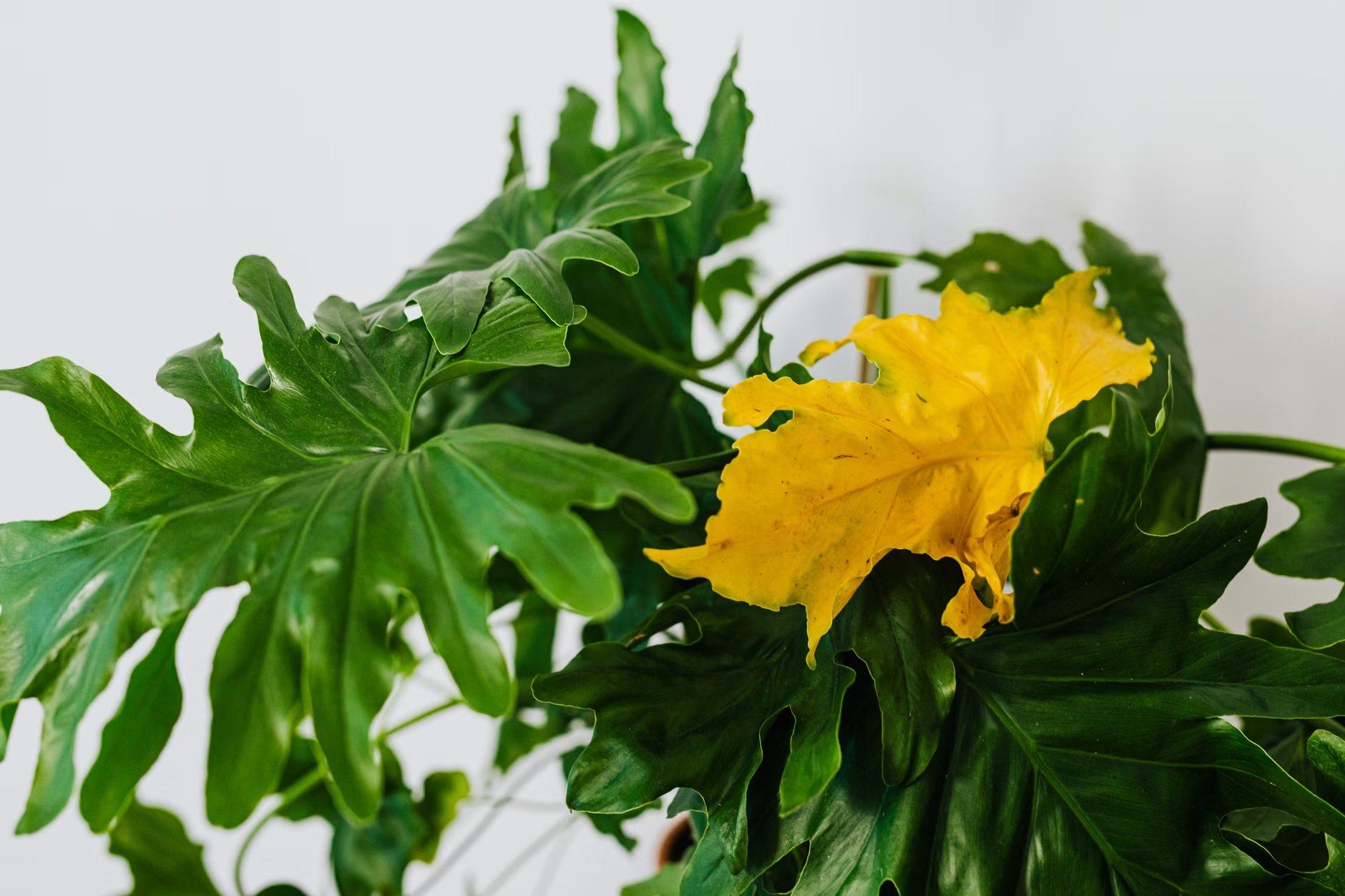
Most people refer to leaf burn resulting from too much light as being either “sunburn” or “leaf scorch.” Examples of symptoms include pale, light-colored, faded, “washed out-looking” leaf patches that turn brown and very, very stiff after they deteriorate further. In most cases, these burned leaf symptoms initially present(s) on the sunniest portion of your plant or plant side.
Signs of Leaf Burn: pale patches originally→dark brown spots at the sun-side…&/but, often occurs on the new side; New Patches w/o Leaf-mask → dark brown; New patches w/o heavy [dust] → less than slightly dry patches (e.g., [soil dry-out]); New patches wet → brown patches after a long time.
If you have: Under-watered
- Wilting/Long dry leaf edges which improve quickly when you have given them enough watering/cooling; However; prolonged sun plus dry soil conditions will likely continue to leaf scorch severely.
- Under-watered: Wilting/dried-out leaf edges plus greater chance there may be a chance of leaf scorch from prolonged sun/dried-out soil.
- Under-watered/cold stress: Damaged plant – cool nights-close windows. Damaged = new cold drafts; Damaging plants next to window-close windows and draughts.
Important point regarding Leaf Area in finished state → New Leaf Area WILL NOT COLOR UP AGAIN. Make sure to plan your recovery to not only generate healthier growth but also to prevent any more burning of the plant’s leaves.
What’s Causing Your Leaves to Burn So Easily, On South and West Windows?
While growing indoors, the intensity of light will vary not only by what direction the window is facing, but also how far the plant is placed away from the window. The brightest location in a home will be by far a south-facing window. Moving your plant a few feet can produce a huge difference in its growth.
West-facing windows are known to experience a lot of afternoon sunlight and heat, which creates ideal growing conditions for burning leaves, especially when those conditions exist during the summer months. Also, in general, the time of day when the sun is the most intense is from about late morning until about mid afternoon.
#1 Catastrophic trigger: A Quick Change to High Light
Plants will acclimate themselves to their growing environment. If you transfer your plants from an environment with little light to an environment with full sun or direct sunlight all of a sudden, you will likely bleach or burn them from the light. Any change in the growth environment should happen gradually.
Prepare Yourself for One Week Without Any Burning
- Pick a goal for the type of light you want your plant to receive from the window, bright direct light; filtered light, using a sheer curtain; or several hours of direct sunlight (only if the plants actually require it). The vast majority of foliage plants will grow well in bright light with no direct sunlight, or have diffused sunlight through a lightweight curtain.
- Avoid letting the plant pot go bone dry before moving it to bright light—scorching the leaves becomes worse when a plant is exposed to hot sunlight and dry soil at the same time.
- Try to limit the time of day you expose your plant to direct sunlight to the early morning sun, which is much easier to work with than the extreme heat experienced in the west at noon and early afternoon.
- Consider how you will “dose” light: You can alter (1) your distance from your window, (2) how much time you are in the direct sun, and/or (3) how much you want to filter the light (e.g., sheer curtain). The amount of light you receive depends on how far away you are from the light source, and filtering can help make direct rays less intense. (extension.umd.edu)
- Make sure that your leaves do not touch the glass: Some plants will suffer when their leaves come in contact with a cold window or when there is a draft causing the leaves to touch the glass (and the plant). (fieldreport.caes.uga.edu)
How to Check Your Light (quick and nerdy): Your eyes are not good enough to determine how much light there is for your plants. To be more scientific about it, you can use a light meter (or phone app) to measure the amount of light and also record how the amount of light changes when you move the plant or add a curtain. (gardeningsolutions.ifas.ufl.edu)
7-Day Acclimation Plan (Works for South or West Windows)
This 7-Day Acclimation Plan follows the same basic process of “hardening off” as previously outlined – Start by exposing the plant to limited amounts of light (days 1-3), then gradually increase the amount of light exposure until you reach the desired amount (days 4-7). If you observe any of the following on your plant, stop increasing the light and allow 2-3 days or go back one day before making any more adjustments: bleaching, washed out areas, or crinkled areas on the leaves. On Day 1 (Baseline), position the plant near the desired window but out of direct sunlight. If direct sunlight is strong at this location, use a sheer curtain during the hours of direct sunlight. You want to achieve ‘daylight with no direct sunlight’ or ‘daylight filtered through a lightweight sheer curtain’ (source:no-source).
Day 2: You will increase the amount of light reaching the plant by one step (ie: move closer to the desired window, add up to 1 hour of gentle direct sunlight either early in the day or late, or use ‘sheer only during the time period of direct sunlight’ if the plant is in the same position on Day 2) (source:no-source).
Day 3: Follow the same principle as Day 2, but use the first sun-facing leaf for monitoring pale/bleached areas (the first signs of scorch) (source:no-source).
Day 4: When all appears to be well, continue to monitor the plant’s light exposure and adjust accordingly. Keeping the soil from becoming too dry prior to exposure to great amounts of sunlight—sun scorching is compounded by having the soil normally dry prior to exposure to large amounts of sunlight (source:no-source). On Day 5: Begin giving your plant some direct sunlight (for as long as its species will tolerate) for an additional hour, but do not give it any of that direct (harsh) sunlight during the most intense part of the day, (from noon – 3 PM), as that would burn it. (extension.umd.edu)
On Day 6: (Reality test) Leave your plant in its intended location (final location) for 24 hours….this means that you will be keeping it where it will be finished with the curtains as planned…If your goal was to use filtered light, this is where you need to be sure it is going to happen. (extension.missouri.edu)
On Day 7: Establish a schedule to maintain it: rotate the container (pot) every week, establish a permanent system using the sheer curtains for high-light exposure/locations (generally south/west)… (extension.missouri.edu)
Sheer Curtain – When to Use One (CLEAR GUIDELINES/Rules)
- You are using a sheer curtain if the plant is in a southwest location and has an extremely high level of very direct sunlight (they tend to scald the leaves of ferns and other shade-loving plants). (extension.unh.edu)
- You are also using sheer curtains during the week of acclimation if the plant has previously been receiving reduced light…the use of filtered light is easier for the plant to adjust to than going direct from filtered light to full direct sunlight.
- If you have a shiny surface that needs to be covered. Use sheer curtains; the mesh will help diffuses and reflect light back towards down below.
- If you have to place a plant in a very bright window, but do not want to let any of the sunlight directly hit the plant or the surrounding area, then use sheer curtains, as many plant care guides recommend keeping your African Violets (and other similar plants) out of direct sunlight, otherwise they may get fried.
- If your only option for preventing your plants from getting burnt/damaged from direct afternoon sun/heat is to cover part of the window’s surface area with sheer material (i.e., shade screen/curtain) then you can do this at least More than the west windows use sheer curtains More often than not when the western windows permit direct sun and heat.
How To Use Sheer Curtains Without Creating New Problems
- Filter Light Only When Necessary: There are many days when you will be able to leave your curtains open in the morning and close them later; however, if you are only filtering out light that hits your plants, you should only close them when you have direct sun hitting your plant(s) leaves.
- Give Your Plant Adequate Airflow And Temperature Differential : Make sure your plant is located at least 2″ from the sheer curtain and not pinned against either the window or curtain due to the risk of thermal damage to the foliage from either the heat or cold due to contact.
- Be Careful At Night During The Winter: If you have a plant placed (either directly or indirectly) on a windowsill be cautious of allowing it to be “trapped” between close curtains and the window. In very cold temperatures, there is a significant amount of cold air that can become trapped between curtains and a window.
- Move the plant out of direct sunlight ASAP, or if keeping it on the window sill then shut the sheer curtain during the hours of direct sun. (extension.missouri.edu)
- Check if the soil is dry and adjust watering accordingly—scorch symptoms are made worse if your plant dries out while receiving strong sunlight. (extension.umd.edu)
- Do not rush to prune the plant—keep partially green leaves on to continue the process of photosynthesis. However, prune the leaves that are all brown/yellow out because they will not recover. (rhs.org.uk)
- Once the plant has been stable for a period of several days (i.e., no new scorch marks) restart acclimation to a steady, low amount of light—specifically to shaded locations. (extension.missouri.edu)
Common Issues Associated with Repeat Leaf Scorch
- Not gradually acclimating a plant to higher levels of light by going directly to direct sunlight after having it in lower light or going directly to a hot west window without gradual acclimation. (extension.missouri.edu)
- Assuming bright means safe: Your eyes adjust to the different intensities of light indoors, therefore your estimation of brightness could be inaccurate—use a light meter if trying to figure out why you have repeatedly trained a plant to grow in bright light and it has still acted differently than expected. (gardeningsolutions.ifas.ufl.edu)
- Allowing the plant to become excessively dry while acclimating to stronger light from the sun—the combination of strong sunshine and excessively dry soil can compound the amount of damage sustained by your plant due to excessive sun. (extension.umd.edu)
- Keeping the plant trapped behind curtains at night on the window sill—this is a different type of damage that may also show some signs of leaf scorch. (rhs.org.uk)