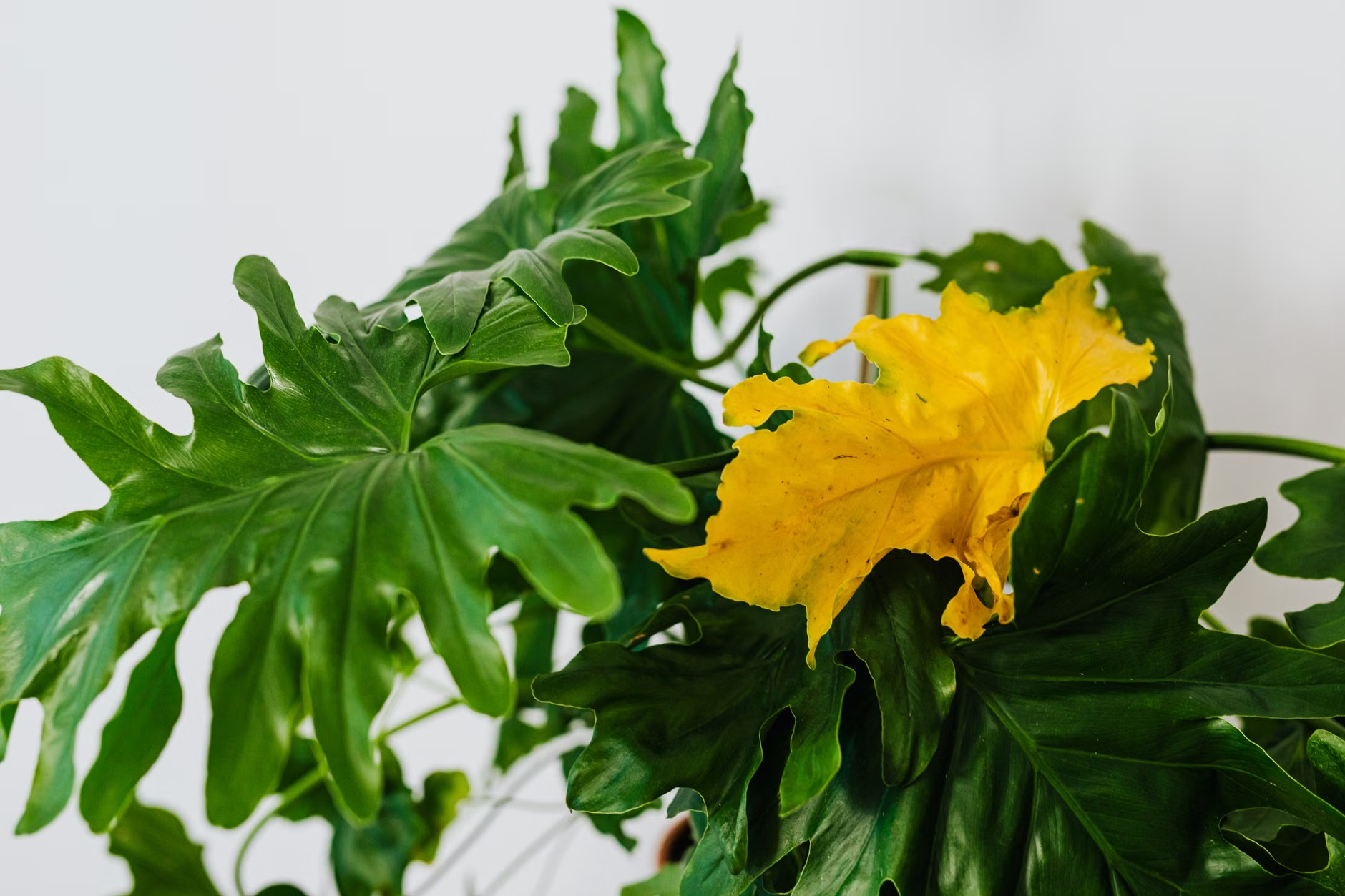
TL;DR Treat this like a containment—can you isolate this plant, check a few next to it, clean up the area? Then before you “spray something,” consider:
Spider mites spread by contact and air currents AND your hands and tools; fungus gnats spread because the wet potting mix is lowkey a breeding site; mealybugs spread via those “crawlers,” and hitchhiking on pots and leaves.
Your biggest wins have to come from a routine you can repeat: physically remove + target treat + re-check on a schedule and NOT just ‘spray something’ or one-and-done.
Stick to label approved products and test a little section of one plant first—soaps, oils, and alcohol can injure foliage when misapplied.
Why these three pests “explode” so quickly indoors
Indoors, a pest gets a huge advantage: stable temperatures, no natural predators, and plant collections grouped close together. Spider mites, fungus gnats, and mealybugs are especially notorious, as each has a nature built-in “spread mechanism” that takes one infested pot and turns it into many.
- Spider mites: Thrive indoors (dry, hide on the underside of leaves, webbing and stippling show up after they’ve already increased in population). Just a quick brushing of leaves, shared watering can, or plants touching move them around.
- Fungus gnats: The adults fly, but the real problem is the larvae breeding in potting mix that is consistently moist. If your watering habits don’t change, you’re just “re-seeding” the problem every few days.
- Mealybugs: They’re arguably the pest on this list that is hardest to kill with casual sprays being they have that waxy coating. Not to mention those young “crawlers” when not controlled, spread off to new crevices and nearby plants before you’re even aware of all the cottony clusters.
Quick check: a 60-second opinion you can repeat weekly
Except for occasional variation, when bugs spread quickly, repetition is your best friend. Approach this same quick inspection the same way, and weekly at the same time(!). You’re looking for patterns (leaf damage, sticky traps, cottony family groups), not perfection!
- The UPSIDE ZONE! Flip over 3-5 of the leaves on the plant. Check along the midrib/veins. (Spider mites love thumbing their noses there!)
- The NEW GROWTH ZONE! Inspect those tight growth tips, especially at the leaf nodes and where the leaf joins the stem (classic mealycoil hide-outs).
- The SOIL LINE ZONE! Look closely at the top of the potting mix and the drainage holes. Adult fungus gnats often shelter on the soil and pot rims.
- A white-paper “tap test” (optional but good!). Tap a leaf over a white piece of paper. Those more than just shadows might be mites.
- Put out and refresh yellow sticky cards near soil level if you’re monitoring fungus gnats (are they trending or trending down? Not what’s on there just today, y’know?).
| Most common clue | Where to look first | What to do immediately | Repeat cadence | |
|---|---|---|---|---|
| Spider mites | Fine stippling/speckling; webbing on undersides in heavier cases | Undersides, leaf veins, warm/dry spots | Isolate; rinse/mist undersides; start a soap/oil plan if confirmed | Re-check every 3–4 days for 2–3 weeks |
| Fungus gnats | Tiny black flies near soil; sticky trap catch; larvae in topsoil | Soil surface and pot rim; under pots/saucers | Stop overwatering; let top layer dry; add sticky traps; consider Bti soil drench | Weekly for 3-4 weeks (plus watering changes) |
| Mealybugs | White cottony clusters; sticky honeydew; weakened new growth | Leaf nodes, joints, under leaf bases; sometimes roots | Isolate; manually remove; dab with 70% (or less) isopropyl alcohol solution | Spot-remove weekly; re-check twice weekly for a month |
Containment first: the 24 hour “stop the spread” protocol
Before you treat, assume you have a small outbreak elsewhere. Your goal in the first day is to stop accidental transfer (hands, tools, runoff, plant to plant contact).
- Quarantine the suspect plant(s): Move to a separate room if possible. At minimum, separate by several feet and prevent leaf to leaf contact.
- Create a “pest only” tool set: One pair of scissors/pruners, one towel, one small brush. Clean after use (soap + water is a good start).
- Remove obvious hotspots: Prune infested leaves/tips and seal them up in a bag before tossing.
- Rinse what you can. For many foliage plants, rinsing thoroughly (especially undersides) knocks mites for a loop and dislodges mealybugs. Avoid soaking those that hate wet foliage or are velvety, and rinse gently, or spot-clean.
- Clean the area: Wipe down shelves/windowsills and wash those saucers. Fungus gnat larvae can persist where that wet debris settles.
Cue out a common mistake: treating only the plant you “see bugs on.” Look around: if one’s infested, all of them within 3–6’ (or within a watering crew) are too, so inspect those immediately.
Targeted treatment plans (what actually works, and why)
Focus on layers, (1) removing them, (2) correcting for the environment, (3) find a product that matches their biology, and (4) repeat on schedule that matches the life cycle. Omitting the repeat schedule is the major reason infestations “come back,” time and again.
Spider mites: dry-air sprinters who hide on the undersides of leaves
They often build up more easily under dry conditions, and if you can see webbing, you probably missed the youngest stage. Focus your effort on the undersides of leaves, where they feed. A daily water spraying/misting to the undersides can help knock them down, and insecticidal soaps/oils can help if they are thoroughly and safely applied.
- Mechanical knockdown: Day 1. Rinse or mist undersides of leaves. If the plant received a stronger spray all over, that can knock off the mites, but for delicate foliage use a gentle shower or a damp microfiber cloth.
- Environmental: Days 1-21. Reduce stress on the plant. Spider mites do better if you allow your plants to get dry and if humidity is low—so try to avoid letting them be chronically dry (but also, don’t neglect watering when needed).
- Product layer (Days 2–21): If those devils are still at it, anyone wondering, spray them twice with insecticidal soap or horticultural oil labeled for houseplants. Spray to coverage on undersides, and repeat every 5-7 days (check the label).
- Recheck: Verify progress every 3–4 days with our white-paper tap test, and if you see any moving specks after two full treatments cycles, check coverage (undersides!) and consider step up your plan.
Fungus gnats: fix the soil moisture, then target larvae
You can’t out-bird the birds: if you’re only killing off adult gnats, you’ll just keep seeing them. That’s because the problem is in the mix: the larvae are developing in your potting mix! For the fastest, most reliable long-term improvement to your fungus gnat woes, change the conditions that are breeding them: allow the top of your mix to dry out a bit, plus remove standing water and slippery organic “slime zones” (a.k.a. wet saucer, decaying leaves sitting in the soil, that sort of thing). And while you monitor and reduce your adults with sticky cards, be sure to fixup your watering pattern. A dilute Bti “drench” targeted for the larvae in the mix, should help with that part.
- Take out the trash (Today): Clear out any standing water (or dumping) in the saucer and decaying plant matter on the soil’s surface.
- Change the watering pattern (This week): Top layer of that potting mix needs to dry out a little before, between, waterings (within the limits of her tolerance). Bottom-water for drier tops.
- Trap and count adults (This week): Set yellow sticky cards about the soil line. Replace when covered with dust/gnats and keep year-over-year counts to verify you’re making forward progress.
- Attack larvae (Weeks 1–4): If applicable for your plants and situation, use a product containing Bacillus thuringiensis subsp. israelensis (Bti) as a soil drench. Consult label directions and repeat as directed (this is not typically a single treatment).
- Confirmation: Sticky trap catches dropping week over week while your watering remains improved? Good thing; you’re on the right track. No drop? Revisit soil moisture levels and look for hidden breeding hotspots (saucers that are constantly wet, a plant sitting in a decorative cachepot and thus also essentially standing in water, etc.).
Mealybugs: waxy defenders—uproot physically, start again
Gliding through tight spots, mealybugs cloak their bodies in wax, making that “one spray” practically useless. The most reliable method for dealing with them, for many owners of houseplants at least, is hands-on annihilation + a follow-up. For small numbers of bugs the most-often recommended tactic, by extension/IPM resources, would be spot pestering with a 70% (or less) alcohol solution (in a drop application, rather than a wash over the whole plant). You can then treat as much of the plant as safely indicated—sensu saturate!—but only if active bugs are present (many mealybugs hide in planters, soil, etc.), of course.
- Uproot (Day 1) Inoculate your plant by plucking off any mealybugs and/or fluffies you can see with a set of dandy tweezers (they’re giving you time to learn how to find and get at them!) or cotton swab. Tackle mealybugs at the leaf joints, then move to the undersides of likely candidates.
- Alcohol on the bug (Day 1, and whenever necessary) Use your cotton swab again, this time doused with a 70% (or less) solution of isopropyl alcohol (common practice: mixing a 70% solution in water). Don’t spray the entire plant with alcohol unless you know your plant can handle it (and if so, test a small hidden area first).
- Option for the follow-up spray (Days 3-21): If you’re still noticing crawlers or hidden clusters, you could use an insecticidal soap or a horticultural oil rated to erradicate mealybugs. Concentrate on the cracks, crevices and nodes as well as the bumpy undersides of the leaves.
- Don’t forget the pot (Week 1): Check at the rim of the pot, and examine your drainage holes and the surface of the soil. Some mealybugs will reside in the roots; if you think you have root mealybugs (white cottony residue in the soil/root zone), then you will want to unpot and treat that area (or toss the plant altogether if there are too many).
- Follow-up: Examine once to twice a week for a month. What you’re aiming for is “no new cottony clusters,” and healthy new growth.
The “7 day reset” plan – (a realistic schedule you can actually do)
This is what to do when you don’t know which pest is guilty or suspect you might have more than one. The goal here is to reduce the population quickly while discovering the diagnosis.
- Day one: Quarantine + prune worst leaves + rinse foliage (as allowed) + set a sticky trap at the soil level.
- Day two: Do a 60 second inspection on all the others nearby, and spot treat any mealybugs (cotton swab method) if present.
- Day 3: Look for watering: do you have a saucer that’s gone dry? Check drainage, and also check that the top layer of that mix is drying appropriately—long enough between waterings to prevent fungus gnats from raising a ruckus (they love soggy, humid spots).
- Day 4: If you’re still seeing mites/mealybugs, spot-test any insecticidal soap or horticultural oil that’s labeled for your critters before fully committing.
- Day 5: Re-inspect the undersides and nodes; physically remove anything you find. Wipe off the shelf surface and rim of each pot.
- As discussed in “Common signs of pests”: Day 7: Count up what you got on that sticky trap (trends are important). Get ready to repeat your treatment cycle based on what you’re still intercepting.
Prevention that’s actually worth your effort (and what’s a waste)
- Quarantine your new plants for at least 2–4 weeks: If you can get yourself in this habit, you prevent a lot of “mystery infestations.” Check-in on the quarantine weekly.
- Avoid chronic “wet soil”: If gnat gnats keep returning, your watering (or drainage) is most often the lever here.
- Don’t let plants grow with dust-covered leaves: Dust-covered leaves make it harder to spot early pest problems, and may cut way down on vigor for specific plants.
- Don’t share dirty tools between plants—especially the ones you’re actively treating an infestation on—that’s kind of gross.
- Don’t routinely “preventative spray” your plants (for most homes): Repeated batters of preventative sprays actually can end up hurting plants, and will not replace how often you inspect. If you do plan to spray and use products preventatively: please stick to products labelled for usage on the intended plant, and try not to spray everything.
When to escalate (or cut your losses)
It’s possible (likely) that the plant-collection-friendly decision is to trash that particular plant—especially if it’s cheap, heavily affected, and could jam up everybody else.
- If: you continue to find live pests after following up 2–3 full treatment cycles with good coverage and consistent re-checks.
- Discard if: the plant is heavily infested in the crown/roots and difficult to quarantine, or it keeps re-infesting neighboring plants.
- Call in the pros if: you have a big indoor collection, a greenhouse setup, and/or a high value plant where biological controls or professional-grade miticides/insecticides are indicated (and safely used).
FAQ
Can I have more than one pest at the same time?
Yes. It’s pretty common to see fungus gnats in parts of consistently moist soil while also having mites or mealybugs on foliage. Again, especially true with stressed plants. So containment + inspection is the way to go.
So fungus gnats? My plant is doomed, right?
No. Fungus gnats indicate a soil moisture issue and decaying organic matter in the potting mix. Fix your watering/drainage and get those fungus gnats larvae and your problem is done.
Is rubbing alcohol okay on all houseplants?
No. Tons of resources are like “use rubbing alcohol for the mealybugs just dab them and you’re good!” Spot test a small area and only use on your whole damn plant if you’ve tested that it plants works for you!
Why do spider mites keep returning?
Usually (1) because they haven’t treated the underside of leaves thoroughly, (2) haven’t bent the bending leaves to repeat treatment and (3) other plants haven’t been inspected and quarantined. Mites can almost persist until “ready” for another population to appear.
The quickest way to tell I’m winning?
Evidence, less live pests found when inspecting and/or plant new growth is taking off, and re: fungus gnats, less weekly adults on sticky traps.