TL;DR
- Stop buying plants for the label photo. Buy for your exact light level (tested where the plant is going to live).
- No drainage and it’s a guessing game for how to keep this plant alive. Choose something with a drainage hole (or double pot in a decorative cachepot).
- Watering schedule? You’re going to get them killed. Water when its soil is actually dry enough to need it—then go nuts with the water and then let it drain thoroughly.
- For most apartment plant murderers, it’s not a black thumb—it’s a light + drainage + overwatering combo issue that kills their plant babies.
- Got pets? Make sure each plant you want to bring home and into contact with them isn’t toxic by name.
If you live in an apartment, there’s a good chance you’ve done this before: you buy the cute plant, put it somewhere “bright” and all goes well until—slowly—it starts to become a sad stick (while you’re Googling “why the leaves turning yellow” at 11:47 p.m. in the dead of night).
The truth is that apartment plants die for one reason (and it’s not because you’re bad at plants): most people just buy randomly, rather than matching to the one element that is hardest to change indoors—light. Everything else (potting, watering routine, soil, humidity) can be molded around that best plant-for-the-spot.
Here’s the good news—you now have a system you can use over and again so that you can find a living, thriving plant for your apartment, and a way to troubleshoot without having to change it over to 47 different conflicting methods of care.
It saves you money, and your sanity. The apartment plant rule: match the plant to the spot (not the vibe). And as a rule, you cannot negotiate with physics. A plant that needs a lot of light will gently decline across the room from the window—even if your eyes think the room is “pretty bright.” Your eyes get used to it; your plants don’t.
So the “rule” is simple: decide where the plant will live first, measure the light there, then buy a plant that fits. Not the other way around.
Measure your light in 10 minutes (don’t guess)
Plant tags are fond of vague phrases like “bright, indirect light.” Indoors, those words can mean anything from “this plant will thrive” to “this plant will slowly starve.” Measuring light is faster than replacing dead plants.
- Pick the exact spot where the plant will sit (not the window itself).
- Measure light at mid-day in that spot. If you can, check once on a sunny day and once on an overcast day.
- Use a light meter if you have a dedicated app. If not, a phone light-meter app is usually good enough to sort your space into “low / medium / high.”
- Write the number down in your notes app as “Living room shelf: ~150 foot-candles at noon.” (this is your plant-shopping cheat sheet)
| Light you actually have | Approx. foot-candles (ftc) | What it looks like in real apartments | What to buy (examples) |
|---|---|---|---|
| Very low | 25–100 | Far from windows; mostly ceiling lights; corners that feel fine to humans | Tough low-light foliage plants (choose for tolerance, not fast growth) |
| Low to medium | 100–200 | Near a window but no sun hits leaves; north windows; shaded rooms | Many “easy” leafy plants that tolerate lower light |
| Medium | 200–500 | A well-lit room with natural light; bright areas near windows without harsh sun | Most popular tropical houseplants do best here |
| High | 500–1,000 | Near an east/west window; may get soft sun or very bright ambient light | Plants that need strong light to stay compact and colorful |
| Direct sun | 1,000+ | Right at an unshaded south/southwest window with hours of sun | Cacti, many succulents, some herbs (often with a grow light assist) |
Step 2: choose plants based on your “care personality” (not influencer hype)
Once you know your light, the next biggest success factor is whether the plant matches how you naturally care for things. Be honest with yourself about which one you are:
- The Under-Waterer: You forget. “Choose plants that prefer to dry out a bit between being watered,” Pedro says.
- The Over-Waterer: You love to “check on it.” “Choose plants (and pots) that tolerate consistently light moisture,” Pedro suggests.
- The Traveler: You disappear for 5-10 days. “Choose drought-tolerant plants, or set up a simple self-watering array—still with drainage,” says Pedro.
- The Maximalist: You want a plant corner! Group plants with similar light and watering needs so you’re not running five different care routines in one shelf. “Mixing incompatible needs is the No. 1 reason indoor plant groupings fail,” says Pedro.
Starter plant picks (by apartment reality) here are some realistic categories because “best plant” kind of depends on your light, your watering habits, and whether your home includes pets and/or kids. Use these as a shortlist at the store, and then verify the exact species/cultivar on the plant tag. Name your spot, the table below can help identify likely candidates:
| If your spot is… | Look for plants marketed as… | Why they tend to work in apartments | Common buying mistake to avoid |
|---|---|---|---|
| Very low / low (25–200 ftc) | Low-light tolerant foliage plants | They can keep leaves with less light (just have to accept slower growth) | Expecting super-fast growth, or strong variegation, in a dark corner |
| Medium (200–500 ftc) | “Bright indirect” / medium light tropicals | This is the sweet spot for many common houseplants | Putting them across the room and calling it “bright” |
| High (500–1,000 ftc) | High light / sun tolerant indoor plants | They stay compact, colorful and less ‘leggy’ | Not acclimating them when you move them to a bright window |
| Direct sun (1,000+ ftc) | Cacti, succulents, sun lovers | They can actually use strong sun through glass | Keeping them too far back then over watering to “help” |
Step 3: pots and soil—the boring stuff that decides whether it lives
In pots, the #1 silent killer in apartments is water that can’t leave. Hard to believe, right? If your container doesn’t drain, you can do everything else “right” and still be left with horrible root rot.
Your pot must have a way to drain.
Best option: a nursery pot or planter with drainage holes + a saucer
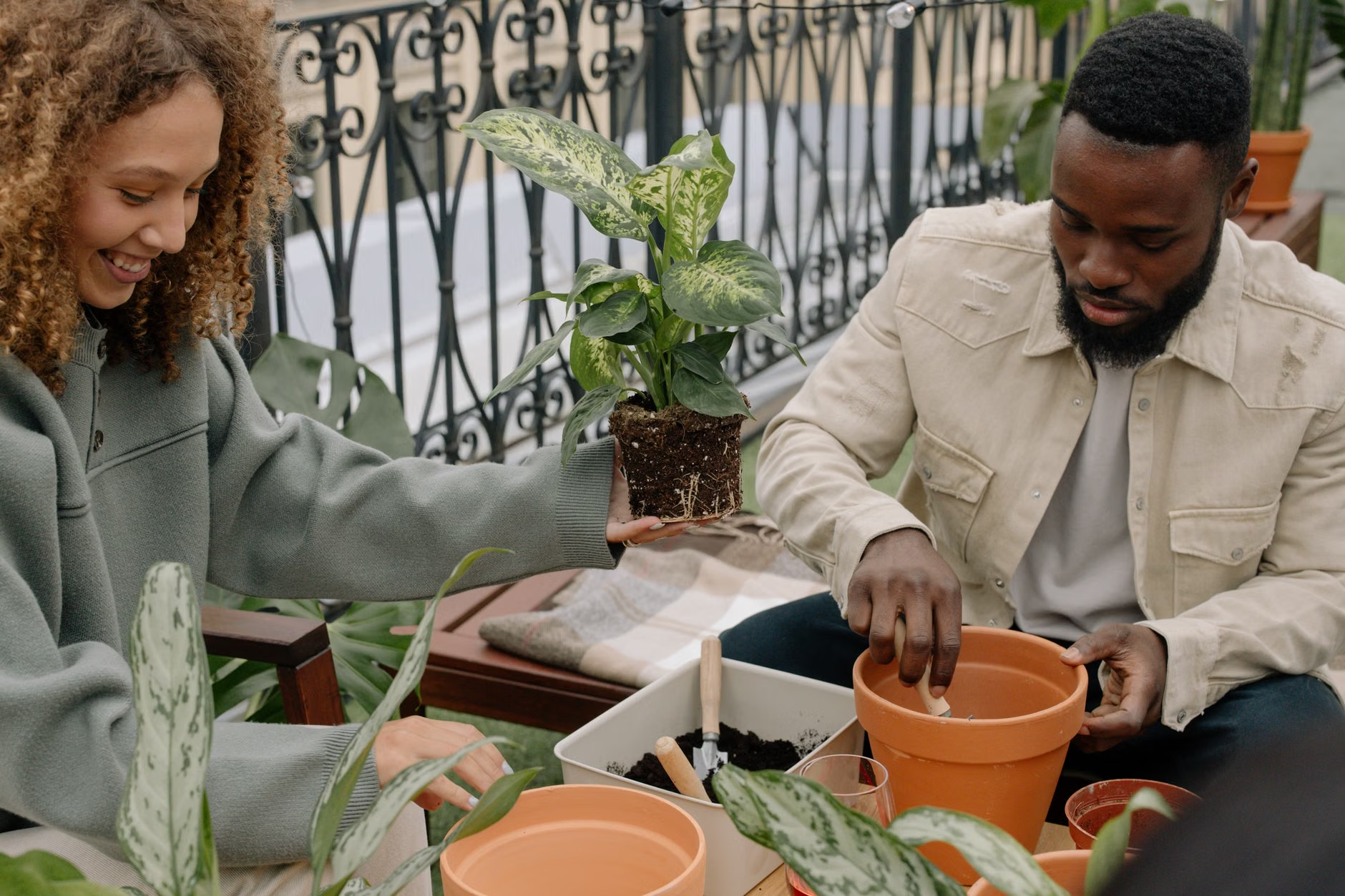
Even if you love your decorative pots and they have no holes for drainage, you can simply “double pot,” keeping your plant in the plastic pot with holes and sitting that inside of the decorative pot, watering at the sink so the plant can drain to its hearts content then returning it. No more “rocks in the bottom” this and that. YOU DO YOU but that’s not going to help drainage. All of that just takes up root space and makes it harder to quickly see water issues.
Use a potting mix made for containers (not outdoor soil)
Your apartment plants are used to soilless/container mixes that will dry quickly and are lightweight. Outdoor garden soil? Too heavy, turns into bricks in pots and will bring all of the nasty pest and disease baggage indoors. 1. If you go with a bagged mix, for most leafy houseplants, go with a quality indoor potting mix and adjust as needed-why would you make your own mix (and mess)? Well, if your plant can use more air around roots, then add shredded bark or perlite or something to break it up, for instance. Same with succulent/cacti mixes-use a fast draining succulent mix (or amend a standard mix) and it will dry out faster. Hint: don’t repot into a pot that is dramatically larger than the root ball. It is a lot easier to get the watering right with a pot that is slightly larger than the previous pot, it won’t take forever to dry out.
Step 4: watering without killing it (a routine you can repeat)
If you want the one sentence that saves the most plants: don’t water by the calendar. Water by the soil.
- Check moisture before you water. Feel the top couple inches of soil (or more for larger pots).
- Cross-check with the pot-weight test: lift it. Light = likely dry. Heavy = still moist.
- When it’s time to water, water thoroughly until water runs out of the drainage holes.
- Let it drain completely. Empty the saucer/cachepot so the plant isn’t sitting in water.
- Then leave it alone until it’s dry enough again. Your goal is a healthy wet-to-drier cycle, not constant dampness.
| What you see | Common apartment cause | What to do next (practical fix) |
|---|---|---|
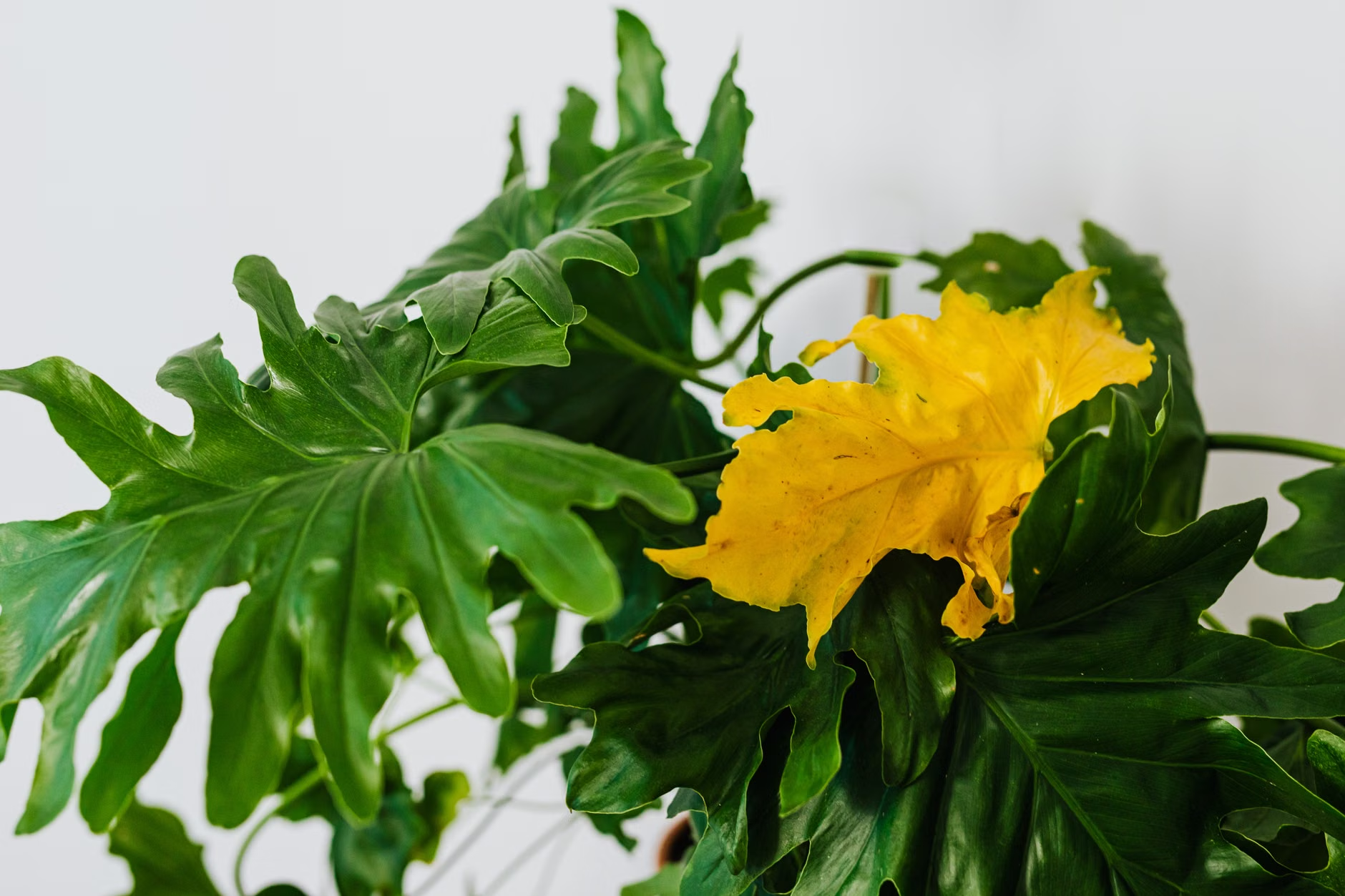
| Yellowing leaves + slow decline | Overwatering and/or poor drainage; low light can make wet soil stay too wet too long | Wait on watering; confirm good drainage holes; move closer to light; maybe re-pot in fresh airier mix if soil is staying wet for days at a time |
| Leggy, stretched growth | Not enough light | Move closer to window or add a grow light; move pot every week so plant grows evenly, not just towards window |
| Brown leaf tips. | Low humidity, salt buildup, inconsistent watering, or too much sun/heat through the glass of a window | Check nearby drafts and vents for stray gust; increase the humidity around plant; feed and flush soil, make sure plant isn’t getting baked by too much hot sun behind glass |
| Mushy stems, bad smell in the soil | Roots stay too wet; risk of root rot | Stopping watering for a time; remove from pot and inspect roots; cut if they started to go; re-pot into fresh mix and a pot that drains; increase light and air flow |
Step 5: apartment microclimates (vents, drafts, humidity)
Apartments have weird weather: heat blasting from the heater vents, drafty windows at night, not to mention the dry air of forced heat (and all that fun indoor air). Your overall room might feel comfortable, but the spot where your plant is sleeping might not be safe or happy. Don’t let the plants go too close to “hot/cold lanes!”
- Don’t park plants anywhere too close to a heater/AC vent, or against a drafty window.
- Encourage steadier humidity. Most houseplants thrive better in moderate humidity; very dry conditions can show as crispy tips.
- Quick and simple humidity boosts that won’t make soil soggy: run a little humidifier nearby, group your plants closely together, use a pebble/gravel tray under a full pot with the pot above the water line (not sitting in standing water).
Step 6: new-plant quarantine (yes, even from nice stores)
Most indoor plant pests and diseases hitch rides home from nurseries and big box shops. Quarantine is how you keep your plants safe and your mind calm.
- Quarantine new plants for 10–14 days in a separate room (or several feet away from your plant collection).
- Inspect the recto and verso of leaves and stems and surface of the soil every few days.
- If you see pests, early is better: most soft-bodied pests can be washed/firmly wiped down and followed up with a couple of checks to reduce.
- Only after two hearty weeks will that plant be considered “graduated” into your other plants area.
The “stop random plant buying” shopping checklist before you insert it in your basket.
- Do I know it ftc/lux number for the spot at home?
- Does that tag/description match that light number?
- Drainage, or I remove pot and double pot it?
- Pests: underside of the leaves, at stem joints to leave soil, and on the surface?
- Will it look stable in the pot when I leave?
- If I have pets: have I checked the plant name in a reputable toxicity database?
A realistic plan: start with 3 plants and earn your way to 20
If you want an apartment full of plants, the fastest route is not buying more plants. It’s getting a few plants stable first—so you’re not constantly triaging problems.
- Choose one plant that matches your lowest-light spot.
- Choose one plant that matches your best natural-light spot.
- Choose one “medium” plant for the spot you walk past every day (so you actually notice changes).
- Track watering dates briefly (notes app is fine). You’re looking for patterns: how long does your soil stay wet, and how quickly does the plant use water in your home?
- After 30 days of stability, add one more plant—using the same light-matching process.
FAQ
Q: Can I keep a houseplant in a pot with no drainage holes?
A: You can, but it turns watering into guesswork because excess water can’t escape. Safer: “Double potting.” Keep your plant in a plastic pot with drainage holes and put that inside a decorative pot without holes. At watering time, take it over to the sink: let it drain and put it back.
Q: What’s your idea of “bright, indirect light”?
A: It’s a loose phrase, and some people make mistaken assumptions about it indoors. One practical remedy is to measure light where the plant lives. Many indoor guides use a system of foot-candles (ftc) to define low/medium/high light, so they can avoid guessing.
Q: Why is my plant wilting when the soil is wet? I should water more?
A: No. Wilting with wet soil can be a sign of root damage, or actual root rot (roots are unable to transport water to the leaves). Skip watering, and make sure the drainage and air circulation is as good as you can do. If the wilting continues, check the roots.
Q: Do I need a humidifier for my apartment plants?
A: Not usually, but very dry indoor air can make some plants’ lives miserable in the winter, resulting in crispy brown tips or bud drop. If you have this issue, and you know you are doing a good job with light + drainage + watering (and so on), consider a small humidifier.
Q: Can I grow my plants under artificial light in my apartment?
A: Absolutely—provided you have an appropriate light source and enough duration. Some people use grow lights in addition to their natural light, seasonally or year round.
Q: How do I keep my other plants safe from pests on a new arrival?
A: Quarantine for approximately 10–14 days, inspecting a lot (especially the undersides of the leaves), and don’t damage your main plant area with any plants that demonstrate pest or disease issues.