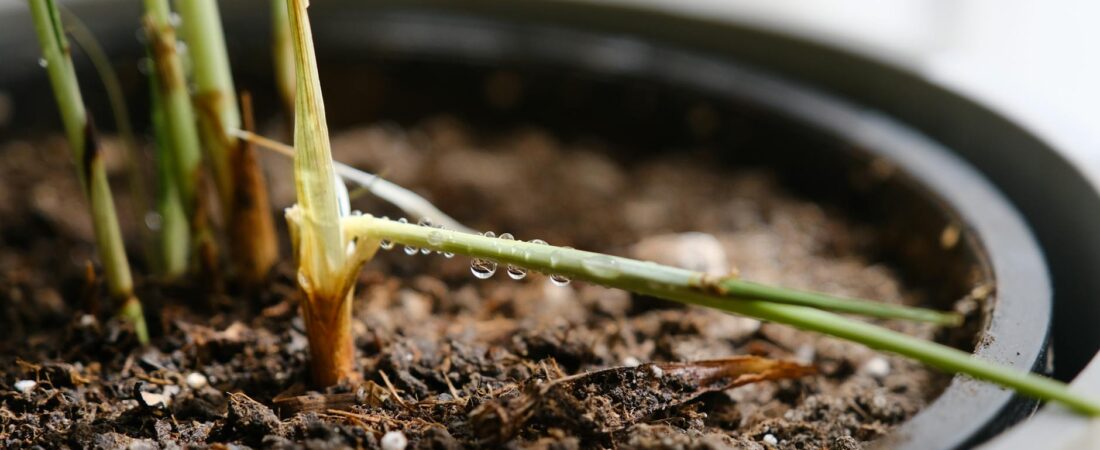
- Check the soil about 2 inches down and lift the pot before you water. A wilted plant with dry soil and a light pot is usually thirsty; a wilted plant with wet soil is often dealing with poor drainage or root stress. (extension.umd.edu)
- Yellow lower leaves, a sour smell, fungus gnats, and water sitting in a saucer or outer pot point more toward drainage trouble than simple thirst. (extension.umd.edu)
- Water thoroughly until excess drains out, then empty the saucer. Do not water on a calendar; pot size, pot material, light, humidity, and plant type all change the interval. (extension.umd.edu)
- Skip gravel at the bottom of the pot. If the mix stays wet too long, use a pot with drainage holes and a fresh, airy mix instead. (extension.illinois.edu)
Most droopy houseplants are not asking for more water; they are asking for a better diagnosis. That matters if you are trying to avoid replacing a $25 to $60 plant, buying gadgets you do not need, or turning one yellow leaf into a much bigger problem. The frustrating part is that thirst and waterlogged roots can look similar from across the room. Wilting, yellowing, leaf drop, and slow growth can show up on both sides. The most reliable way to tell the difference is to read the soil, the pot weight, and the drainage path together. (extension.umd.edu)
This guide is mainly for indoor plants grown in containers. Succulents, cacti, orchids, and bog plants can need very different moisture levels, so treat this as a general framework, not a species-by-species rulebook.
Use the DRY-DRAIN Scorecard before you water
Here is a simple triage tool for everyday plant problems. It is designed to answer one question: is this plant short on water, or short on oxygen at the roots? Use it before watering and again after the next full watering cycle. It combines the finger test, the lift test, leaf clues, and a drainage check, because any single signal can mislead you. (extension.umd.edu)
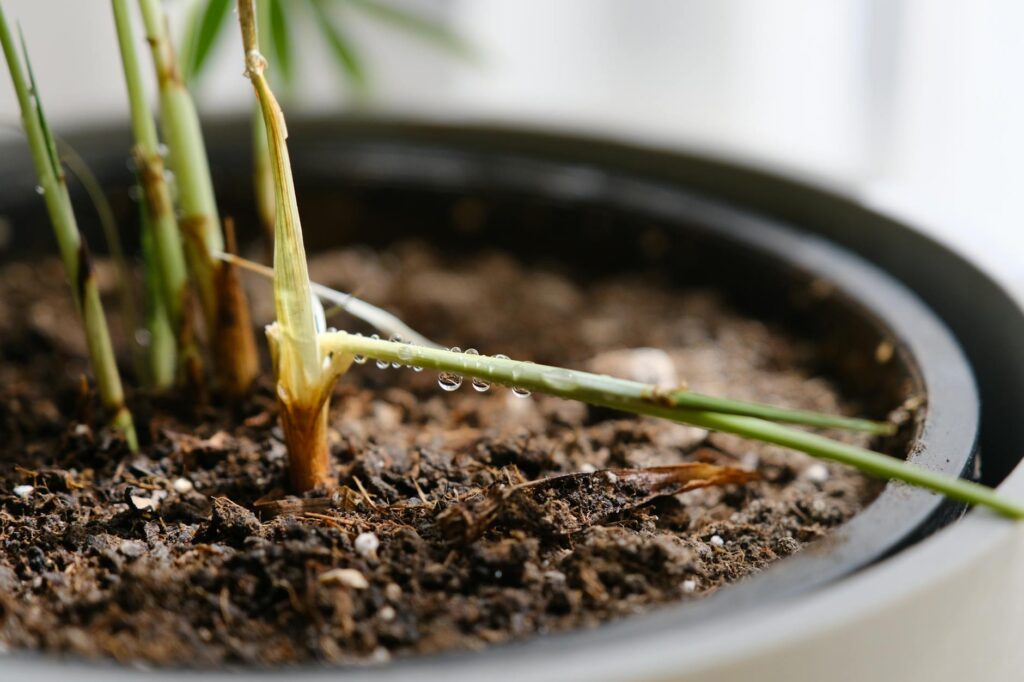
- DRY point: The top 2 inches of the potting mix are dry, not just the surface crust. (extension.umd.edu)
- DRY point: The pot feels noticeably lighter than it did right after a proper watering. (extension.umd.edu)
- DRY point: The soil has shrunk from the sides of the pot or has become hard to rewet evenly. (extension.umd.edu)
- DRY point: Leaves are limp while the soil is dry, often with some crisping or curling at the edges. (extension.umd.edu)
- DRAIN point: The soil is still moist at 2 inches, and the pot still feels heavy, even though the plant looks wilted. (extension.umn.edu)
- DRAIN point: The pot has no drainage hole, a blocked hole, or runoff sits in a saucer, foil wrap, or decorative outer pot. (extension.illinois.edu)
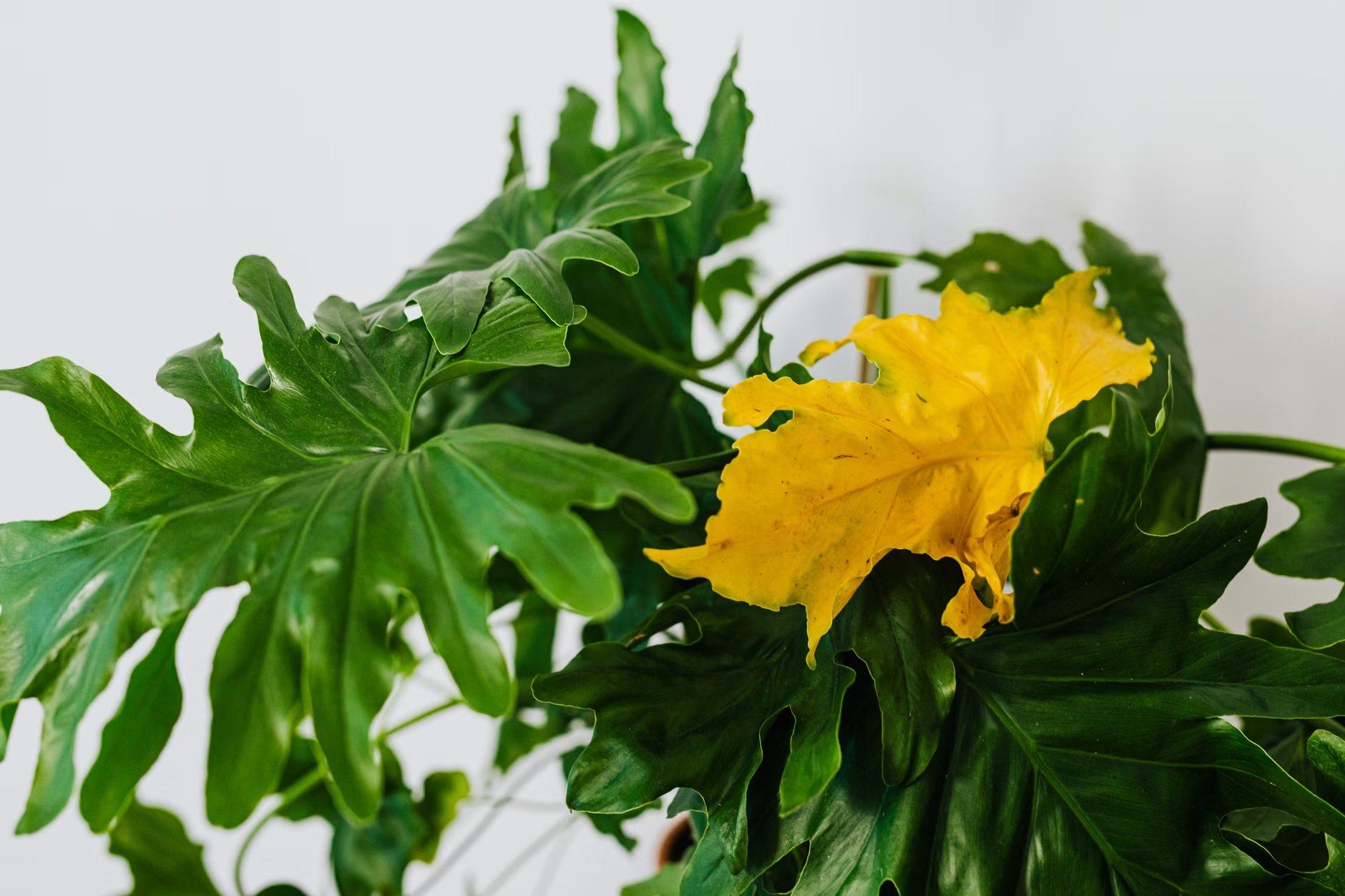
- DRAIN point: Lower or inner leaves are yellowing or dropping while the soil stays wet. (extension.umd.edu)
- DRAIN point: You notice a sour smell, fungus gnats, algae, soft stem tissue, or dark mushy roots. (extension.umd.edu)
Score it honestly. If Dry leads by 2 or more, the plant probably needs water. If Drain leads by 2 or more, fix the drainage setup or reduce watering frequency before you add more water. If the score is close, assume the problem may be mixed or may not be water at all. The usual tie-breakers are root-bound growth, low light, salt buildup, or pests. (hgic.clemson.edu)
A quick decision table for common plant symptoms
| What you see | What to check next | More likely issue | Best next move |
|---|---|---|---|
| Wilted leaves; soil dry 2 inches down; pot feels light | Confirm the mix is dry below the surface, not just dusty on top | Needs water | Water slowly until excess drains out, then empty the saucer or outer pot. (extension.umd.edu) |
| Wilted leaves; soil still moist; lower leaves yellow | Lift the pot and check for trapped runoff | Poor drainage or too-frequent watering | Stop calendar watering and let the root zone drain fully before you reassess. (extension.umd.edu) |
| Soil pulled away from pot sides; water rushes down the edges | Look for a dry core or shrunken peat mix | Dry root ball or mix that is hard to rewet | Water in stages or bottom-water once so the whole root ball rewets. (extension.umd.edu) |
| Fungus gnats, algae, or a stale smell at the soil line | Check whether the saucer or cachepot keeps water under the plant | Soil is staying wet too long | Dump trapped water and consider a pot with better drainage or a looser mix. (extension.umd.edu) |
| Water runs straight through every time; roots show at the surface or holes; plant wilts fast again | Look for roots circling the pot or filling the soil mass | Root-bound, not simply thirsty | Repot or refresh the mix; if you size up, go only 1 to 2 inches wider for most houseplants. (extension.illinois.edu) |
| White crust on soil or pot rim; brown leaf tips | Check fertilizer habit and water source | Salt buildup is mimicking a watering problem | Flush thoroughly with clear water or repot into fresh mix. (extension.umd.edu) |
Example: the $34 pothos that looked thirsty
A realistic example makes this easier. Say you have a $34 pothos in a 7-inch nursery pot slipped inside a ceramic cachepot. You water it every Sunday with about 1.5 cups because that is what your reminder says. By Wednesday, the vines droop, so you add another cup. Two lower leaves turn yellow. The plant looks thirsty, but your scorecard says otherwise: the soil is still damp 2 inches down, the pot is heavy, and when you lift the nursery pot out, there is about half an inch of water sitting in the outer pot.
That is a drainage problem dressed up as thirst. The cheapest good fix is not a moisture meter. It is draining the trapped water, watering the plant in the sink so runoff can escape fully, and switching to a real drainage setup if the current one keeps holding water. If the mix is dense, refreshing it with a basic houseplant mix plus perlite may cost around $20 to $26 total, which is still less than replacing the plant and repeating the same routine. (extension.illinois.edu)
If the plant truly needs water
- Take the plant to the sink or tub if possible so you can water thoroughly without guessing.
- Water from the top until water runs out of the bottom. If the mix has pulled away from the pot, pause and water again, or bottom-water once so the root ball can rehydrate evenly. (extension.umd.edu)
- Let it drain completely. Dump any water left in the saucer or decorative pot before you put the plant back. (extension.umd.edu)
- Lift the pot right after watering. That heavier feel becomes your baseline for the next dry-down cycle. (extension.umd.edu)
- Do not schedule the next watering by day of week. Recheck soil depth and pot weight because light, humidity, pot material, pot size, and season all change how fast a plant dries. (extension.illinois.edu)
If drainage is the real problem
- Pause the watering can. A wilted plant in wet soil is often telling you the roots cannot breathe, not that it needs another drink. (extension.umn.edu)
- Inspect the full drainage path: pot hole, nursery pot, saucer, foil wrap, and decorative outer pot. Trapped runoff matters. (extension.illinois.edu)
- If the plant lives in a decorative pot, keep it in an inner liner pot and water it in the sink. Let it drain fully before sliding it back into the cover pot. (extension.illinois.edu)
- If the mix stays dense, slick, or soggy for too long, repot into fresh, well-drained houseplant mix. Skip rocks or gravel at the bottom; that does not fix saturated soil above. (extension.illinois.edu)
- If the plant is root-bound, move up modestly, usually 1 to 2 inches wider. Oversizing can keep soil wet too long and create a new drainage problem. (extension.illinois.edu)
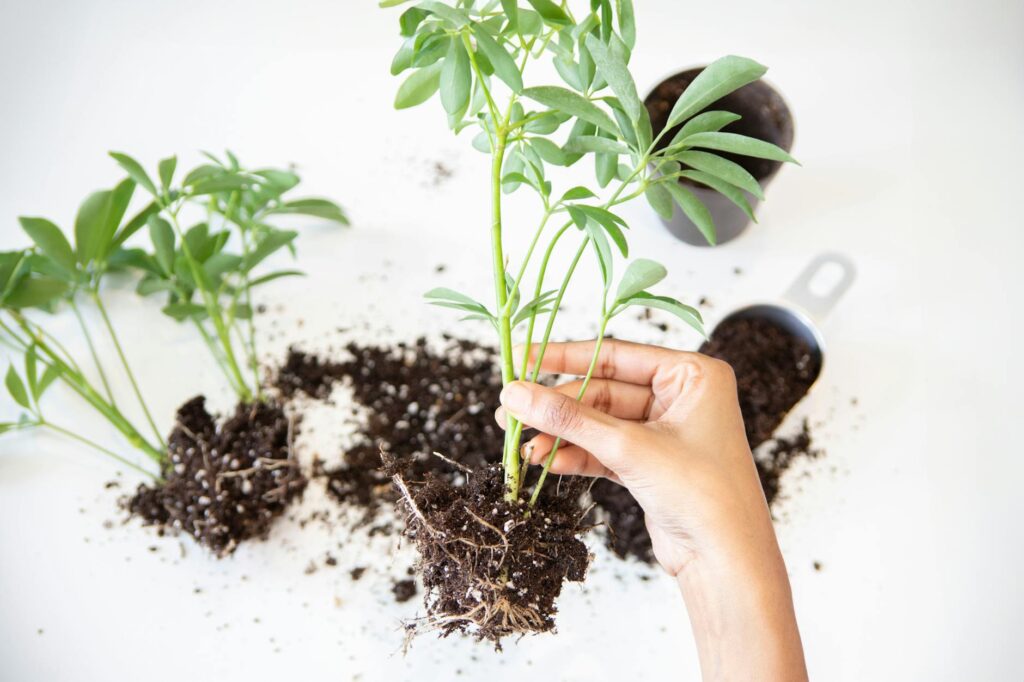
- Check roots while you repot. Firm, pale roots are a better sign than roots that are dark, soft, or mushy. If most roots are gone, propagating what is healthy or replacing the plant may be the more realistic backup plan. (hgic.clemson.edu)
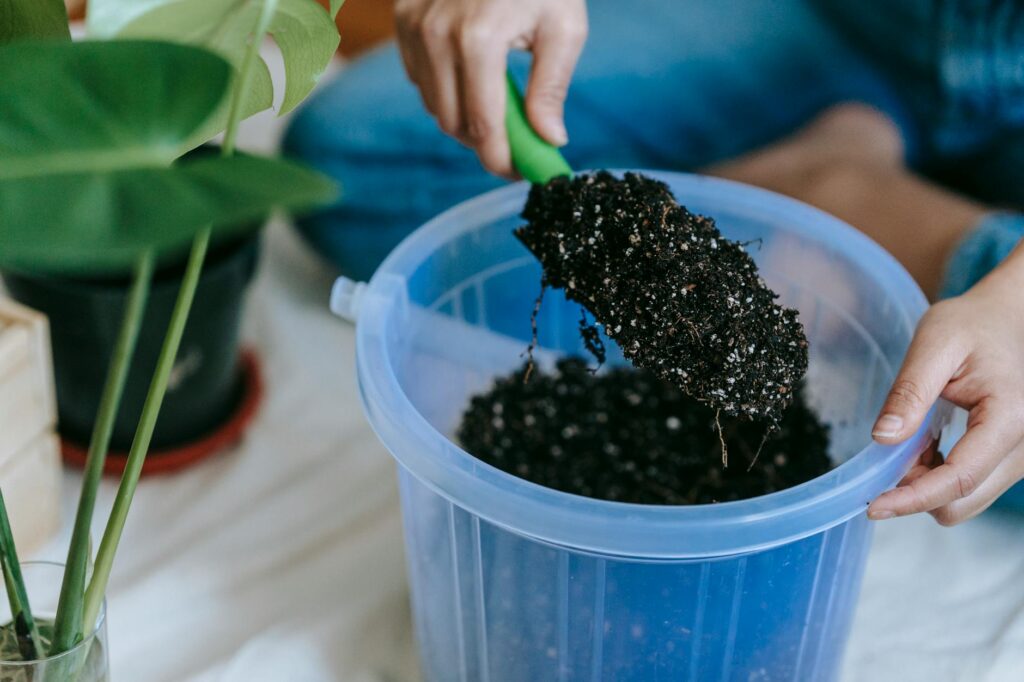
A decorative pot is not a drainage system. Use it as a cover pot, not as the permanent container unless it truly drains.
When the first fix still does not solve it
Sometimes both sides of the scorecard light up because the original problem damaged the roots. A plant that stayed too wet can lose roots, then start wilting faster, which makes it look dry even though the soil is still damp. Low light slows water use. A root-bound plant can wilt between normal waterings because there is not enough soil left to hold moisture. Salt buildup from fertilizer or mineral-heavy water can add brown tips and wilting to the mix. (extension.umn.edu)
- Change one variable at a time. Fix drainage, improve light, or repot, but do not also increase fertilizer while you are trying to diagnose the issue. (hgic.clemson.edu)
- If roots fill the pot and water races through, fresh mix may solve more than watering changes alone. (extension.illinois.edu)
- If you see crusty mineral deposits, flush or replace the mix before assuming the plant is thirsty. (extension.umd.edu)
- If a trailing or vining plant has severe root loss, take a healthy cutting as backup before you keep experimenting.
Common mistakes that keep the cycle going
Most repeat failures come from habits that sound sensible but do not hold up in real homes, where light, temperature, humidity, and containers vary from room to room. These are the mistakes that waste the most time and money. (extension.illinois.edu)
- Watering every Saturday because that is the routine instead of checking the soil first. (extension.illinois.edu)
- Reading droopy leaves before reading the potting mix and pot weight. (extension.umd.edu)
- Leaving runoff in a saucer, cachepot, or foil wrap after watering. (extension.umd.edu)
- Using a pot without a drainage hole as the actual growing container. (extension.illinois.edu)
- Putting gravel in the bottom instead of fixing the pot or the mix. (extension.illinois.edu)
- Jumping to a much bigger pot so the plant will “hold more water.” (extension.illinois.edu)
- Ignoring how clay pots, plastic pots, bright windows, winter heat, and low light change water use. (hgic.clemson.edu)
How to verify your diagnosis over the next two weeks
- For the next two watering cycles, keep a simple four-column note: date, soil feel at 2 inches, pot weight, and what happened when you watered.
- On large pots, use a bamboo skewer or dowel to reach deeper into the mix. If it comes out dark or with soil clinging to it, the root zone is still moist. (extension.umd.edu)
- Check again 12 to 24 hours after a full watering. If water is still trapped in the outer pot or saucer, your diagnosis is not finished. (extension.illinois.edu)
- After two cycles of scoring consistently on the Drain side, you will need to either transplant the plant into a different container or replant the container. On the other hand, if the plant continues to score consistently on the Dry side, you should shorten the time between cycles in which you check the plant to see if it requires watering rather than watering at your own discretion.
- Your goal is not a perfect schedule. Your goal is a repeatable pattern: the mix dries at the right pace, runoff exits cleanly, and the plant stops swinging between wilted and soggy.
Bottom line
If you remember one rule, make it this: dry soil plus a light pot usually means water; wet soil plus a wilted plant usually means drainage or root trouble. Water deeply, let excess escape, and do not let the plant sit in it. That simple split will save more plants than any gadget, fertilizer spike, or oversized replacement pot. (extension.umd.edu)
Can a wilted plant really be overwatered?
Yes. Extension guidance notes that wet soil can reduce oxygen around roots and lead to root loss or root rot, so a plant can wilt even when the soil is already too wet. Wilt plus moist soil is a strong signal to check drainage before adding more water. (extension.umn.edu)
How long should indoor potting mix stay wet?
There is no universal clock. Pot size, light, humidity, temperature, pot material, and plant type all affect drying time. That is why the better test is soil depth plus pot weight, not “every seven days.” (extension.illinois.edu)
Do rocks or gravel in the bottom of a pot improve drainage?
Not in the way most people expect. Illinois Extension explains that gravel at the bottom can leave the soil above it more saturated, not less. A drainage hole and an airy mix are the better fixes. (extension.illinois.edu)
Should I buy a moisture meter?
It is optional, not essential. For most houseplants, the finger test, lift test, and a skewer or dowel for larger pots give you enough information to make a sound watering decision. (extension.umd.edu)
What should I do if my decorative pot has no drainage hole?
Use it as a cover pot. Keep the plant in an inner nursery pot, water it in the sink, let it drain fully, and dump any trapped water before you slide it back into the decorative container. (extension.illinois.edu)
Should I repot into a much bigger pot so I do not have to water as often?
Usually no. Extension guidance for houseplants favors sizing up modestly, often about 1 to 2 inches wider, because oversized pots can stay wet too long and raise the risk of root rot. (extension.illinois.edu)
References
- University of Maryland Extension: Watering Indoor Plants – https://extension.umd.edu/resource/watering-indoor-plants
- University of Maryland Extension: Overwatered Indoor Plants – https://extension.umd.edu/resource/overwatered-indoor-plants
- Illinois Extension: Get Started | Houseplants – https://extension.illinois.edu/houseplants/get-started
- Illinois Extension: Watering | Houseplants – https://extension.illinois.edu/houseplants/watering
- Illinois Extension: Container Drainage Options – https://extension.illinois.edu/container-gardens/container-drainage-options
- Illinois Extension: Repotting | Houseplants – https://extension.illinois.edu/houseplants/repotting
- Clemson Home & Garden Information Center: Indoor Plants – Watering – https://hgic.clemson.edu/factsheet/indoor-plants-watering/
- Clemson Home & Garden Information Center: Houseplant Diseases & Disorders – https://hgic.clemson.edu/factsheet/houseplant-diseases-disorders/
- University of Minnesota Extension: Watering houseplants – https://extension.umn.edu/yard-and-garden-news/watering-houseplants
- University of Minnesota Extension: Winter houseplant tips – https://extension.umn.edu/news/winter-houseplant-tips