Most People Repot Too Late: The Warning Signs Your Plant Is Begging for Help
Yellow leaves, drooping, and “mystery” slow growth often start weeks before a plant truly crashes. Learn the earliest warning signs, how to confirm what’s actually wrong (before you repot), and exactly how to repot with
- TL;DR
- So why does “repotting” get blamed for everything? And why do we delay repotting too long?
- The 2-minute triage—what to check before you do anything else
- The warnings (and what the plant is actually asking for)
- Quick diagnosis table: symptom → likely cause → what to do (and whether to repot)
- How to Repot Without Making Things Worse (Step By Step)
- Mistakes that lead to “repot regret”
- Routine to prevent repeated repotting too late
- FAQ: Repotting (or not) rescue care, and speedy followups.
TL;DR
- “needs a bigger pot” is assumed too often. Many common symptoms (yellow leaves, wilt, leaf drop) can all result from a watering, a light issue, sometimes pest or root issues as well or a combination of these. (ipm.ucanr.edu).
- Do a 2-minute triage: is the soil dry/wet? check weight, drainage, underside of leaves (for pests), then quick sniff and root peek if wilting persists (ipm.ucanr.edu).
- Only repot when there’s hard evidence (roots wrapping or tightly tied within the pot, root ball mix that refuses to re-wet or drains too fast, chronic wilting despite proper watering, or other physical visible damage to roots that necessitates new mix. (ipm.ucanr.edu).
- Suspecting pests? (like stippling/webbing or sticky residue)? then isolate and treat! A pest problem is seldom addressed only with potting changes (ipm.ucanr.edu).
- After a repot if conditions (light, temperature, watering) have been stable (more or less) for 2–4 weeks, (most of) the ‘shock’ is care instability to me. morningchour.com
So why does “repotting” get blamed for everything? And why do we delay repotting too long?
We know that a struggling plant looks visually similar despite many different possible causes—a dying plant could have yellowing leaves, it could be drooping, or might drop its leaves altogether, or could fail to grow, etc. University-based (scientist) plant ‘guidance and care’ notes that our common symptoms like yellowing leaves, wilting, stalling, can come from too much or too little light, overwatering, underwatering, poor drainage/root rot, stress from temperatures, pests and mites sucking sap, etc. (ipm.ucanr.edu)
A lot of people see that the symptoms overlap and postpone action til their plant’s visibly collapsing—and then it’s time to repot as a last resort. The better answer is the opposite: When in doubt, confirm the cause—then choose the smallest, least invasive effective fix—(water/light, treat pests, improve drainage)—and repot only if it will really help the underlying problem. You’ll save time, and ultimately the plant too!
The 2-minute triage—what to check before you do anything else
- Check pot weight: lift it! A super light pot often points to dry mix. A heavy pot that stays heavy for a couple days may point to saturated mix, and low oxygen levels are around the roots. (You’re not diagnosing yet—you’re simply deciding what to inspect next.)
- Check drainage reality: confirm your pot has one, and there’s no standing either in a cachepot/saucer. Overly wet conditions and poor drainage are strongly associated with root problems. (ipm.ucanr.edu)
- Finger test done twice (two spots): push your finger 1-2” into the mix about an inch from the pot edge, and then about an inch from the center. It can be “wet” in one zone and dry in the next (especially in compacted or hydrophobic potting media).
- Look under leaves (not just the top): stippling + webbing suggests spider mites, their sticky residue/sooty mold and small bumps/cottony masses may suggest scale, mealybug and aphid. (ipm.ucanr.edu)
- Scan the newest growth. Pale, small, spindly new leaves and long internodes suggest low light. (ipm.ucanr.edu)
By being methodical and thorough in our observations, we improve our chances of diagnosing the problem accurately. If wilting continues after proper watering (or the plant is dropping fast), pop the root ball out and check what kind of roots you have: firm/light or brown, mushy/rotted? UC IPM also recommends checking the root system when a plant wilts, since rotting roots can produce the same manifestations as under watering. (ipm.ucanr.edu)
The warnings (and what the plant is actually asking for)
- Yellow leaves, that spread (especially if leaf drop is involved)
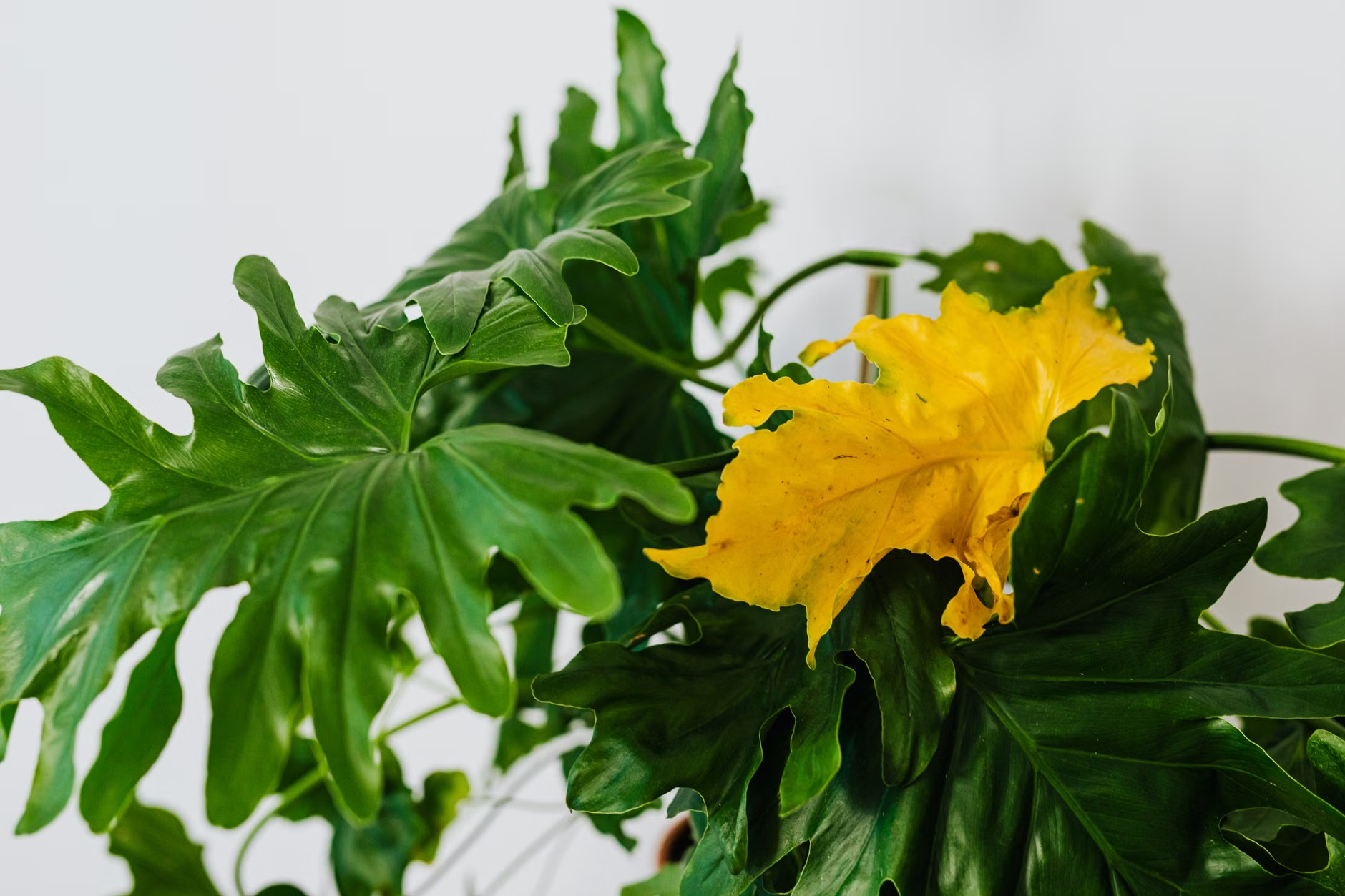
Yellowing leaves, you might know, are typically a “too late” flag—meaning the plant may have been stressed for a period of time before the leaf issue appears. UC IPM lists several root causes of yellow leaves/leaf drop, including insufficient light, low temperatures, excessive watering, soil mix, and at least one type of pest. (ipm.ucanr.edu)
How to confirm rapid: check soil moisture + drainage; flip leaves to check for pests; reconsider light (did you move away from growing light?).
When repotting helps: if the mix is sour smelling or compacted, plant’s drainage is poor, or if you discover root damage that you need to cut back and/or get new potting mix in there.
When repotting won’t help: if caused by low light conditions, especially cool temps, or some variety of pest—fix those first, (or at least concurrently, of course) because the plant isn’t coming back in the new pot either. - Wilting when the soil is wet (the “I watered it, why is it drooping?” trap)
Wilting is commonly blamed on underwatering, but UC IPM notes that wilting can also be due to root decay from soil pathogens, often associated with overwatering or poor drainage—so the plant may wilt even when the potting mix is wet.
How to verify: slide the root ball out. Healthy roots are generally firm; rotting roots tend to be brown and soft.
What to do now: stop watering on a schedule; improve oxygen to roots (better drainage, airy mix). If roots are rotted, repotting into fresh mix after trimming badly rooted parts back can be the fastest save.
Common mistake: watering again because the leaves look limp—this can accelerate root loss. - Soft stem bases or a “soggy” crown
A soft stem base is a red flag. UC IPM notes that soft stem bases are usually indicative of overwatering and soggy soil from overwatering or poor drainage.
- Leggy growth (long gaps between leaves) and “reaching”
If stems get long, weak, and spaced out, it’s often a light problem—not a pot size problem. UC IPM notes that excessively long internodes (“leggy” growth) are usually caused by inadequate light.
How to verify: is that the plant’s current location vs earlier in the season (short winter days, moved farther back from a window, new blinds), etc. What to do now: move to brighter light (typically bright, indirect lighting), rotate weekly, or add a grow light. Repotting won’t solve low light. Good to know: some Extension materials list way “no growth or leggy growth” as a symptom of insufficient light. - Brown leaf tips and crispy edges (especially on tropical plants)
Brown tips are more likely a stress signal vs a single diagnosis. A guide from the Connecticut Agricultural Experiment Station lists multiple possible causes including low humidity, excess fertilizer/soluble salts, poor-quality water, and other cultural factors.
How to verify: look for a pattern of either just the tips browning vs browning of the whole leaf, and look back to see if browning showed up after fertilizing or a switch in water sources. Help from repotting: if you suspect salt build-up from overfertilizing, potting in fresh mix can help dilute the problem (but it pays to think about washing/flush the pot out completely). Optional: if humidity really was the issue, can stabilize humidity and watering now vs wait for repotting. - Sticky leaves, sooty mold, stippling, or webbing (pests that quietly suck plants dry)
Pests are one of the early warning signs most commonly overlooked. UC IPM links sticky mess to pests like scale, mealybug, or aphid; yellowed leaves accompanied by tiny speckling and webbing, to spider mites.- How to verify: use a bright light and look under piles of leaves. For spider mites, look for stippling (tiny pale dots) and fine webbing near growth points.
- What to do now: isolate the plant. If you repot, treat pests anyway—repotting doesn’t magically remove insects from leaves and stems.
- Repot timing: Repot now? Not really unless the plant is slumping and has root issues also.
Quick diagnosis table: symptom → likely cause → what to do (and whether to repot)
| Symptom | Likely Cause | How to Check | Immediate Fix | Repot? |
|---|---|---|---|---|
| Wilting but soil is wet | Root stress/decay, poor drainage | Root peek: check for brown, soft roots | Stop watering; increase airflow; correct drainage | Yes, if root damage or sour/compacted mix |
| Yellow leaves + leaf drop | Light, temperature, watering, pests, root issues | Check light changes; inspect leaves underside; check soil + roots | Stabilize care; treat pests if present | Sometimes—only if root/pot issues are confirmed |
| Soft stem base | Overwatering, soggy soil | Press test at crown; check smell and root condition | Stop watering; remove rot; improve drainage | Often yes (emergency repot) if viable tissue remains |
| Long, leggy growth | Insufficient light | Measure distance from window; look for long internodes | Increase light; rotate; consider grow light | No (unless also root-bound/compacted) |
| Brown tips/edges | Low humidity, salts, water quality, fertilizer burn | Check humidity; recent feeding; water source | Pause fertilizer; flush or adjust water; stabilize humidity | Maybe (if salts/compacted mix suspected) |
| Stippling + webbing | Spider mites | Underside inspection; webbing near new growth | Isolate; begin mite treatment | Not required for mites alone |
| Sticky residue + bumps/cottony masses | Scale/mealybugs/aphids | Underside/leaf joint inspection; sooty mold | Isolate; remove pests; treat repeatedly | No (unless soil also compromised) |
Repotting is advisable when the signs that your roots need new digs (aether, space, air? oxygen, draining, or exhausted mix): if space and shelter are the problem, cool! You can put the plant in a new pot. If it’s light, pests, or temperature? Well, it’s less helpful to repot if you can fix those problems. However, you may find conditions are such that the roots are damaged, and/or the mix is failing.
- Roots are circling tightly, forming a dense mat, or the root ball holds the shape of the pot (root bound). Roots dominant, with root bound symptoms, and make soil “extensively crammed” or too “triumphant.”
- Water runs straight through the pot and the root ball doesn’t rehydrate evenly (often happens when mix becomes very dry/repellent or roots dominate the container).
- The mix stays wet for too long (ground is compacted and poorly aerated) and you see stress symptoms consistent with low oxygen at the roots. UC IPM links soggy soil and poor drainage to root helath problems and correlated symptoms.
- You find root rot and other root damage. This includes the fact that Pathogenic or structure-destroying roots may be removed from circulation, along with old soil that is generally contaminated with disease.) and exchanges media that has compacted or is impacted on the mixing ground.
- You suspect soluble salts or poor water quality is accumulating in the potting mix (are indicated often by browning tips and stunted growth or plant down, … and flushing regularly hasn’t improved condition one bit), we need to repot into some fresh mix.
Note: If your plant is severely stressed, “repot” and “potting up” are slightly different. Sometimes the best fix is to not “up pot” but actively repot into fresh mix only with same pot, or even size down if roots are lost to rot.
How to Repot Without Making Things Worse (Step By Step)
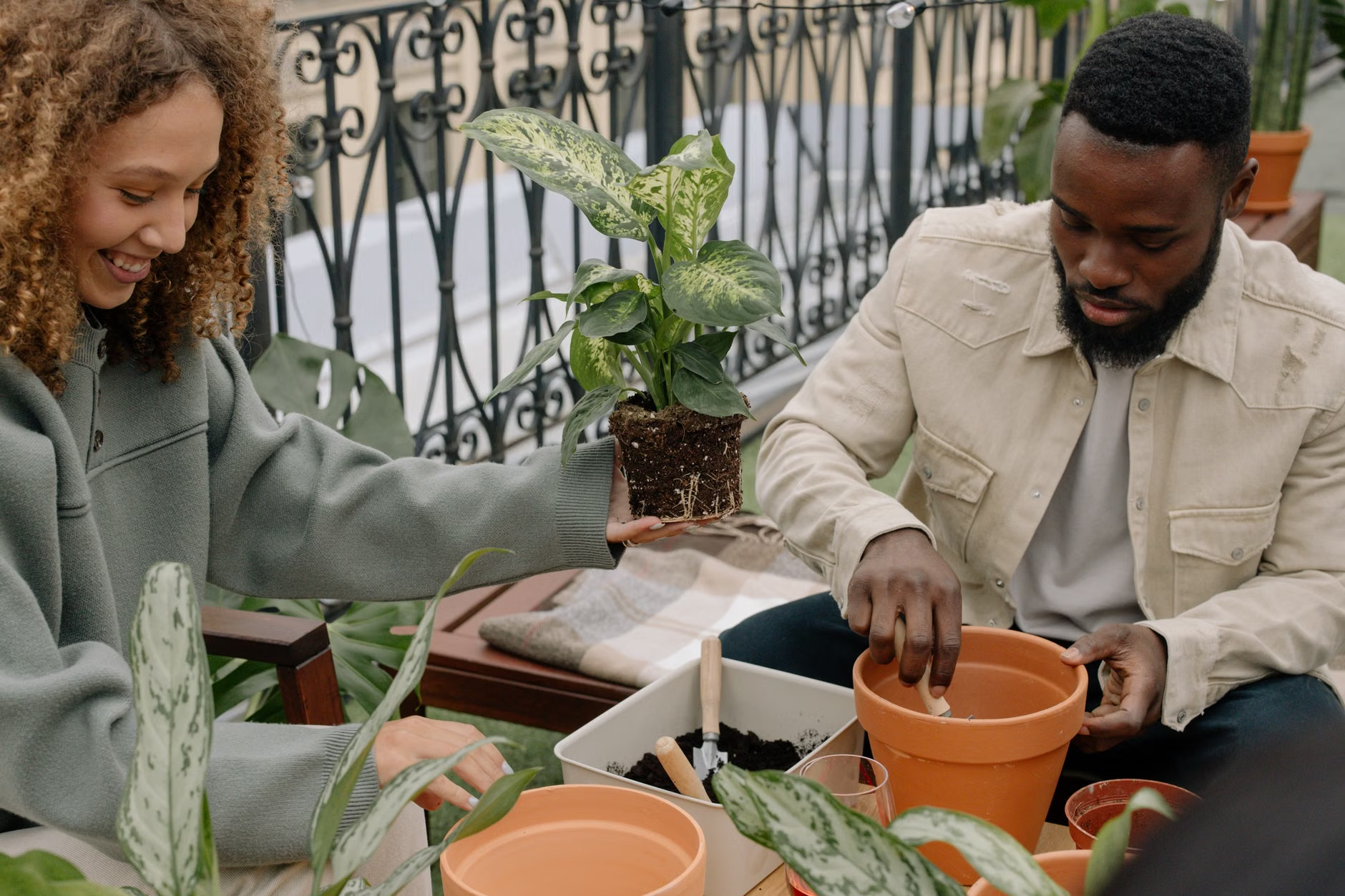
Ultimately a successful repot treats root conditions and then keeps care stable. If you repot and also change light, fertilizer, watering frequency, and temperature at once, it can be hard to know what helped—or what harmed you.
- Choose goals wisely: Are you potting up for growth, or repotting to improve root health? Decide first; it will change your choice of pot size.
- Pick a pot that drains. If you’re using a decorative cachepot, keep the plant in a nursery pot with holes inside it. Poor drainage combined with sopping soil, have been closely associated with root problems. (ipm.ucanr.edu)
- Size up modestly; when potting up, go up a size or two in diameter—not inches in height—for most houseplants. If your pot is three sizes larger that’s just bigger needs to keep mix from drying like a sponge.
- Prepare an appropriate (fresh) mix: Don’t use garden soil from outside, but a quality indoor potting mix. For plants prone to rot an aerating agent such as perlite, pumice, or bark could mean more oxygen for the roots.
- Unpot, inspect, and sanitize roots: Firm roots are usually a good sign; visually inspect, trimming off any obviously dead/soft roots with clean scissors. UC IPM says that symptoms of rotted roots, have a strong correlation with overwatering and poor drainage. (ipm.ucanr.edu)
- Loosen tightly circling roots gently: Just tease out the wrapped outer roots with your fingers so that they will grow down to the new mix. Don’t shred the whole root system, unless terribly rootbound.
- “Height” is important: Don’t bury the stem, or the crown, lower (or deeper) than the previous soil line on the plant.
- Backfill and firm lightly after: Don’t process the mix so hard that tiny air pockets remain, but eliminate any large bubbles.
- Water once (and then check): Water until some runs out of the pot. Clemson Extension explains that root damage (such as root rot from excessive watering) limits the ability of a plant’s root system to absorb water, so allow the mix to dry before frequently watering again. (hgic.clemson.edu)
- For the next 2–4 weeks maintain steady conditions, avoid heavy fertilizing right away, and keep an eye on the newest growth for recovery indicators.
Mistakes that lead to “repot regret”
- Repotting in an effort to fix low light conditions: spindly growth is often a sign of inadequate light levels—adjust the light source first. (ipm.ucanr.edu)
- Upsizing too much: a really big pot holds more water, so there’s a greater chance roots will go bad—upsize conservatively, especially if you have slow growers.
- Following the same watering routine after repotting: a new mix often holds water in a new way/quantity compared to the old mix; use the “lift test” and your finger to gauge.
- Not addressing pests: sticky residue, stippling, webbing, or bumps most often indicate pests, and you’ll want to act quick. (ipm.ucanr.edu)
- Long term use of softened water: “Do not water with softened water, as it can add sodium/chloride to soils and may be harmful to plants,” says Clemson Extension. (hgic.clemson.edu)
- Major changes, multiple at once (new pot, new location, new fertilizer etc.): stress is cumulative.
Routine to prevent repeated repotting too late
- Weekly (30 seconds): pick up your pot and check under 3-5 leaves for pests (especially if you live in a warm dry place). (rhs.org.uk)
- Every watering: make sure it’s getting the moisture, so your soil test is vital for all the reasons above. The University of Minnesota Extension reminds us that good watering is built on knowing watering needs and how potting media varies in its absorption of water as conditions change. (extension.umn.edu)
- Monthly: Rotate your plant, wipe dust off leaves, and check to see if roots are escaping from the drainage hole.
- Seasonally (spring and fall): Assess whether or not your plant’s light needs are being met (especially since day length is changing), and adjust your watering schedule if necessary (meaning, if you notice the rate of growth slowing).
- Every 6 months to a year (or at the first sign of any of the symptoms): Conduct a version of ‘root audit’ by sliding the plant part way out of the pot to assess whether it’s root bound, or whether the mix has become tightly compacted.
FAQ: Repotting (or not) rescue care, and speedy followups.
How do I figure out whether I just need to be watering right, or that repotting is key?
If the symptoms are improving and upon inspection the root ball appears perfectly healthy (in good condition—roots firm, no sour smell, mix drains properly), you may have a watering pattern problem. If your plant is wilting even when the mix is damp, or you find decaying or compact roots in other cases, you may well have to repot, and UC IPM advises that wilting can result from either of those causes. (scroll down to “Plants give indicators when conditions are wrong”) ipm.ucanr.edu
Can I repot now in winter (or when it’s stressed)?
You can, but it won’t be as effective in a low light, slow growing scenario. If you’re fighting root rot, wet mix, or a bad root environment, an “emergency repot” is still the way to go because roots can’t heal in low-oxygen environments. (ipm.ucanr.edu)
Should I fertilize right after repotting?
Probably not at first. New potting mix often has some nutrients in it and starved, cloggy roots may have poor access to water and nutrients. Clemson Extension says root injury restricts the plant’s ability to take up water; same basic idea for nutrient uptake—stabilize, then give it light feed later if actively growing. (hgic.clemson.edu)
My plant has brown tips does that mean it needs repotting?
Nope! Brown tips can be a sign of low humidity, too much fertilizer/soluble salts, or water quality issues. If you have been fertilizing, consider that first. Where is your water coming from? Flush it out or repot it. (portal.ct.gov)
What is the fastest way to rule out pests?
Checking the undersides of leaves in a bright light according to UC IPM. Bodies or damage on plants could indicate spider mites, faint spotted, webbing damage. Sticky sap, sooty/wooly mold are signs of insects like scale, mealybugs, or aphids. Isolate immediately these signs are obvious. (ipm.ucanr.edu)