- Filtered water: what it helps with (and what it may not)
- Distilled water: the “blank slate” option (and when it’s worth it)
- Side-by-side comparison: tap vs filtered vs distilled
- A quick decision guide (no lab tests required)
- How to fix water-related salt buildup (without guessing)
- Common mistakes (that look like “bad water,” but aren’t)
- FAQ: water quality for houseplants
TL;DR
Tap water should be fine for most houseplants. Problems do show up over time in pots, as minerals and fertilizer salts accumulate in container soil.
Let water sit out (treat free chlorine) but it won’t remove chloramine (common disinfectant in many US cities). cdc.gov
Have a water softener that adds sodium? Don’t use softened water for houseplants—salt builds up and plant toxicity occurs. psu.edu
Filtered water helps, but depends on the filter type and what it’s certified to reduce (NSF/ANSI claims like chlorine/chloramine reduction). nsf.org
Distilled is a good “blank slate” for sensitive plants, just fertilize correctly since it has no minerals.
Why water quality matters more indoors (especially indoors in pots)
As Miranda notes, in the ground, rainfall irrigation, etc., can wash through soil and carry minerals away. In containers, water evaporates and plants transpire, but much of the dissolved mineral content is left behind as atolls of salts in place of the water. So “okay” water can still create houseplant problems months later (brown tips, slow upgrowth, crusty soil, root stress) if salts build up. extension.umd.edu
What’s in your water that can affect houseplants?
- Disinfectants (chlorine or chloramine)—added by many utilities to keep tap water safe as it travels through pipes. cdc.gov
- Fluoride: one of those “whatever” things—you may find some plants are more sensitive to fluoride and may show leaf tip burn over time.
- Hardness minerals (calcium, magnesium) and alkalinity: raise soil pH, leave mineral crusted soil and pots.
- Sodium from water softeners: This mistake is thought to be the biggest “water quality” problem for houseplants, as sodium buildup can become toxic. (psu.edu)
- Fertilizer salts: Over-fertilization will create similar “salt burn” symptoms, even if your water is fine!
Tap water for houseplants: when it’s fine vs when it causes problems
When tap water is usually fine
- Tap (or well) water is fine for many homes, and typical culinary-water levels of chlorine and fluoride usually don’t hurt plants. (extension.usu.edu)
- You grow mostly “tough” foliage plants (pothos, philodendron, many monsteras, snake plant, ZZ plant).
- You don’t see white crust on soil/pot rims and you periodically flush/leach pots.
- Your water is not going through a sodium based softener (or you use an unsoftened tap). (extension.usu.edu)
When tap water starts to be the likely culprit
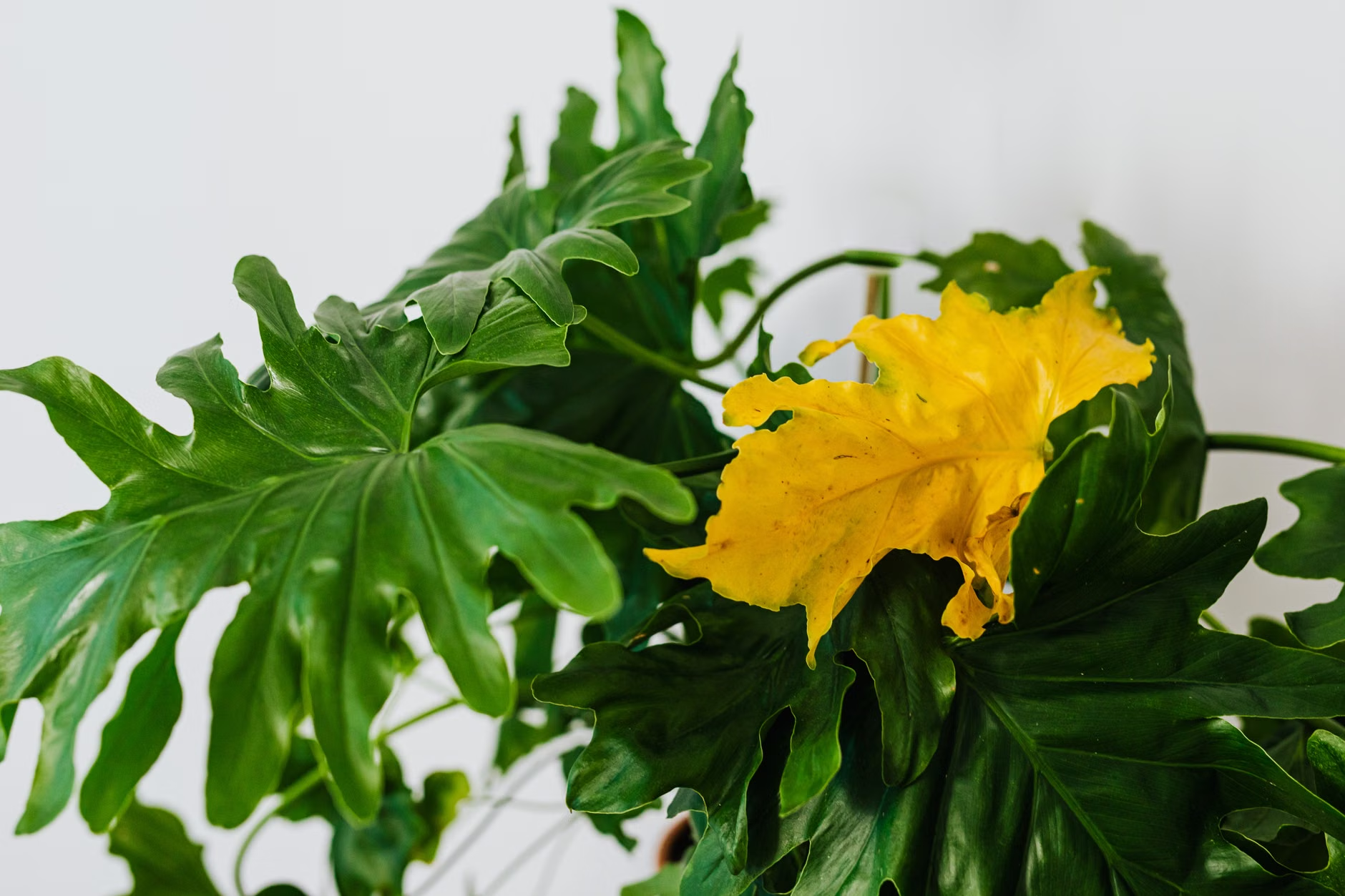
Tap water typically starts to cause visible problems when you have (1) sensitive plants plus (2) accumulation in a container (salts/disinfectants/fluoride) over time. Signs include brown leaf tips, reduced growth, lower-leaf drop, and a crusty ring on the pot/soil line—classic signs of soluble salt accumulation. (extension.umd.edu)
Filtered water: what it helps with (and what it may not)
“Filtered” can mean many things. You’ll want to choose the filter(s) based on what issue you’re trying to address with your water: the taste-odor chemicals used to treat it (chlorine/chloramine), hardness minerals, fluoride sensitivity, or general dissolved solids issues.
Activated carbon (pitcher, faucet, under-sink): good for chlorine, sometimes for chloramine
Many point-of-use filters that are certified to NSF/ANSI 42 (known as aesthetic effects reduction) will reduce chlorine taste/odor. Some products may also make a specific chloramine reduction claim under NSF/ANSI 42—but you’ll need to verify that your specific product does as there isn’t a blanket certification for any filter of a certain type; it’s a claim verified on a product-by-product basis. (nsf.org)
Reverse osmosis (RO): best for “total dissolved solids” problems, but more effort
If you have a chronic mineral buildup issue (very hard water), or if you have something sensitive to water quality, RO is often the most uniform way to reduce dissolved solids in your water. The tradeoffs are cost, installation/plumbing upkeep, and the fact that the very low-mineral water now relies more on your fertilizing routine (since it isn’t contributing calcium/magnesium as well).
Distilled water: the “blank slate” option (and when it’s worth it)
Distilled water is popular for sensitive houseplants because it’s consistent and free of disinfectants and hardness minerals that can build up in your pot. University of Illinois Extension suggests using distilled water instead of tap water for many tropical houseplants because tap water contains fluoride that can cause leaf tip burn, and peace lily and spider plant are noted as especially vulnerable. (extension.illinois.edu)
- Best use cases: plants that repeatedly get brown tips/edges despite good watering and humidity; homes with very hard water; homes on chloraminated water where you don’t want to shop for a chloramine rated filter.
- Main downside: because distilled water contains basically no minerals, plant nutrition will generally rely on your potting mix and your fertilizer (especially for long-term container plants).
Side-by-side comparison: tap vs filtered vs distilled
| Water type | Pros | Cons | Best for |
|---|---|---|---|
| Tap (unsoftened) | Cheap, easy, often fine for most plants | May contain chlorine/chloramine; may be hard (mineral deposits); may contain fluoride | Most common foliage plants; owners who leach pots periodically |
| Filtered (carbon / point-of-use) | Can reduce chlorine taste/odor; may reduce chloramine if specifically certified/claimed | Performance depends on the exact filter and its certification/claims (not all filters do the same thing) (nsf.org) | Moderately sensitive plants; people who want a simple upgrade from straight tap |
| Reverse osmosis (RO) | Often most consistent reduction of dissolved solids/mineral load | Higher cost; maintenance; nutrition depends more on fertilizer routine | Very hard water; collections with lots of sensitive plants |
| Distilled | Very consistent; avoids mineral buildup and many tap-water additives | Ongoing cost/effort; you still need a sensible fertilizing plan | Fluoride-sensitive plants; “problem plants” with chronic tip burn |
A quick decision guide (no lab tests required)
- Step 1: Confirm you’re not using softened water. If your indoor taps are softened, find an unsoftened tap (or use distilled/RO) for plants. (psu.edu)
- Step 2: Look for buildup signs: white crust on soil/pot, slow growth, brown tips. These line up with soluble salt accumulation in containers. (extension.umd.edu)
- Step 3: Check your utility’s CCR to see whether your disinfectant is chlorine or chloramine. (cdc.gov)
- Step 4: Match the fix to the issue:
- (a) chlorine taste/smell only → carbon filter or let water sit (chlorine only);
- (b) chloramine → use a filter that claims chloramine reduction or switch to distilled/RO;
- (c) hard water crust → RO/distilled plus periodic leaching;
- (d) recurring fluoride tip burn on sensitive plants → distilled/RO is often the simplest trial. (extension.illinois.edu)
- Step 5: Re-evaluate in 4–8 weeks. New leaves should look better; old damaged tips usually won’t revert.
How to fix water-related salt buildup (without guessing)
If you suspect salt buildup, the most reliable “reset” is leaching (flushing) the potting mix. UC Cooperative Extension describes leaching as watering thoroughly so salts dissolve, then watering again so excess water drains out—recommending doing this every two or three months for many houseplants. (ucanr.edu)
- Remove visible salt crust: If you see a white crust on the soil surface, scrape off roughly the top inch before leaching. (ucanr.edu)
- First flush: Water slowly until water runs freely out of the drainage holes. Wait about 5 minutes. (ucanr.edu)
- Second flush: Water again so more water runs out the bottom—then empty the saucer. Don’t let the pot reabsorb the drained water. (ucanr.edu)
- If problems persist: Consider repotting into fresh mix, especially if the pot itself is coated in white residue (common with clay).
Common mistakes (that look like “bad water,” but aren’t)
- Overwatering in a pot with poor drainage (root stress can look like “burnt tips”).
- Letting the pot sit in drained water (salts you flushed out can be pulled back up).
- Fertilizing too heavily or too often (fertilizer contributes soluble salts too).
- Blaming chlorine when your city uses chloramine (standing water doesn’t fix chloramine).