A drainage hole is helpful, but it is not a force field. If a houseplant sits in saturated potting mix for too long, roots can lose access to oxygen, weaken, and then rot; wet conditions can also favor root rot pathogens such as Pythium and Phytophthora. In other words, the real issue is not simply whether a pot has a hole. It is whether the entire root zone can dry and re-aerate at a pace the plant can actually tolerate. (rhs.org.uk).
TL;DR
- Drainage holes lower risk, but they do not fix oversized pots, stale or dense potting mix, weak winter light, or water trapped in saucers and decorative outer pots. (rhs.org.uk)
- Root rot is usually a “stays wet too long” problem, not just a “watered too much once” problem. Roots need both moisture and oxygen. (rhs.org.uk)
- For apartment plants, the quickest diagnosis is the H.O.L.E.S. Check: Hole, Oxygen, Light, Excess water, Size. (extension.illinois.edu)
- The best proof that your fix is working is not instant cosmetic recovery. It is that the potting mix stops staying heavy and wet for so long, and new growth improves over time. This is an inference supported by root-rot symptoms and repotting guidance. (extension.umd.edu)
A drainage hole only removes water that can actually reach it
This is the part many indoor gardeners miss. Water does not move through every pot at the same speed. If the mix is compacted, broken down, or simply holding more moisture than the roots can use, water can linger in the container long after the surface looks acceptable. The same thing happens when the pot is too large for the root ball or when runoff collects in a cachepot, foil sleeve, or saucer and the pot sits back in it. (extension.illinois.edu)
That is why two identical plants can behave very differently in the same apartment. A plant in bright light, fresh mix, and a modest pot may dry at a healthy pace. The same plant moved a few feet from the window, kept in a glazed container, or watered the same way in January that it was in June may stay wet much longer. Watering frequency changes with light, temperature, humidity, pot size, plant size, pot material, and the potting mix itself. (extension.illinois.edu)
Use the H.O.L.E.S. Check before you blame the plant
- H – Hole open. Water should leave the pot freely. If roots are clogging the drain hole, foil is wrapped tightly around the bottom, or the plant sits inside a decorative pot that holds runoff, the hole is not doing enough. Gravel in the bottom is not a reliable fix for this. (extension.illinois.edu)
- O – Oxygen in the mix. Roots need air spaces in the growing medium. Low-porosity or decomposed media, heavy soil, or the wrong mix for the plant can reduce oxygen even if the pot technically drains. (rhs.org.uk)
- L – Light and season. In lower light, plants grow more slowly and use less water. Winter usually slows water use even more, so the same watering routine becomes riskier. (extension.umn.edu)
- E – Excess water removed. After watering, the pot should drain and the extra water should be discarded. An inner nursery pot left standing in a cachepot full of runoff is one of the most common apartment mistakes. (missouribotanicalgarden.org)
- S – Size right. Potting up too far gives a small root system a large ring of damp mix it cannot use quickly. That extra wet soil can stay soggy long enough to start root trouble. (extension.illinois.edu)
What usually defeats drainage holes in real homes
| What you see | Why holes are not enough | Better move |
|---|---|---|
| A small plant sitting in a much larger pot | There is more unused mix than the roots can dry at a reasonable pace, so the root zone stays wet longer. | Move down a size or repot only 1 to 2 inches wider than the current root ball. (extension.illinois.edu) |
| Old, dense, or compacted potting mix | As container media breaks down, drainage and aeration decline, so water lingers and oxygen drops. | Repot with fresh, appropriate potting mix rather than trying to outguess the watering schedule. (extension.illinois.edu) |
| A nursery pot nested inside a ceramic cachepot | Runoff has nowhere to go once it leaves the inner pot, so the bottom of the root ball can stay saturated. | Water in the sink or remove the inner pot, let it drain, and empty the outer pot completely. (missouribotanicalgarden.org) |
| The plant was moved to a dimmer shelf or it is winter | Lower light means slower growth and lower water use, so yesterday’s routine becomes too much. | Lengthen the interval between waterings and check the soil first instead of watering by habit. (extension.umn.edu) |
| You water every Saturday no matter what | Calendar watering ignores pot weight, actual soil moisture, pot material, humidity, and season. | Use your finger, lift the pot, or use a moisture meter as a cross-check for the center of the mix. (extension.illinois.edu) |
A common apartment version looks like this: a pothos, philodendron, or peace lily stays in its nursery pot, slips into a pretty ceramic cover pot, and gets watered every Sunday because that seems responsible. By midwinter the lower half of the container may still be wet from the last round, but the top surface looks lighter and the foliage droops slightly. That wilt is easy to misread as thirst, so the plant gets more water. The drainage holes were real, but the root zone still stayed saturated too long. This example is an inference built from extension guidance on low light, overwatering, and trapped runoff. (extension.umn.edu)
The usual culprits are not dramatic
Too much soil around too few roots
Overpotting is one of the quietest ways to create root rot. The problem is not the bigger pot by itself. The problem is the larger volume of moist mix surrounding a small plant that is not growing fast enough to use it. Extension and horticulture guidance repeatedly warns that extra soil can remain wet, reduce aeration, and cause roots to rot instead of colonizing the new space. (rhs.org.uk)
The opposite extreme can also confuse watering. When roots spiral densely through a pot or plug the drainage area, water may not move through the root ball normally, and root congestion can contribute to drainage trouble. So the answer is not simply “smaller is always better.” It is better-sized, better-aerated, and better-matched to the root system you actually have. (rhs.org.uk)
Old mix loses air even when the pot still drains
Potting mix is not permanent. As soilless media ages, organic components break down and the structure changes. That can reduce both drainage and aeration, especially in pots that have gone several seasons without refreshing. Garden soil is also a poor substitute indoors because it is heavier, drains poorly in containers, and may carry pests or disease organisms. (extension.illinois.edu)
Decorative containers create hidden standing water
Double-potting is not inherently bad. In fact, it is common and can work well. The problem is forgetting that the inner pot still needs to drain fully and then sit dry, not in a reservoir of its own runoff. Decorative foil wraps, pot sleeves, and sealed outer pots can turn a normal watering into a long soak if the extra water is not removed. (missouribotanicalgarden.org)
Light changes the watering math more than most people expect
Indoors, light is often the hidden driver. In less light, houseplants photosynthesize less, grow more slowly, and use less water. Winter compounds that slowdown in many homes. Pot material matters too: clay dries faster because it is porous, while plastic and glazed pots tend to hold moisture longer. If you change any of those conditions and keep the same watering routine, drainage holes may not save you. (extension.umn.edu)
How to water so the hole can actually do its job
- Check before watering. Use a finger test, the weight of the pot, or both. If the mix below the surface is still moist and the pot still feels heavy, wait. (extension.illinois.edu)
- When you do water, water thoroughly enough that some water exits the bottom. That helps moisten the root ball more evenly than frequent tiny sips. (missouribotanicalgarden.org)
- Let the pot drain completely, then empty the saucer or outer pot. Do not return the plant to standing water. (missouribotanicalgarden.org)
- Do not water by the calendar. Re-check after moves, weather shifts, heat changes, and seasonal light changes. (extension.illinois.edu)
- Adjust for the container and the plant. Clay may dry faster than plastic or glazed pottery, and plants in lower light usually need less frequent watering. (extension.illinois.edu)
- If the mix stays wet too long even with better watering, repot. A structural problem in the root ball or medium will not be solved by more guessing. (extension.illinois.edu)
How to verify that your changes are actually working
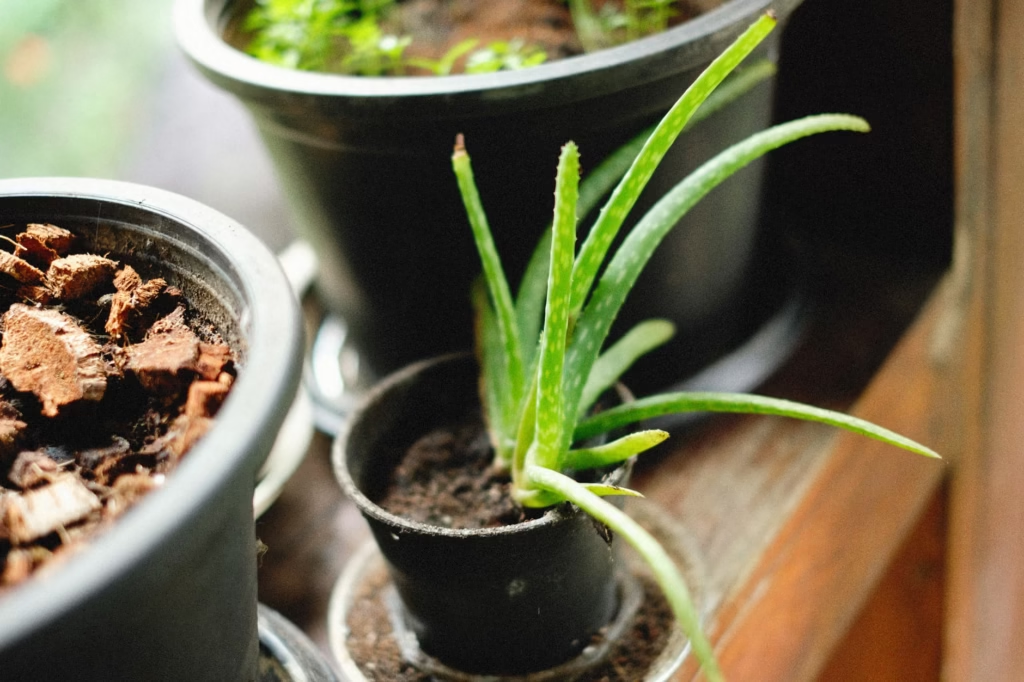
- The pot no longer stays heavy for an unusually long stretch after watering. (missouribotanicalgarden.org)
- The top inch or two of mix dries before the next watering, and a simple moisture meter can help you check deeper in the container if you are unsure. (extension.illinois.edu)
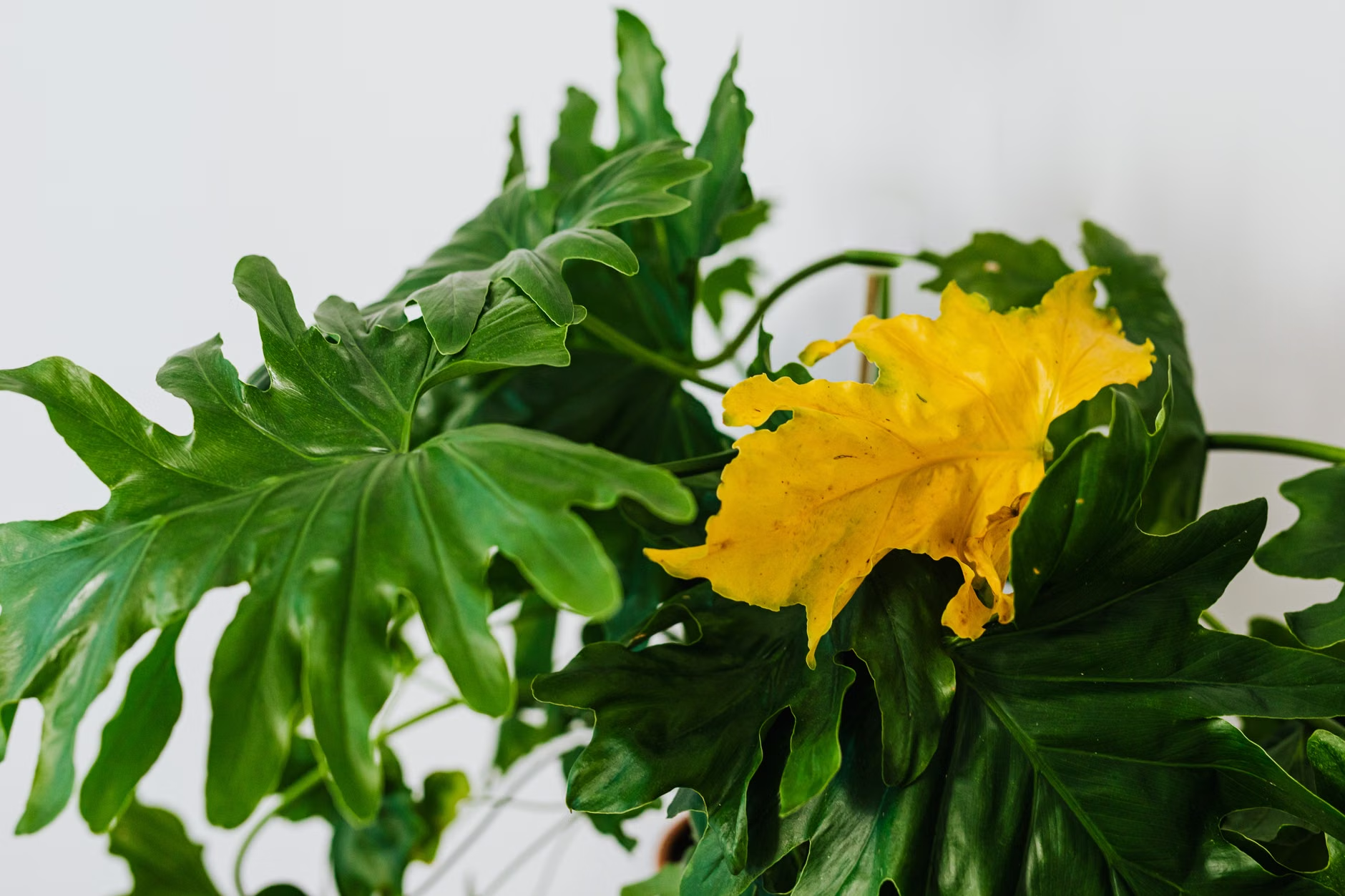
- You stop seeing chronic yellowing, sour-smelling wet mix, or fungus gnats associated with overly wet soil. (extension.umd.edu)
- When inspected, healthy roots are firm and lighter colored; rotting roots tend to be brown to black, soft, or easy to pull apart. (extension.umd.edu)
If the fix fits the problem, the first improvement is often invisible: the root zone starts spending less time saturated. Existing yellow leaves may not recover, but new growth should gradually look more normal once the plant is back in a healthier moisture cycle. That timing-based improvement is the most useful verification for indoor gardeners. This is an inference based on extension descriptions of root decline, overwatering, and repotting recovery. (rhs.org.uk)
If you already suspect root rot
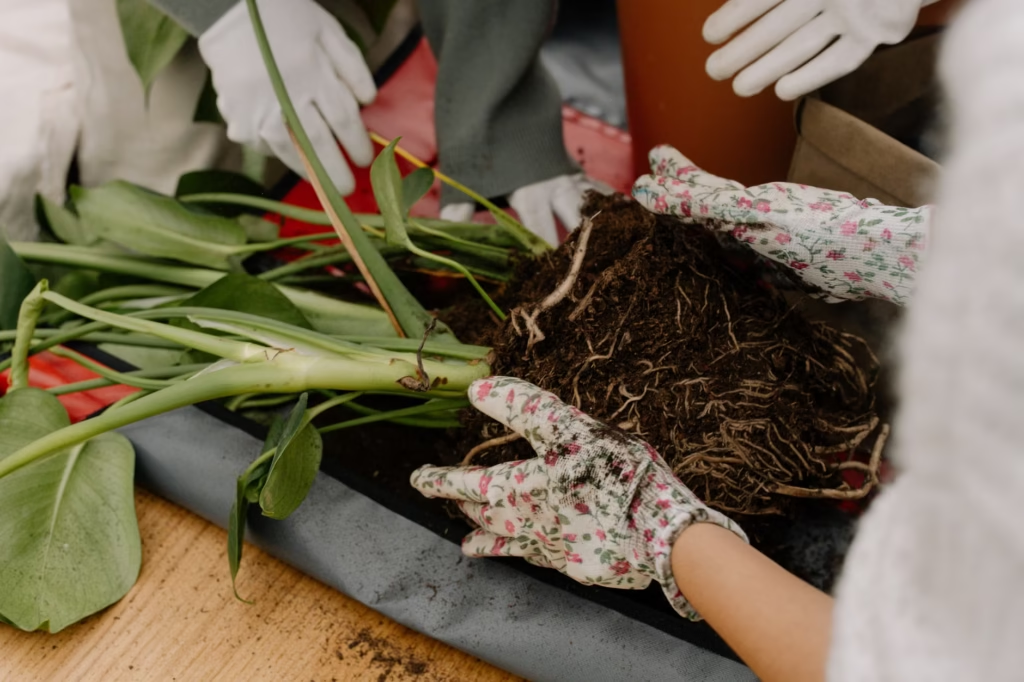
- Stop automatic watering and inspect before doing anything else. Slip the plant out of the pot if needed; root inspection is often more useful than guessing from the leaves. (missouribotanicalgarden.org)
- Trim away dead, brown, mushy roots with a clean, sharp tool, and loosen or cut circling roots if the root ball is congested. (extension.umd.edu)
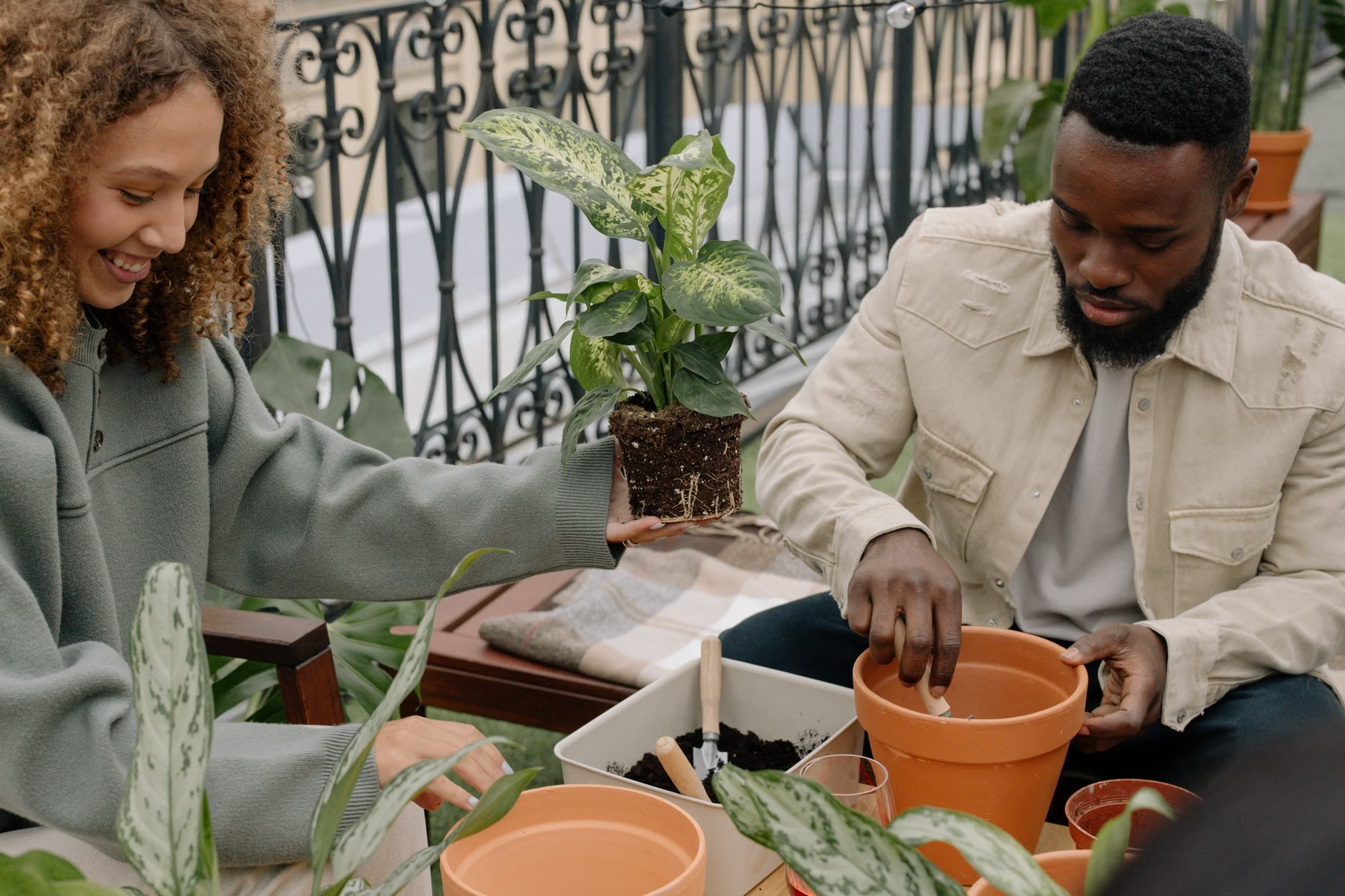
- Repot into fresh potting mix in a container with drainage holes. If the plant lost a lot of roots, a slightly smaller pot is often safer than reusing an oversized one. (extension.umd.edu)
- Set the plant at the same depth it was growing before, not deeper, and use a mix suited to that plant’s needs. (extension.illinois.edu)
- Water once to settle the mix, allow excess to drain, and then be more conservative while the plant re-establishes. (missouribotanicalgarden.org)
- If most roots are gone or the crown is soft and rotting, recovery may be limited. In that case, replacement may be more realistic than repeated rescue attempts. (missouribotanicalgarden.org)
There is no guaranteed save. Some plants recover after dead roots are removed and the moisture problem is corrected; others decline because too much of the root system or crown is already compromised. The practical takeaway is to intervene early, before the pot smells sour, the crown softens, or most of the roots are gone. (rhs.org.uk)
Common mistakes that keep the problem going
- Watering on a fixed schedule instead of checking the soil and pot weight first. (extension.illinois.edu)
- Adding rocks or gravel to the bottom and assuming drainage is solved. (extension.illinois.edu)
- Potting up too far because it feels efficient or “future proof.” (extension.illinois.edu)
- Leaving the nursery pot in runoff inside a cachepot or foil sleeve. (missouribotanicalgarden.org)
- Using tired, compacted media for years or filling indoor pots with garden soil. (extension.illinois.edu)
- Moving a plant into lower light and forgetting that its water use just changed. (extension.umn.edu)
The bottom line
Drainage holes are necessary for most houseplants, but they are only one part of the system. Healthy roots depend on a workable pot size, an airy mix, enough light to use the water you apply, and a habit of removing runoff instead of trapping it. If you remember one thing, make it this: root rot is usually about how long the root zone stays wet, not whether a hole exists somewhere underneath it. (extension.illinois.edu)
FAQ
Can a succulent or cactus still get root rot in a pot with drainage holes?
Yes. A hole helps, but a plant adapted to very free-draining conditions can still rot if the mix is too moisture-retentive, the pot is too large, or the plant sits wet in low light. Plant type changes how fast the medium should dry, not whether saturation is risky. (rhs.org.uk)
Is one drainage hole enough?
At least one functional drainage hole is far better than none for most houseplants, but the number of holes does not override bad potting mix, overpotting, or trapped runoff. A workable drainage path matters more than counting holes. (extension.illinois.edu)
Should I put rocks or gravel in the bottom of the pot?
Usually no. Extension guidance says gravel or shards in the bottom do not improve drainage in the way many gardeners assume, and they can reduce root space or worsen drainage behavior in containers. (extension.illinois.edu)
Can I fix mild overwatering without repotting?
Sometimes. If roots are still healthy, simply lengthening the watering interval, improving light, and emptying saucers may be enough. But if the mix stays wet too long, smells sour, or the roots are already soft and dark, inspection and repotting into fresh mix is the more reliable path. (missouribotanicalgarden.org)
Are yellow leaves always a sign of root rot?
No. Yellowing can also be tied to light changes, temperature stress, nutrient issues, or other cultural problems. Root rot becomes more likely when yellowing is paired with wet mix, poor growth, mushy roots, or a plant that wilts even though the pot is still moist. (extension.illinois.edu)
Does bottom watering prevent root rot?
Not automatically. Bottom watering can work, but the plant still needs to be removed once the mix has wicked up enough water and then allowed to drain. Keeping the root zone continuously wet, whether from the top or bottom, still reduces oxygen. (extension.illinois.edu)
References
- University of Maryland Extension: Root Rots of Indoor Plants – https://extension.umd.edu/resource/root-rots-indoor-plants
- University of Maryland Extension: Potting and Repotting Indoor Plants – https://www.extension.umd.edu/resource/potting-and-repotting-indoor-plants
- Illinois Extension: Watering Houseplants – https://extension.illinois.edu/houseplants/watering
- Illinois Extension: Container Drainage Options – https://extension.illinois.edu/container-gardens/container-drainage-options
- Missouri Botanical Garden: How to Water Indoor Plants – https://www.missouribotanicalgarden.org/gardens-gardening/your-garden/help-for-the-home-gardener/advice-tips-resources/visual-guides/how-to-water-indoor-plants
- Royal Horticultural Society: Overpotting – https://www.rhs.org.uk/prevention-protection/overpotting
- Royal Horticultural Society: A Guide to Compost Mixes for Houseplants – https://www.rhs.org.uk/plants/types/houseplants/growing-media-houseplants
- University of Minnesota Extension: Lighting for Indoor Plants – https://extension.umn.edu/planting-and-growing-guides/lighting-indoor-plants
- Oregon State University Extension: Set Houseplants Up for Success: Right Plant, Right Place – https://extension.oregonstate.edu/news/set-houseplants-success-right-plant-right-place